A portable blender bottle is a blender and a drinking cup in the same object, and that single design decision is what makes it useful. There is no jug to pour from, no washing up beyond the bottle itself, and nothing stopping you making a fresh drink at a desk, in a hotel room or in a car park after training. This guide covers what a portable blender bottle does well, where its limits are, how to load one so it blends properly, which ingredients cause trouble, how to clean it in half a minute, and what to check before you order.
Why a portable blender bottle gets used when a kitchen blender does not
Big blenders are better machines. That is not really in dispute. The problem is that a big blender lives in one place, needs a socket, and creates washing up: a jug, a lid, a blade collar and whatever you poured the drink into. On a weekday morning, that is enough friction to stop a good habit.
A portable blender bottle removes almost all of that. It blends in the container you drink from, it runs on a charge rather than a socket, and cleaning is one bottle rather than four items. The result is that people who buy one tend to actually use it, which is the only metric that matters for kitchen equipment.
The second reason is timing. Protein shakes after training, a smoothie before a shift, or fruit blended at a desk instead of a vending machine snack all happen away from the kitchen. Preparing them at home hours in advance means drinking something that has separated and warmed up. A portable blender bottle moves the blending to where and when you actually drink it.
Then there is travel. Hotel rooms, shared accommodation, long trips and offices without kitchens all make normal food preparation awkward. A portable blender bottle in a bag is often the difference between a real breakfast and buying whatever is available at a service station.
What makes a good portable blender bottle
These bottles look almost identical online. The differences that matter are in the blades, the seal, the battery and the shape.
Blades and how many
Personal blenders work with small, fast blades close to the base. More blade edges means more contact per rotation, which matters because the volume is small and the ingredients cannot circulate as freely as they would in a tall jug. A six-blade head in a portable blender bottle is designed to compensate for the short, narrow chamber.
Capacity, and what it means in practice
Around 380ml is the standard single-serve size, and it is a sensible one. That is a full drink for one person with headroom left for the mixture to move. It is deliberately not a family jug, and treating it like one is the main cause of disappointment: overfilling stops the vortex forming and leaves lumps at the top.
Battery and charging
USB charging is what makes these bottles genuinely portable, because any phone charger, laptop or power bank becomes a top-up point. Like any device with a lithium-ion battery, it prefers regular partial charges to being run flat and left. Charge a portable blender bottle the night before a gym session rather than discovering the problem in the changing room.
The seal and the lid
This is the part that decides whether the bottle can go in a bag. A good seal survives being carried on its side; a poor one turns a rucksack into a laundry problem. Check that the lid closes positively rather than resting in place, and be aware that carbonated or fermenting contents build pressure.
Materials and cleaning
You drink from this container, so the inside matters. Smooth walls without deep threads or awkward corners rinse far more easily, and a wide opening lets you get a hand or a brush inside. Anything that traps residue in a bottle you carry around all day is a hygiene problem, not just an inconvenience.
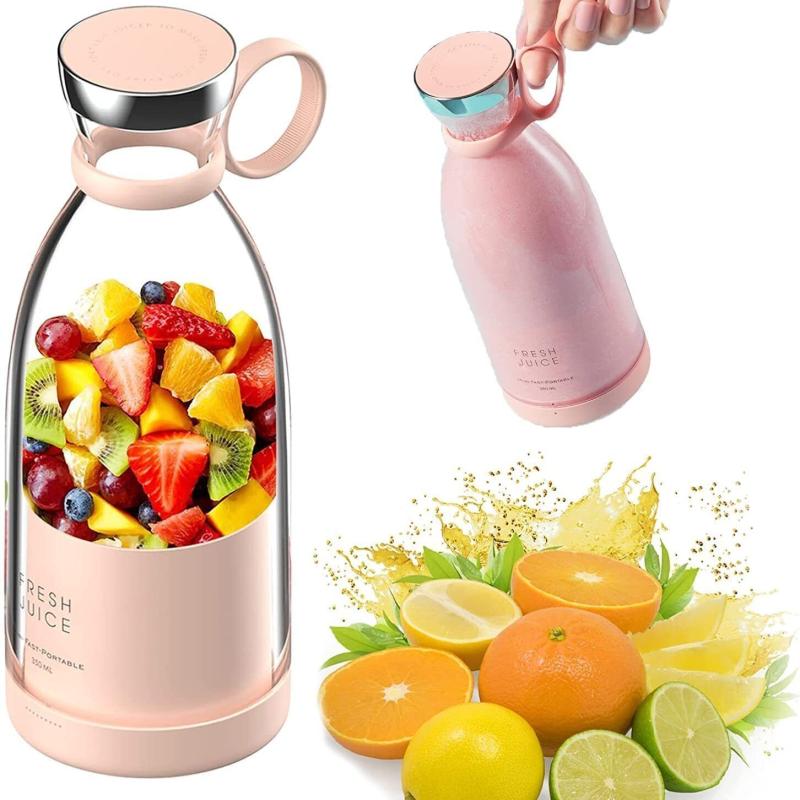
The WLD Store pick: Portable Blender Bottle
This is the portable blender bottle listed at WLD Store, sold as a USB rechargeable juicer for shakes and smoothies.
- Product: Portable Blender Bottle, a USB rechargeable juicer bottle.
- Capacity: 380ml, a single-serve size.
- Blades: 6 blades.
- Speed: the listing states it blends shakes and smoothies in 30 seconds.
- Power: USB rechargeable, so it charges from an ordinary cable.
- Meant for: gym, office and travel.
- Categories: Home and Kitchen, Kitchen Tools.
- Brand: WLD.
- SKU: WLD-PK-0006-(AR-K3LLJPPO78471791).
- Availability: available across Pakistan through secure checkout.
Full listing: Portable Blender Bottle at WLD Store.
How to load a portable blender bottle so it actually blends
Nearly every complaint about personal blenders traces back to loading. The chamber is small, so order and proportion matter much more than they do in a big jug.
- Liquid first, and enough of it. Pour in your milk, water or juice before any solids. Without liquid the blades spin against packed fruit and nothing circulates.
- Cut everything small. Pieces no larger than a grape. A portable blender bottle is not designed to break down a whole apple wedge, and small pieces blend faster and more smoothly.
- Fill to the line, not to the top. Leave headroom so the mixture can move. Overfilling is the single most common mistake.
- Add powder last, not first. Protein and other powders clump against the blades at the bottom. Adding them on top of the liquid gives a smoother result.
- Use short bursts. Several short runs beat one long one, and pausing lets the contents settle back onto the blades.
- Invert briefly if it stalls. Turning a sealed bottle upside down for a second drops trapped ingredients back into the blade zone.
- Go easy on ice. Small personal units are best with a little ice among softer ingredients rather than a bottle packed with cubes.
Frozen banana, soft fruit, yoghurt, oats soaked overnight and leafy greens all work well. Hard raw carrot, whole nuts, large date stones and thick frozen blocks do not. Knowing that boundary is most of the skill in using a portable blender bottle well.
Cleaning and care
A bottle that carries protein or fruit around in a warm bag needs proper cleaning, and it is quick if you do it immediately.
- Rinse straight after drinking. Residue that dries on is ten times harder to remove than residue rinsed within a minute.
- Do the self-clean run. Half fill with warm water, add one drop of dish soap, run a short cycle, then rinse thoroughly. That handles most drinks completely.
- Never submerge the base. The motor and battery live there. Wipe the base with a damp cloth and keep the charging port dry.
- Do not put it in a dishwasher unless the instructions specifically say the bottle is dishwasher safe.
- Dry it open. Store a portable blender bottle with the lid off so air can circulate, otherwise it develops a stale smell within days.
- Clean the lid threads. Residue collects in the screw threads and around the seal, which is exactly where a smell starts.
- Check the blade area weekly. Fibres from greens and pulp from fruit can wrap around the blade base.
Follow the charging and cleaning instructions supplied with your bottle over any general advice given here.
Prep that makes the habit stick
The bottle is the easy part. What decides whether you still use it in three months is whether the ingredients are ready when you are in a hurry, and that takes about fifteen minutes of preparation once a week.
The most effective trick is portioning into freezer bags. Chop fruit into small pieces on a Sunday, divide it into single servings, and freeze the bags flat. Each morning you tip one bag into the bottle, add liquid, and blend. Frozen fruit also removes the need for ice entirely, which is easier on a small motor and keeps the drink from being watered down.
Keep a small kit wherever you drink. At an office that means a sealed tub of powder, a spoon and a cable in a drawer. In a gym bag it means a single portion of powder in a shaker container rather than carrying a whole tub around. The less you have to assemble, the more often it happens.
Think about liquid supply too. Long-life milk cartons, water from a cooler, or a bottle of juice in a desk drawer all work. Being one missing ingredient away from a drink is how a good routine quietly dies.
A note on oats and seeds: soaking them overnight in the fridge softens them enough to blend smoothly and improves the texture considerably. Dry oats blended straight from the packet in a portable blender bottle tend to stay slightly gritty no matter how long the motor runs.
Finally, rinse before you leave wherever you drank it. A bottle rinsed at the gym tap takes seconds. The same bottle discovered in a bag eight hours later takes proper scrubbing and smells like nothing you want to drink from.
Common problems and quick fixes
- It spins but the drink stays lumpy. Too little liquid or too much fruit. Add liquid, shake once, and run again in short bursts.
- It leaks when carried. Check the lid is fully closed and the seal is seated. Never carry a bottle containing a fizzy drink or anything that has started to ferment.
- It stops mid-blend. Many units cut power when the load is too heavy, which protects the motor. Reduce the contents, add liquid and try again rather than repeatedly restarting.
- There is a lingering smell. Wash it, then leave it open to dry fully. For stubborn odours, a rinse with warm water and a spoon of baking soda usually resets a portable blender bottle.
Buying checklist: five questions before you order
- What will I blend most? Soft fruit and powders suit these bottles perfectly; hard raw vegetables belong in a full-size machine.
- Is one serving enough? A 380ml portable blender bottle is designed for one drink at a time, by intention rather than by compromise.
- Where will I charge it? USB charging works anywhere there is a cable, but the habit of charging before you need it is what matters.
- Will it travel in a bag? Seal quality decides this. If you plan to carry it full, that becomes the most important feature on the list.
- How quickly can I clean it? If cleaning takes longer than the blend, the bottle will not stay in your routine.
Other kitchen picks at WLD Store
Three more items worth a look alongside the portable blender bottle.
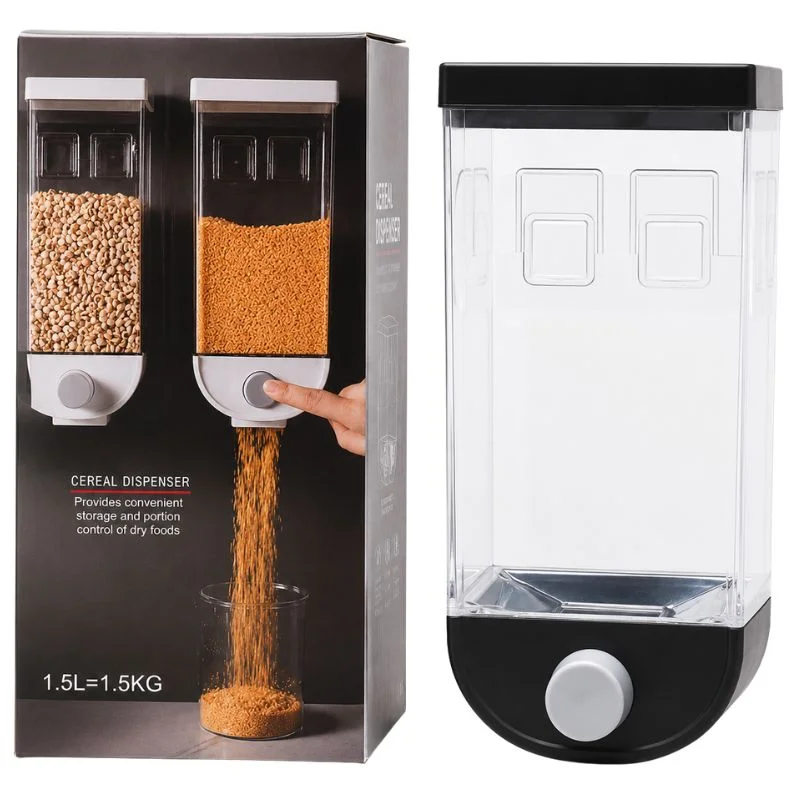
Wall Mounted Cereal Dispenser 1.5L for oats and cereal on tap.
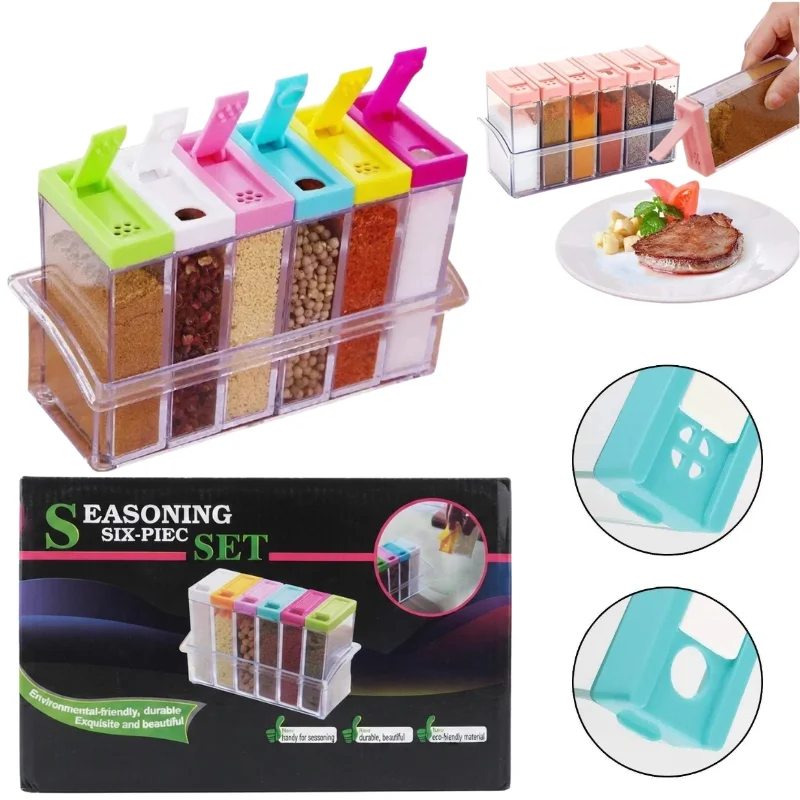
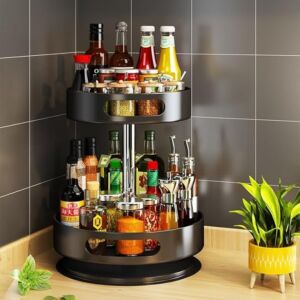
Spice Jars Dispenser Set of 6 for an organised shelf.

Waterproof Terry Cotton Mattress Cover from the home range.
What a portable blender bottle is not built to do
Honest limits make a product more useful, not less. A portable blender bottle is a single-serving tool with a small motor and a short blending burst. Asked to do a jug blender’s job it will disappoint, and the usual result is an abandoned habit rather than a burnt-out motor.
It is not a food processor. Chopping onions, grinding spices, kneading dough or making nut butter all need sustained torque that a battery-driven cup does not have. Hot liquids are a separate problem: heat and steam build pressure inside a sealed cup, and pressure is exactly what you do not want behind a lid you are about to open.
It is also not a family appliance. One cup is one serving. If you are making breakfast for three people every morning you will spend longer rinsing between rounds than a jug blender would take for the whole batch. A portable blender bottle earns its place when the realistic alternative is skipping breakfast entirely.
Who should probably skip one: anyone who already blends at home and never leaves the kitchen with it, anyone who wants thick frozen dessert-style blends rather than drinkable smoothies, and anyone who will not rinse the cup within a few minutes of finishing. That last one is not a small thing. Dried protein is the single most common reason these cups end up forgotten in a drawer.
Taking a portable blender bottle to the gym, the office or abroad
The reason to own a portable blender bottle is that it travels. Getting that right takes a little planning rather than luck.
For a gym bag, blend nothing in advance. Carry the dry ingredients in the cup, add liquid when you arrive, and blend there. A packed bag full of liquid is a leak waiting to happen, and a shake that has been warm for two hours is not something you want after a session.
For the office, keep the routine dry as well: oats, powder and seeds in the cup, water or milk from the kitchen. Rinse immediately at the tap, then wash properly at home. A cup left standing on a desk until the evening is a cup you will avoid using tomorrow.
Air travel is where the rules are strict. A portable blender bottle contains a lithium battery, and airlines require lithium batteries in cabin baggage rather than in the hold. Pack it in your carry-on, empty and dry, and expect to take it out at security like any other electronic item. Check your own airline’s policy before you fly, because limits differ between carriers.
- Before packing: empty, rinse, dry, and store with the lid loose so it does not smell.
- In a bag: upright, ideally in a side pocket, never packed under heavy items.
- Charging: top it up the night before, and never beside a wet sink.
- Abroad: a USB charger works on any mains voltage, so only the plug adapter matters.
One habit covers most travel problems: treat the portable blender bottle as a cup that happens to blend, not as an appliance you carry liquid in. Fill it where you drink it and the rest looks after itself.
Frequently asked questions about the portable blender bottle
Can a portable blender bottle crush ice?
A little, in combination with softer ingredients and enough liquid. It is not built to fill with ice cubes and grind them dry, which strains a small motor. For heavily iced drinks, a full-size machine with a reinforced jar is the right tool.
Is 380ml enough for a protein shake?
For a standard single serving, yes. That capacity fits a normal scoop of powder with liquid and still leaves room for the mixture to move while blending. If you routinely drink very large shakes, you would need to make two.
How long does a charge last?
That depends on how thick your drinks are and how long each blend runs, since thicker mixtures draw more power. The practical approach is to charge a portable blender bottle on a schedule, such as the night before gym days, rather than waiting for it to stop mid-blend.
Can I put hot drinks in it?
No. These bottles are made for cold and room-temperature ingredients. Hot liquid in a sealed container builds steam pressure, and heat is hard on both the seal and the battery. Let anything cooked cool completely first.
Can I store a drink in it overnight?
It is better not to. Blending aerates a drink, and fruit mixtures separate and ferment. Fermentation creates gas in a sealed bottle, which is exactly what you do not want in a bag. Blend fresh, drink it, then rinse.
How is it different from a full-size blender?
Scale and purpose. A kitchen blender handles family volumes, hard ingredients and dry grinding. A portable blender bottle handles one soft drink at a time, wherever you happen to be. They are complementary rather than competing, which is why plenty of households own both.
The short version
Liquid first, small pieces, powder on top, short bursts, and rinse it the moment you finish. Get those five habits right and a portable blender bottle delivers a fresh drink in half a minute in places where a kitchen blender was never an option. You can see this one on its product page, or browse more of the range in the Kitchen Tools section.

Add comment