A portable vacuum cleaner is the machine you actually reach for. Not the big one in the cupboard, not the robot on a schedule — the small one that deals with crumbs on a car seat, dust on a shelf and whatever the children just knocked over. This guide explains which specifications matter and which are marketing, what each attachment is really for, how to clean a car properly, how to read filtration claims honestly, and the battery habits that decide whether the unit is still useful in two years.
What this format is for
The job of a portable vacuum cleaner is speed. It lives somewhere accessible, comes out for two minutes, and goes back. That is a different purpose from a full-size vacuum, and judging it by the same standard leads to disappointment.
Where it excels is the awkward and the small: car footwells, sofa crevices, keyboard trays, stair edges, windowsills and the space between a cooker and a counter. None of these are reachable with a full upright, and none justify dragging one out.
It also removes the friction that stops people cleaning at all. A portable vacuum cleaner with no plug to find and no hose to unwind gets used ten times as often as a machine that needs setting up, and frequency beats power for everyday tidiness.
What it is not is a replacement for a floor vacuum. Battery capacity limits runtime, the dust container is small, and there is no floor head with a beater bar. Buy it as a companion tool rather than a primary one.
The specifications that actually matter
Portable vacuum cleaner listings are dense with numbers, and only some of them tell you anything useful.
Suction and wattage
On a portable vacuum cleaner, motor wattage describes power drawn, not suction delivered at the nozzle, so it is a rough guide at best. Airflow and sealed suction are the meaningful measures, and they are rarely published. Treat a wattage figure on a portable vacuum cleaner as an indication of class rather than a performance promise.
Weight and balance
Weight is the portable vacuum cleaner specification people underestimate. You hold this machine at arm’s length, sometimes above your head, and a few hundred grams change the experience completely. Balance matters as much as mass: a unit whose weight sits over your hand feels lighter than one that hangs forward, even at identical weight.
Runtime
Stated runtime is usually measured on the lowest power setting. On maximum, expect considerably less. The practical question is whether the runtime covers your longest normal task — a car interior, say — in one go, because a portable vacuum cleaner that dies halfway through is far more annoying than a slightly weaker one that finishes.
Filtration
Filters do two jobs: they protect the motor and they stop fine dust being blown back into the room. On a machine used at chest height, that second job matters. A washable filter is a real convenience; a proprietary cartridge you cannot buy locally is a hidden cost.
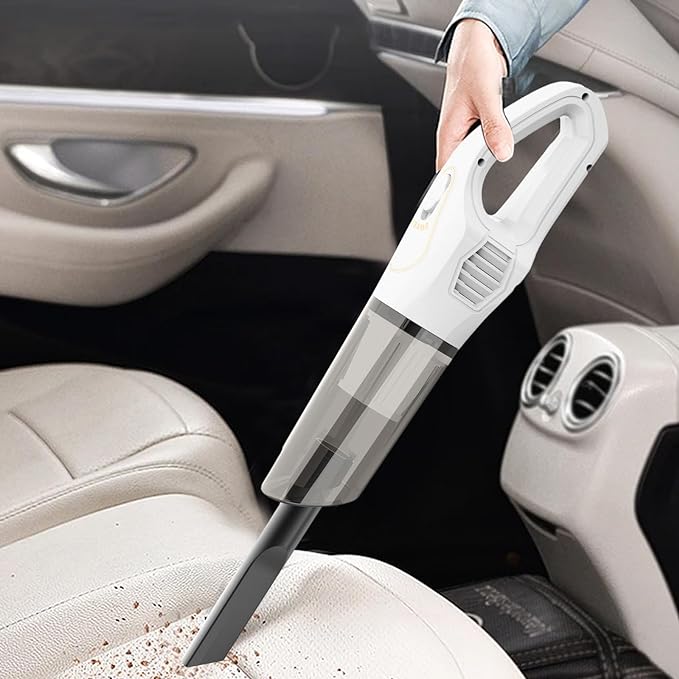
The WLD Store pick: Smart Portable Vacuum Cleaner
These are the details the WLD Store listing provides. They are the seller’s stated figures rather than measurements we have independently verified:
- Product: Smart Portable Vacuum Cleaner, described as a cordless handheld unit for home use.
- Motor per the listing: stated as 120W suction.
- Battery per the listing: stated as 25 minutes of run time.
- Weight per the listing: stated as a lightweight 1.2kg body.
- Accessories per the listing: six attachments included.
- Filtration per the listing: a HEPA filter described as capturing 99.97% of particles.
- Suggested uses per the listing: carpets, sofas and car interiors.
- Category: Home & Kitchen, filed under Home Appliances | Brand: WLD | SKU: WLD-KSA-0134-(KD-080)
- Availability: listed for customers across Saudi Arabia, with secure checkout.
Charging time, dust container capacity and whether the filter is washable are not stated, so check the product page and the manual. Full details are on the Smart Portable Vacuum Cleaner product page.
The attachments and what each is for
Most people use one attachment and ignore the rest, which wastes half of a portable vacuum cleaner. Here is what the common tools actually do.
- Crevice tool: the long thin one. For seat rails, between cushions, window tracks and skirting corners. The most used attachment on any portable vacuum cleaner.
- Brush tool: soft bristles for dashboards, shelves, keyboards and anything that scratches. The bristles loosen dust while the airflow lifts it.
- Upholstery tool: a wide flat head, sometimes with a fabric strip, for sofas, mattresses and car seats.
- Extension hose: lets you reach into a footwell or under a seat without contorting the whole unit.
- Small motorised or turbo head: where fitted, this is the one that lifts pet hair from fabric. A plain suction head will not do the same job.
Keep them together. Attachments scattered through a house are the main reason a portable vacuum cleaner ends up being used with whatever tool happens to be attached.
Cleaning a car properly
Car interiors are where a portable vacuum cleaner earns its place, and there is a sequence that works far better than improvising.
Start by removing the mats and shaking them outside. Then work top down: dashboard and vents with the brush tool, seats with the upholstery head, and the footwells last, because everything you disturb above falls downward. Slide the seats fully forward and then fully back to reach the rails.
A portable vacuum cleaner is genuinely better than a petrol-station machine for this, because you can take your time and reach awkward corners without a coin timer running. Do it in shade rather than direct sun — a Saudi car interior in the afternoon is unpleasant to work in and hard on the battery.
One caution: sand is abrasive and heavy. If you regularly clean up desert sand, empty the container more often than you think you need to, because a partly full bin cuts airflow sharply.
A quick technique guide
Handheld cleaning rewards method far more than power. Three habits make a visible difference to the result.
The first is slow, overlapping passes. Airflow needs contact time to lift embedded dust, and sweeping a portable vacuum cleaner quickly across a surface mostly moves the loose material around. Half speed, twice the pickup.
The second is working top-down within any area, so that anything you disturb falls onto a surface you have not yet cleaned. The third is choosing the right attachment before you start rather than compromising with whatever is fitted — thirty seconds of swapping saves several minutes of poor results.
Finally, do the job in sections. A whole car in one continuous sweep drains the battery and produces uneven results; seat, then footwell, then boot is faster in practice.
Sofas, mattresses and stairs
Upholstery holds far more dust than it looks like it does, and a portable vacuum cleaner is the natural tool for it.
Work systematically across a sofa rather than dabbing at visible marks — overlapping passes in one direction, then a second set at right angles. Lift the cushions and do the base, which is where crumbs and coins collect.
Mattresses benefit from the same treatment every few months, though a dedicated mattress unit does the job better. Stairs are the other classic use: a portable vacuum cleaner handles the treads and the corners without hauling a full machine up and down, which is exactly the task uprights are worst at.
Reading filtration claims honestly
Filtration is the area of portable vacuum cleaner marketing where numbers get used loosely, so it is worth understanding what a claim like 99.97% actually refers to.
A true HEPA rating describes performance against particles of a specific size under defined test conditions. The headline percentage on its own does not tell you which standard was used or whether the machine as a whole is sealed. A filter can perform well while air leaks around it through the housing.
None of this means such claims are wrong; it means treat them as the manufacturer’s description rather than as a certification. If allergies are your main reason for buying a portable vacuum cleaner, look for a named standard, empty the container outdoors, and change the filter on schedule — that combination matters more than the percentage on the box.
Emptying and filter care
The container on a portable vacuum cleaner fills quickly, and a full container is the number one cause of “it lost suction” complaints.
- Empty after every substantial job, not when it looks full. Airflow drops long before the bin is at capacity.
- Empty it outdoors or over a bin bag, and hold it low, so fine dust does not billow back at you.
- Tap or brush the filter out each time, and wash it only if the manual says it is washable.
- Dry a washed filter completely — at least a full day — before refitting. A damp filter breeds smells and can damage the motor.
- Keep a spare filter if one is available, so a portable vacuum cleaner is never out of action while one dries.
Battery habits that extend life
The battery is usually the first component to limit a portable vacuum cleaner’s useful life, and how you treat it makes a measurable difference.
- Use the supplied charger rather than the highest-output adapter you own.
- Avoid storing the unit fully flat for weeks; a partial charge is kinder to a lithium-ion battery.
- Do not leave a portable vacuum cleaner charging permanently on a hot windowsill or in a car.
- Expect shorter runtime on maximum power; that is physics, not a fault.
- If runtime halves within a year, heat or deep discharge is the usual cause.
Heat is the main enemy in this climate. A charging cradle in a cool interior room will outlast the same unit kept in a garage or a utility area that bakes in summer.
Where to keep it
Where you keep a portable vacuum cleaner predicts how much you use it almost perfectly. A machine in a cupboard behind other things gets used monthly; one on a wall bracket by the door gets used daily.
Choose a spot near where the mess happens and near a socket. If the unit comes with a wall dock, fit it — a portable vacuum cleaner that lives on its charger is always ready, which is the entire point of the format.
Keep the attachments in the same place, ideally on the same bracket or in a small box beside it. Five seconds of hunting is enough to make someone decide the job can wait.
What to check when it arrives
Unpack and test a new unit properly on day one, while a return is still straightforward.
- Charge it fully first. Many units ship partly charged, and testing on a low battery gives a misleading impression of power.
- Count the attachments. Confirm the box contains everything the listing described before you discard the packaging.
- Check the bin seal. The container should click positively into place; a loose seal leaks dust and costs suction.
- Run it on maximum for a minute. Listen for rattles and feel whether the portable vacuum cleaner stays comfortable in one hand.
- Look at the filter. Note whether it is washable and how it comes out, so you are not working it out later with a full bin.
Common problems and quick fixes
- Suction has dropped. Empty the bin, then clean the filter, then check the nozzle for a blockage. That order solves nearly every case.
- It smells musty. A filter was refitted damp, or fine organic dust has been sitting in the bin. Wash if permitted, dry fully, and empty more often.
- Runtime has collapsed. Battery ageing, usually accelerated by heat. Move charging indoors and avoid leaving it flat.
- It will not pick up pet hair. Plain suction struggles with hair woven into fabric; a motorised head or a rubber brush attachment is what actually lifts it.
Buying checklist
- What is the single longest job I will use it for, and does the runtime cover it?
- Is the filter washable, and can I get a replacement locally?
- Does it come with a crevice tool and an upholstery head at minimum?
- Where will it live, and is there a socket there?
- Am I expecting this portable vacuum cleaner to supplement a floor vacuum, or replace one?
Who it is not for
If you want one machine to clean an entire villa, this is not it. Runtime, bin size and the absence of a floor head all point the other way, and a full-size vacuum cleaner remains the right tool for that job.
Households dealing with heavy pet shedding on carpet need a motorised brush head specifically; without one, results will disappoint regardless of suction figures. And anyone with limited hand or wrist strength should weigh the weight figure carefully, since holding even a light unit at arm’s length is tiring.
Finally, if the machine will only be used two or three times a year, a corded handheld avoids the battery ageing problem entirely and is worth considering instead of a cordless handheld vacuum.
Handheld, stick or corded?
These three formats overlap enough to confuse buyers, and the distinction is simple once stated.
A stick vacuum is a handheld with a long wand and a floor head attached; many convert between the two. If you want one machine that does both floors and detail work, that is the format to look at, at the cost of size and weight.
A corded handheld gives unlimited runtime and consistent power, with a cable to manage — sensible if it lives in a garage for car cleaning. A cordless handheld vacuum trades some power for the freedom to use it anywhere in seconds, which is why it is the one most households end up using most.
Other picks at WLD Store
Three related home appliance listings from the same catalogue:
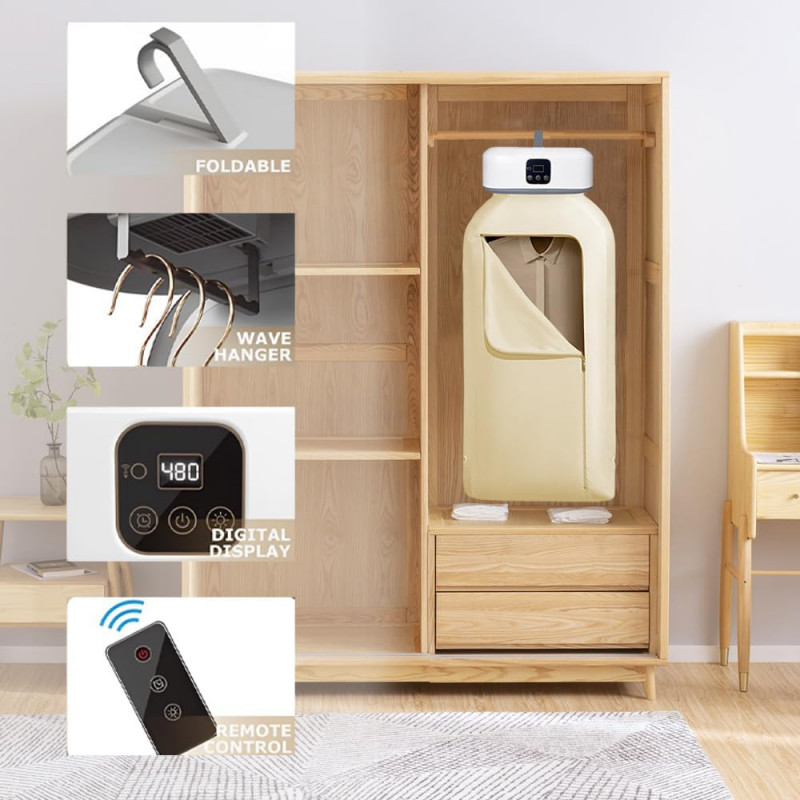

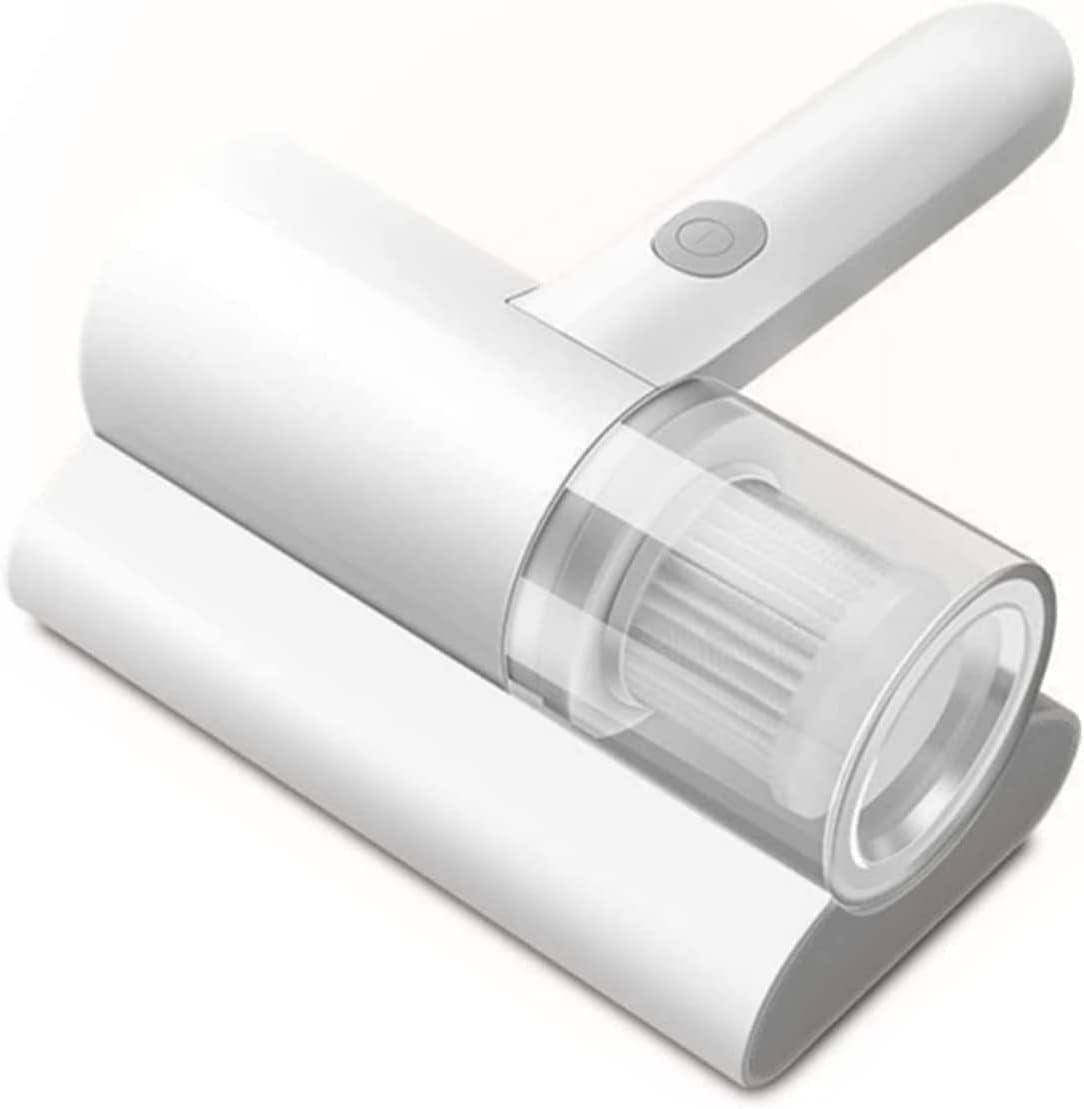
The Dust & Mite Vacuum Cleaner is the specialist option for mattresses and bedding. The Foldable Electric Clothes Dryer and the Smart Blender 15-Speed complete the appliance selection.
Frequently asked questions about the portable vacuum cleaner
Is it powerful enough for a whole house?
No, and it is not meant to be. Bin capacity and battery life both limit it to short jobs. Use it alongside a full-size machine rather than instead of one.
How long does it take to charge?
That varies by model and is often not stated in listings. Check the manual. As a rule, charging takes considerably longer than the runtime it delivers, so plan around a full charge rather than a top-up.
Can I use it on a wet spill?
Only if the machine is explicitly rated for wet pickup. Most are not, and drawing liquid into a dry portable vacuum cleaner can damage the motor and create a shock hazard. Assume dry-only unless stated otherwise.
Will it help with dust allergies?
Good filtration helps, particularly for upholstery and mattresses. Empty the container outdoors, replace filters on schedule, and treat headline percentages as manufacturer claims. Persistent symptoms are worth discussing with a doctor.
How do I stop it losing suction?
Empty the bin often and keep the filter clean. Those two habits address the overwhelming majority of suction complaints about any portable vacuum cleaner.
Is 1.2kg light enough for one hand?
For most people, yes, for short bursts. Balance matters as much as the figure, and anyone with wrist or grip difficulties should treat any handheld cautiously and rest between passes.
Judge it on weight, runtime and the attachments that come in the box, then keep it charged somewhere obvious. Do that and a portable vacuum cleaner becomes the most-used cleaning tool in the house. You can see this model on its product page, or browse the full appliance range in the Home Appliances section.



Add comment