A wall mounted cereal dispenser solves a problem most kitchens have quietly given up on: the shelf where five half-open packets of rice, lentils, sugar and cornflakes lean against each other and spill the moment one is pulled out. Moving that job onto the wall clears the counter, keeps grains sealed between uses and turns pouring into a one-handed action. This guide covers what to look for in a wall mounted cereal dispenser, how to fit one so it does not sag or leak, how to keep grains fresh inside it, and where the 1.5L model stocked at WLD Store fits into a small kitchen.
Why a wall mounted cereal dispenser suits a small kitchen
Counter space is the scarcest resource in most homes. Every canister, jar and packet standing on the worktop is space you cannot chop, knead or stack dishes on, and containers on a counter get pushed around until one of them tips. Putting storage on a vertical surface uses space that was doing nothing at all, which is the entire argument for a wall mounted cereal dispenser.
The second gain is speed. A sealed packet has to be found, opened, poured with two hands and closed again, and clips get lost. A dispenser sits at eye level with the contents visible, so you know at a glance that the rice is running low, and you fill a bowl without putting anything down. On a weekday morning with school bags by the door, that difference is real.
There is a food quality argument too. Grains, flour and cereal go stale, absorb kitchen humidity and attract pantry insects when they sit in a folded packet. A closed container slows all three down. Anyone who has opened a bag of atta after a humid week knows the difference a proper seal makes, and a wall mounted cereal dispenser keeps that seal in place by default rather than depending on someone remembering to clip the bag shut.
It is not the right answer for everything, and it helps to be clear about that. Oily or sticky items, anything with large irregular pieces, and things you buy in ten kilo sacks are better off elsewhere. A dispenser is for the dry, free-flowing staples you reach for daily.
What to look for in a wall mounted cereal dispenser
The category looks uniform online and is not. Four things decide whether the unit becomes part of your routine or ends up in a cupboard within a month.
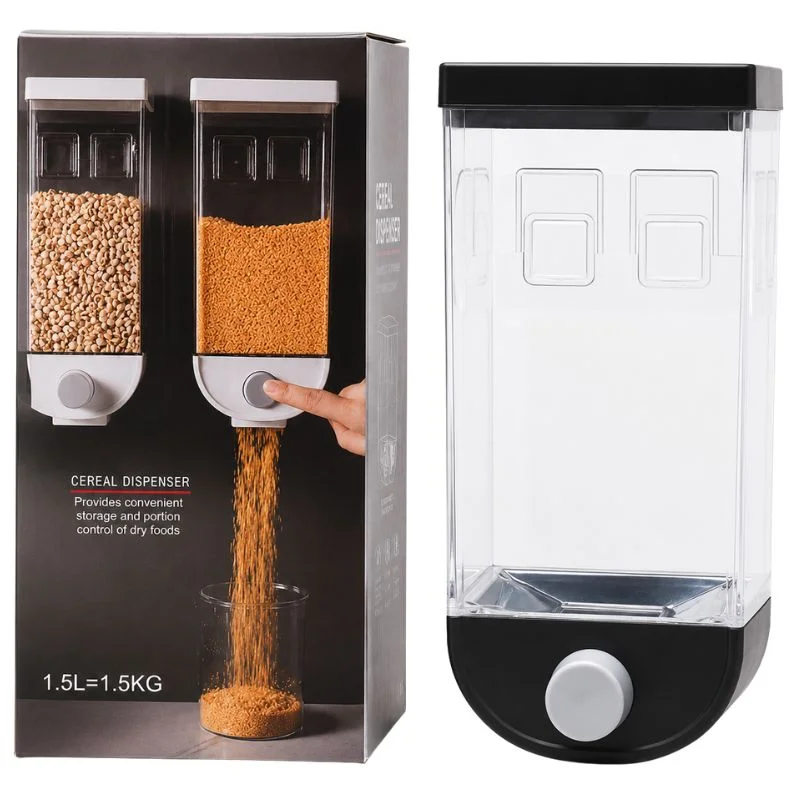
Capacity and what actually fits
Litres are not kilos, and this trips people up. Dense grains such as rice fill a container by weight far faster than puffed cereal does, so the same chamber holds very different amounts depending on what goes in. A one and a half litre chamber is a sensible everyday size: enough for several days of one staple, small enough to empty and refill often so nothing sits at the bottom for months. If you cook for a large household, plan on more than one wall mounted cereal dispenser rather than hunting for a single enormous one.
The dispensing mechanism
This is the part that either works for years or jams in week two. Twist knobs, levers and push buttons all exist; what matters is that the mechanism moves a measured pocket of grain rather than simply opening a hole. A one-touch action you can operate with a bowl in the other hand is the practical test. Look also at whether the outlet shuts fully, because a mechanism that leaves a gap will trickle rice onto the counter every time someone bumps the unit.
Mounting method and wall type
Most units offer adhesive mounting, screws, or both. Adhesive is quick and leaves no holes, which matters in rented homes, but it needs a smooth, clean, non-porous surface: tile, painted board, glass or laminate. It will not hold reliably on rough distemper, unsealed plaster or textured paint. Screws are the stronger option on masonry. Whichever you choose, remember the load is not fixed, because a full wall mounted cereal dispenser is much heavier than an empty one and the mounting has to carry that plus the tug of someone dispensing.
Material, seal and cleaning access
Food-grade plastic is the norm and is fine, provided the chamber is transparent enough to see levels and the lid actually seals rather than resting in place. The point most people miss is cleaning access: at some stage you will need to empty the unit and wash it, and a chamber that does not detach from the bracket makes that a miserable job. Check that the container lifts off, that the lid opens wide enough to get a hand or a brush inside, and that the dispensing mechanism can be cleared without tools. The general principles of food storage apply here as much as to any other container: dry, sealed and cleanable.
The WLD Store pick: Wall Mounted Cereal Dispenser 1.5L
Here is the wall mounted cereal dispenser we stock, described using only what the product listing states:
- Product: Wall Mounted Cereal Dispenser 1.5L
- Brand: WLD
- Category: Home and Kitchen
- Capacity: 1.5 litres per chamber
- Dispensing: easy one-touch portion control
- Intended contents: rice, grains and cereal, as a space-saving kitchen organiser
- SKU: WLD-PK-0015-(YM-Ho-87-00-00-877)
- Availability: available across Pakistan through WLD Store with secure checkout
The 1.5 litre size is the sensible middle ground for a wall mounted cereal dispenser in a family kitchen: large enough that you are not refilling it daily, small enough that stock rotates and stays fresh. Photographs, full details and current availability are on the Wall Mounted Cereal Dispenser 1.5L product page.
How to fit and load a wall mounted cereal dispenser
Fitting takes about fifteen minutes if you prepare the wall properly, and the preparation is where nearly all failures happen.
- Choose the height before anything else. The outlet should clear your tallest everyday bowl or jug with room to spare. Hold the unit up and mime the pouring action before you commit.
- Pick a surface that suits your fixing. Smooth tile or a cabinet side panel for adhesive; solid masonry for screws. Avoid the wall directly behind a hob, where heat and grease both work against you.
- Clean and dry the area thoroughly. Wipe with a degreasing cleaner, then let it dry fully. Kitchen walls carry a fine film of cooking oil that defeats adhesive pads without ever looking dirty.
- Check it is level. A tilted wall mounted cereal dispenser will not empty evenly and will look wrong forever after.
- Let adhesive cure before loading. Most pads need many hours at full strength. Mount it, then leave it empty overnight rather than filling it straight away.
- Fill with dry contents only. Any moisture in the chamber will cause clumping around the mechanism, and a damp grain bridge is the usual cause of a dispenser that suddenly stops feeding.
- Label what is inside. Rice, sooji and daal are less obvious through tinted plastic than you expect, especially to anyone else in the house.
Load it with what you actually use every day rather than what looks best. The most common mistake is filling a wall mounted cereal dispenser with an attractive but rarely used grain, which then sits for months and goes stale while the everyday rice stays in a packet on the shelf.
Care and cleaning for your wall mounted cereal dispenser
A dry-goods container needs less work than most kitchen equipment, but the little it needs is not optional if you want to avoid weevils and stale flour.
- Empty it completely before refilling. Topping up on top of old stock leaves a permanent layer at the bottom that never rotates out. Pour the remainder into a bowl, refill, then put the old stock back on top.
- Wash and dry fully, every few refills. Warm soapy water, a bottle brush for the chamber, then air dry completely. Even slight residual moisture will cake the next batch of flour.
- Keep the mechanism free of dust and husk. A dry brush around the outlet each time you refill stops the gradual stiffening that people mistake for a broken part.
- Avoid hot water and harsh scourers on clear plastic. Both cloud the chamber, and once you cannot see the level you lose half the benefit.
- Keep it out of direct sunlight. Light and heat shorten the life of grains and cereal considerably.
- Recheck the mounting every few months. Give it a gentle downward tug when empty. Adhesive fixings can creep slowly in a warm kitchen.
Common wall mounted cereal dispenser problems and quick fixes
- It stops dispensing although the chamber is full. Grain has bridged over the outlet. Tap the side of the chamber firmly, or open the lid and stir the top layer. If it happens repeatedly, the contents are too damp or too fine for the mechanism.
- It trickles or leaks between uses. Usually husk or a broken grain jammed in the closing gate. Empty it, clear the outlet with a dry brush, and check the mechanism returns fully to its closed position.
- The unit is coming away from the wall. Nearly always a surface problem rather than a pad problem: grease, dust, damp or textured paint. Take it down, degrease properly, and consider screw fixing if the wall is porous.
- Contents go stale or attract insects. The chamber is not being emptied and washed between refills, or the lid is not seated. Clean it out fully, dry it completely, and stop topping up over old stock.
Wall mounted cereal dispenser buying checklist
- Where exactly will it go, and what is that wall made of? Decide this before choosing between adhesive and screw fixing, not after.
- Will your everyday bowl fit under the outlet at that height? Measure rather than estimate.
- Does the chamber detach for washing? If it does not, cleaning becomes a chore you will avoid.
- Can you work the mechanism one-handed? Anything needing two hands loses most of the convenience.
- How many staples do you actually want on the wall? Buying one wall mounted cereal dispenser to try, before committing to a row of them, is the sensible order.
More Home and Kitchen picks at WLD Store
These three come up often alongside a wall mounted cereal dispenser for people organising a kitchen:
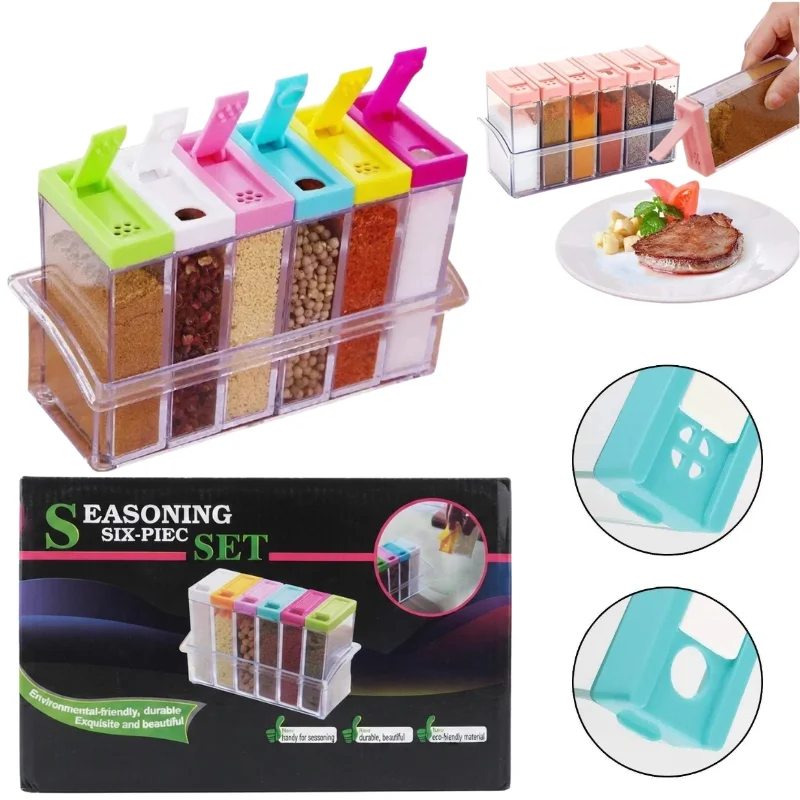
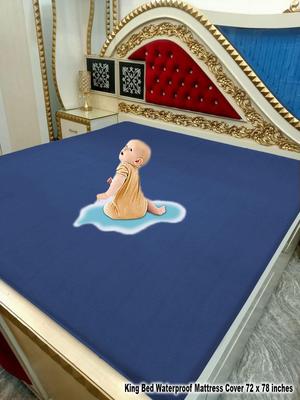

Wall mounted cereal dispenser vs airtight canisters on a shelf
The usual alternative is a row of sealed canisters in a cupboard, and it is worth being clear about what each one does better. Canisters win on flexibility: they stack, they move, they hold anything, and you can add one more whenever you need to. A wall mounted cereal dispenser wins on the two things canisters are genuinely bad at, which are using vertical space that was otherwise dead and letting a child serve themselves without lifting anything heavy.
Portion control is the second real difference. Pouring from a canister is guesswork, and most people over-fill a bowl by a surprising margin. A wall mounted cereal dispenser meters out roughly the same amount every turn, which makes breakfast more predictable and makes a box last noticeably longer than it otherwise would.
Where canisters still win is freshness for slow-moving food. Anything you open once a fortnight is better sealed in a jar than sitting in a chamber you rarely empty. A wall mounted cereal dispenser is at its best holding the one or two things a household eats almost every day, and at its worst as long-term storage for the packet somebody bought once and lost interest in.
Commitment differs too. Canisters need no fixing and leave no marks. A wall mounted cereal dispenser has to attach to something, so a renter should check what the tenancy allows before ordering. Many units can stand on a worktop or fix under a cabinet instead of being drilled into plaster, which is usually the more sensible route in a rented kitchen.
What else belongs in a wall mounted cereal dispenser, and what does not
The name undersells it. Anything dry, free-flowing and eaten often is a fair candidate.
- Good candidates: cornflakes, muesli, granola without large clusters, puffed rice, oats, rice, small pulses such as moong and masoor, sugar, and dry pet kibble.
- Marginal: nuts, chana and dried fruit. They flow well enough, but oily or sticky surfaces mean washing the chamber more often than plain cereal ever needs.
- Avoid anything ground or powdered. Flour, besan, milk powder and ground spices pack down, bridge across the outlet and clog a wall mounted cereal dispenser instead of falling through it.
- Avoid anything damp or oily. Fried snacks and heavily seasoned namkeen leave a film on the walls of the chamber that dry food will then stick to.
- Avoid large or irregular pieces. Big granola clusters, whole nuts and long pasta jam at the outlet and turn every serving into a wrestling match.
One rule covers most cases: if it pours cleanly out of a packet without shaking, it will dispense; if you have to bang the packet, it will bridge. It also helps to label any chamber whose contents are not obvious at a glance, because a wall mounted cereal dispenser full of sugar and one full of puffed rice look remarkably similar from across a kitchen at seven in the morning.
Frequently asked questions about the wall mounted cereal dispenser
What can I keep in a wall mounted cereal dispenser besides cereal?
Any dry, free-flowing staple works: rice, lentils, sugar, sooji, oats, dried beans, nuts and pet kibble are all common. What does not work is anything oily, sticky, powdery enough to pack solid, or made of large irregular pieces that cannot pass the outlet smoothly.
Will it hold on a tiled kitchen wall?
Tile is one of the better surfaces for adhesive mounting because it is smooth and non-porous, but only if it is properly degreased first. Kitchen tiles collect an invisible film of cooking oil. Clean with a degreaser, dry fully, mount, then leave it to cure before adding any weight.
How much rice does a 1.5 litre chamber hold?
Litres measure volume, not weight, so the honest answer is that it depends on the grain. Dense rice fills the same space with far more weight than flaked cereal does. Treat 1.5 litres as several days of one staple for a small family rather than a bulk store.
Can it be moved once it is fitted?
A screw-fixed unit can be moved, leaving holes to fill. Adhesive pads are generally single-use, so plan on replacing the pad if you relocate it. Either way, empty the chamber first and dismount it gently rather than pulling it straight off the wall.
Is it hygienic to store food this way long term?
Yes, provided the container is emptied and washed periodically, dried completely, and kept out of direct sun and heat. The failure mode is always the same: topping up over old stock so a layer at the bottom never leaves. Rotate the contents and you avoid it.
Do I need more than one?
Most people start with one and add more once they see it working. A single unit handles the staple you reach for most; a row of two or three lets you retire several packets at once. Start with one wall mounted cereal dispenser, live with it for a fortnight, then decide.
A wall mounted cereal dispenser is a small purchase that changes a daily routine, which is a better return than most kitchen gadgets manage. If the 1.5 litre one-touch model looks right for your kitchen, the full listing is on the product page, and the rest of the home and kitchen range is in the Home & Kitchen section.



Add comment