A decent electric hair clipper turns a fortnightly trip to the barber into a ten minute job at the bathroom mirror, and after the second or third haircut most people stop being nervous about it. This guide is written for two kinds of shopper: someone who has never owned a clipper and is not sure what the numbers on the guards mean, and someone who bought a cheap set years ago, fought with it, and gave up. We will go through what separates a machine worth keeping from one that pulls hair, how to actually cut with it, how to keep it alive, and where the Kemei KM-5560 grooming kit stocked at WLD Store fits in.
Why an electric hair clipper earns its place at home
Hair does not wait for a free appointment. Short back and sides, a fade, or a simple buzz all start looking untidy within two or three weeks, which is exactly the point at which most people cannot spare an afternoon in a queue. Owning your own electric hair clipper changes the rhythm entirely: you cut when the hair needs cutting, not when the calendar allows it.
The saving is the obvious argument, but control is the better one. With your own electric hair clipper you decide the length, you decide how tight the neckline sits, and you can do a two minute tidy-up between proper cuts instead of waiting for the whole head to grow out of shape. That small maintenance habit is what keeps a short style looking deliberate rather than neglected.
Households with small children get the most out of an electric hair clipper. A child who will not sit still for twenty minutes in a strange chair will often sit for four minutes at home, in front of a cartoon, with a parent doing the work. The same is true of older relatives who find getting out difficult, and of anyone who keeps a very short crop and would otherwise be at the barber every fortnight.
It is worth being honest about the limits too. An electric hair clipper is a tool for short and graduated hair. Long layered styles, fringes and anything that needs point-cutting still belong to scissors and to someone who knows what they are doing. If you want a buzz, a fade, a neckline, a beard shaped down to an even length or a tidy behind the ears, a clipper is the right answer.
What makes a good electric hair clipper
Almost every electric hair clipper looks the same in a photograph. The differences that matter are in the blade set, the guards, the motor and the battery, and you can judge most of them before you buy if you know what to look at.
Blades and blade material
The blade set inside an electric hair clipper is two combs of teeth, one fixed and one moving across it, and the quality of that pairing decides whether the machine cuts hair or drags it. Stainless and carbon steel blades are the common choices, with titanium and ceramic coatings sold as running cooler for long sessions. What you can check yourself is simpler: the teeth should be evenly spaced with no bent or missing points, and the moving blade should sit slightly behind the fixed one so it never touches skin. If you want the full background on how the mechanism developed, the Wikipedia entry on hair clippers is a good short read.
Guard combs and what the numbers mean
Guards are the plastic attachments that hold the blade a set distance from the scalp, and they are numbered by a convention almost every brand follows. A number one leaves roughly three millimetres, a two leaves about six, a three about ten and a four about thirteen, with the higher numbers climbing in similar steps. The important habit is to start longer than you think you want, look at the result, then go shorter. You cannot put length back. Before you buy any electric hair clipper, check which guards are actually in the box, because a machine with only two attachments limits you badly.
Motor type and cutting power
Cheap electric hair clipper models tend to use small rotary motors, salon machines often use magnetic or pivot motors, and the practical difference shows up on thick, dense or damp hair. A weak motor will bog down mid-stroke, stall against a thick patch at the crown, and leave you going over the same area four times. A stronger one keeps its speed under load. You cannot read this off a box reliably, but you can listen: a motor that changes pitch dramatically the moment it meets hair is struggling.
Battery, charging and cordless freedom
A rechargeable electric hair clipper is far easier to steer around the back of a head than one tethered to a wall socket, and it means you can cut on a balcony or over a bin instead of only where the socket is. What matters day to day is that the machine holds enough charge to finish a whole haircut without fading, because power dropping halfway through a fade is how uneven cuts happen. Charge it fully before the first use and top it up after each cut rather than letting it sit flat for months.
Weight, grip and safety
You will be holding this at odd angles for ten minutes with your arm raised, so weight and balance matter more than they sound. A body that is too slim to grip properly is a common complaint. Rounded blade tips and a well-finished guard edge are the safety features to look for, especially around ears and the nape. If a kit includes a nose or ear trimmer head, that attachment should have a guarded rotary tip rather than exposed cutting teeth.
The WLD Store pick: Kemei KM-5560 Electric Hair Clipper
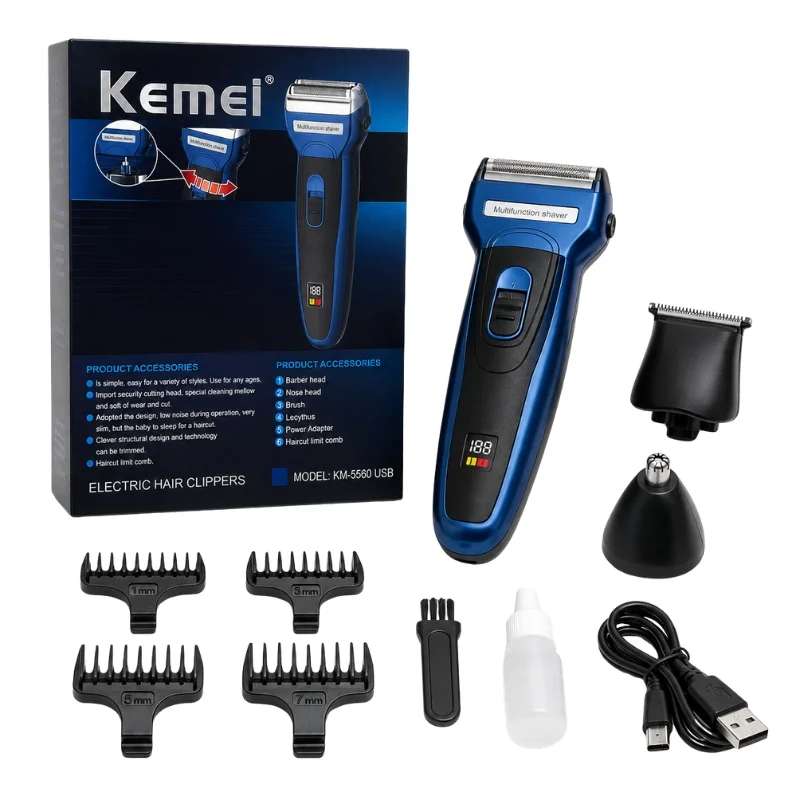
If you want a starting point rather than a shortlist, this is the electric hair clipper we stock for at-home grooming. Here is exactly what the product listing states, with nothing added:
- Product: Kemei KM-5560 Electric Hair Clipper
- Brand: Kemei
- Category: Beauty and Personal Care
- Type: a rechargeable grooming kit, so it runs on its own battery rather than a fixed mains cord
- In the kit: a nose trimmer attachment alongside the main clipper head
- Described as: a professional grooming kit rather than a single-purpose trimmer
- SKU: WLD-PK-0016-(YM-Pe-90-00-00-903)
- Availability: available across Pakistan through WLD Store with secure checkout
The combination worth noting is the clipper plus nose trimmer in one kit, because the tidy-up jobs that make a haircut look finished are rarely done by the clipper head alone. Full details, images and current availability are on the Kemei KM-5560 product page.
How to cut hair at home with an electric hair clipper
The first haircut with a new electric hair clipper is the only difficult one. Give yourself good light, a mirror you can actually see the back of your head in if you are cutting your own, and no time pressure.
- Start with dry, clean, combed hair. Damp hair clumps and feeds unevenly into the blades, which is the single most common cause of a patchy first attempt.
- Put a towel or an old sheet down first. Cut hair travels much further than you expect and is unpleasant to sweep off a rug.
- Fit a guard longer than your target length. If you want a number two finish, cut the whole head with a three first and see how it looks.
- Move against the direction of growth. Push the machine slowly upward from the neckline and forward from the temples, letting the teeth feed rather than forcing them.
- Use slow, overlapping passes. Each stroke should cover part of the strip you just cut. Rushing leaves visible tramlines.
- Blend the sides with a shorter guard. Take the sides and back down a number, stopping about two fingers below the crown, then feather the join by flicking the machine outward at the end of each stroke.
- Do the outline last. Remove the guard, turn the electric hair clipper upside down and use the very edge of the blade to define the neckline and around the ears.
- Check both sides in a mirror before you stop. Symmetry is easier to fix while hair is still long enough to work with.
If you are cutting a child’s hair, keep the machine running continuously rather than switching on and off near their head. The starting jolt is what startles them, and a steady hum quickly becomes background noise. Let them hold the guards, or run the switched-off clipper over their arm first so they know it does not hurt.
For beards, the electric hair clipper technique is the reverse: go with the growth rather than against it, and use a longer guard than you would on a head. Beard hair is coarser and sits at more varied angles, so a slow, patient pass gives a far more even result than a fast one.
Care and maintenance
Almost every electric hair clipper that dies young dies of neglect rather than a fault. Five minutes of care after each haircut is genuinely the difference between two years of service and two months.
- Brush the blades out after every single cut. Hair packed between the teeth is what makes a machine feel blunt long before it truly is.
- Oil the blades regularly. A few drops along the teeth with the machine running for a few seconds, then wipe the excess. Use clipper oil, not cooking oil and not a general workshop spray.
- Keep the body dry. Unless a product is explicitly described as washable, never hold the housing under a tap. Wipe it with a barely damp cloth instead.
- Wash plastic guards separately. They can be rinsed and dried fully before they go back in the case, and clean guards glide much better.
- Look after the battery. Charge it before storing, avoid leaving it completely flat for weeks, and top it up after use rather than only when it dies mid-cut.
- Store it in its case. A dropped blade set knocks out of alignment easily, and a bent tooth cannot be repaired at home.
If your electric hair clipper starts feeling rough after a year of heavy use, a replacement blade set is usually cheaper and quicker than a new machine, provided the model has spares available.
Common electric hair clipper problems and quick fixes
- It pulls or tugs hair instead of cutting. Nine times out of ten this is packed or dry blades, not a broken clipper. Brush the teeth clean, oil them, run the machine for ten seconds and try again.
- It runs loudly but barely cuts. The blade set has usually shifted. Loosen the screws slightly, line the moving blade up so it sits a fraction behind the fixed one and never overhangs it, then retighten evenly.
- Run time has collapsed. Rechargeable batteries lose capacity with age, and much faster if they are habitually stored flat. Do a couple of full charge cycles, and if the fade continues, plan cuts around a charged start.
- The cut looks stepped or patchy. Either the guard was not clicked fully home on one side, or the strokes were too fast and did not overlap. Refit the guard firmly, go back over the area slowly, and always work in the same direction across a section.
Electric hair clipper buying checklist
- How many guard lengths come in the box? Three or fewer will limit you within a month.
- Is it corded, cordless or both? Cordless is far easier to manoeuvre; a machine that also runs on mains power removes the flat-battery problem entirely.
- Are replacement blades and guards sold separately? A repairable machine outlives a sealed one.
- Does the kit cover the jobs you actually do? If you also trim a beard, nose or ears, a multi-attachment grooming kit beats a single head.
- Does it feel balanced in your hand? An electric hair clipper you cannot grip confidently at an awkward angle will produce a nervous, uneven cut regardless of its specification.
More Beauty and Personal Care picks at WLD Store
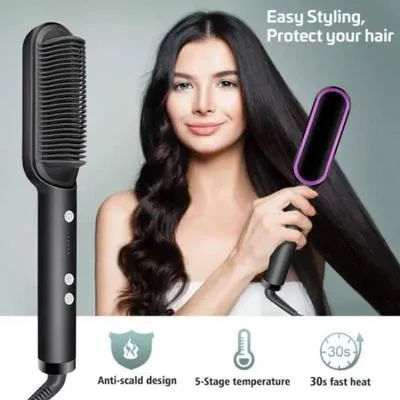
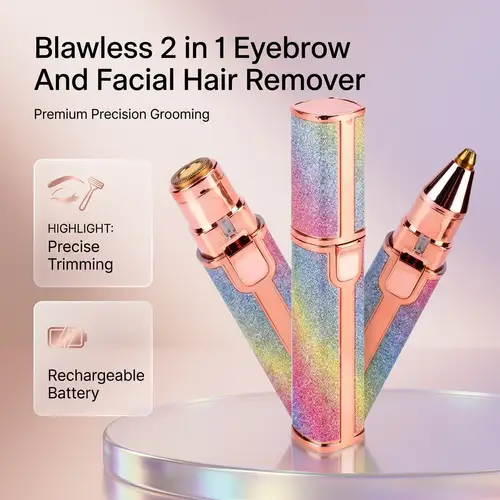
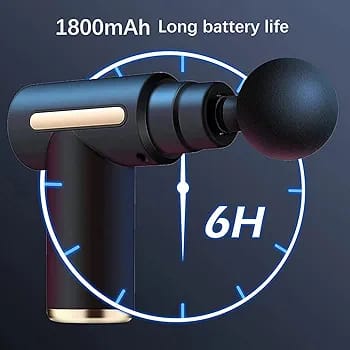
If you are putting together a home grooming kit, these three sit naturally alongside an electric hair clipper:
Frequently asked questions about the electric hair clipper
Is an electric hair clipper hard to use the first time?
Less than people fear, as long as you start with a long guard. The mistakes beginners make are going too short too early and moving too quickly. Cut the whole head at a longer setting, look at it, then decide whether to go shorter. Worst case on a first attempt is a shorter haircut than planned, which grows back.
Can I use an electric hair clipper on wet hair?
Unless the machine is specifically sold as wet-use or washable, keep it to dry hair. Beyond the electrical caution, wet hair clumps together and feeds unevenly through the teeth, so the cut comes out patchy even when the machine is working perfectly. Wash, dry and comb first.
Which guard should I start with?
For a first haircut, a number three or four is the safe opening move on the back and sides, with the top left longer and only touched once you are confident. If you already know you want a very short buzz all over, a two is a common all-round choice, but check the length on a small patch at the back before committing.
How often should the blades be oiled?
A few drops after every haircut is the habit worth building, and certainly before any long session. Oiling reduces friction, which keeps the blades cooler against the scalp and slows down the dulling that makes a clipper feel tired. It takes about fifteen seconds.
Can the same machine be used for hair and beard?
Usually yes, and one electric hair clipper handles both jobs for most people, but the technique differs: use a longer guard on a beard and work with the direction of growth rather than against it. If a kit includes a dedicated nose or detail head, use that around nostrils and ears rather than the main blade set.
How do I cut the back of my own head?
Cutting the back of your own head is the one job worth taking slowly. Use two mirrors, or a phone camera propped up behind you, and work in short overlapping upward strokes from the neckline. Take a full guard length longer than you would if someone else were cutting, because you cannot see the blend as it forms. Many people cut their own sides and top and ask someone to check the back.
A good electric hair clipper is one of the few purchases that pays you back in time as much as money, and it keeps paying every three weeks. If the Kemei kit looks like the right starting point, the full listing is on the Kemei KM-5560 product page, and you can browse the rest of the grooming and personal care range in the Beauty & Personal Care section.


Add comment