An electric blackhead remover vacuum is one of the most misused devices in home skincare, and almost all of the bad results come from the same two mistakes: skin that was not prepared, and suction that was set far too high. Used correctly, an electric blackhead remover vacuum is a gentle way to clear congested pores between facials. Used impatiently, it leaves round marks that take a week to fade. This guide covers how the suction works, how to prepare skin properly, which head to use where, how often to do it, and when to leave your skin alone entirely.
What blackheads are and why suction helps
A blackhead is a pore filled with a mix of oil and dead skin cells. The plug sits open at the surface, and the dark colour is not dirt but oxidation, which is why scrubbing harder never makes them disappear.
Because the plug is open, gentle negative pressure can draw it out once it has been softened. That is the entire principle behind an electric blackhead remover vacuum: warm and loosen the plug first, then lift it rather than squeeze it.
Squeezing with fingernails does work sometimes, at the cost of pressure applied to surrounding tissue, broken surface skin and the occasional scar. A vacuum applies force straight up and out of the pore, which is a much kinder direction.
What suction cannot do is empty a closed bump. Whiteheads and deeper spots are sealed under the surface, and no amount of vacuuming will pull anything through intact skin. Understanding that difference is what stops people turning the dial up in frustration.
How an electric blackhead remover vacuum works
Inside an electric blackhead remover vacuum is a small pump that creates negative pressure at the tip. Different heads change the size and shape of the opening, which changes both the concentration of the suction and the area it covers.
A small round head concentrates the pull, which suits the nose. A larger oval head spreads it over a wider area for cheeks and forehead. Some sets include an oval slot for fine lines and a head intended for gentle exfoliation rather than extraction.
Most devices offer several suction levels, and the useful advice is unglamorous: the correct level is the lowest one that lifts anything at all. Higher settings do not clear more; they simply pull harder on the surrounding skin, which is what causes marks.
The other half of the process happens before the device is switched on. An electric blackhead remover vacuum works on softened plugs, so warmth and time do most of the real work, and the machine finishes the job.
What makes a good electric blackhead remover vacuum
Four features separate an electric blackhead remover vacuum you will keep using from one that sits in a drawer after two attempts.
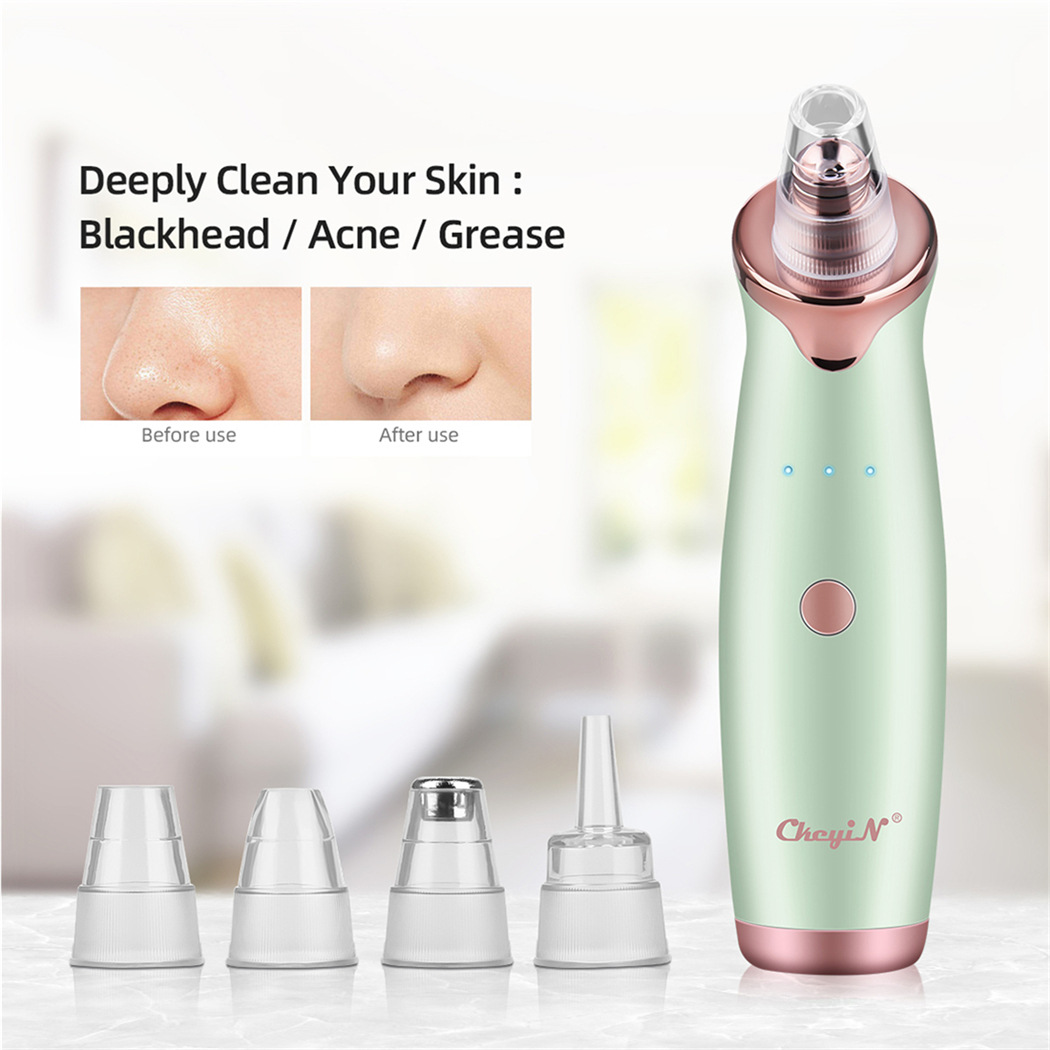
Adjustable suction with a genuinely low setting
The lowest level matters more than the highest. Skin varies enormously, and a device whose gentlest setting is still aggressive is unusable on thin or sensitive areas. A good electric blackhead remover vacuum starts soft enough that you can barely feel it.
A useful set of heads
Interchangeable heads let you match the opening to the area. Look for at least one small round head for the nose and a larger one for broader areas, and check that they seat firmly rather than wobbling in place.
Easy cleaning
Anything that touches pores needs cleaning after every use. Heads should come off without a struggle and tolerate soap, water and a wipe of alcohol. A design that traps residue where you cannot reach is a hygiene problem, not a bargain.
Comfortable handling
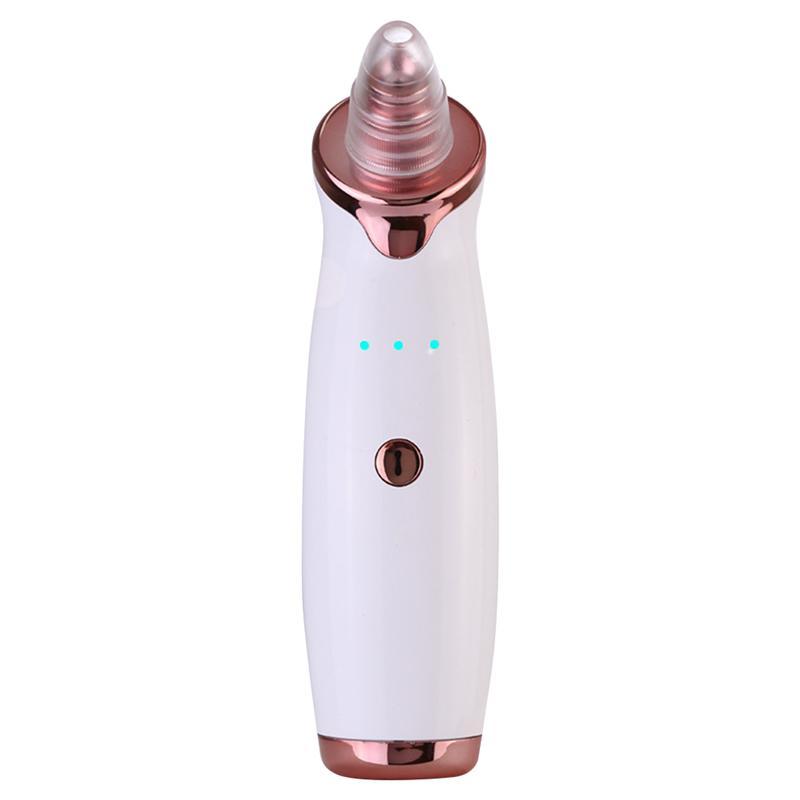
You will be using this in front of a mirror, often one-handed at an awkward angle. A slim body, a clear control and a tip you can see past all matter, because an electric blackhead remover vacuum you cannot aim precisely gets held in one place too long.
The WLD Store pick: Electric Blackhead Remover Vacuum
WLD Store lists this electric blackhead remover vacuum under Beauty and Personal Care. The listing gives these details.
- Product: Electric Blackhead Remover Vacuum, supplied with 5 heads
- Brand: WLD
- Category: Beauty and Personal Care
- Action: gentle suction with interchangeable heads
- Intended result: smoother-looking skin through regular, careful use
- SKU: WLD-US-0023-(HS-500348281500026)
- Availability: available across the USA through secure checkout
The full listing is on the Electric Blackhead Remover Vacuum product page. The five heads are the practical part of the package, since matching head size to the area being treated is most of what separates a comfortable session from a bruised one.
Preparing your skin: the step that decides everything
Skip preparation and an electric blackhead remover vacuum will pull hard on closed pores and achieve nothing. Spend five minutes first and the same device works on the lowest setting.
- Cleanse thoroughly. Remove makeup, sunscreen and the day’s oil with your usual cleanser, and rinse properly.
- Add warmth for five to ten minutes. A warm shower, a warm damp towel over the face, or steam from a bowl. Warmth and moisture soften the plugs, which is what makes extraction possible.
- Do not dry the skin completely. Slightly damp skin lets the head glide. Bone-dry skin grips, and a head that grips is a head that leaves a mark.
- Start on the lowest setting. Always. You can step up one level later if nothing is lifting, but you cannot undo a bruise.
- Test on your cheek or jaw first. A few passes on a less sensitive area tell you how the setting feels before you go anywhere near the nose.
People who use a chemical exfoliant in their routine often find preparation easier, since regularly exfoliated skin holds looser plugs. If you do use acids, leave a day between exfoliating and using an electric blackhead remover vacuum rather than doing both together.
Technique: how to move the device
The single rule that prevents nearly every problem is this: keep the head moving. Static suction is what creates circular marks, and it happens within seconds.
Glide the head slowly in straight lines, always moving, for no more than two or three seconds over any one spot. Work upward and outward along the natural lines of the face rather than pressing into one area repeatedly.
Limit each area to a couple of passes per session. If a blackhead does not lift after two passes, it is not ready, and the answer is more warmth next time rather than more suction now.
Avoid the eye area entirely, and be careful around the nostrils and lips where skin is thin and mobile. On the nose, use the smallest head, keep the pressure light and let the electric blackhead remover vacuum do the work rather than pressing it into the skin.
Aftercare and how often to do it
Pores are open and the skin is slightly stimulated afterwards, so what you do next matters as much as the session itself.
Rinse with cool water to calm the skin and help pores contract. Follow with something soothing and simple, such as a light moisturiser or a hydrating serum, and skip anything with strong acids, retinoids or fragrance for the rest of the day.
Redness for twenty to sixty minutes is normal. Marks that last into the next day mean the suction was too high or the head was held in one place, and the correct response is a longer gap and a lower setting next time.
Once a week is enough for most people, and once every two weeks suits sensitive or dry skin. Daily use of an electric blackhead remover vacuum is the fastest route to irritated skin and visible capillaries, and it does not produce better results.
Cleaning the device and the heads
- After every session: remove the head, wash it in warm soapy water and wipe it with an alcohol pad, then let it dry fully.
- After every session: wipe the body with a barely damp cloth. Never submerge the handle, since it contains the pump and the battery.
- Weekly: check inside the heads for residue, which is where the collected oil and skin cells accumulate.
- Monthly: inspect the sealing ring on each head. A worn seal reduces suction and is usually why a device seems to have weakened.
- Always: store the heads dry in their case, and never share the device or its heads with anyone else.
Electric blackhead remover vacuum versus strips, tools and facials
Pore strips remove the very top of a plug and feel satisfying, but they treat only the surface and can irritate skin when pulled from a dry face. They are also single-use, which adds up.
A metal extraction loop, used by professionals, is precise and effective in trained hands. Used at home without training, it applies concentrated pressure to a small area and is the tool most likely to leave a scar.
A professional facial is the gold standard, because an esthetician can steam, assess and extract with judgement no device has. It also costs many times more per session, which is why home tools exist at all.
An electric blackhead remover vacuum sits in the middle: gentler than a loop, more thorough than a strip, and far cheaper over time than monthly facials. The sensible approach is to use one for maintenance between professional visits rather than treating it as a replacement for them.
Common problems and quick fixes
- Round red marks after use. The head stayed in one place, or the suction was too high. Lower the setting, keep the head moving, and give skin a week to recover.
- Nothing is being extracted. The skin was not warmed enough. Add five more minutes of steam or a warm towel before the next attempt.
- Suction feels weaker than it was. Check the seal on the head and make sure it is seated fully; a partly attached head leaks air.
- Skin feels tight and irritated afterwards. You are using it too often. Move to once every two weeks and simplify the routine that follows.
Who should not use one
This matters more than any technique tip. Anyone with active inflammatory acne, cystic spots, rosacea, eczema, psoriasis or broken skin on the face should not use suction on those areas, because it can spread inflammation and worsen the condition.
People taking prescription retinoids or oral acne medication, or who have recently had a chemical peel, laser treatment or microdermabrasion, should wait and ask their prescriber or dermatologist first. Skin in that state is far more fragile than it feels.
Very thin, mature or easily bruised skin, and anyone taking medication that affects bleeding or bruising, should approach with caution and start at the gentlest possible setting on a small test area.
If blackheads and congestion are persistent and widespread, a dermatologist will do more for your skin in one consultation than any device. An electric blackhead remover vacuum is a maintenance tool for mild congestion, not a treatment for a skin condition.
Buying checklist
- Is the lowest suction setting genuinely gentle, or does the range start too strong for my skin?
- Does it include a small head for the nose and a larger one for cheeks and forehead?
- Do the heads detach easily and tolerate soap, water and alcohol?
- Is the handle slim enough to aim precisely in front of a mirror?
- Does my skin type or current treatment mean I should ask a professional before using suction at all?
Other Beauty and Personal Care picks at WLD Store
These three sit in the same part of the catalogue.
Frequently asked questions about the electric blackhead remover vacuum
How often should I use an electric blackhead remover vacuum?
Once a week suits most skin, and once every two weeks is better for sensitive, dry or easily reddened skin. More frequent use does not clear more; it simply irritates the surface and can leave lasting redness.
Does an electric blackhead remover vacuum hurt?
It should not. On a correct setting it feels like a firm pull on the surface of the skin. Anything sharp, stinging or painful means the suction is too high or the head has been held in one spot for too long.
Will it get rid of whiteheads and deep spots?
No. Suction can only lift material out of an open pore. Closed bumps and deeper inflamed spots are sealed beneath the surface, and trying to force them out with a device risks damaging the skin around them.
Can I use it on the day of an event?
It is better not to. Mild redness for up to an hour is normal, and occasionally it lasts longer. Use it two or three days before anything important so your skin has time to settle completely.
Do the blackheads come back?
Pores refill over time, which is why this is maintenance rather than a cure. Regular cleansing, a suitable exfoliant and consistent sunscreen slow the process far more than any device, and an electric blackhead remover vacuum simply keeps things clear in between.
Can I share the device with family?
Share the handle if you must, but never the heads. Anything that touches pores should belong to one person, and heads are inexpensive enough that everyone can have their own set.
The weekly routine that keeps pores clear
Extraction is the visible part of the process, but what happens on the other six days decides how much there is to extract. A simple, consistent routine beats an aggressive one every time.
- Cleanse twice a day. Morning and evening, with something gentle. Removing sunscreen and makeup properly at night prevents most of the congestion that builds over a week.
- Exfoliate once or twice a week. A mild chemical exfoliant keeps plugs loose, which means an electric blackhead remover vacuum can work on its lowest setting rather than its highest.
- Choose non-comedogenic products. Heavy creams and oils on congestion-prone skin undo the work between sessions.
- Wear sunscreen daily. Skin that has been suctioned is briefly more sensitive to sun, and daily protection also prevents marks from darkening.
- Change pillowcases regularly. Twice a week is a small habit with a visible effect on cheeks and the jawline.
- Wipe your phone screen. It spends more time against your cheek than almost anything else you own.
Fit one session with the device into that week, not more. The routine does the maintenance and an electric blackhead remover vacuum clears what the routine leaves behind, which is a much healthier division of labour than expecting the device to fix everything.
Areas beyond the nose
The nose gets all the attention, but congestion collects in several other places, and each needs a slightly different approach.
Chin and the crease beside it. Skin here is more mobile, so pull it gently taut with your free hand and keep the head moving in short upward strokes.
Forehead. A broad, flat area suits a larger head. Work in straight lines from the centre outwards, and stop well short of the hairline where product residue collects.
Cheeks. Skin is thinner here and marks more easily, so use the lowest setting and fewer passes than you would on the nose. This is the area where people most often overdo it.
Where not to go. Avoid the eye area completely, skip the lips and nostrils, and never use an electric blackhead remover vacuum over a spot that is inflamed, broken or healing. If in doubt about an area, leave it and ask a professional.
Careful use is the whole story here: warm the skin, start on the lowest setting, keep the head moving, stop after two passes, and give your face a week between sessions. Treated that way, the device is a genuinely useful part of a routine, and treated impatiently it is a fast way to mark your own face. You can view the listing on the Electric Blackhead Remover Vacuum page or browse the wider range in the Beauty & Personal Care section. For the underlying skin biology, the article on the comedo on Wikipedia explains what is actually inside a blocked pore.





Add comment