A digital tasbeeh counter solves a small, familiar problem: keeping count should not be the thing occupying your mind. Anyone who has lost their place halfway through a set knows the frustration of it, and knows that starting again is not really starting again, because now you are thinking about numbers instead of the words. A counter takes the arithmetic away and hands it to a thumb. This guide covers what separates a good digital tasbeeh counter from a throwaway one, how to fit one into a daily routine, what to look for if you are buying it as a gift, and the model stocked at WLD Store.
Why a digital tasbeeh counter helps with focus
Counting with fingers or beads works, and has worked for a very long time. The misbaha, or prayer beads, is the traditional tool and remains the preference of many people. What a digital counter changes is the amount of attention counting takes. A bead has to be felt and moved deliberately; a button just registers a press. The difference is small per repetition and considerable over a full set.
The second advantage is that the count is visible. With beads you know roughly where you are; with a display you know exactly. That certainty removes the low-level anxiety of wondering whether you have already passed a number, which is the exact distraction most people are trying to avoid.
Portability is the third. A digital tasbeeh counter is small enough to sit in a pocket, a bag or a car door, so the count travels with you rather than living on a shelf at home. For people who keep a daily target rather than only counting after prayer, that matters: the tool is with you at the times when you would otherwise forget.
Finally, it is quiet and discreet. There is no clicking of beads and nothing obvious in the hand, which suits counting in a waiting room, on a commute, or anywhere you would rather not be conspicuous.
What to look for in a digital tasbeeh counter
These devices are simple, which means the few things they do have to be done well.
The display
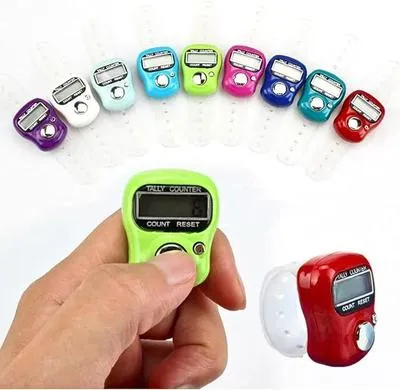
Clarity beats size. You want digits readable at a glance in ordinary indoor light and without holding the device up to your face. A cramped or low-contrast screen defeats the purpose, because if you have to squint at it you are back to concentrating on the count. When comparing one digital tasbeeh counter with another, the readability of the display is the first thing to judge.
The button and how it feels
This is the part you interact with hundreds of times, so its feel matters more than any other feature. A good button gives a definite response so you know a press registered without needing to look. Too stiff and your thumb tires; too loose and you get double counts from a single press. If you can handle one before buying, press it thirty times in a row and see how it feels.
The reset
A reset that is easy to reach on purpose and hard to hit by accident is the ideal, and it is harder to achieve than it sounds. A reset button flush with the body, or one needing a deliberate press, protects a count you are partway through. Losing a count to a pocket press is the most annoying failure this category has.
Form factor
There are two broad shapes. Handheld units sit in the palm with a thumb on the button, which suits sitting and counting deliberately. Finger or ring-style counters are worn and pressed with the opposite thumb, which suits counting while walking or doing something else. Neither is better; they suit different habits, so think about when you will actually use your digital tasbeeh counter before choosing a shape.
Battery and power
Most use a small coin cell, and these last a long time in a device whose only job is incrementing a number and lighting a small display. What matters is whether the battery can be replaced by you: a sealed unit becomes disposable, while a simple screw or clip cover makes the device last for years.
The WLD Store pick: Digital Tasbeeh Counter
Here is the digital tasbeeh counter we stock, described using only what the listing states:
- Product: Digital Tasbeeh Counter
- Brand: WLD
- Categories: Fashion, and Islamic Jewellery and Accessories
- Counting: one thumb press per count
- Display: clear digital display
- Controls: reset button
- Build: light and portable
- Also suitable as: a gift
- SKU: WLD-PK-0010-(MK-694635)
- Availability: available across Pakistan through WLD Store with secure checkout
One-press counting with a clear display and a dedicated reset is the whole specification a counter needs, and keeping it light is what decides whether it stays in a pocket. Full details and current availability are on the Digital Tasbeeh Counter product page.
How to use a digital tasbeeh counter day to day
- Reset before you begin, not after. Making the reset the first action of a session removes any doubt about what the number on the screen represents.
- Keep it in one place. A pocket, a prayer mat bag, a car door. A digital tasbeeh counter that is somewhere different every day gets used far less.
- Press with the same thumb every time. Consistency builds a rhythm, and rhythm is what lets the counting fade into the background.
- Use it for the pattern you already follow. Many people count sets of thirty-three after prayer; others keep a daily total. The device does not impose a method, it just holds the number.
- Do not watch the screen. Glance at it at intervals rather than after every press, otherwise you have simply swapped one distraction for another.
- Carry it while travelling. Journeys, waiting rooms and queues are exactly where a small counter earns its place.
A practical note: the point of the device is to stop counting from occupying you. If you find yourself checking the display constantly, put it somewhere you can press without seeing it and read the total only at the end of a set.
Choosing a digital tasbeeh counter as a gift
A digital tasbeeh counter is a common gift, and a thoughtful one, because it is personal without being presumptuous. A few things make the difference between a gift that gets used and one that gets put in a drawer.
- Consider eyesight. For an older relative, display clarity is by far the most important feature. Choose the clearest display you can find over anything else.
- Consider the hands. A larger body and a button that does not need a firm press suit anyone with reduced grip or joint pain.
- Think about where they will keep it. Someone who prays at home may prefer a handheld unit; someone always out may prefer something wearable.
- Check the battery is replaceable. A gift that dies in a year and cannot be revived is a poor gift.
- Keep it simple. Extra functions are rarely wanted here. Count, display, reset is the whole job.
What a counter can and cannot do
It is worth being clear about the limits, because anything sold on focus that delivers only arithmetic will disappoint. A digital tasbeeh counter holds a number. It does not make the time available, it does not build the habit, and it will not stop a mind from wandering.
What it does remove is one specific friction: the small, constant effort of remembering where you are. That is a genuine gain for anyone who has lost a count and felt the irritation of starting again, and it helps most where a routine already exists rather than where someone hopes a purchase will start one.
The useful way to think about it is as a notebook rather than a teacher. Set whatever target you would have set anyway, press the button, read the number at the end. If the device itself starts becoming the point, with constant checking and worrying about totals, then it is working against you, and the answer is to glance at it less often rather than to go looking for a different digital tasbeeh counter.
Digital tasbeeh counter care and battery life
- Keep it dry. These are not waterproof devices. Wipe with a dry cloth and keep it out of a bag with a leaking bottle.
- Do not carry it loose with keys. Keys scratch displays and press buttons, and a scratched screen is the usual reason a counter becomes hard to read.
- Keep a spare cell at home. Coin cells are inexpensive and the battery will always run out at an inconvenient moment.
- Note the cell type when you change it. Take a photo of the marking on the old battery before you go looking for a replacement.
- Avoid heat. A parked car in summer is hard on both the battery and the display of any digital tasbeeh counter.
- Close the battery cover properly. A cover left loose lets in dust and lets the cell lose contact, which shows up as random resets.
Common digital tasbeeh counter problems and quick fixes
- The count jumps by two. Either the button is being held slightly too long or the contact is worn. Try a lighter, quicker press first; if it persists on a new battery, the switch is failing.
- The display is faint or flickering. Nearly always the battery. Replace the cell and make sure the cover is fully closed and the contacts are clean.
- It resets by itself. Usually the reset is being pressed in a pocket, or the battery is loose. Carry it in a way that keeps the reset facing outward, and check the cover.
- Presses are not registering. Dust or lint around the button. Blow it out gently and wipe around the edge; do not use liquid on the switch.
Digital tasbeeh counter buying checklist
- Can you read the display at arm’s length in normal light? This is the first and most important test.
- Does the button feel right after thirty presses? Comfort over a long set matters more than how it feels once.
- Is the reset protected from accidental presses? A lost count is the most common complaint in this category.
- Can you replace the battery yourself? A sealed unit has a fixed lifespan.
- Does the shape suit when and where you will use it? Handheld for sitting, wearable for moving; pick the one matching your habit.
More picks at WLD Store
These three are popular with shoppers who also buy a digital tasbeeh counter:

Digital tasbeeh counter, prayer beads or a phone app
Three tools do the same counting job, and each one changes the experience in its own way.
Traditional beads need no battery, cost very little and carry a long tradition with them. The thumb finds the next bead without thought, which is exactly why many people prefer them. What beads do not do is hold a running total between sessions, and a strand of thirty-three has to be tracked in your head across the rounds.
A phone app counts perfectly and is always in your pocket. It also puts a screen full of notifications in front of you at the precise moment you are trying to concentrate. Most people who move from an app to a digital tasbeeh counter say the same thing afterwards: the counting was never the problem, the phone was.
A digital tasbeeh counter sits between the two. It keeps the total, it works in the dark, it does not light up a room, and it does nothing else at all. A ring or thumb-worn model also leaves the hand free, which matters if you count while walking or during ordinary household tasks.
- No battery, deepest habit: beads.
- Long or repeated counts without losing your place: a digital tasbeeh counter.
- Counting in the dark or on the move: a digital tasbeeh counter.
- Nothing extra to carry at all: a phone app, at the cost of distraction.
- A gift that gets used daily: a counter, ideally paired with beads.
Ramadan, travel and the days a counter earns its place
A counter is useful all year, but there are stretches when it stops being a convenience and becomes genuinely practical.
Ramadan is the obvious one. Longer night prayers, extra recitation and broken sleep make it easy to lose count, and a small device takes that one worry out of an already full schedule. Keeping the counter with the prayer mat rather than in a drawer is what makes the habit hold through the month.
Travel is the other. In crowds, moving between places and often standing, a thumb counter stays on the hand while beads are easy to drop and awkward to manage alongside luggage. Pack a spare battery if the model takes a coin cell, because finding the right size in an unfamiliar city at the wrong hour is not a fun errand.
Long journeys, hospital stays and night shifts fall into the same category. A digital tasbeeh counter works silently in a shared room, needs no light of its own, and does not ask for the free hand and the attention that beads do.
One practical note for all of these: set the counter to zero deliberately at the start of a session rather than trusting whatever is on the screen. A reading left over from yesterday is the most common reason people lose confidence in a digital tasbeeh counter, and it is entirely avoidable.
Frequently asked questions about a digital tasbeeh counter
How high can it count?
Most counters run to four digits, which covers any single session comfortably and most daily targets. If you keep a large running total across a day, check the maximum before buying, since a counter that rolls over unexpectedly is worse than one that simply stops.
Does it need charging?
Generally no. These devices run on a small replaceable coin cell rather than a rechargeable battery, and because the display and circuit draw very little power, a single cell lasts a long time. Keeping a spare at home is the only maintenance most people ever do.
Is a digital counter better than beads?
Neither is better; they suit different preferences. Beads are tactile, need no battery and many people find the physical rhythm helpful. A digital tasbeeh counter gives an exact, visible number and takes less attention per count. Plenty of people keep both and use whichever suits the moment.
Will it lose my count if I put it down?
No. The number stays on the display until it is reset, which is the main practical advantage over counting in your head. The risk is an accidental press of the reset button in a pocket or bag, which is why a protected reset is worth looking for.
Is it suitable for an older relative?
Often it is one of the better gifts for an older person, provided you choose for the display and the button rather than for the styling. A clear, high-contrast screen and a button that does not need a firm press make a digital tasbeeh counter genuinely easier to use than small beads for anyone with reduced eyesight or grip.
How do I change the battery?
Most units have a small cover on the back held by a clip or a single screw. Open it, note the marking on the cell, fit an identical one the same way up, and close the cover firmly. If the display stays faint afterwards, check the contacts are clean and the cell is seated properly.
A digital tasbeeh counter is a small object that does one job, and the things worth paying attention to are the display, the button and the reset. If the clear-display model suits you or the person you are buying for, the full listing is on the product page, and you can browse the wider range in the Islamic Jewelry & Accessories section.



Add comment