A professional cordless hair trimmer is not a small clipper. It is a different tool for a different job: clippers remove bulk, trimmers define edges. The clean line around a hairline, the sharp corner of a beard, the neat neckline that makes a two-week-old haircut still look deliberate, all of that is trimmer work. This guide explains what separates a professional cordless hair trimmer from a general clipper, what the T9 shape is for, how to cut a clean line without regretting it, how to oil and care for the blade, and what to check before buying.
Trimmer or clipper: what a professional cordless hair trimmer is actually for
A hair clipper has a wide blade and a set of long guide combs, and its job is to take length off the whole head evenly and quickly. It is a volume tool. A trimmer has a narrower blade with the teeth extending closer to the edge, which is what lets it cut right up against a line.
That difference is the whole point. Try to outline a hairline with a wide clipper blade and you cannot see where the cutting edge actually meets the skin, so the line ends up crooked or too high. A professional cordless hair trimmer puts the cutting edge exactly where you are looking.
The T-shaped blade found on T9 style trimmers extends past the body on both sides. That overhang is what lets you work in tight places: around ears, along a neckline, into the corner of a beard, or on the fine detail near a temple. It is the reason barbers keep a professional cordless hair trimmer beside the clippers rather than instead of them.
For home use the practical outcome is this: a clipper handles the haircut, and a professional cordless hair trimmer handles everything that makes the haircut look finished. If you only buy one and you mostly maintain a short beard and a neckline between barber visits, the trimmer is the more useful purchase.
What makes a good professional cordless hair trimmer
Five things separate a tool that lasts from one that stops cutting cleanly after a few months.
The blade
Everything depends on the blade. It should sit level, feel firm with no side-to-side play, and cut hair rather than fold it. Steel blades hold an edge and can be sharpened; softer metals dull quickly. Look for a fine-tooth T-blade if line work is your priority, because tooth spacing determines how close and how sharp a line you can cut.
Body and build
A metal body changes how a trimmer feels in the hand. It adds weight in a useful way, giving the tool a steadier feel through a stroke, and it survives being dropped on a tiled bathroom floor far better than thin plastic. A metal-bodied professional cordless hair trimmer also stays cooler in the hand during longer sessions.
The display
An LED display sounds cosmetic until you are halfway through a line-up. Knowing the exact charge level tells you whether you have time to finish, which is the difference between a completed neckline and a half-cut one. It also tells you when the battery is genuinely full rather than guessing from an indicator light.
Guide combs
Combs turn a detailing tool into a light all-rounder. A set of four covers short beard lengths and light tidying, so a professional cordless hair trimmer can maintain stubble at a consistent length as well as cut edges. Check they clip on firmly, because a comb that shifts mid-stroke leaves a step in the cut.
Cordless running and charging
Cords get in the way of exactly the movements that matter in detail work, particularly reaching behind your own neck. USB charging is the practical standard now: any phone charger, laptop or power bank will do the job, and there is no proprietary dock to lose.
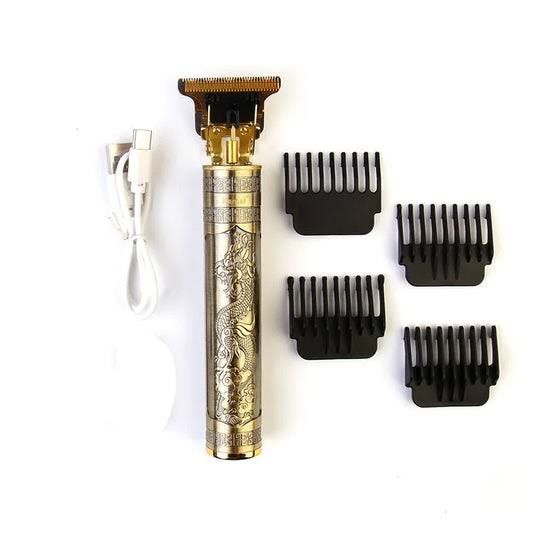
The WLD Store pick: Vintage T9 Professional Cordless Hair Trimmer
This is the professional cordless hair trimmer listed at WLD Store, from the Vintage brand.
- Product: Vintage T9 Professional Cordless Hair Trimmer.
- Body: metal.
- Display: LED.
- Attachments: 4 guide combs.
- Power: USB charging.
- Positioning: the listing describes it as salon-style grooming at home.
- Category: Beauty and Personal Care.
- Brand: Vintage.
- SKU: WLD-PK-0003-(HHC-3764074).
- Availability: available across Pakistan through secure checkout.
Full listing: Vintage T9 Professional Cordless Hair Trimmer at WLD Store.
How to cut a clean line without regretting it
Line work is unforgiving because a mistake is visible for weeks. These habits are what barbers rely on, and they translate directly to home use.
- Work on dry, clean hair. Wet hair sits lower than it will when dry, so a line cut wet ends up in the wrong place once it dries.
- Comb the hair into its natural fall first. Cut a line into hair that is pushed the wrong way and the line will be wrong when the hair relaxes.
- Find the natural line before you cut. Look at where the hair actually grows, and follow it. Inventing a straighter line means cutting into skin territory, and it grows back looking obviously artificial.
- Use the corner, not the whole blade. One corner of a T-blade gives you a precise starting point. Working with the full width at once is how lines end up wandering.
- Pull the skin flat. Stretch the area gently with your free hand so the blade meets an even surface.
- Take less than you think. A professional cordless hair trimmer removes hair instantly. Go slowly, check in the mirror between passes, and remember that a line can only ever move upwards.
- Use two mirrors for the neckline. A hand mirror against a wall mirror is the only realistic way to see what you are doing behind your own head.
For a beard, set the outline first and then work inwards with the guide combs, rather than trimming the bulk and then trying to find an edge. For a neckline, follow the natural curve rather than cutting straight across, because a squared-off neckline grows out looking heavy within a fortnight.
Blade care: oiling is not optional
The single biggest difference between a professional cordless hair trimmer that stays sharp and one that starts pulling is oil. Blades run metal against metal at speed, and without lubrication they wear each other down and heat up.
- Oil after every few uses. Two or three drops along the blade teeth with the trimmer running for a few seconds, then wipe off the excess.
- Use clipper oil. Not cooking oil, not olive oil and not a general household lubricant. Those thicken, gum up the teeth and attract hair.
- Brush out hair after every session. Trapped clippings between the teeth are what makes a professional cordless hair trimmer feel blunt when the blade is actually fine.
- Keep water away unless it is rated for it. Rinse only if the manufacturer says the head is washable, and dry it thoroughly before oiling.
- Check the blade alignment. The cutting blade should sit slightly behind the fixed one. A blade pushed forward is a cutting hazard against skin.
- Store it with the guard on. A chipped tooth from a knock will pull hair, and no amount of oil fixes that.
A note on zero-gapping, which people ask about constantly with T-blade trimmers: adjusting the blade closer to the skin does produce a sharper line, but it also removes the safety margin and raises the risk of nicks and irritation. If you are new to line work, leave the blade as it comes from the factory and follow the manufacturer’s instructions.
Battery and charging habits
- Charge before a session, not during. Detail work with a fading motor produces pulled hair and uneven lines.
- Use a normal adapter. A standard phone charger or a laptop port is all a grooming device needs.
- Do not store it flat for months. Give it a partial charge before putting it away for a long period.
- Watch the display. That is what it is there for; top up when it drops rather than running to empty every time.
- Keep it out of a hot car or a steamy shower shelf. Heat and humidity are hard on both batteries and blades.
A realistic maintenance schedule between barber visits
The reason a haircut looks scruffy after ten days is rarely the cut itself. It is the edges: the neckline creeping down, the sideburns thickening, the beard line blurring. Those are all trimmer jobs, and keeping to a simple schedule makes a barber appointment last noticeably longer.
A weekly neckline tidy is the highest-value habit. Five minutes with two mirrors, following the natural curve, resets the single most visible sign of a growing-out haircut. Do not chase the line upwards each week, or within a month the neckline will sit far higher than it should.
Beard edges suit a twice-weekly touch-up: the cheek line, the corners and the moustache edge. Everything else can be left to the guide combs whenever the length starts to feel untidy.
Sideburns and around the ears need attention roughly every ten days, and this is where a professional cordless hair trimmer with a T-blade earns its place, because the overhanging blade reaches around the ear where a clipper cannot sit flat.
Build the tool care into the same routine. Brush the teeth out at the end of every session and oil the blade at the end of every second or third one, so a professional cordless hair trimmer is always ready rather than needing ten minutes of attention before you can start.
Common problems and quick fixes
- It pulls instead of cutting. In order of likelihood: hair trapped in the teeth, no oil, a low battery, then a genuinely worn blade. Check them in that order.
- The line came out crooked. Almost always a hair-direction or angle problem rather than the tool. Comb the hair down, work from the corner of the blade, and cut in short controlled passes.
- It gets hot quickly. That is friction. Switch off, clean the teeth, oil the blade and let it cool before continuing.
- Guide combs leave steps. The comb is not fully seated, or you changed the angle mid-stroke. Reseat it and keep the flat of the comb against the skin throughout the pass.
Buying checklist: five questions before you order
- Do I need edges or bulk? A professional cordless hair trimmer excels at edges. Full haircuts still want a clipper alongside it.
- How does it feel in the hand? Build and balance matter for a tool used at awkward angles behind your own head.
- Can I see the charge? An LED display removes the guesswork that ruins half-finished line-ups.
- What comes in the box? Guide combs, a brush and oil turn a professional cordless hair trimmer into a complete grooming kit.
- Will I maintain it? Oiling takes fifteen seconds and doubles the useful life of any blade. If you will not do it, no purchase in this category stays sharp.
Other grooming picks at WLD Store
Three more items from the same part of the range.
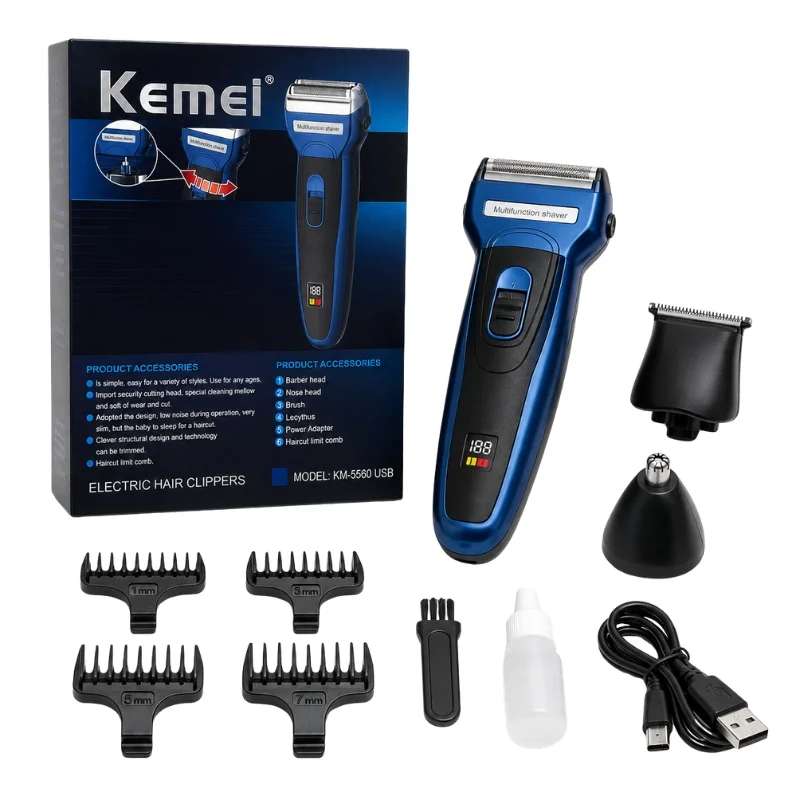
Kemei KM-5560 Electric Hair Clipper for bulk cutting alongside a trimmer.

Hair Straightener Brush for styling longer hair.
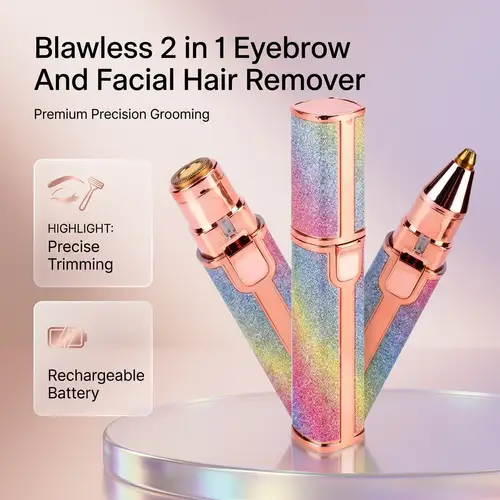
Blawless 2-in-1 Eyebrow and Facial Hair Remover for fine facial detail.
Doing the back of your own head, and doing someone else’s
The front is easy. Almost everything that goes wrong with a professional cordless hair trimmer at home happens in the places you cannot see.
For your own neckline, two mirrors are not optional. Set a hand mirror so the wall mirror shows you the back of your head, then move slowly and check after every pass rather than at the end. Work from the outside of the neck inwards on both sides so the shape stays symmetrical, because a line cut in one long sweep from a single side almost always drifts.
Decide where the neckline goes before you switch anything on. The safe rule is to follow the natural hairline rather than cutting a straight line across it. A straight line grows out as a hard shadow within a fortnight, while a natural shape grows out invisibly. If you are unsure, cut higher on the neck than you think and leave the final shape to your next barber visit.
Cutting for someone else is easier and calls for different manners. Sit them lower than you, work in daylight, and say what you are about to do before you do it. Keep the professional cordless hair trimmer flat against the skin for a crisp line and tilted away from it for a soft edge. Check the two sides against each other constantly, from the front, not from behind.
Sideburns are the classic mistake for both. Match them by eye from the front rather than by measuring down from the ear, because ears are rarely level. One short pass on each side with the professional cordless hair trimmer, alternating between them, keeps the pair matched. Three passes on one side does not.
Hygiene when a professional cordless hair trimmer is shared
Barbers disinfect between every client for a reason, and a professional cordless hair trimmer at home is no different. A blade that has crossed one person’s skin and then another can move bacteria and fungal infections between them, and the small nicks a close cut leaves are exactly the way in.
At home the practical rules are simple. Anyone with broken skin, an active spot, a rash, ringworm or a fungal infection should not share a professional cordless hair trimmer with anyone else until it has cleared. If a household shares one anyway, brush and disinfect between people rather than once at the end of the day.
- After every use: brush the blade out dry, then oil it.
- Between people: brush, wipe the blade with a disinfectant made for clipper blades or with surgical spirit, and let it dry fully.
- Weekly, if shared: take the blade off if the design allows, clear the packed hair behind it and re-oil.
- Never: soak the body of a professional cordless hair trimmer or run it under a tap unless it is marked washable.
Disinfectant and lubricant do different jobs. Alcohol-based products dry a blade out and will let it rust if you stop there, so oil after disinfecting, every single time. A trimmer that is wiped and never oiled goes blunt faster than one that is oiled and rarely wiped.
Guards deserve the same attention. They collect more hair and skin than the blade does, and they are the part that touches everybody. Wash them in warm soapy water, rinse them, and dry them completely before they go back on the professional cordless hair trimmer.
Frequently asked questions about the professional cordless hair trimmer
Can a professional cordless hair trimmer cut a full head of hair?
With guide combs it can manage short, simple cuts, but it is not designed for bulk removal. A trimmer blade is narrower, so a full haircut takes far longer and is harder to keep even. Use a clipper for the length and the trimmer for the edges.
What does T9 refer to?
It refers to the T-shaped blade style used on detail trimmers, where the cutting head extends beyond the body on both sides. That shape is what allows precise work right up to a line, around ears and into beard corners.
How often should I oil the blade?
Every few uses at minimum, and always after cleaning. It takes seconds, and it is the single most effective thing you can do to keep a trimmer cutting cleanly for years rather than months.
Is a metal body actually better?
It is more durable and gives a steadier feel in the hand, which helps with control during detail work. Metals such as stainless steel and alloys also resist the cracking that plastic bodies suffer after a few drops onto a hard floor.
Can I use it on a beard as well as hair?
Yes, and beard edging is one of the jobs it does best. Outline first, then use the guide combs to bring the bulk to a consistent length. The same tool handles the neckline and the cheek line, which is where most home beard trims go wrong.
Why does my trimmer pull at the hair?
Usually hair packed between the teeth or a dry blade rather than a broken machine. Brush the teeth out, add a couple of drops of clipper oil, run it briefly, and check the charge. If it still pulls after that, the blade has likely reached the end of its life.
The short version
Buy for the blade, oil it religiously, cut lines dry, follow the hair’s natural growth, and remove less than you think you should. A professional cordless hair trimmer used with those habits keeps a haircut looking fresh for weeks longer than it otherwise would. You can view this model on its product page, or browse the wider range in the Beauty & Personal Care section.





Add comment