A solar power bank is one of the most misunderstood accessories on the market. The panel on the back is genuinely useful, but not in the way the packaging photography suggests, and knowing the difference before you buy saves a lot of disappointment on a camping trip. This guide explains what the panel realistically contributes, how to read capacity figures, what water resistance does and does not cover, and how heat affects lithium cells. It also covers the high-capacity model WLD Store lists for shoppers in Saudi Arabia.
What a solar power bank really does
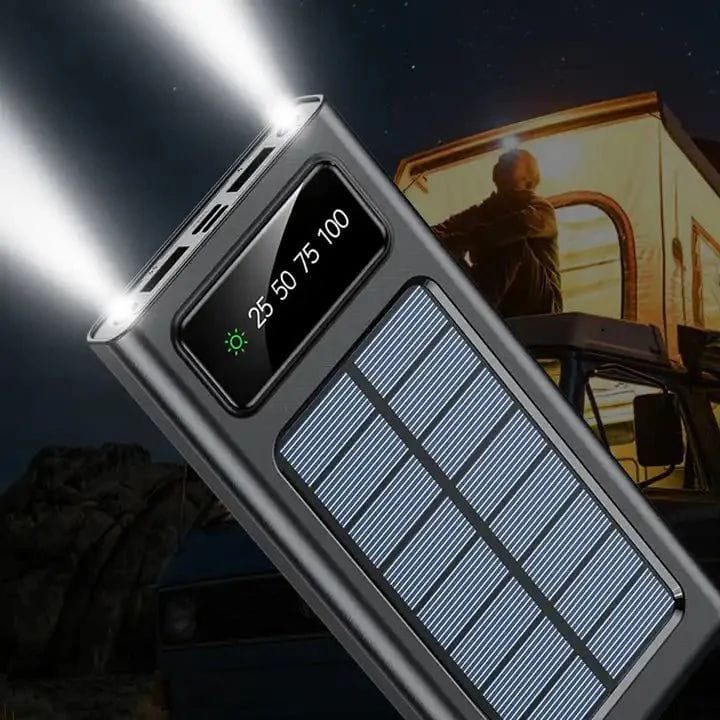
Start with the honest version. The photovoltaic panel built into a portable charger is small, typically a few hundred square centimetres, and small panels produce small amounts of power even in perfect conditions.
In practice that means the panel is a top-up and an emergency reserve, not a primary charging method. Left in strong sun all day, it adds a useful amount of charge over many hours. It will not refill a large pack from empty during a lunch break, and any marketing that implies otherwise is overselling the physics.
That does not make the feature pointless. On a multi-day trip with no mains socket, a slow trickle that keeps a phone alive for one more emergency call is exactly the point. The panel is insurance, and insurance is valuable precisely when nothing else is available.
The right way to use a solar power bank is therefore simple: charge it fully from mains before you leave, and treat the sunlight as a bonus that extends the reserve rather than as the way you refill it.
Why solar power bank capacity numbers confuse everyone
Capacity is quoted in milliamp-hours, and the figure on the box is the capacity of the internal cells, not the amount of energy that reaches your phone.
Some energy is always lost converting the cell voltage up to the level a USB port needs, and more is lost as heat in the cables and in the phone’s own charging circuit. A realistic expectation is that roughly two thirds of the labelled capacity actually arrives in your device.
That is not a defect and it is not specific to any brand; it is how voltage conversion works. It simply means a twenty-thousand milliamp-hour pack is best thought of as three or four full phone charges rather than five or six.
Knowing that also helps you size a purchase honestly. If you want two phone charges and a tablet top-up over a weekend, a large solar power bank makes sense. If you want a single emergency charge in a handbag, a much smaller and lighter unit is the better tool.
What makes a good solar power bank
Five things separate a unit worth carrying from dead weight in a rucksack.
Real capacity and weight
Capacity and weight rise together, because both come from the cells. A large pack is heavy, and on a long walk that weight matters more than the extra charge. Be honest about how far you will actually carry it.
Check the weight figure as carefully as the capacity figure. A solar power bank you leave at home because it is too heavy provides no charge at all.
Panel area and placement
Panel output scales with area, so a bigger panel genuinely does more. Also look at where the panel sits: one on the flat back is easy to lay in the sun, while one on a folding wing collects more light but adds bulk and another hinge to break.
Angle matters as much as area. A panel lying flat on the ground at midday collects reasonably well, but the same panel propped to face the sun directly does noticeably better.
Ports and charging speed
Count the outputs and check what each supports. Two devices charging at once share the available current, so a pack that charges one phone quickly may charge two phones slowly. The WLD Store listing for the model below states support for fast charging of multiple devices at the same time.
Look at the input as well. A pack with a slow input port can take a whole night to refill from mains, which is fine at home and frustrating between two days of travel.
Casing and ingress protection
Outdoor units usually have a rubberised shell and port covers. Understand what that buys you: resistance to dust, splashes and rain is common, while genuine submersion protection is rare and rarely claimed.
The listing describes this model as having a durable, water-resistant casing. Treat water resistance as protection against a shower or a splash, not permission to drop it in a wadi pool, and always make sure port covers are properly seated before exposure.
Built-in cables
Integrated cables are convenient and one less thing to forget. They are also a single point of failure, since a frayed built-in cable cannot simply be replaced. A pack with both a built-in cable and standard ports gives you a fallback.
The WLD Store pick: Solar Power Bank 20000mAh
These are the details the WLD Store listing states, reported exactly as written with nothing added.
- Product: Solar Power Bank 20000mAh, a portable charger with a built-in cable.
- Category: Accessories, also listed under Chargers & Cables.
- Brand: WLD.
- SKU: WLD-KSA-0031-(KD-KD0133).
- Capacity: the listing states 20000mAh.
- Solar: described as having built-in solar panels for recharging.
- Charging: the listing says it supports fast charging for multiple devices simultaneously.
- Casing: described as durable and water-resistant.
- Availability: sold across Saudi Arabia through secure checkout.
The Solar Power Bank product page carries the full specification and current availability, and remains the authoritative source if any detail changes.
How to charge and use it properly
A few habits make a large difference to both usable capacity and battery lifespan.
- Charge fully from mains before every trip. Solar is the top-up, never the main fill.
- Use a decent wall adapter. A weak charger can take twice as long to fill a large pack.
- Charge your phone before it hits zero. Lithium cells prefer partial cycles to deep discharges, in the phone and in the pack.
- Do not leave it plugged in for days on end. Modern packs manage this reasonably, but constant float charging is not ideal.
- Keep a spare cable. Built-in cables fail, usually at the worst moment.
- Store it around half charged if unused for months. Long storage at full or empty ages cells faster.
Getting the most from your solar power bank panel
The panel rewards a little thought and gives almost nothing if you ignore it.
Direct, unfiltered sunlight is what counts. Behind glass, output falls substantially, so a solar power bank on a car dashboard collects far less than the same unit on a rock outside, quite apart from the heat problem discussed below.
Face the panel at the sun rather than at the sky. Propping it against a bag at an angle can meaningfully outperform leaving it flat, and repositioning it once or twice through the day helps further.
Keep the panel clean. Dust is a fact of life across much of Saudi Arabia, and a fine layer of it scatters light before it reaches the cells. A dry cloth wipe before you set it out is worth doing.
Finally, be patient and set expectations. Judge the solar contribution over a full day, not over an hour, and think of it as extending your reserve rather than replacing a wall socket.
Heat, and why it matters for a solar power bank
This is the section that matters most in a hot climate, and it is the one most guides skip.
Lithium cells degrade faster at high temperatures, and they degrade very quickly indeed at the temperatures a closed car reaches in summer. A dashboard in direct sun can far exceed anything the pack was designed for.
Never leave a solar power bank in a parked car during the day. That single habit does more damage to capacity than a year of ordinary use, and in a damaged or poor-quality cell, extreme heat is also a genuine safety risk.
Charging while hot is also worth avoiding. If the pack has been sitting in the sun, let it cool in the shade before you plug a phone in, and stop using any unit that becomes uncomfortably hot, swells, or smells odd.
What to check when your solar power bank arrives
Ten minutes of checks on the first day is worth more than any amount of reading, because a fault is far easier to raise straight away.
- Inspect the casing. Look for cracks, a lifted panel edge or gaps around the port covers before you charge anything.
- Charge it fully from mains and time it. Note how long it takes so you can spot a change later, which is often the first sign of an ageing cell.
- Test every port. Charge a device from each output and confirm the built-in cable works too.
- Test the solar function. Put the panel in direct sun and confirm the charging indicator responds; expect the reading to move slowly.
- Check it stays cool. A solar power bank that becomes hot rather than warm during a normal charge should be stopped and returned.
- Run a real-world discharge. Charge a phone from full to empty on the pack and note how much capacity it used, so you know what your solar power bank actually delivers.
Keep the packaging until these checks are done. It makes any return straightforward, and it also usually carries the model details you will want if you need support later.
Solar power bank care and maintenance
- Keep the port covers closed. Dust in a USB port is the most common cause of intermittent charging outdoors.
- Wipe the panel regularly. Dust and fingerprints both reduce output.
- Rinse salt off after coastal trips. Use a barely damp cloth, never running water, and dry it fully.
- Cycle it every couple of months. A pack that sits at the back of a drawer for a year will disappoint you when you need it.
- Inspect the built-in cable. Look for cracking at the strain point where it enters the housing.
- Retire it if the casing swells. A visibly swollen pack should be stopped immediately and disposed of through proper battery recycling, never in household waste.
Common problems and quick fixes
- It charges much slower than expected. Usually the wall adapter or the cable rather than the pack. Try a higher-output charger and a different cable.
- The solar indicator lights but nothing seems to happen. Normal. Panel output is low; judge it across a whole day, not minutes.
- Only one port works. Check for dust or lint in the dead port and clear it gently with a wooden toothpick, never metal.
- It runs down while stored. All packs self-discharge. Top it up every couple of months if you keep it for emergencies.
Who a solar power bank is really for
The panel adds cost and weight, so it is worth being clear about who benefits and who is paying for a feature they will never use.
It suits people who spend whole days away from mains power: campers, hikers, anglers, photographers working outdoors, and anyone who drives into the desert at weekends. For them the reserve is meaningful and the sunlight is abundant.
It also suits households keeping an emergency kit. A charged pack in a cupboard covers a power cut, and the panel means it can be topped up on a balcony without electricity at all.
It suits commuters and office workers far less. If you are never more than a few hours from a socket, a lighter pack without a panel does the same job for less weight, and the panel spends its life in a bag.
Buy a solar power bank because of where you go, not because the feature sounds appealing. That single question resolves most of the regret people report with this category.
Solar power bank versus a standard pack or a car charger
Choosing well means matching the tool to where you actually run out of battery.
A standard power bank without a panel is lighter and cheaper for the same capacity, and for city use it is the sensible choice. If your phone dies on a commute or at the office, a panel adds weight you never use.
A car charger is the most practical option for road trips because the alternator supplies far more power than any small panel. It is also useless the moment you step away from the vehicle.
A solar power bank earns its place away from both: camping, hiking, desert trips, long days outdoors, or as a household emergency reserve during a power cut. If that describes your use, the panel is worth the extra weight. For the underlying science of how panels convert light to electricity, see the Wikipedia article on photovoltaics.
Travelling with a solar power bank
Batteries are the one accessory airlines genuinely care about, so it is worth knowing the rules before you pack.
Power banks must travel in the cabin, not in checked baggage. This is a universal safety rule rather than an airline preference, and a pack found in a checked bag will usually be removed.
Capacity limits apply and vary between carriers, so check your airline’s published policy before flying with a large solar power bank. Very high capacity packs may need advance approval or may not be permitted at all.
Keep it accessible and protect the ports. A pack loose in a bag with keys and coins can short across its contacts, which is exactly the scenario the cabin rule exists to prevent.
Solar power bank buying checklist
- How far will you actually carry it? Weight, not capacity, is what makes people leave a pack behind.
- How many devices need charging at once? Shared current means slower charging for each.
- How fast does it refill from mains? Input speed matters more than most buyers expect.
- Is the water resistance enough for your conditions? Splash resistance is not submersion protection.
- Do you have somewhere cool to store it? Heat is the main enemy of any lithium pack.
Other Accessories picks at WLD Store
If you are building a charging kit, these three items from the same category cover the situations a panel cannot.
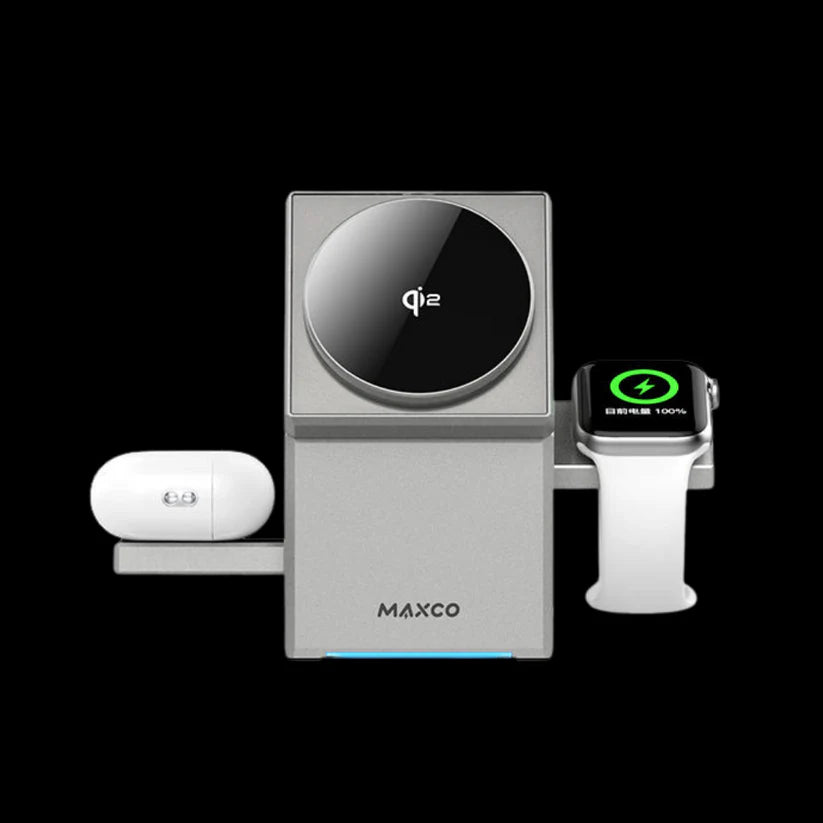

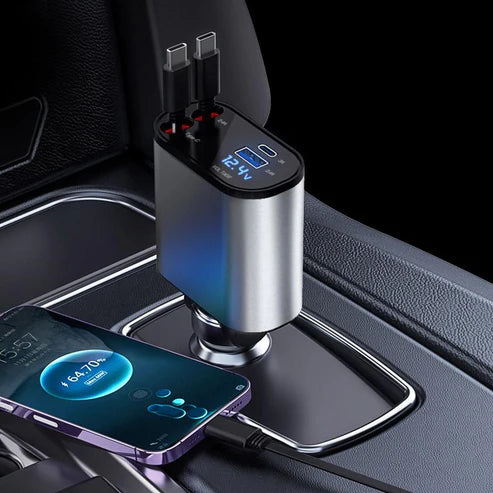
The wireless charger handles overnight charging at home, the car phone holder pairs with in-car charging, and the retractable charger is a sensible backup for the built-in cable.
Frequently asked questions about the solar power bank
How long does a solar power bank take to charge in the sun?
Far longer than most people expect, because the built-in panel is small. Treat sunlight as a slow top-up measured across a full day rather than a way to refill a large pack, and always charge from mains before a trip.
Does a 20000mAh pack really give five phone charges?
No, and no brand can. Voltage conversion and cable losses mean roughly two thirds of the labelled capacity reaches your device, so three or four full phone charges is a realistic expectation.
Can I leave a solar power bank on a car dashboard?
It is a bad idea. Glass blocks much of the useful light, and the temperature inside a parked car in summer is high enough to damage lithium cells quickly and permanently.
Is a water-resistant casing the same as waterproof?
No. Water resistance covers splashes, rain and dust when the port covers are closed. It is not a guarantee against submersion, and no portable charger should be deliberately put underwater.
Can I take a solar power bank on a plane?
In your cabin baggage, yes, subject to your airline’s capacity limits, which you should check before flying. Power banks are not allowed in checked luggage under standard aviation safety rules.
Why does my solar power bank get warm while charging?
Some warmth is normal, since converting voltage produces heat. Uncomfortable heat, swelling or an unusual smell is not normal; stop using the unit, let it cool somewhere safe and dispose of it through battery recycling.
A solar power bank is a genuinely useful piece of kit once you treat the panel as a reserve rather than a charger, keep the pack out of hot cars and size the capacity to what you will actually carry. If that matches your plans, take a look at the Solar Power Bank 20000mAh listing, or browse the wider range in the Chargers & Cables section.






Add comment