An electric hand mixer is the appliance that turns baking from an arm workout into an ordinary weeknight activity. Whipping cream by hand takes several minutes of hard effort; the same job with a motor takes under two and comes out more consistent.
This guide covers what to look for in speeds, attachments and weight, the technique that separates good results from disappointing ones, how to use one safely, and how to keep it working. It also introduces the 2-in-1 model WLD Store stocks for Saudi Arabia, with a checklist and six questions at the end.
Why an electric hand mixer still makes sense
Stand mixers get the attention, but most home baking does not need one. The tasks that fill a normal kitchen year are creaming butter and sugar, whipping cream, beating eggs and mixing a cake batter. All of them are comfortably within the range of a hand-held machine.
Storage is the second argument, and in a typical flat it is decisive. An electric hand mixer lives in a drawer; a stand mixer occupies permanent worktop space. Appliances that have to be lifted out of a low cupboard get used far less often than appliances you can simply reach for.
Control is a genuine advantage rather than a consolation. Because you hold the machine, you can move the beaters around the bowl, work the edges, tilt to reach a corner and stop the moment a mixture looks right. That responsiveness matters with whipped cream, which goes from perfect to grainy in seconds.
Finally, versatility of bowl. A hand mixer works in any bowl you own, including a small one for a single egg white or a wide one for a big batch. A stand mixer works in exactly one bowl, and washing it between stages is a chore.
What makes a good electric hand mixer
Machines in this category look similar and are described in near-identical language. The differences that matter emerge the first time you push one hard. These are the areas worth checking before buying any electric hand mixer.
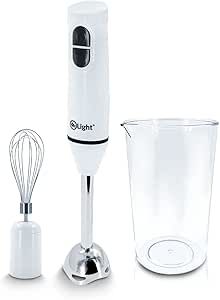
Weight and balance
You hold this machine for the whole job, sometimes for five minutes at a stretch. A heavy unit is tiring; a very light one can feel like it is being pushed around by a stiff mixture. What matters most is where the weight sits: a machine that balances near your hand is far more comfortable than one that pulls forward.
The speed range
A low first speed is more valuable than a high top speed. Starting slowly is what stops flour and icing sugar leaving the bowl, and it is the difference between mixing and redecorating your kitchen. Check that the lowest setting is genuinely slow rather than merely slower.
Attachment fit and release
Beaters should push in until they click and come out with one button. A stiff, fiddly release is the feature people complain about most after a month, because it happens on every single use. Sockets that are keyed so beaters cannot be fitted the wrong way round are a small but real convenience.
Cord length and where it exits
A short cord dictates where you can work, and a cord that exits at an awkward angle drapes across the bowl. Neither appears in a specification list, and both affect daily use more than motor claims do.
Cleaning
Detachable beaters that can be washed properly are the whole cleaning story, since the body of an electric hand mixer must never be immersed. Check the packaging for dishwasher guidance on the attachments, and look for a body without deep crevices that trap batter.
The WLD Store pick: 2 in 1 Hand Mixer
For readers who want a specific product rather than category advice, this is the model stocked for the Saudi market. Everything below comes from the product listing itself.
- Product: 2-in-1 Electric Hand Mixer, described as a kitchen appliance for baking.
- Speeds: the listing describes multiple speed settings.
- Tasks: the listing names beating, whipping and mixing dough.
- Handling: the listing describes a lightweight design intended to reduce arm fatigue.
- Attachments: the listing describes detachable beaters that are dishwasher safe.
- Category: Home & Kitchen, also listed under Kitchen Tools. Brand: WLD.
- SKU: WLD-KSA-0021-(KD-KD0170). Market: available across Saudi Arabia through secure checkout.
Current images, the attachment list and the order page are on the 2 in 1 Hand Mixer product page. Motor wattage, the exact number of speeds, voltage and plug type should be confirmed there and on the packaging rather than taken from a guide.
Beaters, dough hooks and what each does on an electric hand mixer
Most machines in this category ship with two kinds of attachment, and using the wrong one is the most common cause of poor results.
Beaters are the wire or flat attachments used for almost everything: cake batter, creaming butter and sugar, whipping cream, beating eggs and making icing. They incorporate air, which is exactly what those mixtures need.
Dough hooks are the spiral attachments for heavy, low-hydration mixtures. They fold and stretch rather than aerate. Using beaters on a stiff dough strains the motor and can bend the wires; using hooks on a cake batter simply will not mix it properly.
The practical rule is simple: if the mixture should be light, use beaters. If it should be elastic, use hooks. An electric hand mixer with both covers the great majority of home baking.
On heavy bread dough, be realistic about limits. Hand-held machines are not designed for large batches of stiff bread dough, and pushing one through a big batch is how motors overheat. Work in smaller quantities or finish by hand.
How to use an electric hand mixer well
Technique matters more than power in this category. These habits produce noticeably better results with any machine.
- Start on the lowest speed every time, and only increase once the ingredients are combined enough not to fly.
- Use a deep bowl rather than a wide shallow one, and keep the beaters below the surface of the mixture.
- Move the machine around the bowl in slow circles rather than holding it in the centre and waiting.
- Scrape down the sides with a spatula partway through, with the machine switched off and unplugged if you are reaching in.
- Stop and check often. Whipped cream in particular passes its best point within seconds.
One habit is worth building above the rest: switch the electric hand mixer off before lifting the beaters out of the bowl. Lifting while running is how kitchens end up decorated in cake batter.
Electric hand mixer technique, task by task
Different mixtures want different handling, and knowing what each one needs removes most baking frustration.
Creaming butter and sugar. Start with soft butter, not fridge-cold. Begin slowly, then move to a medium speed and work for several minutes until the mixture is visibly paler. This step carries most of the air in a cake, so do not rush it.
Whipping cream. Use cold cream and a cold bowl. Start slow, build to medium, and stop while the peaks are still soft and glossy. Over-whipped cream becomes grainy and then turns to butter, and it cannot be reversed.
Egg whites. The bowl and beaters must be completely clean and free of any grease or yolk. Start slow, build gradually, and add sugar a little at a time once soft peaks form.
Cake batter. Combine wet ingredients first, then add dry on the lowest speed and mix only until it comes together. Overmixing develops gluten and produces a tougher crumb.
Dough. Fit the hooks, work in smaller batches, and give the motor a rest if it sounds strained. An electric hand mixer is happier with soft enriched doughs than with dense bread dough.
Understanding the speed settings on an electric hand mixer
Speed dials are rarely explained on the box, but the pattern across the category is consistent enough to be useful.
The lowest speeds are for combining: folding dry ingredients into wet, starting a batter, and any moment when powder could escape the bowl. This is where most mixing should begin.
The middle speeds do the real work: creaming, whipping cream to soft peaks and beating eggs. Most baking happens here, and a machine that feels smooth in the middle of its range is a good machine.
The highest speeds are for finishing meringue and for light mixtures that need maximum air. They are not a shortcut for heavy work, and using top speed on a stiff mixture is hard on the motor.
If your electric hand mixer has a turbo or boost button, treat it as a short burst rather than a setting to hold, unless the instructions say otherwise.
Electric hand mixer, stand mixer or a balloon whisk
These three tools overlap, and it is worth being clear about what each is genuinely best at.
A stand mixer wins on hands-free operation and on heavy dough. It kneads while you do something else, and it handles large batches without complaint. It is expensive, heavy and permanently occupies worktop space.
A balloon whisk wins on control, silence and washing up. It is perfect for a small amount of cream or a couple of eggs, and it needs no socket. Beyond that it is slow and tiring.
An electric hand mixer sits between them, and for most households it is the practical choice. It handles everything a home baker does regularly, stores in a drawer and costs a fraction of a stand mixer.
If you bake bread weekly in large batches, a stand mixer is worth the space. For everything else, a hand-held machine plus a whisk covers the year comfortably.
Using an electric hand mixer safely in the kitchen
This is a mains-powered device with fast-moving metal parts, so a few rules are not optional.
Never immerse the body in water. Only the detachable attachments go near a sink. Wipe the motor housing with a damp cloth and dry it.
Unplug before fitting or removing beaters, and before reaching into the bowl with a spatula or your fingers.
Keep hair, sleeves and utensils clear of the beaters while they are turning. A spoon left in the bowl can be caught and thrown.
Keep the cord away from hot surfaces and from the edge of the worktop where it could be pulled by a child.
Do not run it continuously for long periods. If the motor smells hot or sounds laboured, stop and let it cool. Any duty-cycle limit will be stated in the instructions, and it is worth reading them once.
Care and maintenance for an electric hand mixer
These machines are simple and long-lived if two or three basic rules are followed.
Wash the beaters immediately after use. Batter that dries in the wire twists is far harder to remove later. Where the packaging says the attachments are dishwasher safe, follow that guidance.
Wipe the body, never soak it. A damp cloth on the housing and a dry cloth afterwards is the whole routine.
Check the beater sockets occasionally for dried mixture, which is the usual reason attachments start fitting badly.
Inspect the cord for nicks or kinks near the body. Damaged cords on any electric hand mixer mean the machine should be retired rather than repaired at home.
Store it in a drawer, beaters detached, so the wires cannot be bent by other items pressing against them. A bent beater will never spin true again.
Common electric hand mixer problems and quick fixes
- Ingredients fly out of the bowl. You started too fast or the bowl is too shallow. Begin on the lowest speed with the beaters submerged.
- The motor sounds strained. The mixture is too stiff for the attachment fitted. Switch to dough hooks, reduce the batch size, or finish the job by hand.
- A beater will not click in. Dried mixture in the socket, or the beater is in the wrong hole where the sockets are keyed. Clean, dry, and try the other socket.
- Whipped cream turned grainy. It was over-whipped, which cannot be undone. Next time stop at soft, glossy peaks and finish the last few turns with a whisk.
- The body feels hot. Stop and let it cool. Repeated overheating shortens the life of an electric hand mixer more than anything else.
Storing an electric hand mixer so it stays easy to reach
Where an appliance lives decides how often it gets used, and this one rewards a little thought.
Detach the beaters before storing. Wires bent by other items pressing against them in a drawer never spin true again, and a wobbling beater knocks against the bowl.
Keep the attachments with the machine. A small bag or a dedicated drawer section stops the dough hooks disappearing to the back of a cupboard, which is how people end up thinking their electric hand mixer only came with beaters.
Coil the cord loosely. Wrapping a cord tightly around a body, over and over, stresses it where it enters the housing. That is the point where cords eventually fail.
Store it at working height. A machine in a drawer near the worktop gets used for a two-minute job; the same machine at the back of a low cupboard does not.
Who an electric hand mixer is not for
It is more useful to be honest about the limits than to pretend the category suits everyone.
If you bake bread every week in full-size batches, a hand-held machine will frustrate you and the motor will not enjoy it. That is a stand mixer job, and no amount of technique changes it.
If you only ever whisk a couple of eggs, a balloon whisk is faster once you account for finding the machine, plugging it in and washing the beaters afterwards.
And if worktop space is genuinely unlimited and you bake constantly, an electric hand mixer will end up as the second machine rather than the main one. That is still a reasonable place for it, since it handles the small jobs a stand mixer is clumsy with.
Buying checklist for an electric hand mixer
- Is the lowest speed genuinely slow enough to combine dry ingredients without a cloud?
- Do the beaters click in firmly and release with one button?
- Does it feel balanced in your hand rather than nose-heavy?
- Are dough hooks included if you plan to mix dough at all?
- Is the cord long enough to reach from your usual socket to your usual work surface?
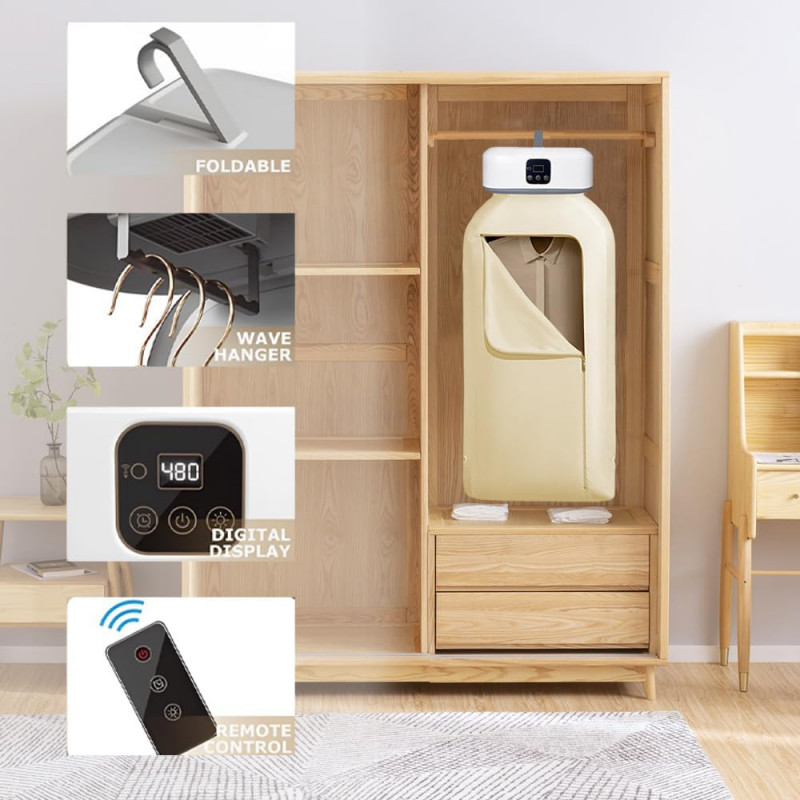
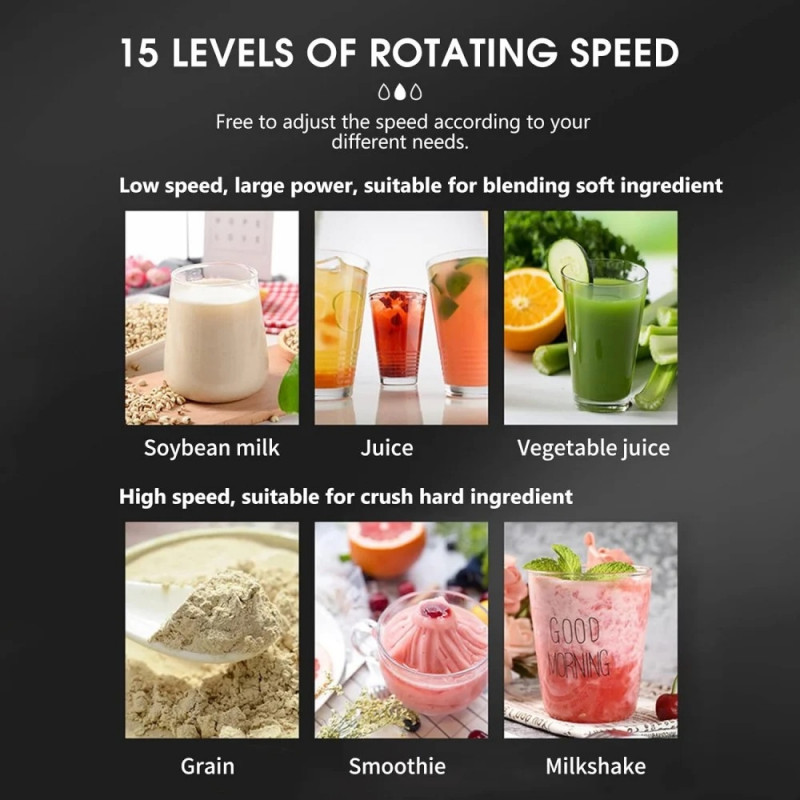
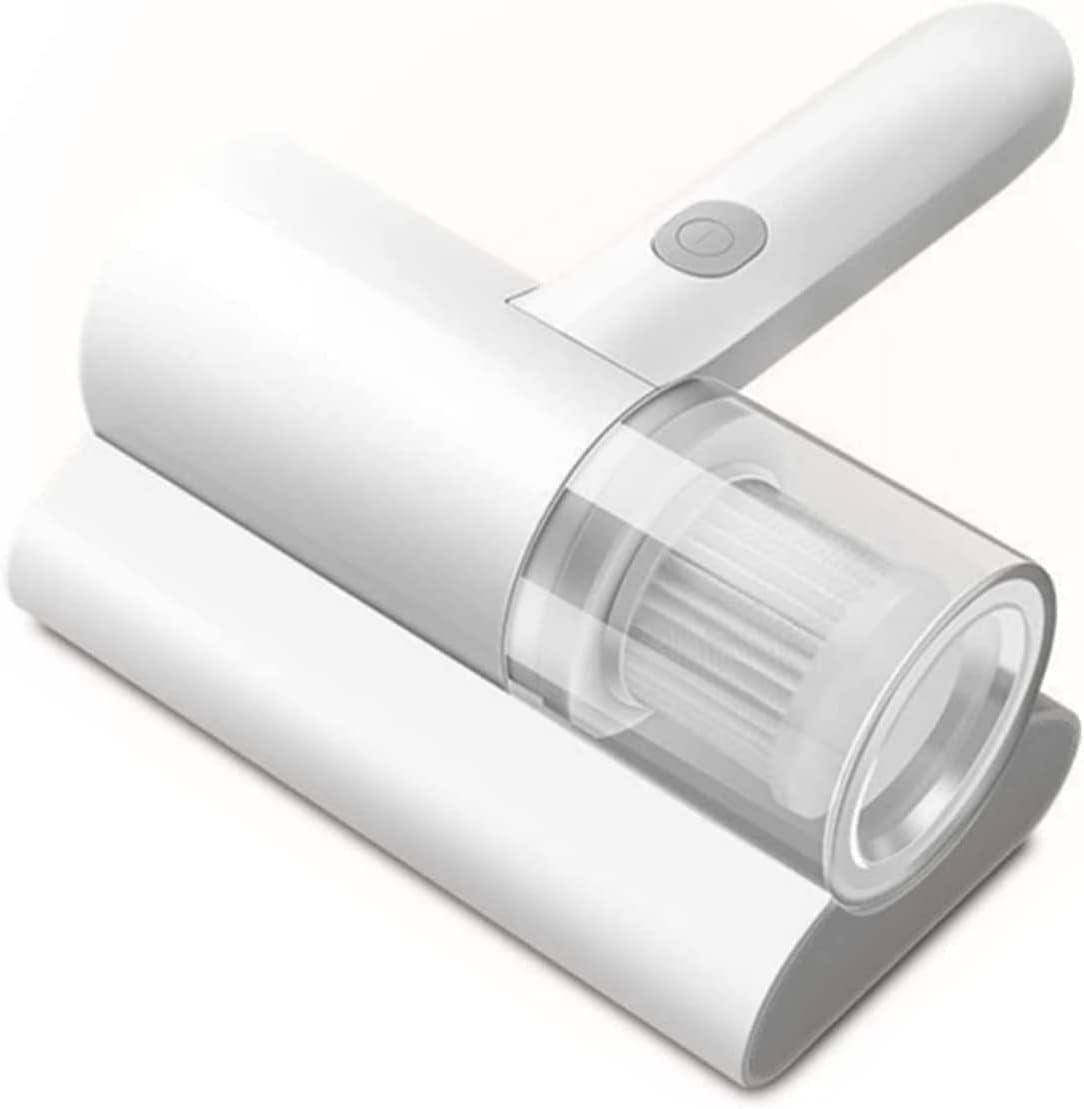
Other Home and Kitchen picks at WLD Store
If you are equipping a kitchen rather than buying one appliance, these three sit nearby in the catalogue and pair well with an electric hand mixer.
Frequently asked questions about the electric hand mixer
Can an electric hand mixer knead bread dough?
With dough hooks fitted, it can handle soft and enriched doughs in modest quantities. Large batches of stiff bread dough are beyond what hand-held machines are built for, so work in smaller amounts, listen to the motor, and finish by hand if it sounds strained.
How many speeds do I actually need?
Three would cover most baking: slow to combine, medium to cream and whip, fast to finish. Extra settings give finer control rather than new abilities. A genuinely slow first speed is worth more than a very fast top speed.
Can I put the mixer in the dishwasher?
Only the detachable attachments, and only if the packaging says so. The motor body must never be immersed or put in a dishwasher. Wipe it with a damp cloth and dry it after use.
Why does my whipped cream go grainy?
It has been whipped past the point where the fat holds air, and it is on its way to becoming butter. Use cold cream, stop at soft peaks, and finish the last few turns by hand where you can feel the texture changing.
Is an electric hand mixer worth it if I only bake occasionally?
For most people, yes, because it stores in a drawer and costs far less than a stand mixer. If you bake two or three times a year and never whip cream, a balloon whisk will do the job without needing storage space.
What should I check when it arrives?
Check that both attachment types are present, that the beaters click in and release cleanly, that the cord is undamaged, and that the plug matches your sockets. Then read the instructions once for any duty-cycle or cleaning guidance specific to the model.
An electric hand mixer is one of the few kitchen appliances that reliably earns its drawer space: it makes several common jobs faster, easier and more consistent without demanding a permanent home on the worktop. Buy for a slow first speed and a comfortable balance, use the right attachment for the mixture, keep the body away from water, and it will serve for years. You can see the 2-in-1 model on its product page, read more about how these appliances developed in the mixer article on Wikipedia, or browse the wider range in the Kitchen Tools section.



Add comment