An electronic prayer mat is a prayer mat with audio built into it, designed to teach children the postures and recitations of Salah step by step. The child stands on the mat, the mat speaks, and learning happens through repetition rather than through correction.
This guide explains how the audio guidance actually works, what the three language options are for, how to introduce the mat at different ages, what to expect it to teach and what it cannot, and how to look after something that spends its life on the floor of a busy household.
Why an electronic prayer mat helps children learn
Teaching Salah to a young child runs into a practical difficulty. The postures are physical, the recitations are in Arabic, and the sequence has to be learned as a whole. A parent teaching it is doing three things at once while also praying themselves.
Children also learn movement by copying and by repetition, not by explanation. Telling a five-year-old what comes after ruku is far less effective than a prompt arriving at the moment it is needed, every single time, without impatience.
An electronic prayer mat provides exactly that. It gives the same cue in the same words at the same point, as many times as the child needs, which is something no adult can realistically do for weeks on end.
It also changes who is in charge. A child practising on their own mat is doing something independently rather than being corrected, and that shift in ownership is usually what turns learning into a habit that continues.
How the electronic prayer mat audio guidance works
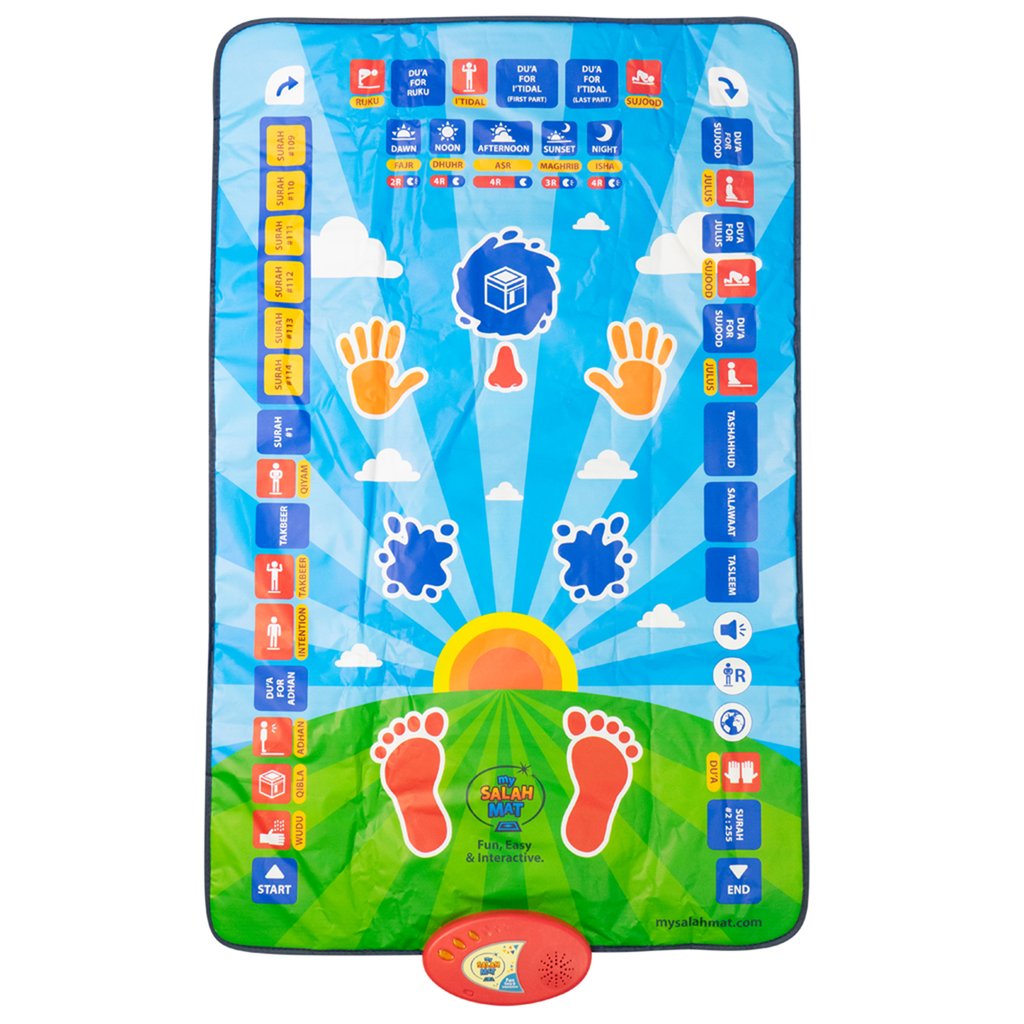
The mat contains a speaker and a set of recorded recitations, activated by touch points built into the mat itself. Pressing the marked spots plays the relevant audio, which is why a child can operate it without an adult present.
Salah follows a fixed sequence of standing, bowing, prostration and sitting, each with its own recitations. An electronic prayer mat walks through that sequence in order, so the child hears what belongs at each position rather than learning the words separately from the movements.
This model also includes 18 Surahs and Duas. That is a substantial amount of material, and it means the mat continues to be useful well after the basic sequence has been learned, as a way of hearing and repeating passages accurately.
The three language options are what make it practical in most households. Arabic carries the recitation itself, while English and Urdu allow a child to understand the instruction, which is often the difference between memorising sounds and understanding what is being said.
What makes a good electronic prayer mat
Most differences between one electronic prayer mat and another are physical rather than technical, because this is an item a child will kneel, stand and drop things on.
Audio quality and clarity
Recitation has to be clear enough to copy. A child learns pronunciation from what they hear, so clarity matters more than volume, and an electronic prayer mat with muddy audio teaches inaccurate sounds that are then hard to correct.
The anti-slip backing
A mat that slides during prostration is both distracting and unsafe on a tiled or marble floor. A durable anti-slip base is what allows a child to move confidently, and it is the single most important physical feature.
Language coverage
Arabic alone teaches the recitation; a second language teaches the meaning and the instruction. Three languages, as on this mat, also make it usable across an extended family where different generations are comfortable in different languages.
Durability and cleaning
This spends its life on a floor. Look for a surface that can be wiped, edges that will not fray quickly, and a construction that tolerates being rolled, walked on and occasionally sat on by someone who is not praying.
The WLD Store pick: Electronic Educational Learning Prayer Mat
This is the electronic prayer mat WLD Store stocks for families teaching young children Salah at home.
- Product: Electronic Educational Learning Prayer Mat for Kids
- Teaches: correct Salah postures, with audio guidance through the sequence
- Content: 18 Surahs and Duas recitation
- Languages: Arabic, English and Urdu
- Build: durable mat with an anti-slip surface
- Intended as: an Islamic educational gift for children
- Category: Fashion, Islamic Jewelry & Accessories · Brand: WLD · SKU: WLD-KSA-0112-(KD-008)
- Availability: available across Saudi Arabia through secure checkout
Photographs and full details sit on the Electronic Educational Learning Prayer Mat product page. Check the instructions supplied with the mat for how the touch points and language selection work on your unit.
How to introduce an electronic prayer mat: 7 easy ways
How an electronic prayer mat arrives matters as much as what it does. These seven approaches help it become something a child wants to use.
- 1. Let them explore it first. Give the child ten minutes to press everything and hear what it does before any teaching starts. Curiosity satisfied early stops it becoming a distraction later.
- 2. Make it their own. A mat that belongs to the child, kept where they can reach it, is used far more than one shared or stored out of sight.
- 3. Pray beside them. Children copy what they see. An electronic prayer mat works best alongside an adult praying nearby rather than as a substitute for that.
- 4. Start with one position. Learn standing properly before moving on. Trying to cover the whole sequence in the first session usually ends in frustration.
- 5. Use the language they think in. Set instruction to English or Urdu if that is what the child understands, while keeping the Arabic recitation as it is.
- 6. Keep sessions short. Ten minutes of willing practice beats half an hour of reluctance, and children retain far more from short repeated sessions.
- 7. Praise the effort, not the accuracy. The mat handles correction automatically by repeating the right version, so an adult does not need to.
Most children move from curiosity to routine within a couple of weeks when the mat is left accessible.
Teaching with an electronic prayer mat by age
Very young children, around three or four, are mainly learning that this is something the family does. At that age an electronic prayer mat is about familiarity: the sounds, the movements, standing in the right place at the right time.
From five to seven, the sequence starts to stick. Children can follow the order of postures, begin repeating short recitations, and take genuine pride in getting through a full cycle without prompting.
Between eight and ten, the emphasis shifts to accuracy and to the additional material. The 18 Surahs and Duas become the useful part, since a child at this stage is memorising rather than learning the basic shape.
Older children generally outgrow the guidance but often keep the mat itself. By then the audio is used occasionally to check a passage rather than to be led through the whole sequence.
Where to put an electronic prayer mat in the home
Placement decides how often it is used. A mat kept rolled in a cupboard is used when an adult remembers; the same mat left out in a quiet corner is used by the child on their own.
Choose somewhere with a little privacy but not isolation. Children concentrate better away from a television, yet most prefer to be within earshot of the household rather than alone in a distant room.
Watch the floor surface. An electronic prayer mat needs its anti-slip backing to work, and very smooth marble or a polished tile with a rug underneath can still shift. Test it before a child is moving quickly on it.
Keep the direction consistent. Setting the mat out the same way each time helps a young child associate the routine with a place and a direction rather than having to be told each occasion.
Using the three electronic prayer mat languages well
The language selection is more useful than a simple translation feature, because the two jobs are different. Arabic is the language of the recitation and does not change; the second language is there so the child understands what they are doing.
Many families use both in sequence. Play the instruction in English or Urdu so the child grasps the meaning, then switch to Arabic for the recitation itself and let repetition do the rest.
It also helps across generations. A grandparent more comfortable in Urdu can sit with a child and use the same electronic prayer mat that the child uses in English at other times, without either of them being excluded.
Do not switch too often at the start. Settling on one instruction language for the first few weeks gives a child consistent phrasing to latch onto, and variety can come later.
What an electronic prayer mat teaches and what it does not
The mat teaches sequence, posture and recitation through repetition, and it does that reliably. For the mechanical parts of learning Salah, it is genuinely effective.
What it cannot teach is meaning in any deeper sense, intention, or the reasons behind what is being done. Those come from family and from a teacher, and an electronic prayer mat is a support for that conversation rather than a replacement for it.
It also cannot judge whether a child has performed something correctly. The mat plays its audio regardless of what the child is actually doing, so an adult still needs to watch occasionally and gently adjust posture.
Treat it, in other words, as a patient practice partner. It handles the repetition that would exhaust any parent, and leaves the parts that need a human being to the humans.
Ramadan and building a routine
Ramadan is when most families find the mat gets its heaviest use, because the household routine is already built around prayer and a child is naturally more aware of what everyone else is doing.
Use that momentum rather than adding pressure. A child who joins in willingly for a month often keeps the habit afterwards, and an electronic prayer mat left in the same familiar place once Ramadan ends makes continuing the easier option.
Small markers of progress help. Learning one new Surah across the month is a realistic target for most children of primary school age, and the 18 included on the electronic prayer mat give plenty to work through over several years.
Expect a dip afterwards. Interest almost always softens once the household rhythm returns to normal, and the answer is a shorter routine rather than abandoning it. Ten minutes after one prayer a day is enough to hold what has already been learned.
Electronic prayer mat care, cleaning and battery
An electronic prayer mat is a textile with electronics inside, which means it cannot be treated like an ordinary mat. Do not put it in a washing machine, and do not soak it, whatever the state of the surface.
Spot clean instead. A cloth dampened with plain water, worked gently over the mark and then dried, handles almost everything a child will bring to it. Keep liquid away from the speaker and the control area entirely.
Roll it rather than folding it. Repeated sharp folds stress the wiring inside an electronic prayer mat, and a rolled mat also stores more neatly against a wall or in a cupboard.
Check the battery compartment periodically and remove the batteries if the mat will not be used for a long stretch, such as during a house move or a long holiday. A leaking cell is the most common way these mats are lost.
Common problems and quick fixes
Four issues account for most of what parents run into with an electronic prayer mat.
- The audio has stopped or gone quiet. Batteries first, almost always. Check them before assuming anything else has failed.
- Touch points are not responding. Usually a mat that has been folded across the sensor area, or pressed at the edge of the marked spot rather than the centre.
- The mat slides on the floor. Dust on the backing reduces grip considerably. Wipe the underside and the floor, and avoid placing it on top of a loose rug.
- The child has lost interest. Very common after the novelty passes. Shorter sessions, a change of language, or simply praying alongside them usually restores it.
Electronic prayer mat, regular mat or an app
An ordinary prayer mat is simpler, cheaper and needs nothing. For a child who already knows the sequence it is entirely sufficient, and every child ends up using one eventually.
A phone or tablet application can teach the same material, but it puts a screen into the middle of the activity, and screens bring notifications, games and everything else with them. Many parents specifically want to avoid that at this age.
An electronic prayer mat keeps the learning physical. The child is standing, bowing and prostrating on the thing that is teaching them, with no screen involved, which suits the subject far better than a device held in the hand.
Choosing an electronic prayer mat as a gift
It is a popular gift for Eid, birthdays and the start of Ramadan, largely because it is useful without being a toy. It suits a child who is just beginning to join family prayers.
Check the age first. A mat like this fits the roughly four to ten range comfortably; a very young toddler will treat it as a noisy rug, and an older child who already prays confidently may find the guidance unnecessary.
Include batteries if the mat needs them. A gift that cannot be switched on immediately loses most of its impact, and it is the sort of detail that is easy to overlook.
Consider pairing it with something for an adult in the family. An electronic prayer mat for the child and a counter or lamp for a parent makes a natural set for a family occasion.
Buying checklist before you order
Five questions worth answering before any electronic prayer mat goes into a basket.
- Which languages does it offer? Instruction in a language the child understands is what turns sounds into meaning.
- How much content is included? A mat with 18 Surahs and Duas stays useful well beyond the first few weeks.
- Is the backing anti-slip? On tile or marble this decides whether the mat is usable at all.
- Can it be cleaned easily? An electronic prayer mat cannot go in a machine, so a wipeable surface matters.
- Does the age suit your child? Around four to ten is the window where the guidance genuinely helps.
Other Islamic accessories at WLD Store
These three sit alongside it in the same part of the catalogue and work well as companion gifts.
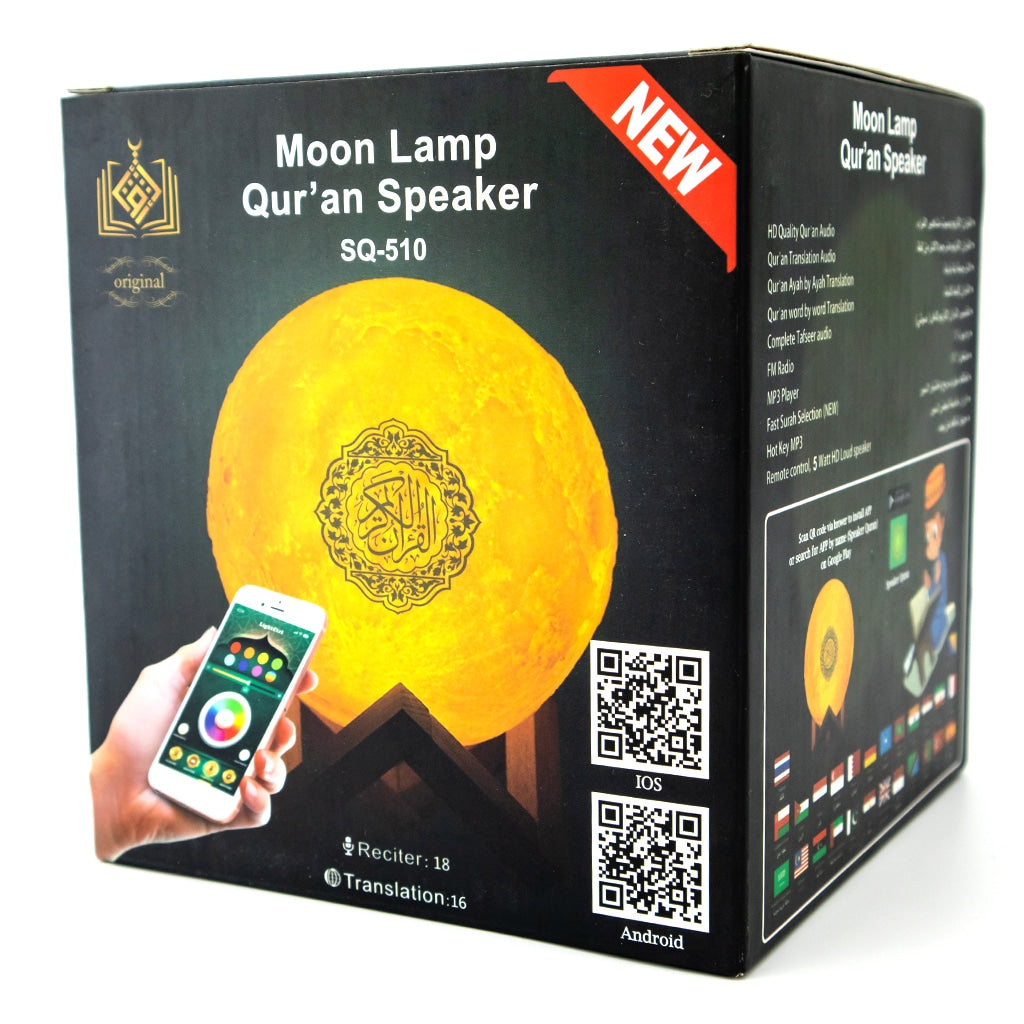
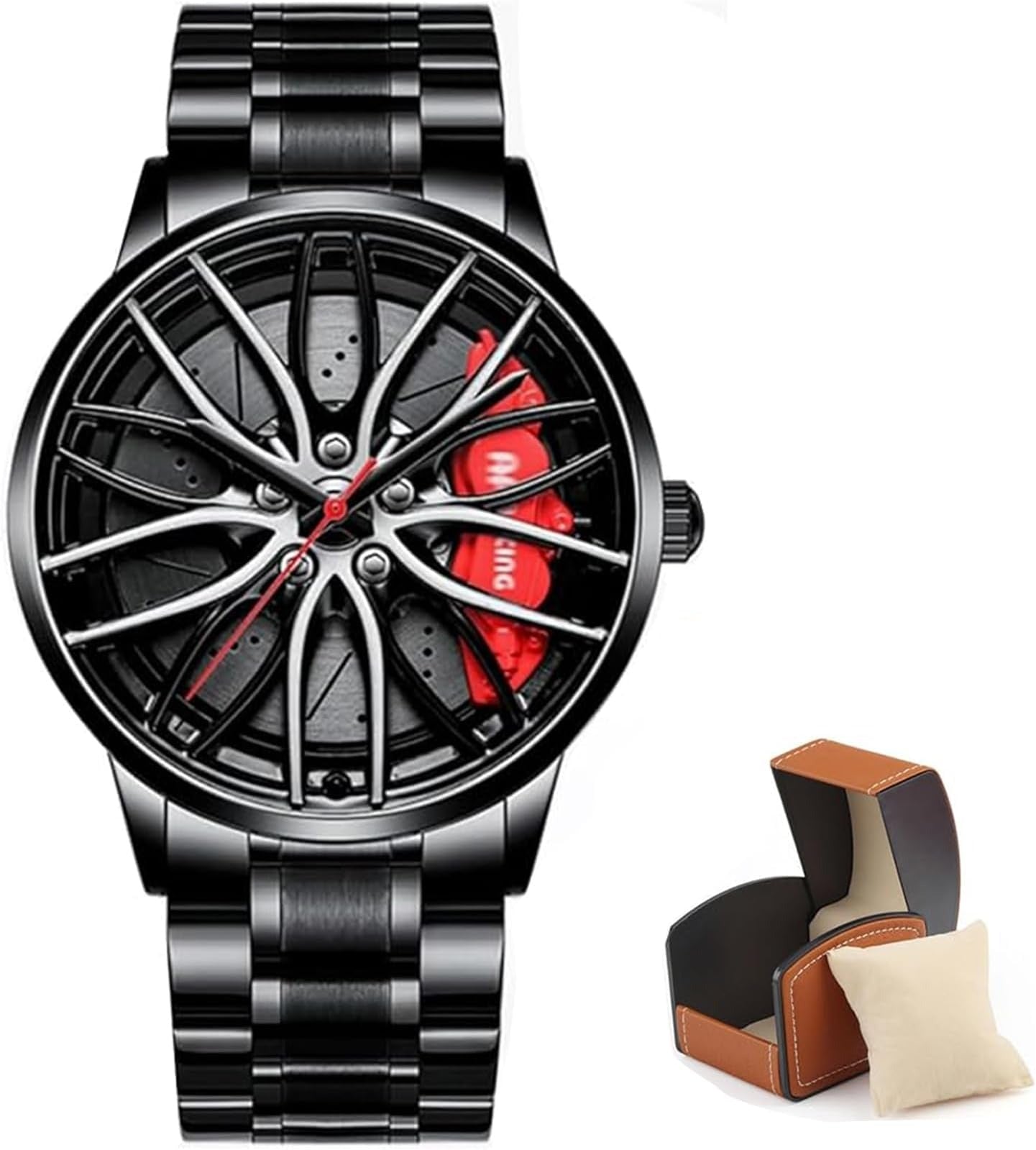
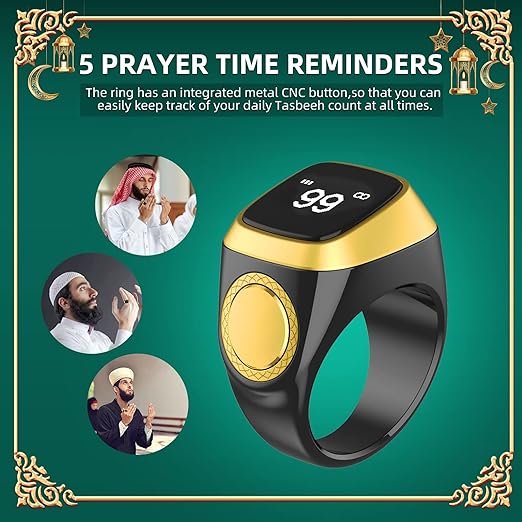
The Moon Lamp Quran Speaker is the common pairing for a child’s room, since it covers listening at bedtime while the mat covers practice during the day.
Frequently asked questions about the electronic prayer mat
What age is it suitable for?
It is aimed at children, and in practice the useful window runs from around four to ten. Younger children enjoy the sounds without following the sequence, while older children who already pray confidently tend to need the guidance less.
Does it work without batteries or power?
The audio functions need power, so the mat will not speak without it. As a plain prayer mat it still works perfectly well, which is worth remembering if the batteries run out unexpectedly.
Can it be washed?
No. There are electronics inside, so machine washing or soaking will damage it. Spot clean with a barely damp cloth, keep water away from the speaker area, and let it dry fully before rolling it up.
Which language should we choose?
Use the language the child thinks in for instruction, and keep Arabic for the recitation. Because this electronic prayer mat offers Arabic, English and Urdu, most families can match it to the child and to the wider household.
Will it teach my child to pray on its own?
It teaches the sequence and the recitations reliably, but it cannot check what the child is actually doing, and it does not teach meaning or intention. It works best alongside a parent praying nearby and correcting posture occasionally.
Is it suitable for adults learning too?
Nothing prevents it. An adult new to Salah can use the same guidance, and the 18 Surahs and Duas are equally useful for memorisation at any age, though the mat is sized and presented for children.
The strength of this kind of mat is patience. It repeats the same guidance without tiring, without frustration and without a child feeling watched, which is precisely the condition under which most children learn something new most easily.
The full listing is on the Electronic Educational Learning Prayer Mat product page, and there are more Islamic accessories and gifts in the Islamic Jewelry & Accessories section, available across Saudi Arabia.




Add comment