A bamboo travel tumbler is the rare eco-friendly product that people keep using after the novelty wears off. It works because it solves a real daily problem: coffee that goes cold on the commute, and a paper cup thrown away twenty minutes after it was made.
This guide explains how the insulation in a bamboo travel tumbler works, which construction details matter, how to look after a natural bamboo lid, how to clean a stainless steel body properly, and what to put in it. There is a troubleshooting list, a comparison with plastic and ceramic alternatives, a buying checklist and six questions answered.
Why a bamboo travel tumbler earns its place in a bag
The disposable cup habit is expensive in ways that are easy to ignore. One drink a day is several hundred cups a year, each used for a few minutes and then binned. A reusable vessel removes that cycle without asking anyone to change what they drink.
Temperature is the practical argument, though. A paper cup loses heat almost immediately. A properly insulated bamboo travel tumbler keeps a drink at a comfortable temperature long enough that you can actually finish it, which is a genuine improvement in daily life rather than a virtuous inconvenience.
The cold side matters even more in Saudi Arabia. Iced water and cold coffee are unrecognisable within half an hour in a normal cup, and a double-wall vessel keeps them drinkable through a whole morning in the car or on a site visit.
Then there is the material choice. Bamboo is a fast-growing renewable grass, and pairing a bamboo lid with a stainless steel body gives you a container built from two materials that are both durable and recyclable, which is the honest version of an eco-friendly product.
How double-wall insulation actually works
The clever part of a bamboo travel tumbler is invisible. The body is built as two stainless steel shells with a gap between them, and that gap is what does the work.
Heat moves in three ways: conduction through materials, convection through moving air or liquid, and radiation. A sealed gap between two walls interrupts the first two almost completely, because there is very little material and very little air to carry heat across it.
This is the same principle used in vacuum flasks, and the effect is dramatic. The outer wall stays close to room temperature no matter what is inside, which is why a well-made bamboo travel tumbler never feels hot in the hand or sweats on a desk. The full technical explanation is on the vacuum flask reference page.
What makes a good bamboo travel tumbler
Bamboo travel tumbler designs vary enormously in quality despite looking similar. Four details separate the good from the disappointing.
A genuinely leak-proof lid
The lid is where most travel mugs fail. A lid that merely rests on top will spill in a bag, and one spilled coffee over a laptop teaches that lesson permanently.
Look for a threaded closure with a seal rather than a push-fit. A leak-proof bamboo travel tumbler can go in a rucksack on its side, which is the difference between a mug you carry and a mug you leave at home.
Stainless steel where the drink touches
The interior material decides how a drink tastes. Stainless steel is neutral, does not stain, does not absorb odour and does not degrade with repeated hot liquid.
This matters most for coffee and tea, which are both aggressive at picking up flavours from a container. A steel-lined bamboo travel tumbler tastes the same on day one and day three hundred.
BPA-free materials throughout
Even a mostly metal and bamboo vessel has some plastic in it, usually in the seal or the threads. BPA-free construction is what you should expect to see stated, and it is worth checking rather than assuming.
The same applies to the finish on the bamboo. A food-safe treatment is standard on quality pieces, and it is what keeps the wood from absorbing whatever it touches.
Size, grip and cup holder fit
The best insulated mug in the world is useless if it does not fit your car’s cup holder. Check the base diameter against the holder you use every day before ordering.
Grip matters too. A body you can hold securely with one hand while opening a door is a bamboo travel tumbler you will carry; a slippery cylinder is one you will drop.
The WLD Store pick: Bamboo Travel Tumbler
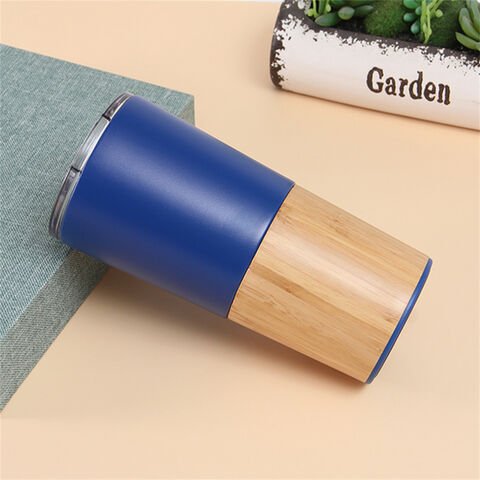
WLD Store lists an insulated model built around exactly these priorities. Here is what the listing states, with nothing added:
- Product: Bamboo Travel Tumbler, an eco-friendly insulated mug sold under the WLD brand.
- Lid: natural bamboo.
- Body: double-wall stainless steel that keeps drinks hot or cold for hours.
- Sealing: leak-proof.
- Materials: BPA-free.
- Suited to: coffee, tea and cold drinks on the go.
- Category: Home & Kitchen, in the Kitchen Tools section.
- Availability: stocked for customers across Saudi Arabia.
- SKU: WLD-KSA-0084-(KD-KD0215).
Photographs, current availability and secure checkout are on the Bamboo Travel Tumbler product page.
First use and the daily routine
A few habits from day one make a large difference to how well the tumbler performs and how long it lasts.
- Wash before first use. Warm soapy water, a soft cloth and a thorough rinse. Skip the dishwasher for the bamboo lid entirely.
- Preheat or prechill the body. Fill with hot or cold water, wait two minutes, empty, then fill with your drink. This single step adds meaningfully to how long the temperature holds.
- Fill closer to the top than you think. A large air gap above the liquid works against the insulation, because that trapped air changes temperature quickly.
- Close the lid firmly but not violently. Threads on a bamboo travel tumbler should meet cleanly. Forcing them is how cross-threading starts.
- Empty it at the end of the day. Leaving coffee in overnight is the main cause of stains and lingering smell.
- Store it dry with the lid off. Air needs to reach both the body and the lid seal between uses.
Getting the best temperature performance
Insulation in a bamboo travel tumbler is not magic, and a few things you control make a large difference.
Preheating is the biggest one. A cold steel body absorbs heat from the drink before the insulation can do anything about it, and that lost heat never comes back. Two minutes with hot water first is the cheapest performance upgrade available.
Opening frequency is the second. Every time the lid comes off, the heat you were saving leaves. Drinking in a few longer sessions keeps a bamboo travel tumbler noticeably warmer than sipping constantly.
Keep it out of direct sun for cold drinks. Insulation slows heat transfer, but a black car dashboard in Riyadh will still win eventually, and the difference between shade and sun is hours.
Do not add ice to a hot vessel or boiling liquid to a chilled one. Extreme swings stress the seals over time, and the temperature you end up with is a compromise anyway.
Caring for the bamboo lid
The lid on a bamboo travel tumbler is the part that needs attention, because it is a natural material rather than a metal one.
Never put it in the dishwasher. Prolonged heat and detergent strip the protective finish, and bamboo that has been through a machine cycle will crack, warp or split along the grain.
Hand wash with warm water and a small amount of mild soap, then dry it immediately with a cloth. Leaving a wet bamboo lid to air-dry face down traps moisture against the seal.
Treat it occasionally with a food-safe oil if it starts to look dry or pale. A very small amount rubbed in and wiped off restores the surface and helps repel moisture, much like a wooden chopping board.
Check the silicone seal inside the lid each week. Remove it if it is designed to come out, wash underneath, and refit it properly. That hidden ring is where residue collects on almost every bamboo travel tumbler.
Cleaning the stainless steel body
The body is far more forgiving than the lid, but it still benefits from a routine.
Rinse with hot water straight after use. Coffee oils set as they cool, and a rinse before that happens removes most of the work.
Use a bottle brush rather than a cloth wrapped around a hand. A long narrow vessel has a corner at the base that fingers cannot reach, and that corner is where staining starts.
For stubborn tea or coffee staining, fill with hot water, add a spoonful of bicarbonate of soda, leave for an hour and then brush and rinse. This lifts discolouration without any abrasive that would scratch the interior.
Avoid steel wool, bleach and harsh scouring powders. Scratches in the interior surface give residue somewhere to hold, which makes every future clean harder.
Dry the outside properly, especially around the base rim. Water sitting in a seam is the one way a stainless steel exterior can eventually mark.
Taking a bamboo travel tumbler to the office and beyond
Where you use it shapes which habits are worth adopting, and the three common settings each have their own quirks.
In an office, the main risk is the bag rather than the desk. A sealed lid means a bamboo travel tumbler can lie flat among papers and a laptop, but it is still worth checking the thread is fully closed before the mug goes anywhere near a rucksack.
In a car, the cup holder fit decides everything. Measure the base against the holder, and remember that many holders taper, so a mug that sits in the top rarely sits securely at the bottom.
Outdoors, the double wall stops condensation forming on the outside with a cold drink, which means no wet ring on a table and no slippery grip. That is a small thing until you have carried a sweating plastic bottle across a site.
On a flight or a long drive, half-fill rather than filling to the brim. Pressure changes and movement both make a very full vessel more likely to seep at the thread, and a bamboo travel tumbler kept slightly below the line travels far more reliably.
Making it a habit rather than a good intention
Most reusable cups fail on logistics rather than design. Three small routines fix that.
Wash it the night before, not in the morning. A clean, dry bamboo travel tumbler sitting by the door is one you will pick up; one in the sink is one you will walk past.
Keep it by the keys rather than in a cupboard. Visibility drives use far more than intention does, and this is the single most effective change most people can make.
If you buy drinks out, hand it over rather than asking whether it is allowed. Most places fill a clean personal vessel without hesitation, and having the lid already off speeds it up for everyone.
Common problems and quick fixes
- It leaks from the lid. Usually the silicone seal is misaligned after cleaning, or the lid is cross-threaded. Remove the lid, reseat the seal fully and screw down slowly.
- Drinks do not stay hot as long as expected. The body was not preheated, it was underfilled, or the lid is being opened frequently. Fix those three in order.
- A stale smell develops. Residue in the lid seal, almost always. Remove the seal, wash it separately, and dry both parts fully before reassembling.
- The bamboo looks dry or faded. Normal for untreated natural material. A light application of food-safe oil restores it, and keeping it out of dishwashers prevents recurrence.
What to put in it and what to leave out
Almost any everyday drink works in a bamboo travel tumbler, with a couple of sensible exceptions.
Coffee, tea, hot chocolate, iced coffee, cold brew, water and juice are all fine. A bamboo travel tumbler handles hot and cold equally well because the insulation works in both directions.
Be cautious with fizzy drinks. Sealed insulated vessels are not designed to contain pressure, and a carbonated drink in a warm car can build enough to make the lid difficult to open safely.
Avoid leaving dairy drinks in it for long periods. Milk-based coffee left sealed for hours in a warm environment is unpleasant at best, and the insulation that keeps it warm also keeps it warm for the wrong reasons.
Do not use it for soup unless the opening is wide enough to clean properly. Anything with solids in it needs an opening you can get a brush into, and a narrow drinking aperture is not that.
Compared with plastic and ceramic travel mugs
A bamboo travel tumbler is not the only option, and it is worth being clear about the trade-offs.
Plastic mugs are light and cheap, but they scratch, stain, hold onto flavours and generally insulate poorly. They are the right choice only when weight is the overriding concern.
Ceramic travel mugs taste excellent and look good, but they are heavy, breakable and usually single-walled, so the drink cools far faster than in a double-wall vessel.
A bamboo travel tumbler sits between them: the neutral taste of steel, insulation that genuinely works, a natural material at the lid, and enough durability to be thrown in a bag every day for years.
Who should skip it
Anyone who wants a mug that goes in the dishwasher without thought should choose an all-steel or all-plastic design. A bamboo lid needs hand washing, and that is a small ongoing commitment.
People who drink very slowly over many hours may prefer a wider vacuum flask with a larger capacity. A travel tumbler is sized for one or two drinks rather than a whole day’s supply.
If your drink is always finished within five minutes at a desk, insulation is solving a problem you do not have, and a plain ceramic mug will serve you better and cost less.
Buying checklist
- Is the lid genuinely leak-proof? A sealed threaded lid is what makes it bag-safe.
- Is the interior stainless steel? This is what keeps taste neutral over years of use.
- Does it fit my cup holder? Measure the holder before ordering rather than after.
- Am I happy to hand wash the lid? Bamboo and dishwashers do not mix, and this is the main care commitment.
- Does the size match my usual drink? Filling near the top is what keeps the temperature holding.
Other home and kitchen picks at WLD Store
These related listings sit in the same Home & Kitchen range if you are browsing more widely.
Frequently asked questions about the bamboo travel tumbler
How long does it keep drinks hot or cold?
The listing states that the double-wall stainless steel body keeps beverages hot or cold for hours. The exact duration depends on how full it is, whether you preheated or prechilled it, and how often the lid is opened.
Can it go in the dishwasher?
The bamboo lid should always be washed by hand, because dishwasher heat and detergent damage natural wood. The steel body is easier, but hand washing both keeps the whole bamboo travel tumbler in better condition.
Will coffee make the interior taste permanent?
No. Stainless steel does not absorb flavour the way plastic does. Rinsing soon after use and an occasional bicarbonate of soda soak keeps it completely neutral.
Is it safe for hot drinks?
Yes. The double-wall construction means the outer surface stays comfortable to hold even with a hot drink inside, which is one of the main practical advantages of this design.
Can I put fizzy drinks in it?
It is better not to. Sealed insulated containers are not built to hold pressure, and carbonation in a warm environment can make the lid awkward and unsafe to open.
How do I stop the lid from smelling?
Remove the silicone seal weekly, wash underneath it, and dry both parts fully before refitting. That hidden ring is where residue collects on any bamboo travel tumbler, and cleaning it solves nearly every odour complaint.
For anyone who buys a drink on the way to work, a bamboo travel tumbler pays for itself in convenience long before the environmental argument even comes up. You can see the current listing on the Bamboo Travel Tumbler page or browse more kitchen items in the Kitchen Tools section, with secure checkout and availability across Saudi Arabia.


Add comment