An electric feet callus remover is the small bathroom gadget that finally makes hard, cracked heels a solved problem instead of a recurring chore. Instead of scraping with a metal blade or soaking for half an hour, a spinning roller does the work in a couple of minutes. This guide explains how the tool actually works, what separates a good one from a frustrating one, how to use it without over-filing your skin, and how to keep it hygienic. It also covers who should avoid this kind of device entirely, and it points to the model stocked at WLD Store for shoppers in Saudi Arabia.
Why an electric feet callus remover solves a real problem
Feet build thickened skin for a reason. Pressure and friction from walking, standing and shoes cause the outer layer to toughen as protection. That is normal biology, and you can read the medical background on the Wikipedia article about callus formation. The trouble starts when that layer keeps thickening, dries out and splits.
Once heels crack, the problem feeds itself, and that is the point where an electric feet callus remover starts to earn its place. Dry, rigid skin cannot flex when you take a step, so it tears instead of bending. Moisturiser alone rarely fixes it because the cream cannot penetrate a thick, dead outer layer. Something has to physically reduce that layer first.
That is the job an electric feet callus remover does. The rotating head abrades the dead surface in thin passes, taking away material gradually rather than slicing a chunk off. Because the roller spins at a steady speed, the removal is far more even than hand filing, where pressure varies with every stroke.
The other benefit is time. A salon pedicure means an appointment, travel and an hour of your day. Doing the same maintenance at home with an electric feet callus remover takes a few minutes while you are already in the bathroom, which means it actually gets done regularly instead of twice a year.
What makes a good electric feet callus remover
Not all of these devices are equal, and the differences are easy to check before you buy. Four things matter most: the roller surface, the motor behaviour, the water rating and how the tool is powered. Get those right and the rest is preference.
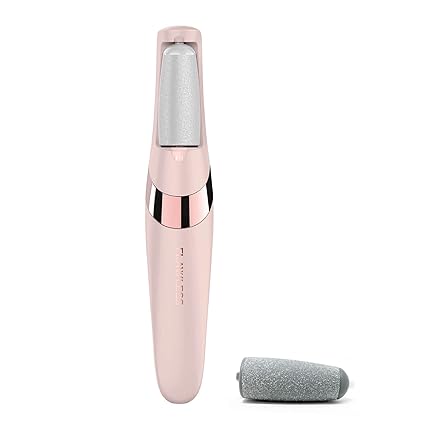
The roller head and its grit
The roller is the part that does the work, so it is the part that wears out. A good electric feet callus remover ships with spare heads, because a worn roller simply polishes without removing anything and people assume the device has failed. Replacement rollers should be easy to click on and off with one hand.
Grit matters too, and it is the specification most people ignore when comparing one electric feet callus remover with another. A very coarse roller removes material fast but is unforgiving on thin skin, while a fine roller is safe but slow on genuinely thick heels. Most users are best served by a medium roller used in short passes, with patience rather than pressure doing the work.
Motor speed and how it handles pressure
On an electric feet callus remover, speed is less important than consistency. A motor that stalls the moment you press down forces you into a stop-start rhythm that leaves an uneven surface. Better designs either hold their speed under load or stop cleanly when pressed too hard, which doubles as a safety feature.
Grip is part of the same story. You are working on a wet, awkwardly angled surface, often balanced on one leg. A contoured handle that stays secure with damp hands is worth more than an extra speed setting you will never use.
Waterproofing and safe use in the shower
Damp skin abrades more evenly than bone-dry skin, so being able to use the device in or straight after a shower is genuinely useful. A waterproof electric feet callus remover can also be rinsed under the tap, which is the only practical way to clear skin dust out of a roller.
If a device is not rated for water, you are stuck brushing debris out of the head and wiping it with a dry cloth. That is fine but slower, and it makes proper hygiene harder to maintain over months of use.
Power, runtime and storage
Battery or rechargeable tools give you freedom to sit anywhere, which matters because the best working position is usually on the edge of the bath with your foot resting on your knee. Whatever the power source, check that the tool stands or hangs somewhere dry. Leaving an electric feet callus remover in a wet soap dish shortens its life more than any amount of use.
The WLD Store pick: Electric Feet Callus Remover
WLD Store lists an electric feet callus remover aimed at exactly this at-home routine. Here is what the product listing actually states, with nothing added:
- Product: Electric Feet Callus Remover, a professional-style pedicure tool
- Brand: WLD
- Categories: Home & Kitchen, and Personal Care
- How it works: a rotating roller gently buffs away dry skin, calluses and dead skin
- In the box: three replacement roller heads
- Use: described as safe, painless and waterproof for use in the shower
- Availability: sold across Saudi Arabia with secure checkout
- SKU: WLD-KSA-0110-(KD-015)
The three spare rollers are the detail worth noticing. Roller wear is the single most common reason people abandon a device like this, so having replacements in the box means the tool stays effective well past the first few uses. You can see the full listing on the Electric Feet Callus Remover product page.
How to use an electric feet callus remover properly
Technique matters more than the device itself, and an electric feet callus remover rewards a light touch. The goal is to reduce thickened skin, not to reach bare pink skin in one session. Work in stages across a few days and your feet stay comfortable throughout.
- Soften first, but do not soak for ages. Slightly damp skin from a normal shower is ideal. Skin that has been soaking for thirty minutes is waterlogged and abrades unpredictably.
- Support the foot. Sit down and rest your foot on the opposite knee or the edge of the bath. Working while standing is how people slip and press too hard.
- Move constantly. Glide the roller across the heel in slow sweeps. Holding it still in one place is what creates a dip or a sore patch.
- Use light pressure. Let the roller speed do the work. If the motor is bogging down, you are pushing too hard.
- Stop early. Two to three minutes per foot is plenty. Check the surface with your fingertips rather than your eyes.
- Rinse and moisturise. Wash off the skin dust and apply a foot cream while the skin is still slightly damp.
The most common beginner mistake is trying to fix months of neglect in one sitting. An electric feet callus remover works cumulatively: a short session twice a week for a fortnight produces far better results than one long, aggressive session that leaves your heels tender.
Building a foot-care routine that keeps results
Removing hard skin with an electric feet callus remover is only half of the job. The other half is preventing it from rebuilding at the same speed, and that is mostly about moisture and footwear.
Moisturise daily, not just after a filing session. Creams containing urea or lactic acid are formulated to soften thickened skin rather than simply sitting on top of it. Applying at night and pulling on cotton socks gives the cream hours to work without being wiped onto the floor.
Look at your shoes as well. Open-backed sandals and unsupportive flats let the heel pad spread on every step, which is one of the most reliable ways to build a thick rim of skin around the heel. Switching to closed or cushioned footwear for daily walking reduces how often you need the device at all.
Frequency should drop over time. In the first month you might use an electric feet callus remover twice a week. Once the thickened layer is under control, most people find that once every week or two is enough to maintain smooth heels, and that lighter schedule is gentler on the skin.
Seasonal use: why heels get worse at certain times
Foot skin follows the weather and the calendar. In the hot months, open sandals expose heels to dry air and dust, and the constant friction of a backless shoe thickens the rim quickly. Air conditioning in homes, offices and cars pulls even more moisture out of the skin.
Long travel days and standing for extended periods have the same effect. If your routine changes seasonally, adjust your maintenance instead of waiting for cracks to appear. Many people keep an electric feet callus remover in regular rotation through summer and use it less often in cooler months, which is a sensible response to what their feet are actually doing.
Who should not use an electric feet callus remover
This is worth saying plainly. Anyone with diabetes, reduced sensation in the feet, poor circulation or a diagnosed neuropathy should not use an abrasive foot device without medical advice. Reduced sensation means you cannot feel when you have gone too far, and a small wound on a foot with poor blood supply is not a small problem.
The same caution applies to broken skin. Do not run the roller over an open crack, a blister, a wart, an infected area or anything painful. Let it heal, or have it looked at, before returning to the device. An electric feet callus remover is a maintenance tool for healthy skin, not a treatment for a foot condition.
Children do not need one either. Thick heel skin is largely an adult problem caused by years of load and footwear choices, and young skin is thin enough that abrasion is unnecessary.
Electric feet callus remover versus a salon pedicure
The honest comparison is not which is better but which job you are doing. A salon pedicure is a full service: soaking, cuticle work, nail shaping, hard-skin removal and often polish, performed by someone who can see the parts of your foot you cannot. It is the right choice when nails need attention or you simply want the experience.
An electric feet callus remover does one part of that list, and it does it on your schedule. It handles the hard-skin removal that would otherwise be the reason you booked an appointment in the first place. For most people, the realistic pattern is a home device for weekly upkeep plus an occasional salon visit for everything else.
Cost-per-use is where the home tool wins outright, but the bigger advantage is frequency. Hard skin rebuilds continuously, so monthly appointments always leave a gap where heels roughen again. An electric feet callus remover closes that gap because it is sitting in your bathroom, not in a diary.
Where the salon still wins is judgement. A trained technician will spot an ingrown nail, a fungal problem or a pressure point caused by your gait, and will tell you to see a doctor when that is the right answer. No electric feet callus remover can do that, so treat the device as maintenance between professional eyes on your feet rather than a full replacement for them.
Care and maintenance
An electric feet callus remover is a simple device, and almost all of the maintenance is about keeping the head clean and the body dry.
- Clear the roller after every session. Skin dust packs into the abrasive surface and blunts it. Rinse it if the tool is waterproof, or brush it out if it is not.
- Dry it completely before storing. Shake out the water, wipe the body and leave it out until it is fully dry rather than putting it straight into a drawer.
- Swap rollers when they stop biting. A worn head glides without removing anything. That is the signal to fit one of the spares, not a sign the motor is failing.
- Keep it personal. Do not share the tool or its heads between family members. Skin conditions and fungal infections transfer easily on shared abrasive surfaces.
- Store it away from heat. A sealed cupboard is better than a sunny windowsill or the top of a heater.
A monthly check takes seconds: look at the roller, feel whether it still has grip, and confirm the head clicks on firmly. Those two checks catch nearly every problem before it becomes annoying.
Common problems and quick fixes
- It feels like nothing is happening. The roller is worn or clogged. Clean it, and if it still glides smoothly over hard skin, fit a fresh head.
- The motor keeps stopping. You are pressing too hard. Reduce pressure and let the roller speed do the work, moving in sweeps rather than pushing into one spot.
- My heel feels sore afterwards. You worked too long in one area. Stop for several days, moisturise, and next time cap each foot at two or three minutes.
- The head will not stay attached. Skin dust in the mounting collar is the usual cause. Clean the seat and the inside of the head, dry both, then refit until it clicks.
Buying checklist
- Does it include spare roller heads, or will you have to source them separately later?
- Is it rated for use with water, so you can work on damp skin and rinse it clean?
- Can you hold it comfortably with wet hands at an awkward angle?
- Does the head attach and release without tools or fiddling?
- Is the product page clear about what is included, so you know exactly what arrives?
Other home and personal care picks at WLD Store
If you are already browsing, these three products sit in the same everyday-household bracket and are worth a look.

Frequently asked questions about the electric feet callus remover
How often should I use an electric feet callus remover?
Start with twice a week while you are reducing a thick layer, then drop to once a week or once a fortnight for maintenance. Daily use is unnecessary and increases the chance of over-filing. Let how the skin feels guide you rather than following a fixed schedule.
Does an electric feet callus remover hurt?
Used correctly it should not. The roller only abrades the dead outer layer, and healthy dead skin has no nerve endings. Pain means you have gone through to living skin, so stop immediately, moisturise and give the area several days to recover before using the device again.
Can I use an electric feet callus remover in the shower?
Only if the model is rated as waterproof, which the WLD Store listing states for this one. Damp skin abrades more evenly than dry skin, and being able to rinse the head under running water makes cleaning far easier. Never use a device in water unless the listing confirms it is safe.
How do I know when a roller head needs replacing?
A fresh roller catches slightly on hard skin; a worn one slides over it. If a cleaned head no longer removes anything after a normal session, fit a replacement. Having three spares in the box means you are covered for a long stretch of regular use.
Is an electric feet callus remover better than a manual foot file?
They do the same job by different means. A manual file is cheap, silent and gives fine control, but it is slow and your pressure varies with fatigue. A powered tool is faster and more even, which is why most people who own both reach for the electric one first.
Can two people share the same electric feet callus remover?
Sharing the body of the tool is acceptable if each person has their own roller head, but sharing heads is not a good idea. Abrasive surfaces trap skin debris and can transfer fungal infections between users, so treat the head the same way you would treat a toothbrush.
Smooth heels come from consistency, not intensity, and an electric feet callus remover is simply the fastest way to stay consistent. A short session every week, daily moisturiser and shoes that support the heel will do more than any single marathon pedicure. If you want to start, the Electric Feet Callus Remover is listed with its three spare rollers on the product page, and you can browse the rest of the range in the Personal Care section.


Add comment