An led motion sensor light is the cheapest meaningful security upgrade most homes can make, and a solar-charged one removes the two things that usually stop people fitting outdoor lighting: an electrician and a cable run. Point it at a gate, a side path or a dark corner of the garden, and it stays dark until something moves. This guide explains how the detection works, how to choose between models, where to mount one so it triggers when you want and not when you do not, and how to keep it working through a full year outdoors.
Why an led motion sensor light beats a lamp left switched on
A porch lamp burning all night is a poor security tool, and it is the first argument for fitting an led motion sensor light instead. Constant light creates fixed shadows that eyes and cameras adapt to, and neighbours stop noticing it entirely because nothing about it ever changes.
A light that suddenly comes on does the opposite. The change is what draws attention, both from anyone inside the house and from anyone passing. That sudden switch is the actual deterrent, not the brightness, which is why a modest led motion sensor light in the right place often works better than a powerful floodlight in the wrong one.
There is a practical benefit as well. Carrying shopping to the door, finding a keyhole, or checking why the dog is barking are all easier with light that appears exactly when you arrive. You get the convenience without lighting the street all night.
Finally, an led motion sensor light that charges from the sun costs nothing to run. That changes where you are willing to put lighting, because a dark corner of the garden no longer has to justify a trench and a cable.
How motion detection actually works
Almost all consumer units use a passive infrared sensor, which detects changes in the infrared radiated by warm bodies moving across its field of view. It does not emit anything; it simply watches for a pattern of change. The Wikipedia article on passive infrared sensors explains the mechanism in more detail.
Two consequences follow from this, and they explain most real-world behaviour. First, movement across the sensor’s view triggers far more reliably than movement straight towards it, because crossing produces a sharper change. Second, anything warm and moving can trigger it, including cats, birds and a branch that has been warmed by the afternoon sun.
Understanding that makes an led motion sensor light much easier to live with. If yours triggers constantly, the answer is usually to change the angle so the busy area falls outside the sensor’s cone, rather than to assume the unit is faulty.
What makes a good led motion sensor light
On an led motion sensor light, four specifications carry almost all of the difference between a unit you forget about and one you take down after a month.
Detection angle and range
These two numbers define the area an led motion sensor light actually watches. A wide angle covers a broad approach such as a driveway; a narrower one is better for a single path where you do not want the road triggering it.
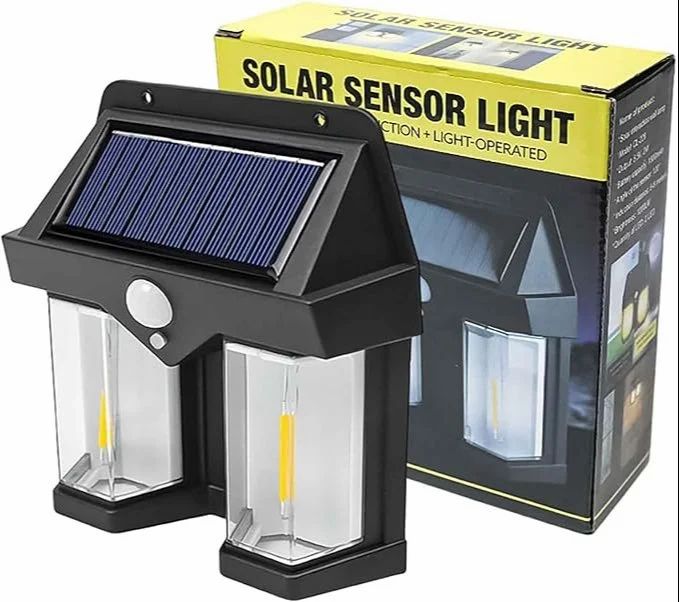
The WLD Store unit is specified with a 120-degree detection angle and a six-metre range. That combination suits gates, doorways and paths well, and it is a realistic figure rather than an optimistic one. Match the numbers to the space instead of assuming more is always better.
Weather rating
Outdoor electronics live a hard life. Dust, blowing sand, sudden rain and long hot days all attack seals and housings. An ingress rating tells you what the housing is built to survive.
This led motion sensor light carries an IP65 rating, meaning it is dust-tight and protected against water jets. That is the sensible band for an exposed wall or gate post, and it is the specification to check first on any outdoor light.
Solar charging
A solar unit is only as good as the light its panel receives. The WLD Store model charges fully via solar power, with no electricity cost, which is exactly what makes it practical for places with no supply nearby.
What this means in practice is that panel placement matters as much as light placement. A perfectly aimed led motion sensor light with its panel in permanent shade will disappoint you by the third night.
Lighting modes
Three lighting modes are offered on this unit. Modes matter because different locations want different behaviour: a doorway benefits from a bright burst on detection, while a long garden path is often better with a dim constant glow that brightens when someone walks along it.
The WLD Store pick: Dual Solar LED Motion Sensor Light
Here is exactly what the WLD Store listing states for this product, with nothing added:
- Product: Dual Solar LED Motion Sensor Light, an outdoor security light
- Brand: WLD
- Power: charges fully via solar power, with zero electricity cost
- Detection: wide 120-degree motion detection range, six-metre distance
- Protection: weatherproof IP65 rating for outdoor use
- Modes: three lighting modes
- Suggested locations: gates, gardens and pathways
- Availability: sold across Saudi Arabia with secure checkout
- SKU: WLD-KSA-0108-(KD-056)
The dual-head design is the part worth understanding. Two adjustable heads let you cover two directions from a single mounting point, which is genuinely useful on a corner or a gate post where one fixed beam would leave half the approach dark. You can read the full listing on the Dual Solar LED Motion Sensor Light product page.
Where to mount an led motion sensor light
Mounting position determines almost everything about how well an led motion sensor light performs. Get it right and the light feels intelligent; get it wrong and it feels broken.
- Height: around two to two and a half metres is the usual sweet spot. Lower and people walk under the detection cone, higher and the cone spreads too far and picks up the street.
- Angle: aim so approaching visitors cross the sensor’s view rather than walk directly at it. Crossing movement triggers much more reliably.
- Direction: avoid pointing the sensor at a road, a neighbour’s window or a busy pavement.
- Heat sources: keep it away from air-conditioning outlets and metal surfaces that heat and cool quickly, both of which cause phantom triggers.
- Access: mount it where you can reach it with a step ladder for cleaning, because you will need to.
Before drilling anything, hold the led motion sensor light in position after dark and have someone walk the approach you care about. Five minutes of testing prevents an afternoon of re-drilling, and it usually shifts the intended position by more than you would expect.
Getting the solar panel charging properly
Solar charging on an led motion sensor light fails for boring reasons, and all of them are avoidable at installation.
The panel wants unobstructed sky for as much of the day as possible. South-facing surfaces receive the most sun in Saudi Arabia, but an east or west aspect with a clear view usually beats a south wall shaded by a tree or an overhang.
Watch out for shade that only appears at certain times. A wall that looks perfect at noon may be in deep shadow from three o’clock onwards, and that is when a good part of the day’s charge is lost. Check the position across a full day before committing.
Also keep artificial light away from the panel. Many units use the panel to decide when night has fallen, so a street lamp shining onto it can convince an led motion sensor light that it is still daytime and stop it activating at all.
Seasonal and weather considerations
Performance changes across the year, and knowing that saves you from thinking the unit has failed.
Shorter winter days mean less charging time, so a light that ran all night in summer may fade earlier in the small hours of a winter morning. This is normal for every solar product and is a reason to prefer a mode that is less demanding on the battery during those months.
Dust and sand are the bigger issue in this region. A film of dust on the panel cuts charging dramatically, and it builds up faster than most people assume. In dusty seasons, wiping the panel of your led motion sensor light every few weeks makes more difference than any setting change.
Heat matters too. Sustained high temperatures are hard on batteries, so where you have a choice, a position that gets strong morning sun and some afternoon shelter is kinder than one that bakes from noon until sunset.
Solar led motion sensor light versus a wired floodlight
A mains-powered floodlight is the obvious alternative, and it wins on raw output. If you need to light a large yard brightly for a camera to record usable footage at distance, wired is the honest answer.
What wired lighting costs you is flexibility. Every position needs a cable, which means channels, conduit, an electrician and a permanent decision. Moving a wired fitting two metres is a job; moving a solar led motion sensor light two metres is four screws and ten minutes.
Running cost is the other difference. A solar unit uses no household electricity at all, so lighting a far corner of a garden costs nothing after purchase. That is what makes it realistic to light three or four separate spots rather than one.
For most homes the sensible answer is a mix: wired lighting where the mains already reaches, and a solar led motion sensor light for gates, side passages, garden paths and outbuildings where running a cable was never going to happen.
What an led motion sensor light will not do
It is worth being clear about the limits so expectations stay realistic.
An led motion sensor light is not a camera and it does not record anything. It draws attention to movement, which is valuable, but if you need evidence you need a camera as well. The two work well together, since light improves what a camera can capture.
It is also not a substitute for locks, and it will not stop a determined person. Treat an led motion sensor light as one layer that makes a property look occupied and attended, alongside solid doors, sensible habits and good sightlines from the street.
Finally, it will not perform in a spot with no sun. If the only place you can mount it is a permanently shaded passage, either mount the unit there and site the panel elsewhere if the design allows, or accept that a wired fitting is the right tool for that location.
One led motion sensor light or several around the house?
Most people start with a single unit at the front gate and then discover that the dark spot which actually bothered them was somewhere else entirely. It is worth mapping the property before buying rather than after.
Walk the outside of the house after dark and note every route a person could realistically take: the main gate, the side passage, the path to a store room, the back door, the parking area. Those routes, not the walls, are what you are lighting.
A single well-placed led motion sensor light covering the main approach is often enough for a small property with decent street lighting. A larger plot with several entry points needs one per route, because a light that covers half an approach gives a false sense of coverage.
Because a solar unit has no running cost and no cabling, adding a second or third later is straightforward. Many people fit one, live with it for a few weeks, then add the next where experience says it is needed. That works better than guessing everything on day one.
Avoid the opposite mistake too. Crowding four units onto one wall produces overlapping cones that all trigger together and light nothing new. Spread them across genuinely different approaches and each led motion sensor light does distinct work.
Care and maintenance
Outdoor lighting needs a little attention two or three times a year, and this is the whole list.
- Clean the solar panel. Wipe dust and grime off with a damp cloth. This is the single most valuable maintenance task on any solar light.
- Wipe the sensor lens. A dirty lens narrows effective detection range and causes missed triggers.
- Check the fixings. Heat cycling loosens screws over time. Tighten the mounting bracket and confirm the heads still hold their aim.
- Inspect the seals. Look for cracking or gaps around the housing, since the IP65 rating only holds while the housing is intact.
- Trim nearby foliage. A growing branch will eventually shade the panel or wave in front of the sensor all night.
Put these on the same schedule as your other seasonal jobs and an led motion sensor light will keep doing its job without ever needing attention in a hurry.
Common problems and quick fixes
- It stops working before morning. The battery is not receiving a full charge. Clean the panel and check whether the position falls into shade for part of the day.
- It triggers constantly. Something warm and moving is inside the detection cone. Re-aim away from roads, plants and air-conditioning outlets, or narrow the covered area.
- It never triggers. Either people are approaching head-on rather than crossing the view, or nearby artificial light is convincing the unit that it is still daytime.
- It seems dimmer than it was. Check the panel surface and the lens first. Dust on both is by far the most common cause and takes a minute to fix.
Buying checklist
- Does the stated detection angle and distance actually cover the approach you care about?
- Is the weather rating suitable for a fully exposed position rather than a sheltered porch?
- Will the panel get several hours of direct sun where you intend to mount it?
- Do the available lighting modes match how you want that spot to behave at night?
- Can you reach the unit safely to clean the panel a few times a year?
Other WLD Store picks worth a look
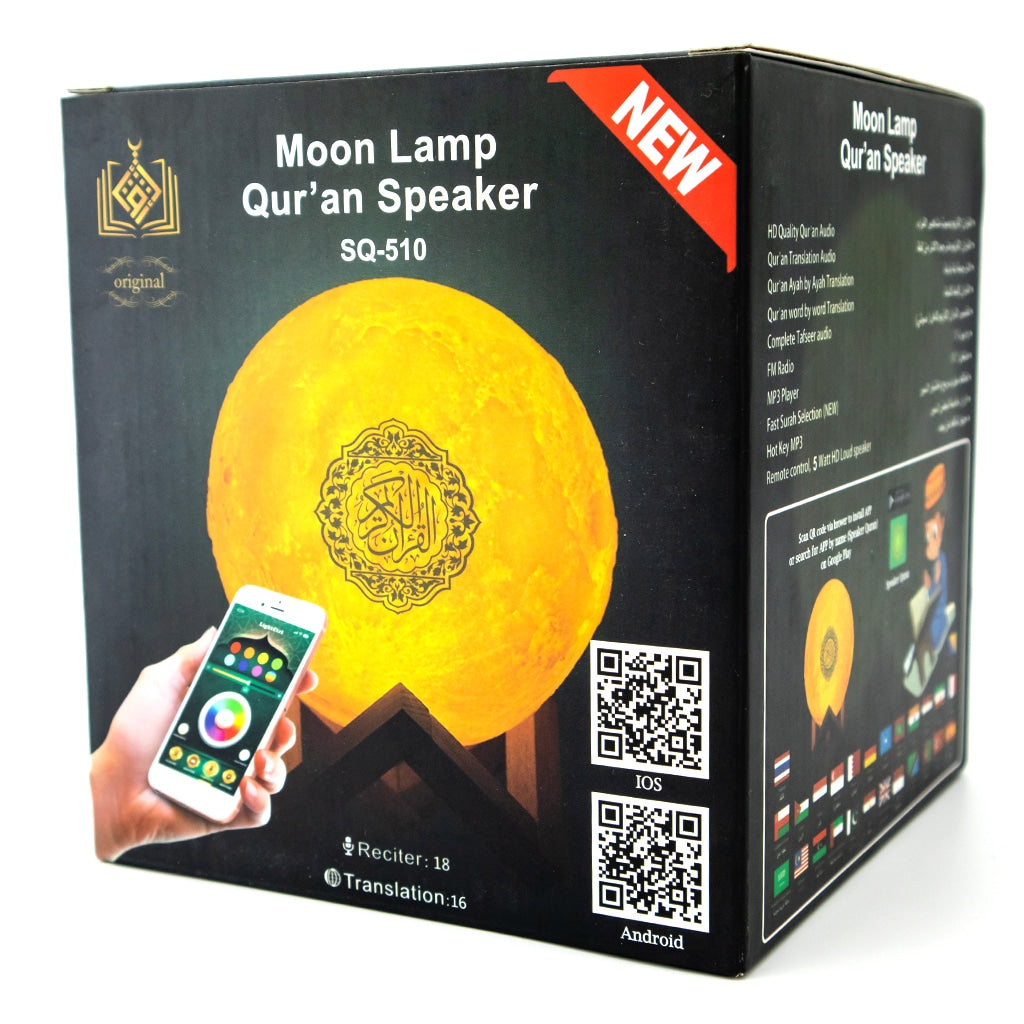
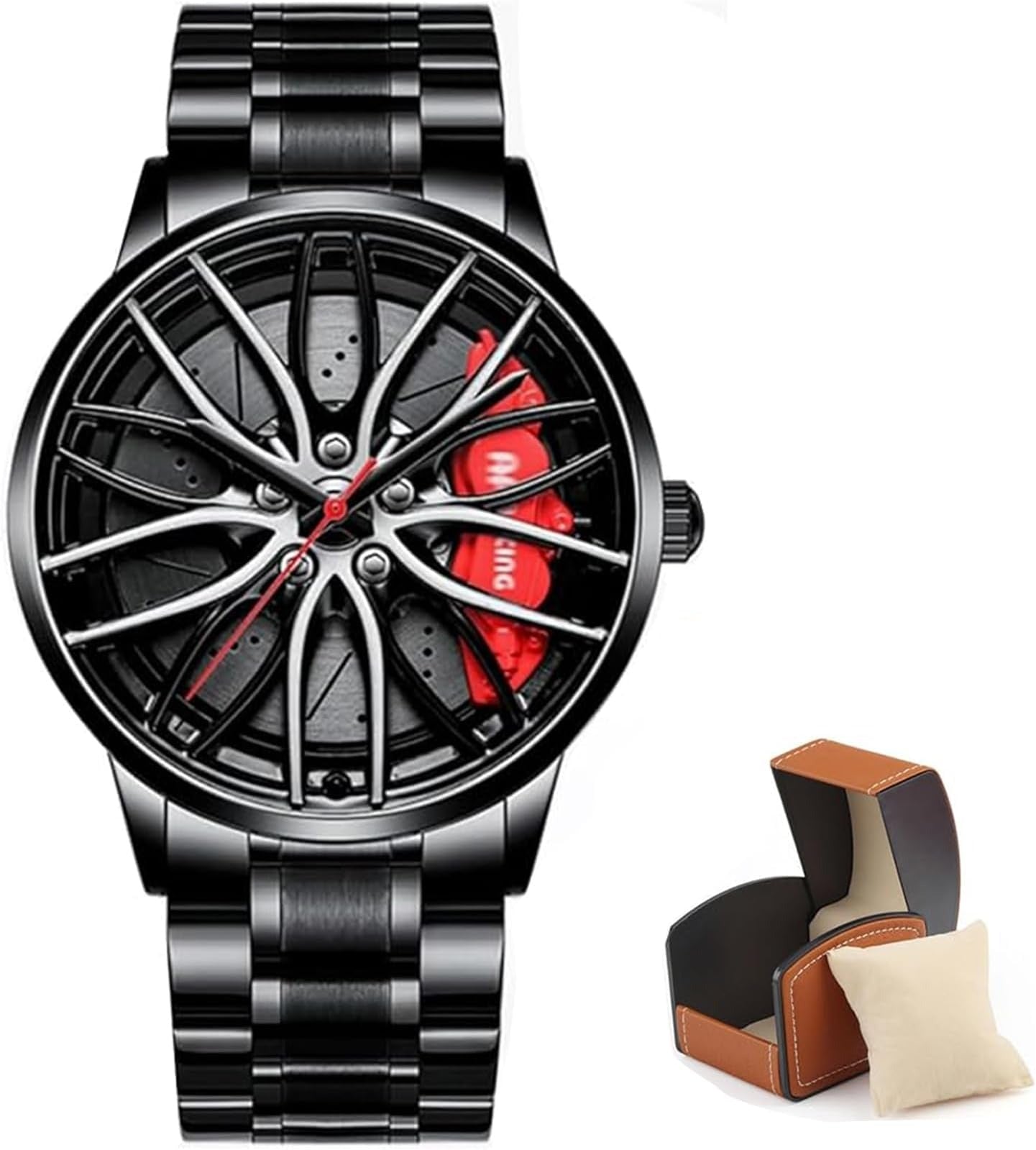
If you are browsing the wider catalogue, these three are also listed at WLD Store.

Frequently asked questions about the led motion sensor light
Does an led motion sensor light need any wiring?
A solar model does not. It charges from its own panel, so installation is a bracket and a few screws with no electrician involved. That is the main reason people choose solar for gates, garden paths and outbuildings where mains power never reached.
How long does it stay on after being triggered?
That depends on the mode selected. Units of this type typically light for a short period after the last detected movement, then return to standby. If a spot needs longer illumination, choose a mode with a constant low glow that brightens on detection.
Will rain or dust damage it?
The WLD Store unit is rated IP65, which means dust-tight and protected against water jets, so normal weather is not a problem. Dust does not damage it but does reduce charging, which is why wiping the panel is the most important maintenance job.
Why does my led motion sensor light come on when nobody is there?
Passive infrared sensors respond to warm objects moving across the view. Cats, birds, sun-warmed branches and hot air from a vent all qualify. Re-aiming the sensor so those things fall outside the cone solves it in almost every case.
Can I use one indoors?
You can, but there is little point. Solar units need daylight on the panel to charge, and an indoor position rarely provides it. Indoors, a battery or mains sensor light designed for the job is the better choice.
How many should I fit around a house?
Think in terms of approaches rather than walls. Most homes have two or three routes someone would actually walk: the main gate, a side passage and a back door. One well-aimed led motion sensor light on each covers far more than several units crowded on the front elevation.
Good outdoor lighting is about the right light in the right place, not the brightest light you can buy. Choose the approaches that matter, mount at a sensible height, keep the panel clean, and the system looks after itself. The Dual Solar LED Motion Sensor Light lists its full specification on the product page, and you can browse everything else in the Islamic Jewelry & Accessories section.




Add comment