A good handheld electronic game does something a phone rarely manages: it keeps a child busy without a login, a download or a data connection. That makes it one of the most practical things a parent can drop into a bag before a long drive to Abha or a wait at a clinic in Riyadh.
This guide explains what a handheld electronic game actually is, how the category differs from tablet play, and which features are worth paying attention to. It also covers matching a handheld electronic game to your child’s age, care, common faults and a short buying checklist, with the WLD Store pick shown in context rather than sold at you.
Why a handheld electronic game still makes sense
Screens are everywhere, so it is fair to ask why a single-purpose toy still has a place. The short answer is boundaries. A handheld electronic game does one job and then stops. There is no app store behind it, no notification, no autoplay video queued up after the last one, and no account attached to a child’s name.
That narrow scope is exactly what makes it useful in the moments parents dread. Waiting rooms, airport gates, long taxi rides and the last thirty minutes before dinner are all easier when a child has something absorbing but finite. Hand over a tablet in those moments and you usually end up negotiating about it later.
There is also a shared-play angle. Tic-tac-toe and memory sequences are old games precisely because they work between two people. A handheld electronic game with a two-player mode gives siblings something to do together, and gives a parent a way to join in for five minutes without learning a new interface.
Finally, cost and consequence are low. If a small plastic device is dropped on a marble floor or left in a hotel room, nobody’s photos, messages or school work go with it. For a lot of families, that alone justifies keeping a dedicated toy in the bag instead of handing over a phone.
What makes a good handheld electronic game
The category has a wide quality range, and the differences are mostly physical rather than technical. Once you know where to look, comparing two models takes about a minute. Here is what actually matters when you are picking a handheld electronic game for a child rather than a collector.

Buttons you can feel
Tactile buttons matter more than screen quality on a device this small. Children play by feel, often without looking down, and a button with a clear click tells them the input registered. Mushy, uneven buttons cause repeated presses, which frustrates a young player far faster than simple graphics do.
If you can handle the device before buying, press each button in turn and listen. Consistency across all of them is the sign to look for. On a handheld electronic game with a directional pad, check that diagonal presses do not stick.
Size, weight and grip
A device that fits a small hand is one a child will actually use. Anything that needs two adult-sized palms will be abandoned in the back seat within ten minutes. Look for rounded edges, a body narrow enough for short fingers to wrap around, and a weight light enough to hold at arm’s length.
Compactness has a second benefit. A handheld electronic game that slips into a jacket pocket or the side pouch of a school bag travels with the child instead of living at home, which is usually the whole point of buying one.
Display that survives daylight
Cars in Saudi Arabia get bright, and a dim panel is unreadable through a rear window at noon. A crisp, high-contrast display beats a large dull one every time. Simple segment or dot-matrix screens often perform better in sunlight than glossy colour panels, because there is less glare to fight.
Sound you can switch off
Beeps are part of the fun for the child and the main complaint from everyone else in the car. A mute switch, or at least a volume step, turns a handheld electronic game from a source of arguments into a genuinely quiet activity. Treat this as a requirement, not a bonus.
More than one game mode
A single game gets exhausted quickly. Multi-mode devices last because a child can move between a strategy game, a memory challenge and something faster when attention drifts. Four modes is a sensible sweet spot: enough variety to stay interesting, few enough that a child can learn them all.
Build quality and battery access
Look at where the seams meet and whether the battery door has a screw. A screwed door is safer around younger children and less likely to pop open in a bag. Check that the shell does not flex when squeezed, because flex is where cracks start after the first drop.
The WLD Store pick: Tic Tac Toe Bolt 4-in-1 Handheld Game
WLD Store lists the Tic Tac Toe Bolt 4-in-1 Handheld Game as a compact device aimed at exactly the situations described above. Here is what the listing itself states, kept separate from our general advice so you can judge the two independently.
- Product: Tic Tac Toe Bolt 4-in-1 Handheld Electronic Game
- Category: Baby & Kids, filed under Toys
- Brand: WLD
- SKU: WLD-KSA-0060-(KD-KD0104)
- What the listing says: four classic games in one compact unit, including tic-tac-toe and memory challenges, with a lightweight body, a bright display and button-based play
- Connectivity: the listing notes that no internet connection is required, which is what makes it suitable for travel, school breaks and road trips
- Market: available across Saudi Arabia through secure checkout
You can read the full specification, see every product photo and check current availability on the Tic Tac Toe Bolt 4-in-1 Handheld Game product page. We have deliberately not repeated anything the listing does not state.
Getting the best from a handheld electronic game
A toy like this needs almost no setup, but a few habits make the difference between a device that lasts a year and one that is forgotten in a drawer by the second week.
- Open it at home, not in the car. Learning the controls while moving is a recipe for motion sickness and frustration. Ten calm minutes at the kitchen table first pays off later.
- Play one full round together. Sit with the child through a complete game so they understand what winning looks like in each mode.
- Set the mute rule up front. Agree that sound is off in the car and on at home. Deciding this before the first trip avoids the argument entirely.
- Give it a home. A fixed pocket in the school bag or the car door means the device is found when it is needed.
- Carry one spare set of batteries. Keep them in the same pocket, still in the packet, so nobody has to hunt for them mid-journey.
One more thing worth doing early: let the child lose a few rounds. A handheld electronic game that is always beaten on the first try stops being interesting. Devices with difficulty steps are worth setting a notch higher than feels obvious.
Travel, car journeys and school breaks
Most of the value in this category shows up away from home. Long road journeys between cities are the obvious case, but the smaller occasions add up faster: the school run in heavy traffic, an hour in a government office, a delayed flight, a long family lunch where the youngest has finished eating.
For car use, a handheld electronic game beats a tablet on two counts. It is far lighter to hold for a long stretch, and it does not need a charger cable snaking across the back seat. Nothing is streaming, so nobody is asking about signal coverage on the desert stretch between towns.
For flights, the no-connection point matters again. There is no need to download anything before boarding and no aeroplane-mode conversation. Cabin crew generally have no issue with a small battery toy, though sound should stay off out of courtesy.
School breaks and holidays create a different problem: too much unstructured time. A device with several modes gives a child something to work at rather than passively consume, which is a small but real distinction when screen limits are already tight in your household.
Matching a handheld electronic game to your child’s age
Age fit is where most disappointed purchases come from. The handheld electronic game is fine; the match is wrong. A rough guide helps.
Younger children, broadly four to six, do best with big buttons, immediate feedback and games with no reading. Memory and pattern modes work well here because success does not depend on strategy. Expect short sessions and plenty of restarts.
From about seven to ten, strategy starts to land. Tic-tac-toe becomes genuinely interesting once a child can see two moves ahead, and this is the age where a handheld electronic game gets played until the batteries run flat. Two-player modes are used most in this band.
Older children often keep one in a bag as a backup rather than a main activity, and that is a perfectly good outcome. It is the thing they reach for when a phone is out of battery or has been put away for the evening.
For very young children, check the battery compartment first. Small cells are a genuine hazard, so a screwed door is not optional. If the compartment opens without a tool, the device belongs to an older sibling.
Care and maintenance for a handheld electronic game
These devices are simple, and simple things last if you treat them sensibly. None of this takes more than a minute a week.
- Wipe the screen with a dry microfibre cloth. Skip household sprays; alcohol-based cleaners cloud plastic panels over time.
- Keep it out of parked cars. Interior temperatures in a Saudi summer are hard on both plastic and batteries. Bring the device inside with you.
- Remove batteries before long storage. If a handheld electronic game is going into a cupboard for a season, take the cells out to avoid leakage damage.
- Clear crumbs from around the buttons. A soft dry brush works. Compressed air pushed straight into a seam can force debris deeper.
- Check the battery door screw every few months. It loosens with repeated changes and is easy to tighten.
- Store it away from liquids. A water bottle in the same bag pocket is the most common cause of failure in kids’ electronics.
Batteries deserve a note of their own. Alkaline cells are the usual choice for a device like this, and mixing old and new cells is the fastest route to unreliable behaviour. Change the full set at once, and read a little about the wider handheld game console category on Wikipedia if you are curious how these devices evolved from single-game units into multi-mode toys.
Common handheld electronic game problems and quick fixes
- Screen is on but nothing responds. Almost always weak batteries. Displays keep working at voltages too low to drive the processor reliably, so swap the full set before assuming a fault.
- One button needs a hard press. Usually debris under the pad rather than a broken contact. Turn the device upside down, tap gently, and brush the seam.
- Sound is distorted or crackly. Check whether the speaker slot is blocked by lint from a bag. A dry brush across the grille solves most cases.
- Device resets mid-game. Look at the battery contacts for corrosion or a bent spring. A gentle scrape with a dry cotton bud restores contact; a spring that stays flat needs the device replaced.
If none of those apply and the device is genuinely dead, resist the urge to open the shell. On a sealed handheld electronic game there is nothing user-serviceable inside, and prising the case usually breaks the clips that hold it together.
Handheld electronic game versus a tablet
This is the comparison most parents are actually making, so it deserves a straight answer rather than a sales pitch.
A tablet wins on range. It plays video, runs school apps, opens a browser and grows with the child. If you need one device to cover everything, a tablet is the honest answer and no handheld electronic game replaces it.
The dedicated device wins on containment, cost of loss, battery independence and the absence of anything to supervise. There is no browser to filter, no in-app purchase to block and no account to manage. For a parent who wants a child occupied for forty minutes with zero admin, that is the whole argument.
Many families end up owning both and using them for different jobs: the tablet at home under supervision, the small device in the bag for everywhere else. Framed that way, a handheld electronic game is not competing with a tablet at all.
Who a handheld electronic game is not for
Being honest about fit saves returns. A handheld electronic game is a poor choice for a child who mainly wants to watch video, because nothing in the category does that. It is also wrong for a child who has moved on to console or PC gaming; simple modes will feel thin after that.
It is not a learning device either. Some models market educational value, but memory and strategy modes are entertainment first. If your goal is structured practice in maths or letters, buy something built for that instead.
Finally, it is not a quiet toy unless it can be muted. If the model you are looking at has no volume control, assume you will hear every beep of every round.
Handheld electronic game buying checklist
- Can the sound be turned off completely? If not, keep looking, whatever else the device offers.
- Is the battery compartment secured with a screw? Essential for any household with a child under six.
- Do the buttons feel consistent? Press every one; a single soft button will annoy a player daily.
- Are there enough modes to hold attention? Two is thin, four is usually enough, twenty is often marketing.
- Does it fit the pocket it will live in? Measure the school bag pouch or the car door bin before ordering.
Other Baby & Kids picks at WLD Store
If a handheld electronic game is not quite the right fit, these three toys from the same section solve related problems, from quiet drawing to counting practice.
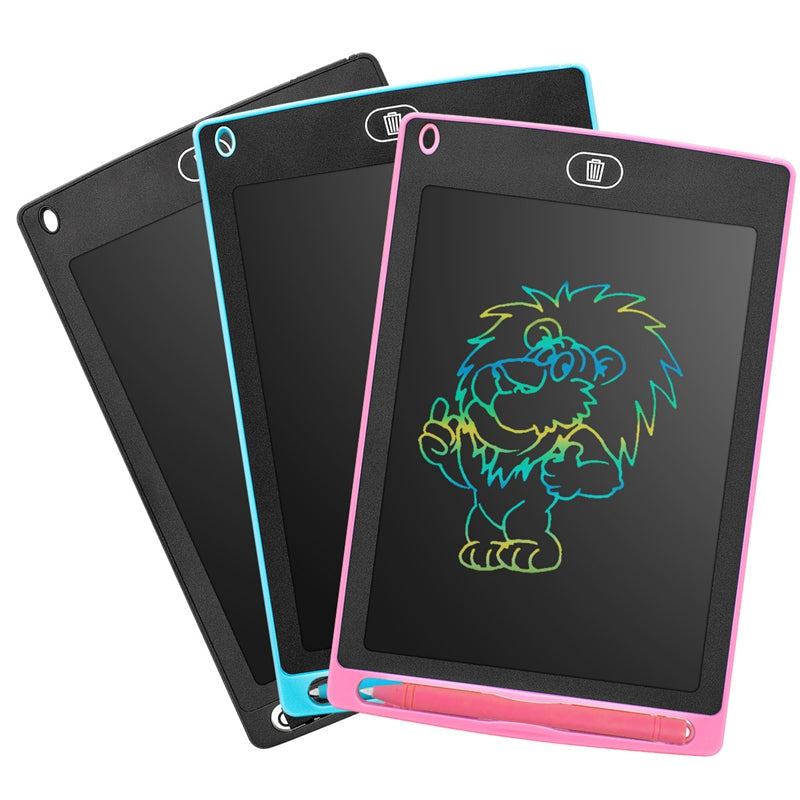
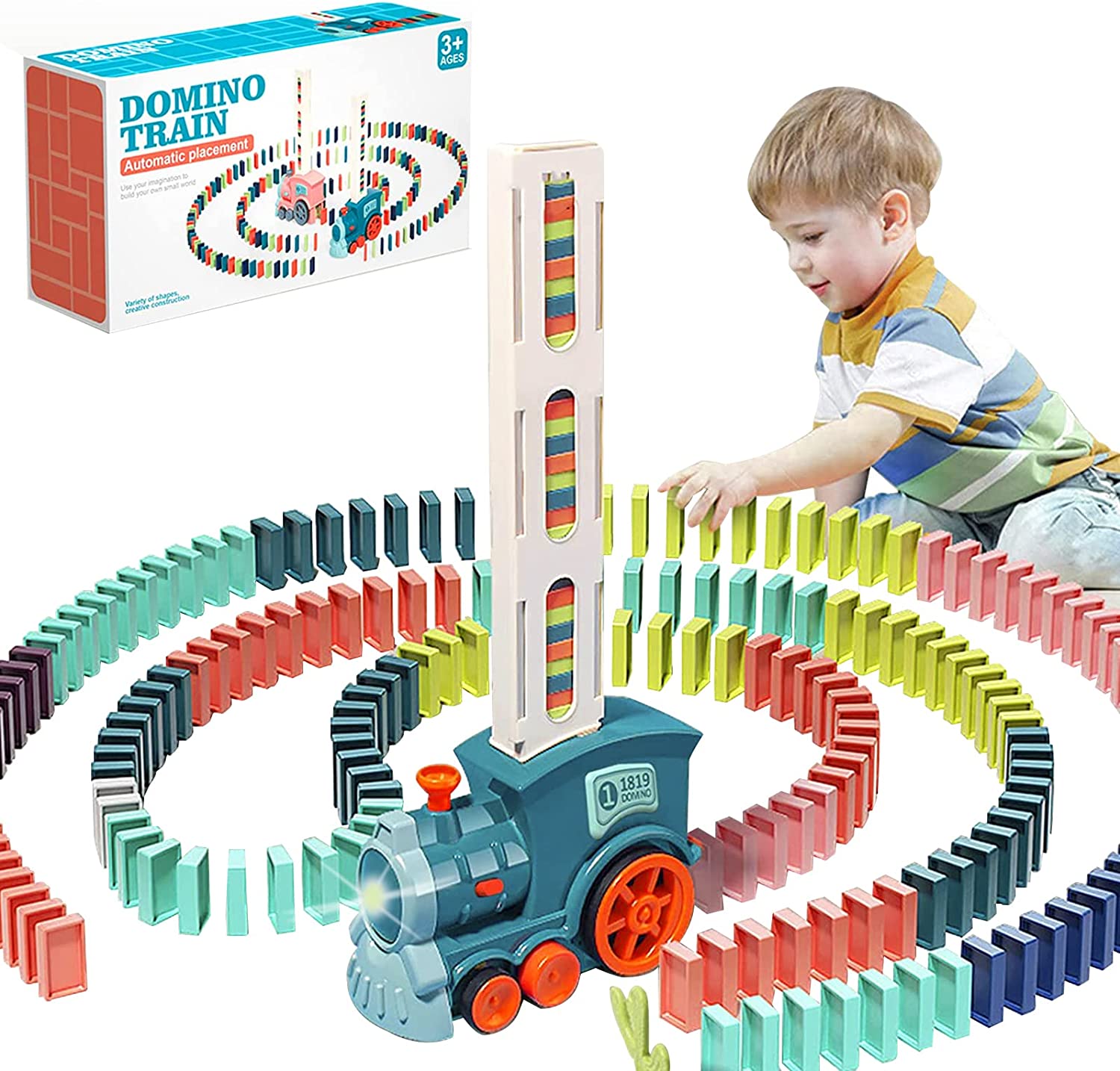
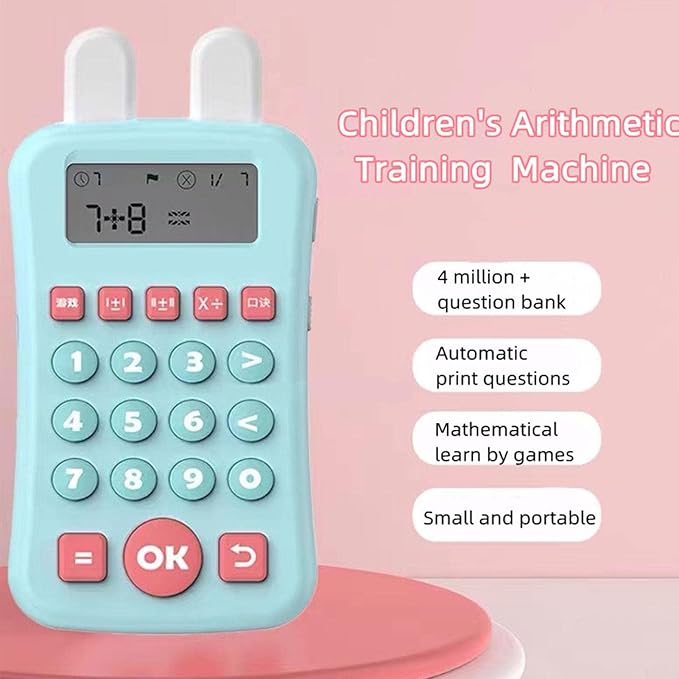
The LCD drawing tablet suits a child who prefers to draw, the domino train set works for hands-on play at a table, and the early education machine is the one to look at if you want counting practice rather than entertainment.
Frequently asked questions about a handheld electronic game
Does a handheld electronic game need Wi-Fi or mobile data?
No. This is the defining feature of the category. Everything runs on the device itself, so it works on a plane, in a basement car park, or on a highway with no coverage. The WLD Store listing for the Tic Tac Toe Bolt specifically states that no internet is required.
What age is a handheld electronic game suitable for?
Broadly from around four upwards, with the caveat that younger children need a screw-secured battery compartment. Pattern and memory modes suit four to six, strategy modes land best from seven to ten, and older children tend to use one as a backup activity.
How long do the batteries last?
That depends entirely on the model, the cells used and how loudly it is played, so no honest guide can give you a number. Sound is usually the biggest drain, so muting a handheld electronic game noticeably extends run time. Carry one spare set and you will not be caught out.
Can two children play on the same device?
On models with a two-player mode, yes, by passing the device between turns. Tic-tac-toe works especially well this way. Check the mode list before buying if shared play is the main reason you want one.
Is it a good gift for a long flight?
It is one of the better options, because there is nothing to download beforehand and no charging cable to manage. Keep the volume off in the cabin. A handheld electronic game also survives being dropped between seats better than a large tablet does.
Will it replace screen time on a phone?
Partly, and that is usually the realistic goal. It substitutes well for the short filler moments where a phone gets handed over, but it will not compete with video. Most families use it alongside other devices rather than instead of them.
A handheld electronic game is a small purchase that solves a specific, recurring problem: keeping a child genuinely occupied when there is nothing else to do and no connection to rely on. Check the mute switch, the battery door and the button feel, match the modes to the child’s age, and it will earn its place in the bag. You can see the full details on the Tic Tac Toe Bolt 4-in-1 Handheld Game page, or browse the wider range in the Toys section to compare it against other toys before deciding.



Add comment