A hair straightener comb is the tool for people who want smooth hair in the morning without the learning curve of a flat iron. You brush, the heat travels through the teeth as you go, and hair comes out straighter and calmer in roughly the same motion you already use.
This guide explains what a heated brush actually does to a strand, how ionic and ceramic features change the result, how to pick a temperature that suits your hair, and the technique that gets the most out of one pass instead of five. It also covers cleaning, safety and the honest limits of the format.
Why a hair straightener comb suits everyday styling
A flat iron clamps a section between two plates and forces it straight. That produces the sharpest possible finish, and it also demands sectioning, coordination and a certain tolerance for burning your fingers. Most people who own one use it far less often than they intended.
A hair straightener comb replaces the clamping with brushing. Heated teeth pass through the hair while the bristles keep it under tension, so you are straightening and detangling at once. The result is a soft, blow-dried kind of straight rather than a poker-flat one, which is what most people actually want on a working morning.
The speed difference is the real argument. A flat iron works one thin section at a time; a heated brush covers a much wider swathe with each stroke. For thick hair, that can turn a twenty-minute routine into something closer to eight.
There is a safety benefit too. Because the hot surface sits between teeth rather than on an exposed plate, a hair straightener comb is much harder to press against your scalp or your neck by accident, which is the main reason it suits beginners and anyone styling in a hurry.
What ionic and ceramic mean on a hair straightener comb
Two features appear on nearly every heated brush, and both do something specific rather than being decoration.
Ionic technology releases negatively charged ions as the tool heats. Hair that has been brushed carries a positive static charge, which is what makes strands repel each other and stand away from the head. Neutralising that charge is why ionic styling reduces flyaways and frizz rather than simply flattening them temporarily.
Ceramic coating is about how heat behaves on the surface. Ceramic heats evenly and holds a steady temperature, so there are no hot spots along the teeth. On a hair straightener comb that matters more than on a flat iron, because the teeth are small and any unevenness would show up as inconsistent results across a single stroke.
Together they change the trade you are making. Even heat means fewer passes; fewer passes means less total heat exposure; and an ionic finish means the smoothness holds up better once you walk outside.
What makes a good hair straightener comb
Every hair straightener comb looks similar, so the differences come down to four practical things.
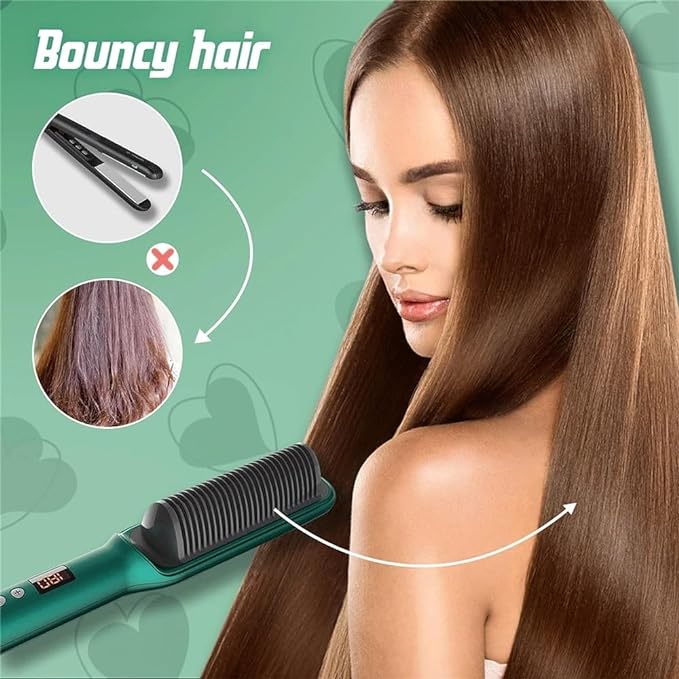
How fast it heats
Heat-up time decides whether the tool gets used on a rushed morning. Something that reaches working temperature in about a minute can be switched on while you finish getting ready; anything much slower tends to be skipped when you are late.
Adjustable temperature
A single fixed setting is the biggest weakness a heated brush can have, because fine hair and coarse hair need genuinely different heat. Adjustable temperature is what makes one hair straightener comb work for a whole household rather than for one person.
Tooth design and coating
Teeth should be smooth, rounded and evenly spaced, with a ceramic coating that lets hair slide rather than snag. Rough or bare metal teeth catch on tangles, and catching at 200 degrees is how breakage happens.
Weight and handle balance
You hold this at head height with one arm for several minutes. A light body and a handle that stays cool make far more difference to the experience than any specification, particularly if your hair is long enough to need both hands.
The WLD Store pick: 3 in 1 Hair Straightener Comb
This is the hair straightener comb WLD Store stocks for shoppers who want straightening, styling and smoothing from a single tool.
- Product: Hair Straightener Comb, a 3 in 1 straightening brush
- Function: straightens, styles and smooths hair in one step
- Frizz control: ionic technology to reduce frizz while styling
- Teeth: ceramic coated, designed to protect hair as it passes through
- Heat-up: reaches 200°C in around 60 seconds
- Control: adjustable temperature, listed as safe for all hair types
- Category: Beauty & Personal Care, Hair Care · Brand: WLD · SKU: WLD-KSA-0116-(KD-049)
- Availability: available across Saudi Arabia through secure checkout
Photographs and the full specification sit on the 3 in 1 Hair Straightener Comb product page. The combination of adjustable heat and a fast warm-up is what makes it practical for daily rather than occasional use.
How to use a hair straightener comb: 9 easy steps
Technique is what separates one clean pass from five frustrating ones. These nine steps cover the whole routine.
- 1. Start with completely dry hair. Damp hair and high heat is how strands are damaged. If it feels cool to the touch, it is still wet.
- 2. Apply heat protectant. A light mist through the mid-lengths and ends, brushed through evenly. This is the cheapest damage prevention available.
- 3. Detangle first. Brush hair out fully before the tool is switched on, so nothing catches once the teeth are hot.
- 4. Pick your temperature, not the maximum. Start lower than you think you need and work up only if a section is not responding.
- 5. Section the hair. Clip the top half up and work from the bottom. Wide sections are fine, but the tool has to reach through them.
- 6. Go slowly. One steady, unhurried stroke from root to tip works better than three quick ones, and exposes hair to less total heat.
- 7. Follow with your free hand. Running a hand behind the hair straightener comb keeps tension on the section and makes each pass noticeably more effective.
- 8. Turn the wrist at the ends. A slight rotation on the final centimetres gives a soft inward curve instead of a blunt straight edge.
- 9. Let it cool before you touch it. Hair sets as it cools, so leave it alone for a minute rather than brushing straight away.
Most people find the whole routine settles at five to ten minutes once they stop trying to rush individual sections.
Choosing the right hair straightener comb temperature
Heat is not a difficulty setting, and higher is not better. The right temperature is the lowest one that straightens your hair in a single pass, and finding it takes one session of experimenting.
Fine, light or previously bleached hair belongs at the bottom of the range. It transfers heat quickly and shows damage sooner than any other type, and it usually straightens easily at temperatures that would barely affect coarse hair.
Thick, coarse or very curly hair needs more heat and benefits most from a tool that can reach the top of the range. Even so, the honest test is the same: if a section is smooth after one slow pass, the temperature is right, and turning it up further only adds damage without adding results.
Matching a hair straightener comb to your hair type
Wavy hair is the easiest match. A heated brush relaxes waves into a smooth, natural-looking finish quickly, and because it does not flatten hair completely the result keeps some body.
Thick and frizzy hair sees the biggest time saving. This is the hair type that takes longest with a flat iron and responds best to a tool that covers a wide section at once, particularly with ionic frizz control working at the same time.
Tightly curled hair is where expectations need adjusting. A hair straightener comb will stretch and smooth a curl pattern considerably, but a very tight curl generally needs a flat iron afterwards for a truly sleek finish. Many people use the brush to do most of the work and the iron only where it matters.
What else a hair straightener comb can do
The three-in-one description is fair, because the same tool does several jobs depending on how you move it. Straightening is the obvious one, and the most common reason people buy.
Smoothing is the second, and it is different. On days when you like your natural texture but not the frizz, a single slow pass over the surface layers calms flyaways without removing the shape underneath. It takes about two minutes.
Styling is the third. Turning the wrist at the ends creates a soft bend, and drawing the hair straightener comb over the roots at the crown lifts hair away from the scalp for volume. Neither needs any additional attachment.
Fitting it into a morning routine
The practical advantage of a fast heat-up is that the tool fits into the gaps rather than needing its own slot. Switch it on when you start getting ready and it is waiting by the time you need it.
Where it lives decides how often it is used. A hair straightener comb kept in a drawer near a mirror and a socket gets used most mornings; the same tool stored in a box at the back of a cupboard gets used before events only.
Touch-ups are the underrated use. Hair that has been slept on, tied back, or caught by humidity rarely needs the whole routine again, and thirty seconds on the front sections is usually enough to make it look intentional.
Build in the cool-down. The tool stays hot for several minutes after switching off, so a heat-resistant mat or a spot where nothing can fall against it saves both worry and worktops.
Limiting heat damage
Every heated tool costs something, and the goal is to keep the cost low rather than pretend it is zero. Frequency matters most. Daily straightening is harder on hair than three times a week, and finding a style that survives two days is the single biggest improvement most people can make.
Protectant products genuinely help. They slow the rate at which heat reaches the strand and reduce moisture loss, which is why hair styled with protectant stays flexible while unprotected hair turns brittle over months.
Watch the ends. They are the oldest hair and have been styled the most, so they need the fewest passes and the lowest heat. Many people run a hair straightener comb through the roots and mid-lengths and barely touch the last few centimetres.
Deep condition weekly. A conditioning treatment replaces some of the moisture heat styling removes, and it makes the next styling session easier because smoother hair needs fewer passes.
Care and cleaning for a hair straightener comb
Product residue is the main thing that shortens the life of a heated brush. Hairspray, serum and heat protectant bake onto the teeth and gradually stop hair sliding through, which is usually mistaken for the tool losing power.
Clean it cold and dry. Once the tool is completely cool and unplugged, work a dry cloth between the teeth and lift out trapped hair with your fingers or an old toothbrush. Do not run it under a tap.
Look after the cable. Wrapping a lead tightly around a hot body is what breaks it near the base over time. Loop it loosely instead, and never store a hair straightener comb still warm inside a closed bag.
Check the teeth occasionally. Any chip or roughness in the ceramic coating will start catching hair, and that is the point at which the tool should be retired rather than pushed through another few months.
Common problems and quick fixes
Four complaints cover almost everything people run into with a hair straightener comb.
- Hair is not straightening. Usually sections that are too thick for the teeth to reach through, or moving too fast. Take thinner sections and slow the stroke before raising the heat.
- Frizz appears within an hour. Often hair that was not completely dry, or a missing heat protectant. Humidity finds any moisture left in the strand.
- The tool catches or pulls. Residue on the teeth, or hair that was not detangled first. Clean the teeth cold and brush hair out before switching on.
- Results have got worse over time. Almost always build-up rather than a fault. A hair straightener comb with clean teeth performs like a new one.
Hair straightener comb, flat iron or blow-dry brush
A flat iron still wins for a perfectly sleek finish, tight curl patterns and anything sharp or precise. It is slower, needs more skill, and applies concentrated heat to thin sections.
A blow-dry brush works on wet hair and dries while it styles, which suits people who want volume and movement more than straightness. It replaces a dryer rather than a straightener.
A hair straightener comb sits between them: used on dry hair, quicker than an iron, softer in finish, and easier to handle. For most people it becomes the everyday tool, with a flat iron kept for occasions.
Safety and travelling with it
Treat it like any other high-heat appliance. Never leave it switched on unattended, keep it well away from children, and rest it on a heatproof surface rather than a towel or a bathroom counter.
Let it cool completely before packing. A warm tool in a bag is a risk to the bag and to everything in it, and a heat-resistant pouch is worth having if you travel often.
Check the voltage before travelling abroad and never plug a styling tool into an adaptor that is not rated for the load. A hair straightener comb draws real power, and cheap adaptors are a common cause of trouble.
Buying checklist before you order
Five questions worth answering before any hair straightener comb goes into a basket.
- Is the temperature adjustable? Without it, fine hair and coarse hair cannot both be styled safely.
- How quickly does it heat? Around a minute is what makes daily use realistic.
- Are the teeth ceramic coated? Coated teeth are what let hair slide instead of snagging.
- Does it offer ionic frizz control? This is the feature that keeps the finish once you go outside.
- Is it light enough to hold up? A hair straightener comb that tires your arm gets abandoned quickly.
Other Beauty & Personal Care picks at WLD Store
These three sit nearby in the catalogue and cover the rest of a home and travel routine.
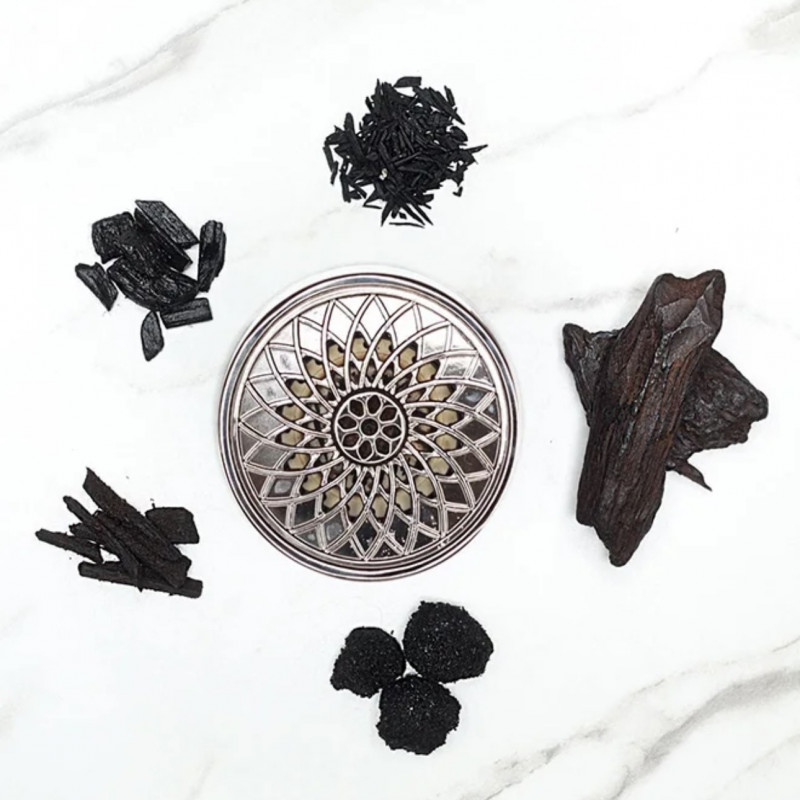
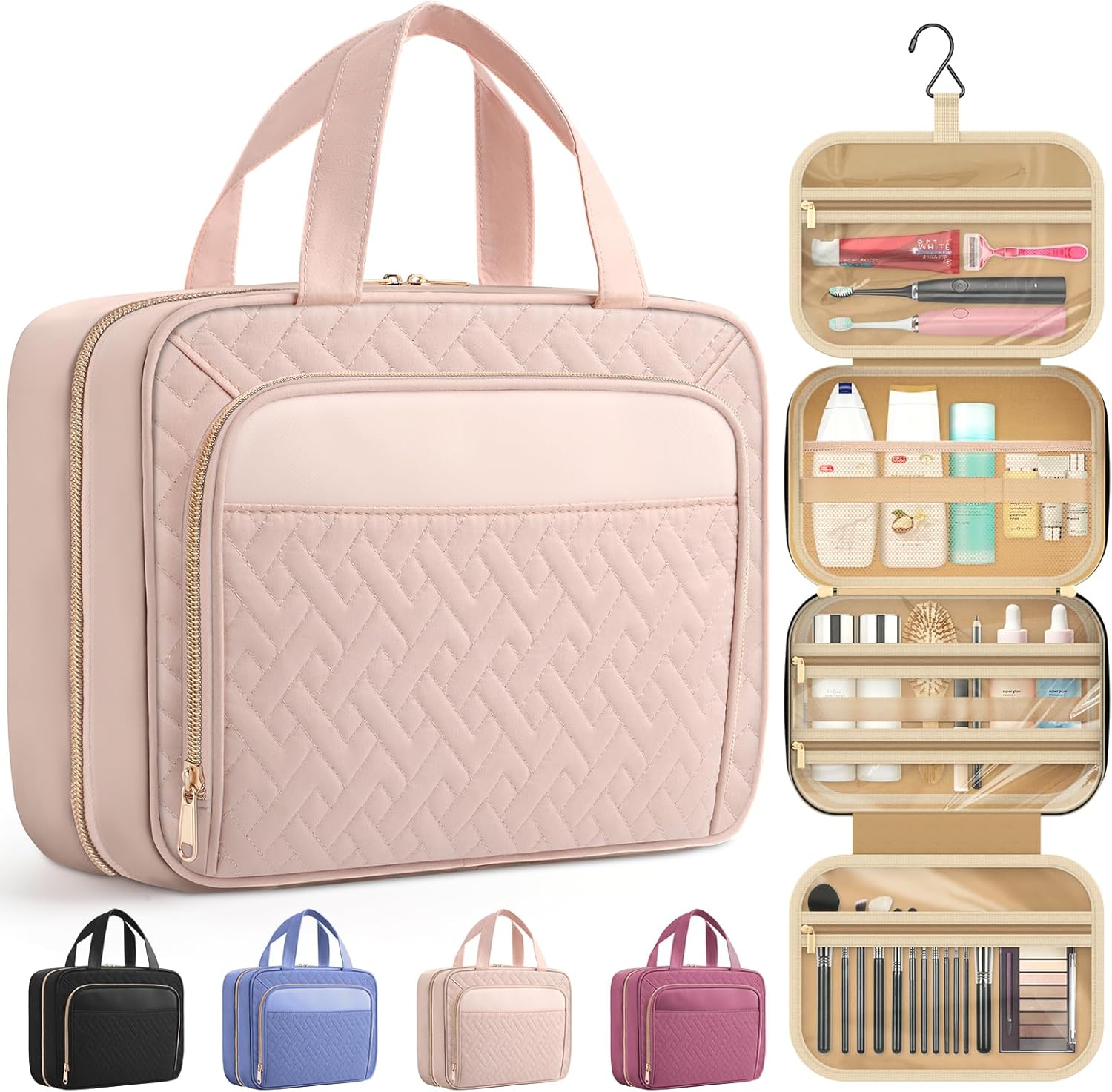
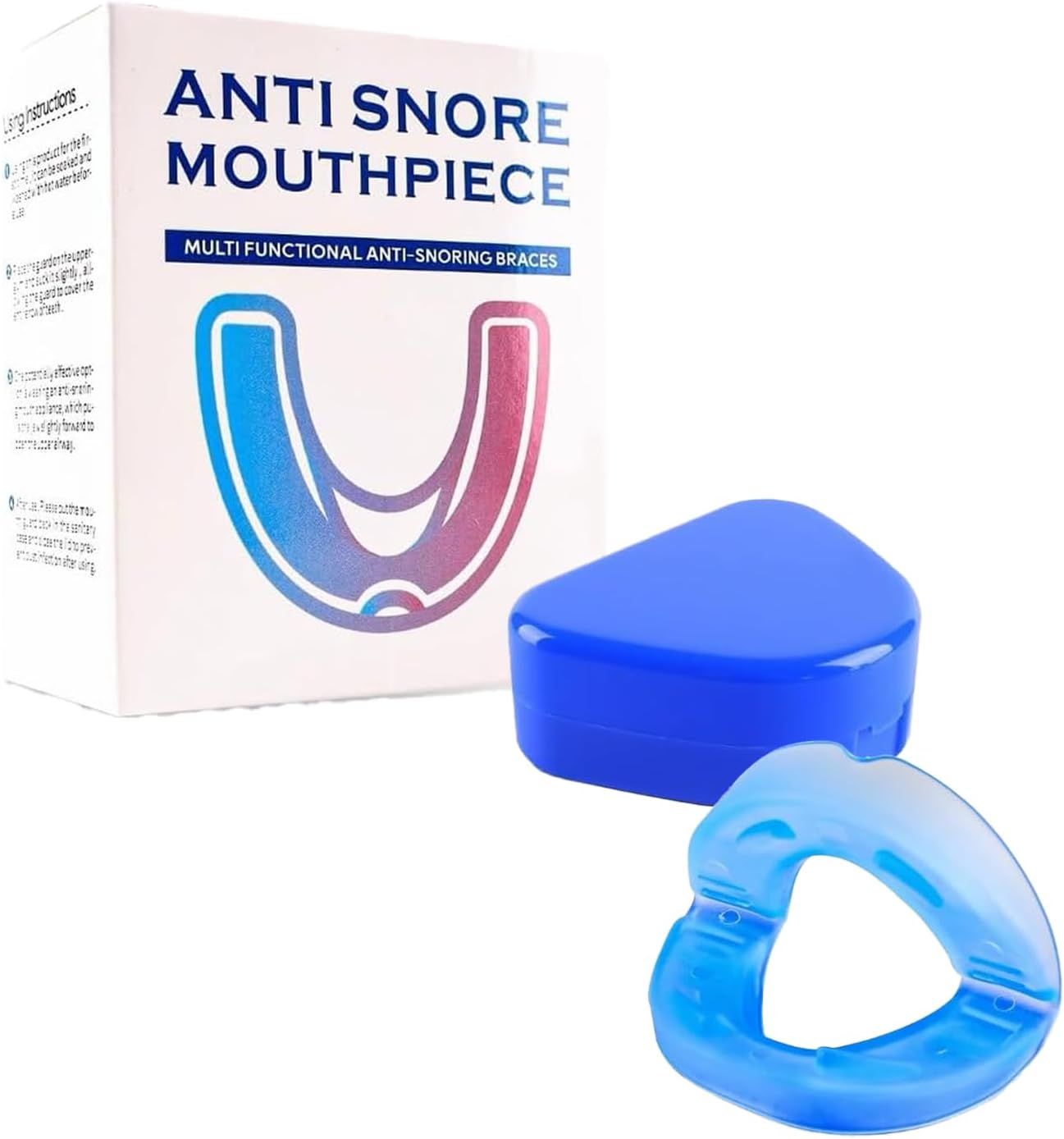
The Large Travel Cosmetic Bag is the natural pairing, since a styling tool and its protectant sprays travel better kept together.
Frequently asked questions about the hair straightener comb
Can I use it on wet hair?
No. This is a dry-hair tool, and applying high heat to wet hair forces the water inside the strand to expand, which damages it from within. Dry hair fully first, then style.
What temperature should I choose?
The lowest that works in one pass. Fine or bleached hair belongs at the bottom of the range, thick and coarse hair towards the top. Because this model has adjustable temperature, it is worth spending one session finding your setting rather than defaulting to maximum.
Will it work on very curly hair?
It will stretch and smooth a curl pattern considerably and cut styling time. For a completely sleek finish on tight curls, most people follow with a flat iron on the sections that need it, using the hair straightener comb to do the bulk of the work first.
How often can I use it?
As often as your hair tolerates, though every other day is kinder than daily. Always pair it with a heat protectant, and keep a weekly conditioning treatment in the routine to replace moisture the heat removes.
Can men use it for longer hair or beards?
For longer hair, yes, and the technique is identical. Beards need a tool designed for that purpose and a much lower temperature, so a full-size hair straightener comb is not the right choice there.
How do I clean the teeth properly?
Unplug it, let it cool completely, then work a dry cloth and an old toothbrush between the teeth to lift residue and trapped hair. Never use water or immerse any part of it.
A heated brush is one of the few styling tools that genuinely saves time rather than just promising to. The technique takes one session to learn, and after that it is a matter of switching it on and running it through.
The full listing is on the 3 in 1 Hair Straightener Comb product page, and there is more hair care and beauty in the Hair Care section, available across Saudi Arabia.




Add comment