A pet hair comb brush is the tool that decides whether shedding season is a minor chore or a household problem. Fur that comes out onto a brush does not end up on the sofa, and a coat that is combed regularly mats far less than one that is only brushed when it starts to look untidy.
This guide explains how grooming tools differ, which technique suits which coat, how often to brush, and how to introduce a pet hair comb brush to an animal that dislikes being handled. The Pet Hair Cleaning Comb Brush sold by WLD Store to shoppers in Saudi Arabia serves as the worked example, described only from its listing.
Why a pet hair comb brush is worth using regularly
Every dog and cat sheds, and without a pet hair comb brush the fur has to go somewhere. Without regular grooming it goes onto clothes, carpets, car seats and the corners of every room. Brushing moves that process into a controlled ten minutes at a time of your choosing, which is the single biggest reason a pet hair comb brush earns its place in a household.
The benefit to the animal is larger than the benefit to the furniture. Loose undercoat that is not removed traps heat against the skin, which matters a great deal in a warm climate. Regular combing lifts that dead fur away and lets air reach the skin, which is far more comfortable for the animal than a dense, packed coat.
Matting is the other problem grooming prevents. A tangle that is caught early comes out in seconds; the same tangle left for a fortnight tightens against the skin and becomes painful to remove. Working through a coat with a pet hair comb brush on a routine schedule keeps small knots from ever reaching that stage.
There is a health-monitoring angle too. Running a brush over an animal every few days means your hands pass across its whole body regularly, which is how owners notice lumps, ticks, scabs and sore spots early. A grooming session is also a check-up, and that is a reason to use a pet hair comb brush that has nothing to do with tidiness.
What makes a good pet hair comb brush
Every pet hair comb brush looks similar on a shelf, yet they behave very differently in the hand. Four things decide whether a brush actually gets used: how the teeth are shaped, whether it clears itself, how it feels in the hand after ten minutes, and whether it suits the coat in front of you.
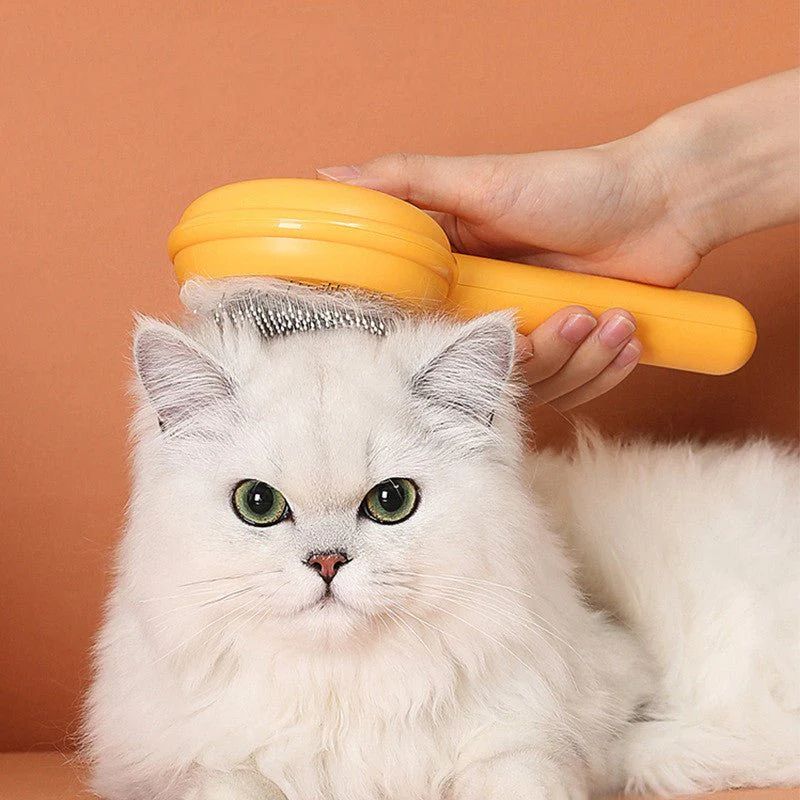
Teeth, pins and how they meet the coat
The working end of a pet hair comb brush determines everything. Fine, closely spaced teeth pull loose undercoat out efficiently but snag on tangles; wider spacing glides through a long coat but leaves more behind. Rounded tips are essential, because sharp points scratch skin and teach an animal to dislike the whole process. A good pet hair comb brush reaches the undercoat without dragging on the skin beneath it.
The self-cleaning mechanism
Anyone who has pulled a compacted wad of fur out of a brush by hand understands why this matters. This model has a self-cleaning button that ejects collected fur in seconds, which changes the rhythm of a session: you clear the brush and continue rather than stopping to unpick it. On a heavy-shedding animal, a self-clearing pet hair comb brush can be the difference between finishing the job and abandoning it halfway.
Handle comfort and grip
Grooming a large dog properly takes longer than people expect, and a handle that is comfortable for one minute may not be comfortable for fifteen. This tool is listed with an ergonomic handle intended for extended sessions. Look for a grip that does not need to be squeezed hard, since a tight grip transfers tension straight down your arm and into the animal.
Matching the tool to the coat
The listing describes this brush as suitable for dogs and cats of all coat types, which is the flexibility most households need when they have more than one animal. Short, smooth coats need light, frequent passes; double coats need patient work through the undercoat; long coats need detangling before any deshedding work begins. The same pet hair comb brush can serve all three if the technique changes with the coat.
The WLD Store pick: Pet Hair Cleaning Comb Brush
Here is what the WLD Store listing states about this pet hair comb brush for shoppers in Saudi Arabia, with nothing added beyond the listing itself.
- Category: Home & Kitchen
- Brand: WLD
- Purpose: a professional grooming tool for dogs and cats
- Removes: loose fur, tangles and debris
- Coat types: suitable for all coat types
- Cleaning: self-cleaning button that ejects collected fur in seconds
- Handle: ergonomic, intended for comfortable extended grooming sessions
- Market: available across Saudi Arabia
- SKU: WLD-KSA-0075-(KD-KD0105)
Photographs, variants and current availability for this pet hair comb brush are on the Pet Hair Cleaning Comb Brush product page, where orders are completed through secure checkout.
How to use a pet hair comb brush properly
Technique matters more than the tool itself when using a pet hair comb brush. These steps make sessions shorter, calmer and considerably more productive.
- Start with a dry, clean coat. Combing a damp or dirty coat drags, and dragging is what makes an animal resist the brush next time.
- Work in the direction the fur grows. Against the grain looks thorough but is uncomfortable and lifts skin along with fur.
- Go in sections. Finish one shoulder, then move on. Random passes over the whole animal leave patches half done and take longer overall.
- Detangle before deshedding. Hold the base of a knot with your free hand and work the tangle from the outside inwards so the pull never reaches the skin.
- Empty the brush often. A loaded grooming tool stops collecting. Press the self-cleaning button whenever it fills rather than pushing through.
- Stop while it is still going well. Ending a session before the animal is tired of it is what makes the next one easy.
Pressure is the mistake almost everyone makes. A pet hair comb brush should be drawn through the coat under its own weight with only light guidance; pressing harder does not remove more fur, it just scrapes the skin and turns grooming into something the animal avoids.
Building a grooming routine that sticks
How often you reach for a pet hair comb brush depends on the coat, the season and the animal, but the pattern below suits most households and is easy to maintain.
Short-coated dogs and cats. A few minutes twice a week is usually enough to control shedding. These coats do not mat, so the goal is purely removing loose fur before it transfers to the furniture.
Double-coated breeds. These need the most work, especially during a seasonal moult when the undercoat releases in quantity. Short daily sessions beat one long weekly one, both for the coat and for the animal’s patience.
Long-coated animals. Daily attention is realistic here because tangles form quickly. Concentrate on the friction points: behind the ears, under the collar, in the armpits and around the base of the tail, which is where mats begin.
Cats specifically. Cats groom themselves and swallow what they remove, so brushing reduces how much fur ends up being ingested. Keep sessions short and stop at the first sign of irritation; a cat that associates a pet hair comb brush with a long ordeal will vanish when it appears.
Seasonal changes. Coats respond to daylight and temperature, so shedding is rarely constant through the year. Expect a period where a pet hair comb brush fills two or three times in a single session, and treat that as normal rather than a sign something is wrong. Increasing frequency during those weeks and easing off afterwards keeps the coat in better condition than a fixed schedule applied all year round.
Introducing the brush to a nervous animal
An animal that dislikes a pet hair comb brush has usually learned that grooming hurts or that it goes on too long. Both are fixable with patience.
- Let them investigate the tool first. Leave it out, let it be sniffed, and pair it with something pleasant before it ever touches the coat.
- Begin where they already enjoy contact. Most dogs accept the shoulders and back long before they accept legs, belly or tail.
- Keep the first sessions very short. Thirty seconds and a reward beats ten minutes and a struggle.
- Never chase an animal that walks away. Ending the session when they leave teaches them that they have a say, which paradoxically makes them stay longer next time.
- Groom at a calm time of day. After exercise or a meal an animal is far more settled than before either.
Sensitive areas deserve extra care from the start. Ears, belly, armpits and the area around the tail have thin skin and less padding, so use the tips of a pet hair comb brush lightly there and finish those areas quickly rather than lingering.
Care and maintenance
A pet hair comb brush itself needs almost nothing, but that small amount of upkeep keeps it hygienic and effective.
- Clear it fully after every session. Fur left in a brush compacts and becomes much harder to remove later.
- Wash it periodically in warm soapy water. Skin oils build up on the teeth over time and reduce how cleanly the brush passes through a coat.
- Dry it completely before storing. Damp storage encourages odour, particularly where the teeth meet the base.
- Check the teeth for damage. A bent or chipped tooth scratches skin. Inspect them occasionally rather than waiting for the animal to object.
- Keep one brush per animal where possible. Sharing tools between animals with skin conditions is best avoided.
Store the brush where you will see it. A pet hair comb brush kept in a cupboard gets used far less often than one kept near where the animal settles in the evening, and consistency matters more here than any feature on the packaging.
Common problems and quick fixes
Four complaints cover nearly everything owners run into with a pet hair comb brush, and each has a straightforward cause.
- The brush pulls and the animal flinches. Too much pressure, or working against the grain. Lighten the hand and follow the direction of the fur.
- It stops picking up fur. The head is full. Clear it and continue; a loaded brush glides over the coat without collecting anything.
- Mats will not come out. Do not force them. Hold the base of the mat, tease it apart from the outer edge, and accept that a tight mat close to the skin is a job for a groomer.
- The animal leaves as soon as it appears. Sessions have been too long or too firm. Restart with very short, rewarded sessions and rebuild from there.
How it compares with a deshedding blade or a rubber mitt
The obvious alternatives to a pet hair comb brush are a bladed deshedding tool and a soft rubber grooming mitt, and each has a genuine niche. A blade removes undercoat aggressively and quickly, which suits heavy double coats during a moult but can damage the coat if overused.
A rubber mitt is the gentlest option and is excellent for short-coated animals and for those who will not tolerate anything rigid. What it cannot do is reach undercoat or work through a tangle, so it complements a proper comb rather than replacing one.
A pet hair comb brush sits between the two. It reaches deeper than a mitt without the aggressiveness of a blade, and it handles tangles and debris as well as loose fur. For a household with more than one animal and more than one coat type, that middle ground is usually the most practical single purchase.
Households with a heavy shedder often end up owning two tools and using them for different jobs. That is a sensible outcome: a pet hair comb brush for routine sessions, and something more specialised for the few weeks a year when the undercoat releases in earnest.
When to see a groomer instead
Tight mats close to the skin should not be tackled at home. Skin under a mat is often inflamed and fragile, and scissors near it are how serious injuries happen. A groomer has clippers designed for the job and can remove the mat safely in minutes.
Skin conditions are the other boundary. Bald patches, persistent scratching, scabs or an unpleasant smell are veterinary matters rather than grooming ones, and no pet hair comb brush addresses an underlying skin problem. Get the cause treated first and resume routine grooming afterwards.
Finally, some animals genuinely will not tolerate handling, and forcing the issue damages trust for everything else. A professional session a few times a year, combined with light maintenance at home, is a reasonable compromise for an animal that finds grooming stressful.
Buying checklist
Five questions to settle before ordering a pet hair comb brush for your household.
- What coat types are you dealing with? One tool can cover several, but the technique changes for each.
- Does the head clear itself? On a heavy shedder this feature does more for session length than anything else.
- Is the handle comfortable for a long session? Grooming a large dog is not a two-minute job.
- Are the tooth tips rounded? Sharp tips are the fastest way to teach an animal to hate being brushed.
- Do you need more than one? Multi-animal households often benefit from a brush each.
Other home picks at WLD Store
These three products sit nearby in the WLD Store catalogue and cover related household cleaning and kitchen jobs.


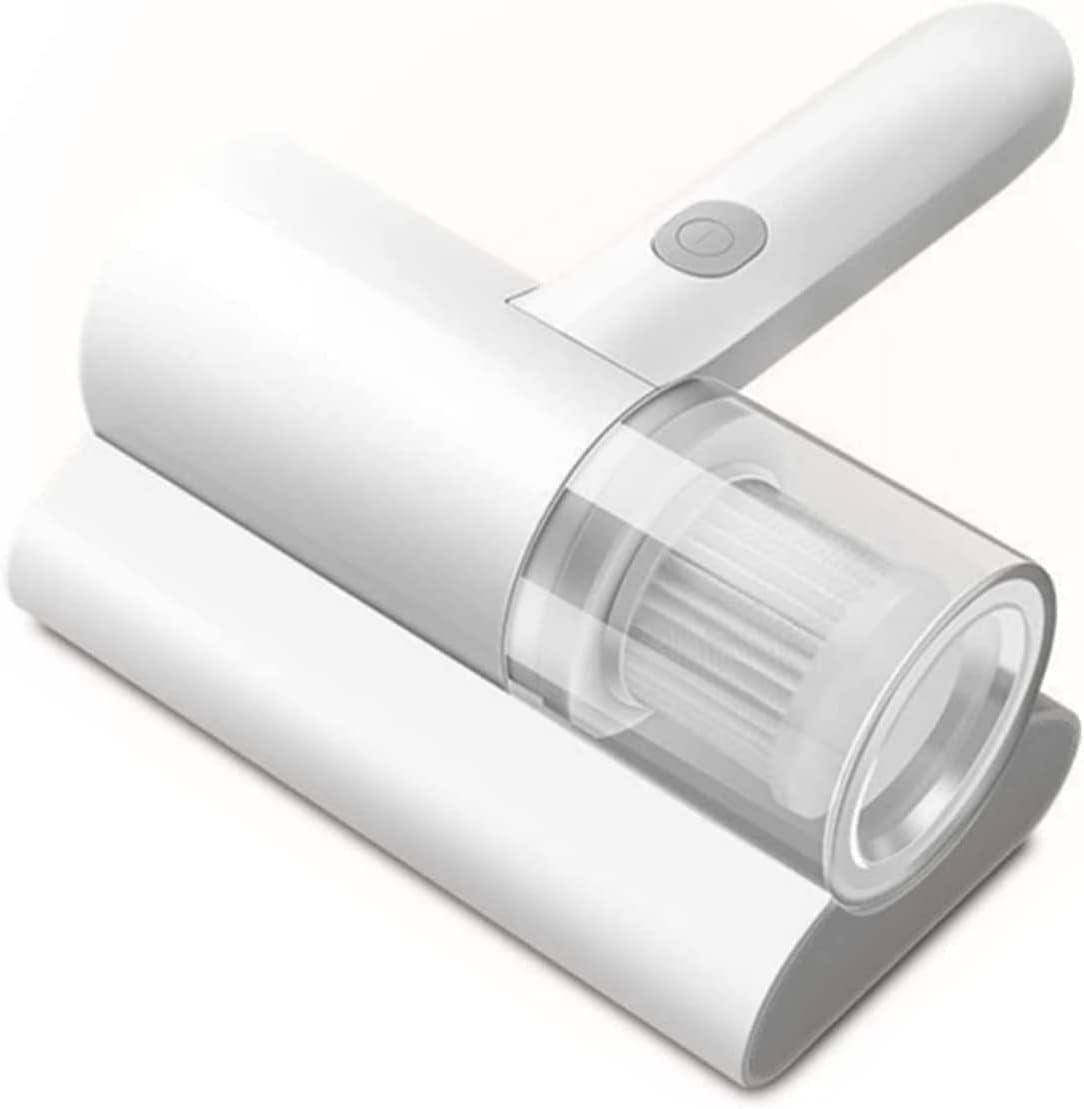
The Foldable Electric Clothes Dryer helps with laundry, the Smart Blender 15-Speed covers kitchen prep, and the Dust & Mite Vacuum Cleaner targets mattresses and soft furnishings where fur also collects. Each has its own listing.
Frequently asked questions about a pet hair comb brush
How often should I brush my pet?
It depends on the coat rather than the calendar. Short coats are usually fine with a couple of sessions a week, while long and double coats benefit from something closer to daily attention. During a seasonal moult, increase frequency and shorten each session rather than doing one long weekly effort.
Can the same brush be used on both dogs and cats?
The listing describes this tool as suitable for dogs and cats of all coat types. In practice, cats need lighter pressure and shorter sessions than most dogs. If either animal has a skin condition, keeping separate brushes is the more hygienic approach.
Will a pet hair comb brush hurt my pet?
Used lightly and in the direction of fur growth, it should not. Discomfort almost always comes from too much pressure, working against the grain, or forcing a tangle. Rounded tooth tips help, but technique matters more than the tool: let the brush do the work under its own weight.
What is the self-cleaning button actually for?
It ejects the fur that has collected in the head so you can continue without unpicking it by hand. On a heavy-shedding animal a brush fills quickly, and a full brush simply slides over the coat without collecting anything more. Clearing it often is what keeps a session efficient.
Can I use it on a wet coat after a bath?
Better to wait until the coat is dry. Wet fur clumps, drags and stretches, which makes combing uncomfortable and can break the hair. Towel-dry thoroughly, let the coat finish drying, then groom. Detangling before a bath rather than after also saves a lot of trouble.
How do I stop fur getting everywhere while I brush?
Groom in one designated spot, ideally on a hard floor or outdoors where the fur can be swept rather than vacuumed out of a rug. Clear the brush into a bin directly instead of shaking it out, and keep sessions in the same place so the cleanup becomes routine.
Used lightly and often, a pet hair comb brush keeps a coat healthier, a home cleaner and a grooming session short enough that the animal does not dread it. Work in sections, clear the head regularly, and stop before patience runs out. The full listing is on the Pet Hair Cleaning Comb Brush page, and the wider range is at the WLD Store shop.



Add comment