A finishing touch hair remover is designed for the small, awkward areas that other methods handle badly: the upper lip, the chin and the soft hair along the cheeks. It is a battery-powered device with a rotating head that trims hair at the surface of the skin rather than pulling it out.
That distinction shapes everything else about it. This guide explains how the mechanism actually works, where it belongs in a routine, the technique that gives an even result, how to clean it properly, and what it genuinely cannot do. Knowing the limits is what stops the device from disappointing you.
Why a finishing touch hair remover exists
Facial hair removal has always been badly served by the available options. Waxing works but stings, needs regrowth before the next session, and can leave skin red for hours. Threading is precise but requires a salon visit. Depilatory creams smell strong and are hard to control near the nose and mouth.
Razors do the job, but people are understandably reluctant to bring a blade to the face, and the flat edge struggles with the curve of an upper lip or the underside of a chin. Small nicks in those places are both common and highly visible.
A finishing touch hair remover was built around those specific complaints. There is no blade against skin, no wax, no pulling and no chemical. The rotating head passes over the surface and cuts hair where it emerges, which is why it can be used quickly and without preparation.
The other reason it exists is timing. Facial hair is noticed at the worst moments, usually in a car mirror on the way somewhere. A small device that lives in a handbag and needs no water, no cream and no cleanup is answering that problem directly.
How the finishing touch hair remover head works
The mechanism is simpler than the marketing language suggests. A small motor spins a head behind a perforated guard. Hairs pass through the openings in the guard, the moving element behind it shears them at the surface, and the guard itself keeps the cutting parts away from skin.
This puts the device in the trimming family rather than the epilating one. Hair removal methods split broadly into two groups: those that cut hair at or near the surface, and those that remove the whole hair from the follicle. A finishing touch hair remover belongs firmly in the first group.
That is precisely why it is comfortable. Nothing is being pulled from the root, so there is no sharp sensation and no need to wait for growth before using it again. It is also why the results last days rather than weeks, and expecting otherwise is the single most common source of disappointment.
The guard is also what makes it forgiving on curved surfaces. Because no exposed edge touches the skin directly, the device can be run over the dip above the lip or the line of the jaw without the care a razor demands.
What makes a good finishing touch hair remover
Every finishing touch hair remover looks almost identical in a photograph. Four things separate one that becomes a handbag fixture from one that ends up in a drawer.
The light
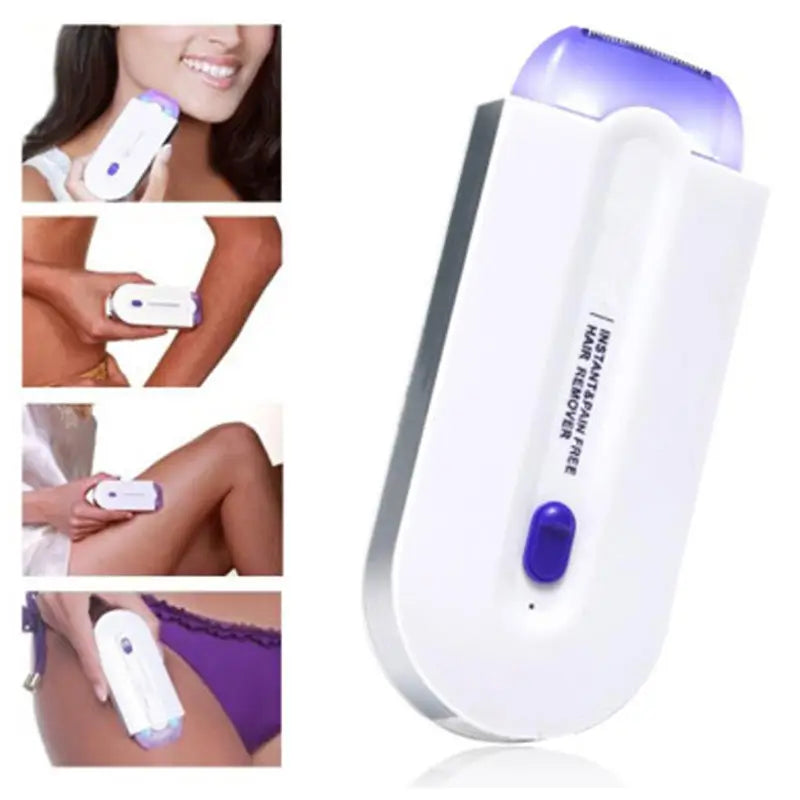
A built-in LED is far more useful than it sounds. Fine facial hair is nearly invisible in ordinary bathroom lighting, and the whole point of this device is catching the hairs you would otherwise miss. The light on this finishing touch hair remover is what turns guesswork into something you can actually see.
Size and grip
It is used at arm’s length in front of a mirror, often with one hand holding skin taut. A slim body that can be held like a pen gives far better control than a bulky one, particularly around the corners of the mouth.
The guard and head quality
The perforated guard does the safety work. It should be smooth, finely perforated and easy to remove for cleaning. A coarse guard catches skin; one that cannot be taken off cannot be cleaned properly, and hair clippings build up until performance drops.
Power source and portability
Battery operation is what makes the device travel. There is no cable, no charging stand and nothing to plug in, so a finishing touch hair remover fits into a bag and works in a hotel room, an office or a car park with equal ease.
The WLD Store pick: Finishing Touch Hair Remover
This is the finishing touch hair remover WLD Store stocks for shoppers who want a discreet, everyday tool for facial hair.
- Product: Finishing Touch Hair Remover, a painless facial hair eraser for women
- Mechanism: gentle rotating eraser head, listed as painless in use
- Designed for: upper lip, chin and cheeks
- Skin contact: no cuts and no irritation, with no blade against the skin
- Visibility: built-in LED light for precision
- Power: battery-operated and travel-friendly
- Category: Home & Kitchen, Personal Care · Brand: WLD · SKU: WLD-KSA-0115-(KD-043)
- Availability: available across Saudi Arabia through secure checkout
Photographs and the full listing are on the Finishing Touch Hair Remover product page. As with anything used on facial skin, follow the instructions supplied with the device and stop if your skin reacts badly.
How to use a finishing touch hair remover: 7 easy steps
Technique with a finishing touch hair remover matters more than people expect, mainly because the hair being removed is hard to see. These seven steps cover a complete pass.
- 1. Start with clean, dry skin. Remove makeup and any cream first. Dry skin lets hairs stand up so the head can catch them; moisturiser flattens them against the surface.
- 2. Find good light, then add the LED. Face a window or a bright mirror and use the built-in light as well. Between them you will see hair that is invisible in normal room lighting.
- 3. Hold the skin taut. Use your free hand to stretch the area. A flat surface is far easier to work than a soft, mobile one, and this matters most on the upper lip.
- 4. Work in small circles. Move the finishing touch hair remover slowly over the area with light pressure. Pressing harder does not remove more hair, it only irritates skin.
- 5. Change direction. Facial hair grows in several directions at once, so go over each area from two or three angles rather than one.
- 6. Check by touch, not sight. Run a fingertip over the area. Skin tells you about missed hairs far more reliably than a mirror does.
- 7. Finish gently. Wipe the area with a clean tissue and apply a light, unscented moisturiser if your skin likes one. Avoid strong acids or exfoliants immediately afterwards.
A full pass over the lip and chin takes a couple of minutes once you know your own growth pattern.
Where on the face a finishing touch hair remover belongs
The upper lip is the main use, and the area that benefits most from taut skin and a slow pass. Growth here is often finer than it appears and shows up in strong daylight rather than in a bathroom.
The chin and jawline come second. Hairs here tend to be coarser and more isolated, which makes them easier to feel than to see, so the fingertip check matters more than anywhere else on the face.
The cheeks and sideburn area are where the LED earns its place, because the hair is usually very fine and light. A finishing touch hair remover handles it well, though many people find they only need to do this area occasionally.
Eyebrows are the exception. This is not a shaping tool and it has no precision edge, so brows are still a job for tweezers or a professional. Using a rotating head near a brow line is how a shape gets ruined.
How often to use a finishing touch hair remover
Because hair is cut at the surface rather than removed at the root, regrowth is quick and the rhythm is closer to shaving than to waxing. Most people settle into using the device every two or three days.
Growth rate varies considerably between individuals and changes over time, so there is no universal schedule. The practical approach is to run a fingertip over the upper lip every few days and use the finishing touch hair remover when you feel something rather than on a fixed day.
There is no waiting period, which is the main practical advantage. Waxing requires several weeks of growth before the next appointment; this device can be used the same evening if you missed a patch, without any penalty to the skin.
Honest limits of a finishing touch hair remover
The most important thing to understand is that this is not permanent hair removal, and no home device in this category is. Hair is cut at the surface, the follicle is untouched, and growth continues at its normal rate.
Nor does it change hair texture. The old belief that cutting hair makes it grow back thicker or darker is not accurate; what changes is the feel of a blunt cut end compared with a naturally tapered tip, which can seem coarser for a day or two.
It is also not a body hair tool in any practical sense. A finishing touch hair remover is sized for small facial areas, and using it on legs or arms would take a very long time for a result a different tool achieves in minutes.
Finally, very coarse or dense growth may be better addressed with professional advice. Sudden or unusual facial hair growth is worth mentioning to a doctor rather than only managing cosmetically.
Skin care around the routine
Facial skin is thinner and more reactive than skin elsewhere, so what happens around the removal matters. Avoid using the device immediately after a strong exfoliant, a retinoid or a chemical peel, when the surface is already sensitised.
Evening use suits most people. Any slight redness settles overnight, and skin is not going straight under makeup or sun. It also fits more naturally into a cleansing routine that is already happening.
Keep products simple straight afterwards. A gentle moisturiser is welcome; strong actives, heavy fragrance and alcohol-based toners are best left until the following morning.
Watch how your own skin responds over the first couple of weeks. Everyone’s tolerance differs, and adjusting frequency is easier than treating irritation after it appears.
Cleaning and battery care for a finishing touch hair remover
Cleaning is the maintenance that matters, and it is the step most often skipped. Fine hair clippings collect behind the guard and gradually block the openings, which shows up as the device seeming to lose power.
Remove the guard after every few uses and brush the head out with the small brush supplied or a clean dry toothbrush. Do this over a bin, since the clippings are almost invisible on a bathroom counter.
Keep water away unless the instructions specifically allow rinsing. Most battery-operated units of this kind are not designed to be immersed, and water in the housing is the usual cause of failure.
Take the battery out if the finishing touch hair remover is going to sit unused for months. A leaking cell ruins the contacts, and that is an avoidable way to lose an otherwise working device.
Common problems and quick fixes
Four issues account for nearly every complaint about a finishing touch hair remover.
- It seems to have lost power. Almost always trapped clippings behind the guard or a tired battery. Clean the head first, replace the battery second.
- Hairs are being missed. Usually skin that was not held taut, or a single-direction pass. Stretch the area and go over it from two or three angles.
- Skin feels irritated afterwards. Generally too much pressure, or use on skin that was already sensitised. Lighten the touch and leave more time after exfoliating.
- Regrowth appears within days. Expected behaviour rather than a fault, since a finishing touch hair remover cuts at the surface. Shorten the interval between uses instead of pressing harder.
Compared with waxing, threading and creams
Waxing and threading remove hair from the root, so results last weeks rather than days. They also hurt, need regrowth before repeating, and usually mean either a salon appointment or a fiddly session at home.
Depilatory creams dissolve hair chemically. They are painless and cheap but carry a real risk of reaction on facial skin, need a patch test, and are difficult to keep away from the nostrils and mouth.
A finishing touch hair remover trades duration for convenience. Results are short-lived, but it takes two minutes, needs no preparation, causes no downtime and can be used again immediately. For most people that trade is exactly the right one for the face.
Travelling with a finishing touch hair remover
This is one of the easier grooming tools to travel with. It is small, needs no charging cable and no adaptor, and works anywhere there is a mirror and a little light.
Cap it or bag it for transport. An unprotected head rattling loose in a handbag collects lint, and a device that switches itself on inside a bag flattens its battery before you arrive.
Pack a spare battery for longer trips. It weighs nothing, and a finishing touch hair remover with a dead cell is of no use at the exact moment you wanted it.
Buying checklist before you order
Five questions worth asking before any finishing touch hair remover goes into a basket.
- Does it have a light? Without one, fine hair on the cheeks is largely invisible while you work.
- Can the head be removed for cleaning? If not, clippings will build up and performance will drop.
- Is it sized for facial areas? A finishing touch hair remover is meant for the lip, chin and cheeks rather than large areas.
- How is it powered? Battery operation is what makes it genuinely portable.
- Are your expectations right? This is surface trimming, so plan for a routine every few days rather than a monthly one.
Other Home & Kitchen picks at WLD Store
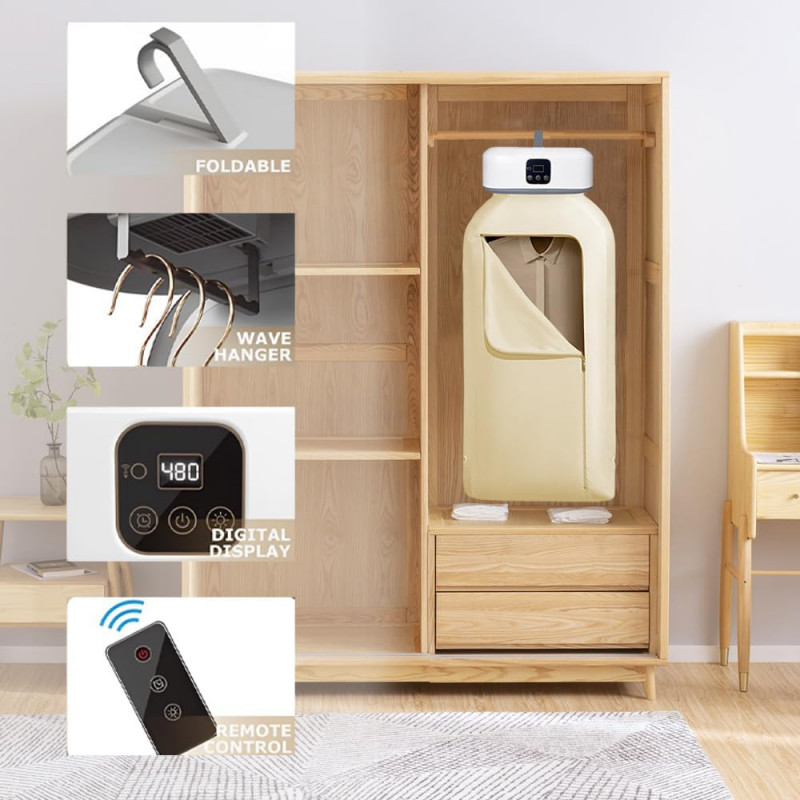
These three sit nearby in the same part of the catalogue and cover everyday household jobs.

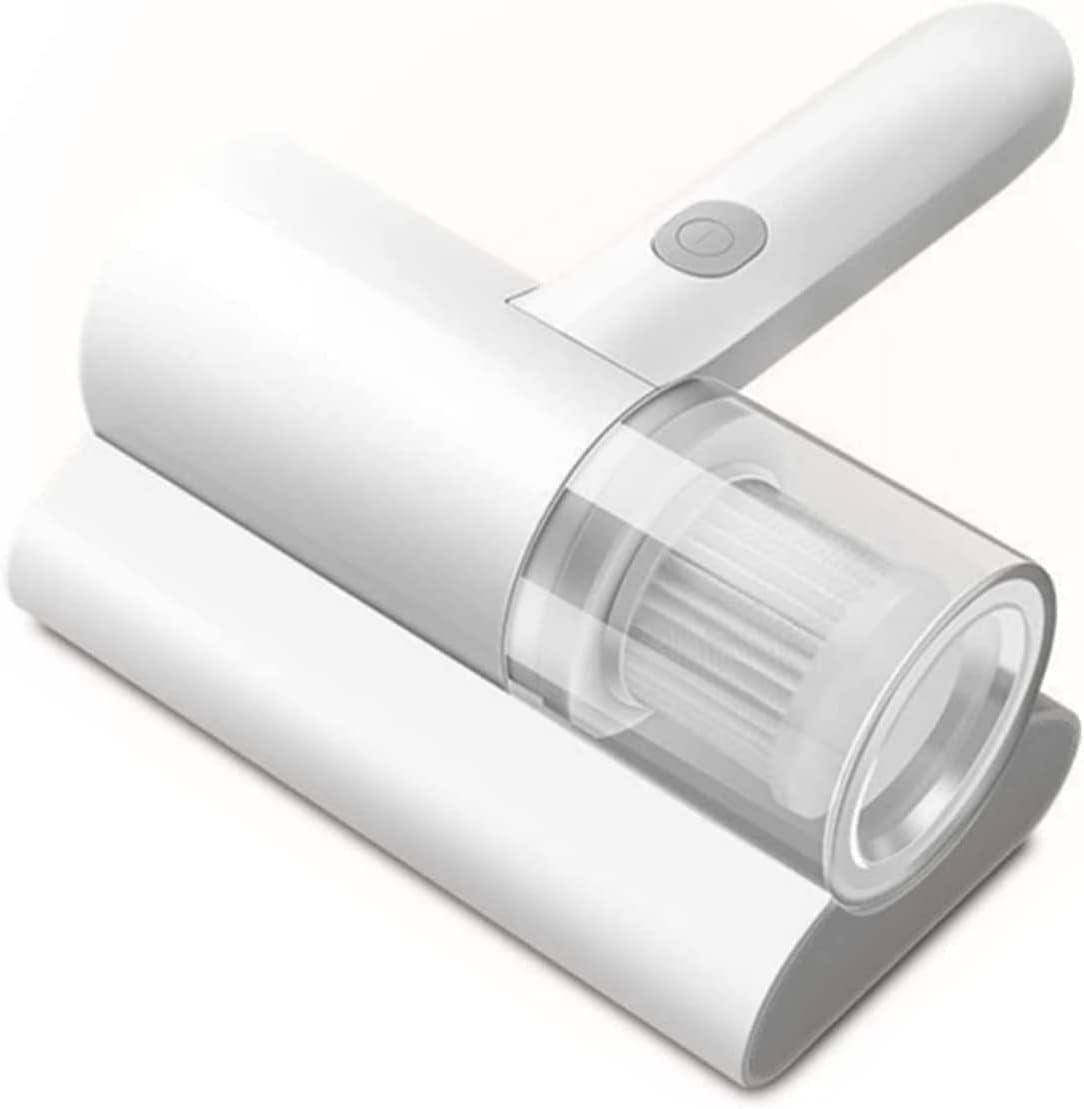
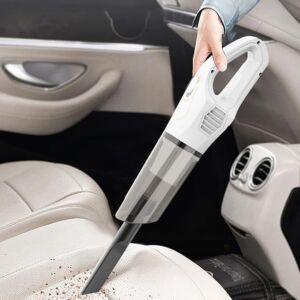
The Dust & Mite Vacuum Cleaner is the useful companion for anyone whose skin reacts to household dust, since bedding is where most of it collects.
Frequently asked questions about the finishing touch hair remover
Does it really not hurt?
The device is listed as painless, and the reason is structural: nothing is pulled from the root and no blade meets skin. Most people describe it as a light tickling sensation. Skin sensitivity varies, so use light pressure at first and stop if your skin reacts.
Will the hair grow back thicker?
No. Cutting hair at the surface does not change the follicle or the thickness of what grows from it. A blunt cut end can feel slightly coarser than a tapered tip for a day or two, which is where the impression comes from.
Can I use it on my eyebrows?
It is not designed for shaping, and using a rotating head near a brow line risks removing more than you intended. Keep eyebrows to tweezers or a professional, and use the finishing touch hair remover for the lip, chin and cheeks.
Is it safe on sensitive or acne-prone skin?
Many people with sensitive skin prefer it to waxing precisely because nothing is pulled. Avoid active breakouts, broken skin or recently exfoliated areas, and patch test a small area first if you are unsure.
How long do the results last?
Usually a few days, since this is surface trimming rather than root removal. Most people use a finishing touch hair remover every two or three days, which takes only a couple of minutes once it is part of a routine.
What kind of battery does it use?
It is battery-operated, so check the packaging supplied with your unit for the exact type and keep a spare if you travel. Removing the battery during long periods of storage prevents leakage damage.
The appeal here is not dramatic results but low friction. Two minutes, no preparation, no mess and nothing to book, on an area of the face where every other method asks for considerably more.
Full details are on the Finishing Touch Hair Remover product page, and there is more for personal care and the home in the Personal Care section, available across Saudi Arabia.




Add comment