A car dashboard phone holder is one of those purchases that seems trivial until the first time your phone slides off the passenger seat during a turn and takes your navigation with it. Getting the screen up where you can glance at it, without holding it, changes how a long drive feels.
This guide covers what actually makes a car dashboard phone holder stay put, where on the dash to mount one, how heat and dust destroy suction, how to fit a phone in a thick case, and how to keep the whole thing working through a summer. The WLD Store telescopic pick is described in full further down.
Why a car dashboard phone holder is worth fitting
The safety case for a car dashboard phone holder is the honest one. Anything that takes your eyes off the road for more than a moment is a problem, and hunting for a phone in a cup holder is exactly that. A car dashboard phone holder puts the screen in your natural field of view so a glance is a glance rather than a search.
Navigation is the everyday use for a car dashboard phone holder. Voice directions are good but not complete: junctions with five exits, unfamiliar city centres and last-minute lane changes are all far easier when the map is visible. A holder mounted high enough keeps the map near your sightline instead of down by the gearstick.
Then there is the practical business of calls and music. With a car dashboard phone holder, answering a hands-free call or skipping a track is a single tap in a fixed, predictable place. Everything about driving gets easier when controls stop moving around.
Finally, a mount protects the phone itself. Phones that live loose in a car get stood on, sat on and dropped into footwells. Giving it a fixed home costs almost nothing and prevents the kind of cracked screen that costs a great deal.
What makes a good car dashboard phone holder
Most car dashboard phone holder designs look similar in photographs and behave very differently on a hot dashboard in August. Five things decide whether yours is still holding in six months.
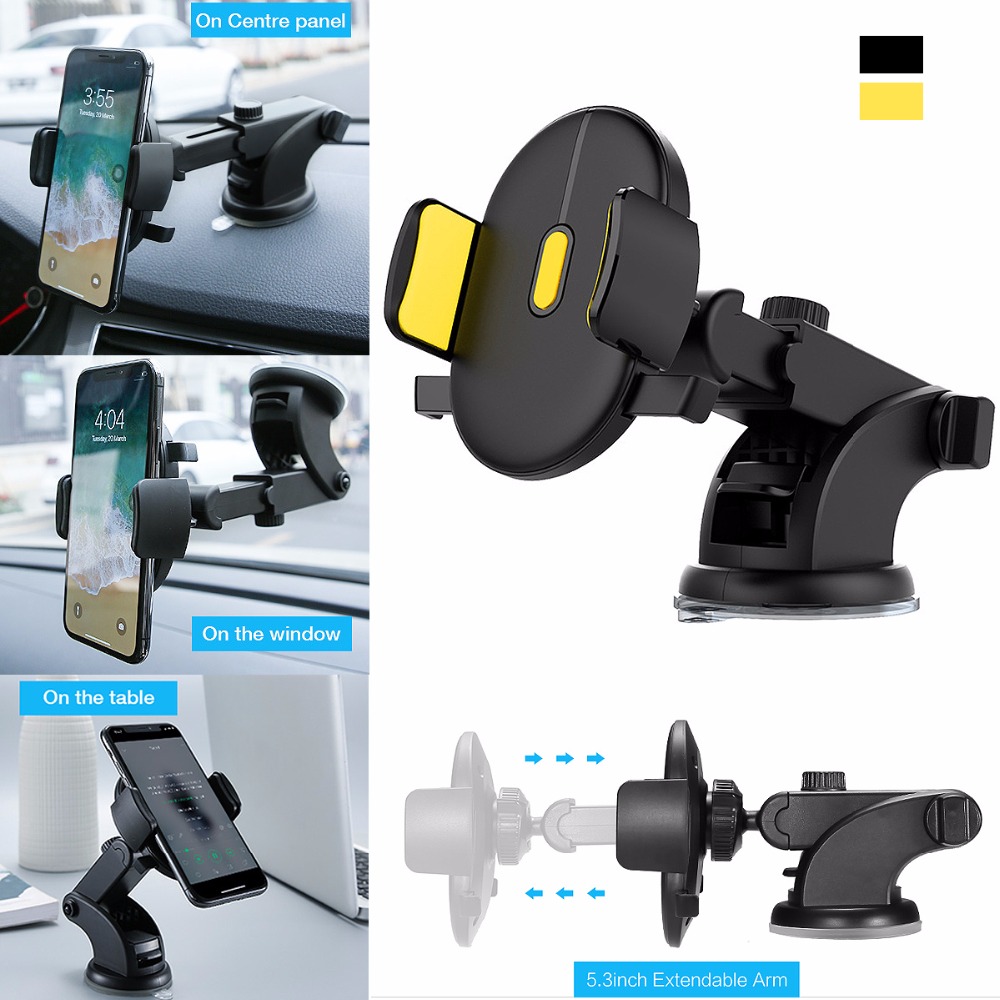
The base and how it attaches
Suction is the most common attachment for a car dashboard phone holder, and its performance depends almost entirely on the surface underneath. A smooth, flat, non-textured area gives a strong seal; a heavily grained or curved dashboard gives a poor one. Many suction mounts include an adhesive base disc precisely so they have something smooth to grip.
Look for a locking lever rather than plain press-on suction. A lever compresses the cup and holds the vacuum mechanically, which is a different level of security from pressing a rubber pad down and hoping. If a car dashboard phone holder has one, the lever should feel firm and stay put when the car goes over a speed bump.
Arm length and adjustment
A telescopic arm is the feature that transforms usability. Dashboards sit low and far forward in most cars, so a fixed short mount leaves the phone somewhere you have to look down to see. Extending the arm brings the screen closer to eye level and closer to your hand.
Check the range of movement as well as the length. A good car dashboard phone holder swivels, tilts and rotates between portrait and landscape, because the right angle in bright morning sun is not the right angle at night.
The cradle and phone fit
Measure your phone in the case you actually use. Grips, wallet cases and rugged armour add real width, and a cradle that only just fits a bare handset will not close around a protected one. Spring-loaded arms handle a wider range than fixed slots.
Check what the cradle touches. Buttons on the side of a modern phone sit exactly where clamp arms land, and a car dashboard phone holder that presses a volume key all journey is an irritation you will not tolerate for long.
Vibration and stability
A long arm amplifies every bump. The trade-off with any telescopic car dashboard phone holder is reach against wobble, so look for a joint that locks positively rather than relying on friction alone. If the screen shakes so much you cannot read it on a rough road, the mount has failed at its main job.
Heat tolerance
Dashboards get extremely hot in the sun, far hotter than the cabin air. Cheap plastics go brittle and adhesive pads soften and creep. This is the reason a mount that worked all winter suddenly lets go in July, and it is worth thinking about before you buy rather than after.
The WLD Store pick: Telescopic Car Dashboard Phone Holder
Here is what WLD Store publishes for this product, with nothing added:
- Product: Telescopic Car Dashboard Phone Holder
- Brand: WLD
- Category: Electronics
- Description: a long-arm telescopic dashboard mount with strong suction, made for hands-free driving
- SKU: WLD-US-0004-(CJ-CJQCQCQC00072)
- Availability: available across the USA through secure checkout
The long arm is the part worth noticing. A short mount on a deep modern dashboard puts the phone out of comfortable reach, which is the most common reason a car dashboard phone holder ends up in a drawer. Full images and current options are on the Telescopic Car Dashboard Phone Holder product page.
Fitting it properly: a ten-minute job
- Choose the spot with the car stationary. Sit in the driving position and hold the phone where you would want it. Do not obstruct your view of the road, and keep well clear of any airbag panel.
- Clean the surface twice. Wipe with a mild cleaner, then again with isopropyl alcohol and let it dry. Dashboard plastics carry a film of protectant that will defeat both suction and adhesive.
- Warm the surface if it is cold. Adhesive and suction both bond far better above about fifteen degrees, which is why winter fittings fail more often than summer ones.
- Press, lock, and then leave it. Fit the car dashboard phone holder, engage the locking lever, and wait a few hours before hanging a phone on it if it uses an adhesive disc.
- Test with a shake. Tug the arm gently in three directions before the first drive. It is far better to find a weak seal in the driveway than on a motorway.
That short routine is the difference between a mount that lasts a year and one that drops the phone in week two. Almost every failure traces back to a surface that was not properly cleaned.
Where to mount it, and where not to
The best position for a car dashboard phone holder is high on the dash, off to the side of your straight-ahead view, close to the centre console. That puts the screen near the sightline you already use for mirrors without blocking anything.
Never mount over an airbag panel. Passenger airbags deploy through a seam in the dashboard at enormous speed, and anything sitting on top of that seam becomes a projectile. If you cannot identify the panel, mount on the driver’s side of the centre or use the windscreen instead.
Be careful with vents in winter. Hot air blowing directly onto a phone will make it throttle and, over time, is unkind to the battery. Angling a car dashboard phone holder slightly away from the vent flow costs nothing.
Rules on windscreen mounting vary by state and country, and some places restrict where anything may be attached to the glass. Check your local regulations before choosing a windscreen position, since a dashboard position usually avoids the question entirely.
Dashboard, windscreen, vent or cup holder
There are four common mounting styles and each suits a different car. Knowing why you are choosing one over the others saves a return.
A car dashboard phone holder sits on the horizontal surface in front of you. It keeps the glass clear, which matters in places where windscreen attachments are restricted, and a telescopic version can reach whatever height you want. The downside is that dashboards are hot, sometimes curved, and often textured.
A windscreen mount uses the same suction technology on glass, which is the ideal surface for it. Grip is excellent and the screen sits naturally high. Against that, it can block part of your view, it is more exposed to direct sun, and local rules on what may be attached to a windscreen vary a great deal.
A vent mount clips to an air vent and needs no cleaning or curing time at all, which makes it the best choice for a car you do not own. It blocks the vent it uses, it can sag on soft vent blades, and it puts the phone in the airflow, which is unhelpful in both winter and summer.
A cup-holder mount is the most stable of the four and the worst positioned, because the phone ends up low and to the side. It suits passengers and long motorway drives more than city navigation.
For most private cars with a reasonably flat dash, a telescopic car dashboard phone holder is the best compromise of the four: clear glass, adjustable height, and no vent blocked. If your dashboard is steeply curved, that calculation changes and a vent or windscreen mount wins.
Heat, sun and the summer problem
A parked car in direct sun becomes an oven, and the dashboard is the hottest surface in it. Phones will shut down or refuse to charge at those temperatures, so take the handset with you rather than leaving it in the cradle.
Adhesive discs are the other casualty. Repeated heat cycling softens the adhesive and lets it creep, so a car dashboard phone holder that was solid in spring can peel away in a heatwave. Re-pressing the disc firmly on a warm day often re-bonds it.
A sunshade behind the windscreen does more for mount longevity than any product feature. It keeps the dashboard tens of degrees cooler and extends the life of both the plastic and the suction cup considerably.
If the suction has weakened, wash the cup with warm water and a little washing-up liquid, rinse, and let it dry completely. Skin oils and dust are what break the seal, and cleaning restores most cups to nearly new grip.
Charging and cable management
A phone running navigation with the screen on will drain faster than it charges from a weak socket. Pair your car dashboard phone holder with a decent car adapter rather than the cheapest one in the glovebox, or a long drive ends with a flat battery.
Think about which side the cable enters your car dashboard phone holder. If the charging port faces the wrong way, the cable loops across the screen or fouls the gear lever. Rotating the cradle before you settle on a final position solves this in ten seconds.
Keep the cable short and clipped. A long cable draped across the centre console is the thing that snags on a hand brake or a coffee cup and pulls the mount loose. Two small adhesive cable clips fix it permanently.
Care and maintenance
Monthly: wipe the cradle arms and the suction cup with a damp cloth. Dust in the cup is the leading cause of gradual grip loss on any car dashboard phone holder.
Every few months: check the joints. Ball joints loosen with vibration, and most designs have a collar that can be nipped up by hand before wobble becomes permanent.
Seasonally: re-seat the base. Release the lever, clean both surfaces, and refit. Five minutes twice a year prevents the sudden failures that happen at the worst moment.
Before a long trip: tug-test the arm and cradle. It is the cheapest insurance available and takes ten seconds.
If you sell the car: warm an adhesive disc gently with a hairdryer before peeling, and it will come away without leaving a mark or damaging the dashboard surface.
Common problems and quick fixes
- The suction keeps letting go. Wash the cup, dry it, clean the dash with alcohol and refit on a warm day. If the dashboard is textured, use an adhesive smooth-surface disc as an intermediate layer.
- The phone vibrates too much to read. Shorten the telescopic arm, which reduces leverage dramatically, and tighten every joint. A shorter arm is always steadier than a long one.
- The cradle presses a side button. Rotate the phone to landscape, or reposition it higher in the cradle so the arms land on a clear part of the frame.
- The mount droops on rough roads. The main pivot has loosened. Tighten the collar, and if it will not hold, a thin rubber washer in the joint usually restores the friction.
Who should skip a dashboard mount
If your car already has a built-in screen with wireless projection, you may not need a car dashboard phone holder for navigation at all. It is still useful for calls and for passengers, but the case is much weaker.
Cars with steeply curved or heavily textured dashboards are poor candidates for suction. A vent mount or a cup-holder mount will serve you better than fighting a surface that was never going to seal properly.
Anyone who moves between vehicles daily, such as drivers of shared or work vehicles, is often better with a mount that clips on and off in seconds rather than one that is fitted semi-permanently to one dashboard.
Buying checklist
- Is your dashboard smooth and flat where you want the mount, or will you need an adhesive base disc?
- Does the cradle open wide enough for your phone in its actual case?
- Is the arm long enough to reach a comfortable viewing height in your particular car?
- Does the mount lock positively at the base and at every joint, rather than relying on friction?
- Will the chosen position keep clear of the airbag panel and out of your view of the road?
Five clear answers will point you at the right car dashboard phone holder faster than any specification list. The case question catches more buyers than any other.
Other electronics picks at WLD Store
Three more from the WLD Store electronics range worth a look alongside a mount:
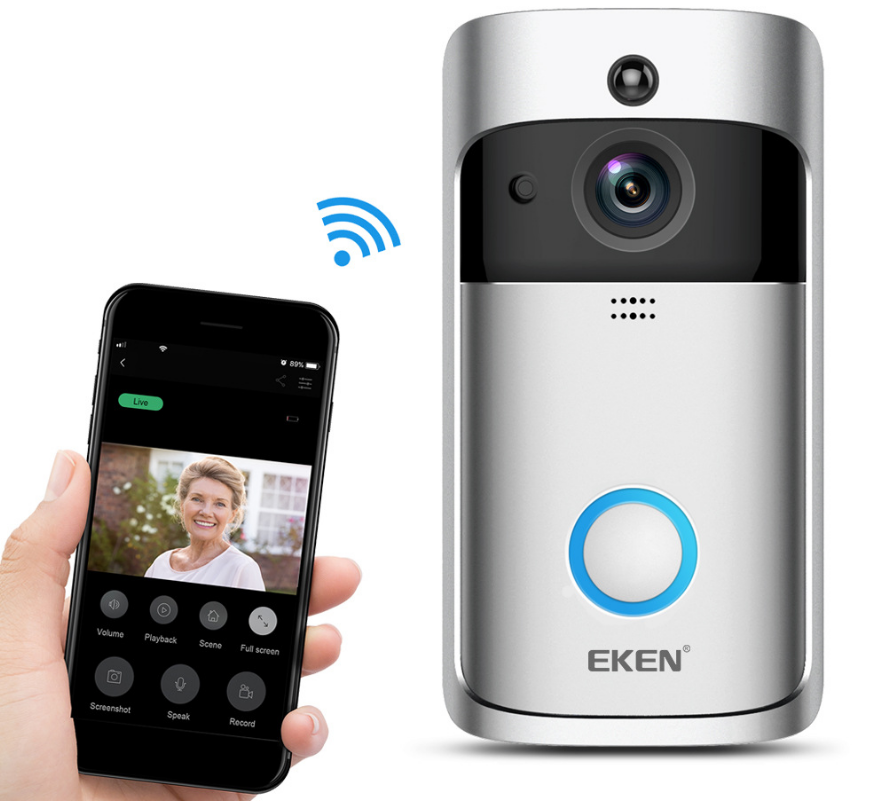
Smart WiFi Video Doorbell Camera — a connected doorbell camera, for keeping an eye on the front door while the car is out.
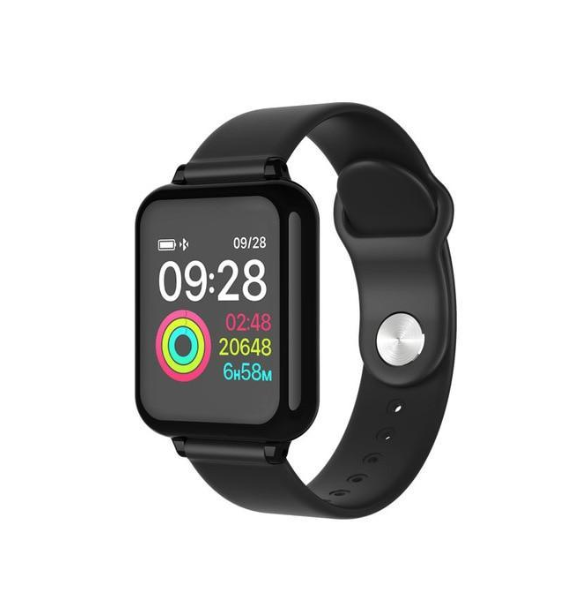
B57 Color Screen Smart Sports Watch — a colour screen sports watch that keeps notifications on your wrist instead of in your hand.
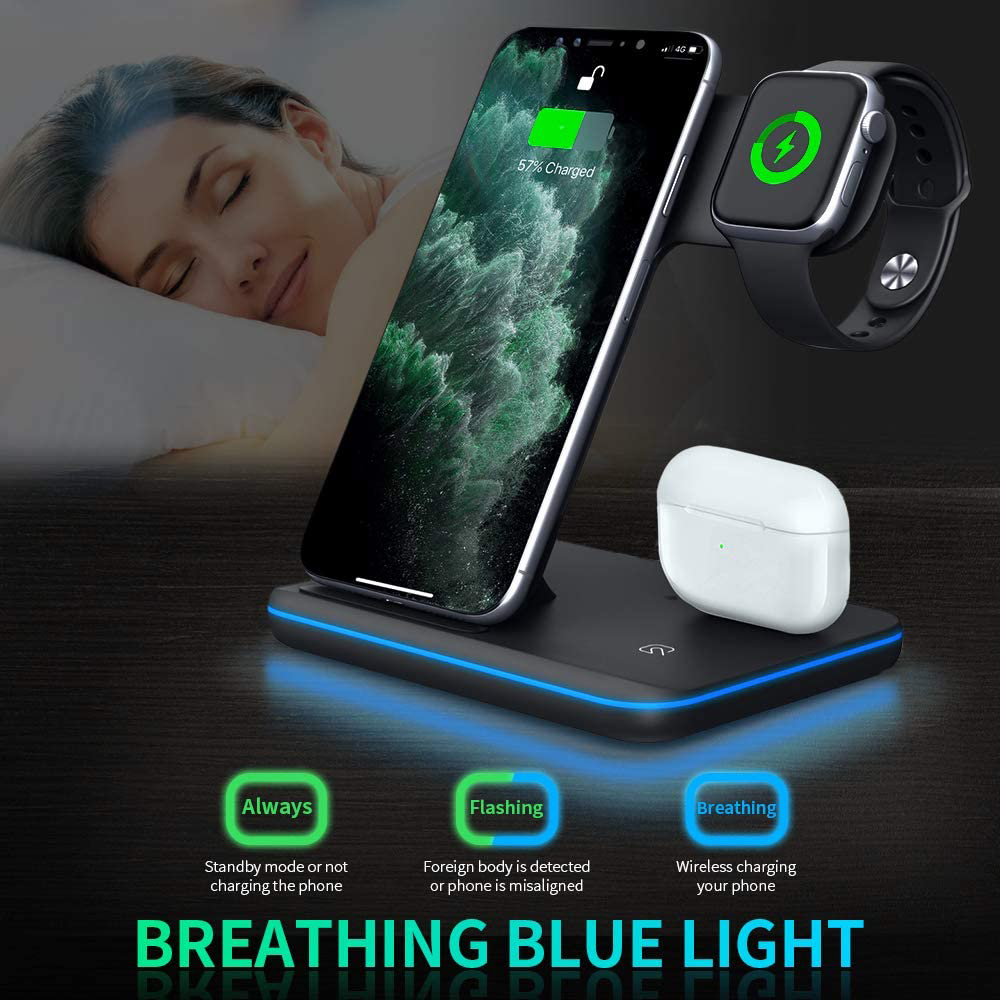
3-in-1 Wireless Charger for Phone, Watch and Earbuds — the charging counterpart for everything that comes back into the house at the end of a drive.
The full range is at the WLD Store shop.
Frequently asked questions about a car dashboard phone holder
Will a car dashboard phone holder stick to a textured dashboard?
Not reliably on its own. Suction needs a smooth, flat surface, so on a grained dashboard you should fit an adhesive smooth-surface disc first and mount onto that. It is a standard accessory and it solves the problem completely.
Is it safe to mount a phone on the dashboard?
Yes, provided it is clear of the airbag deployment panel and does not block your view of the road. Position it low enough not to obstruct the windscreen and to one side of your straight-ahead sightline.
Will it work with a thick or rugged case?
It depends on the cradle. Spring-loaded arms cope with far more width than fixed slots, so measure your phone in its case and compare before ordering. This is the most common fit problem people run into.
Why does my car dashboard phone holder fall off in hot weather?
Heat softens adhesive and expands the air trapped under a suction cup, which breaks the seal. Use a windscreen sunshade when parked, clean the cup regularly, and re-press the base on a warm day to restore the bond.
Does a telescopic arm make it less stable?
A longer arm does amplify vibration, which is why good designs use positive locking joints. In practice, extend it only as far as you genuinely need, and the extra wobble is negligible.
Can I leave my phone in the holder when I park?
Better not to. A dashboard in direct sun gets hot enough to force a phone into thermal shutdown, and a visible phone is an invitation to a break-in. Take it with you and the mount will last longer too.
The short version
Clean the surface properly, choose a position that is high, clear of the airbag and out of your line of sight, extend the arm only as far as you need, and keep the cup clean. Those four habits cover almost every complaint people have about a car dashboard phone holder.
The option described above is the Telescopic Car Dashboard Phone Holder, a long-arm telescopic mount with strong suction, available across the USA through secure checkout. Browse the rest in the Electronics section. For the wider context on why keeping a phone out of your hands matters, the English Wikipedia article on distracted driving is worth five minutes.



Add comment