A body pillow is the rare sleep purchase that most people understand within one night. If you sleep on your side, the gap between your knees and the twist through your lower back are doing quiet damage for eight hours, and a long pillow fills both at once.
This guide covers the shapes available, how to pick a fill and a length, how to actually position a body pillow rather than just hugging it, what to do about heat in a warm climate, and how to keep the cover clean. There is a checklist, six answered questions, and the WLD Store pick set out exactly as the listing describes it.
Why a body pillow helps side sleepers
Side sleeping is the most common position, and it creates two structural problems. The upper leg falls forward and down, rotating the pelvis and twisting the lumbar spine. Meanwhile the upper arm drops across the chest, rolling the shoulder inward.
A body pillow solves both simultaneously. Placed between the knees, it holds the upper leg level with the hip, which keeps the pelvis square. Hugged at the same time, it supports the upper arm so the shoulder stays open instead of collapsing forward.
The result is that your spine spends the night closer to neutral. Most people notice this as waking with less stiffness in the lower back and hips rather than as anything dramatic during the night itself.
There is a second, less clinical benefit worth naming: it simply feels better. Pressure across the front of the body is calming for many people, which is why a body pillow often gets used by people with no back complaint at all.
What makes a good body pillow
The category looks simple and hides several decisions that determine whether the pillow gets used nightly or ends up on the floor by week two.
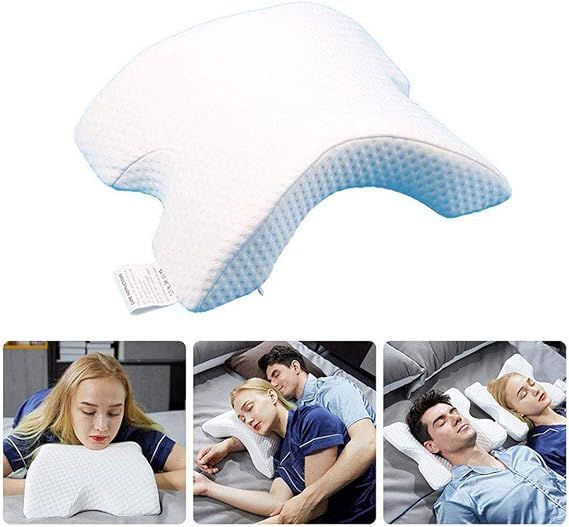
Shape
The straight bolster, sometimes called an I-shape, is the most common and the most versatile. It goes between the knees, under the arm, behind the back or along the front, and it takes up the least space in a shared bed.
U-shaped and C-shaped pillows wrap around the sleeper and support the front and back at once. They are excellent for support but large, hot and awkward for two people sharing a bed. A straight body pillow is the safer first purchase.
Length
Length should relate to your height, not to the bed. A pillow that reaches roughly from your shoulder to below your knees does the job; one that stops at mid-thigh leaves the knees unsupported, which is the whole point.
Too long is its own problem. A pillow that overhangs the mattress ends up on the floor every night, and in a shared bed it crosses the invisible border and starts an argument.
Fill type and firmness
Polyester fibre fill is the most common. It is light, affordable and easy to wash, and it conforms readily to the body. The trade-off is that it compresses over time and needs occasional fluffing to keep its loft.
Shredded foam holds shape longer and gives firmer support, but it is heavier and warmer. Solid foam holds its shape best of all and is the least adaptable. For most people a soft, conforming body pillow is more comfortable than a firm one, because the job is filling gaps rather than propping weight.
Cover fabric and removability
A removable, washable cover is not optional. This pillow spends the night against your face, arms and legs, and it collects skin oils accordingly. If the cover does not come off, the pillow becomes unhygienic quickly.
Fabric choice matters more in a hot climate. Cotton and other natural fibres breathe better than tightly woven synthetics, and a breathable cover is the difference between a body pillow you can use in summer and one you put away in May.
Weight
Weight is worth checking because you will move this pillow several times a night. A heavy pillow is harder to reposition half asleep, and considerably harder to wrestle into a fresh cover on wash day.
Hypoallergenic materials
If you react to dust, look for a hypoallergenic fill description and a cover that can be washed at a reasonably warm temperature. A large pillow has a large surface area, so it matters more here than with a standard pillow.
The WLD Store pick: Cuddling Body Pillow
WLD Store lists this as an extra-long support pillow for side sleepers. The points below come directly from the listing.
- Product: Cuddling Body Pillow, described as an extra-long support pillow
- Intended users: the listing names side sleepers, pregnant women and anyone wanting full-body relaxation
- Fill: described as soft and hypoallergenic, conforming to body shape
- Cover: removable and washable, according to the listing
- Category: Decor, also filed under Home & Kitchen
- Brand: WLD | SKU: WLD-KSA-0053-(KD-KD0176)
- Market: available across Saudi Arabia with secure checkout
The full description, all photographs, stated dimensions and current availability are on the Cuddling Body Pillow product page. Check the listed length there against the sizing advice above before ordering.
How to position a body pillow properly
Most people hug it and stop there, which captures maybe half the benefit. A few minutes of deliberate setup on the first night pays off.
- Knees first, always. The section between your knees is doing the structural work. Get that right before worrying about the top half.
- Keep the knee gap filled, not stretched. Your top knee should rest level with your hip, not lifted above it. Too much pillow tilts the pelvis the other way.
- Let the top arm rest, do not grip. The arm should lie along the pillow, taking the shoulder’s weight. Squeezing tenses the muscles you are trying to relax.
- Keep your head pillow separate. A body pillow is not a head pillow. Your neck still needs its own support at the right height.
- Try it behind your back instead. Placed along your back, it stops you rolling onto your back if that is what you are trying to avoid.
- Give it a week. Sleep positions are habits. Two or three nights is not long enough to judge, and most people adjust by the end of the first week.
One adjustment worth trying: rather than pushing the pillow fully between your thighs, let the lower end sit between your calves and ankles. Many people find that keeps the hip more level than a pillow bunched at the knees.
Using one during pregnancy
Pregnancy is the reason a great many people buy their first body pillow, and it is where the shape choice matters most.
A straight bolster is easy to reposition as the night goes on, which matters when you are turning more often. U-shaped pillows support front and back at once without needing to be moved, but they take up most of a bed.
Position is the same principle: between the knees to keep the hips level, and under the bump for support rather than pressure. Small, frequent adjustments are normal and not a sign you have chosen wrongly.
Heat deserves attention. Many people feel warmer during pregnancy, and a large pillow adds insulation. A cotton cover and a lighter fill are worth prioritising over maximum support.
One thing this guide will not do is tell you which position to sleep in. Advice on sleeping position during pregnancy should come from your midwife or doctor, and a body pillow is simply a tool for holding whatever position they recommend more comfortably.
Heat, airflow and a warm climate
This is the practical issue that gets least attention in product descriptions and matters most in Saudi Arabia.
A body pillow adds a large insulated surface against your torso and legs. In an air-conditioned bedroom that is fine. In a warm room it is the reason people abandon an otherwise good pillow after a fortnight.
Choose a cotton or cotton-blend cover rather than a smooth polyester one. Natural fibres move moisture better, and the difference is noticeable within an hour of lying down.
Fill matters too. Dense foam holds heat considerably more than loose fibre fill, so if you sleep warm, a softer fibre-filled body pillow is the better choice even if foam offers firmer support.
Some people simply rotate their use seasonally: full-length in the cooler months, and just a folded pillow between the knees in high summer. That is a perfectly sensible compromise rather than an admission of defeat.
Other ways to use a body pillow
Once one is in the house it rarely stays limited to side sleeping, and several of the secondary uses are genuinely worth knowing about.
Sitting up in bed is the most common. Folded in half behind your back, a body pillow gives far better lumbar support than a stack of ordinary pillows for reading or working on a laptop, because it does not slide apart every time you shift.
On a sofa it works as a long bolster along the arm, which turns an awkward two-seater into somewhere you can actually lie down. This is also the easiest way to test whether you like the feel before committing to it in bed.
Anyone recovering from a period of limited mobility often finds one useful for propping a leg or an arm at a comfortable angle during the day. Follow whatever guidance you have been given about positioning rather than improvising from an article.
One firm exception: a body pillow does not belong in an infant’s cot or sleep space. Soft bedding is not safe for babies, and this is one use to rule out completely, however appealing the idea of propping seems.
Finally, it is worth keeping the pillow off the floor between uses. A long pillow left leaning against a wall collects dust along one face, and that face is the one that ends up against you.
Covers, washing and care
Large pillows need a slightly different routine from standard ones, mostly because of drying time.
- Wash the cover every one to two weeks. Same schedule as your sheets. This is the main hygiene measure and it is easy.
- Buy a second cover. A spare means the pillow is never out of action on wash day, which is when most people give up on the routine.
- Check whether the inner is washable. Many fibre-filled inners can be washed occasionally on a gentle cycle; foam usually cannot. Read the label rather than assuming.
- Dry it completely. A large pillow holds a lot of water and can stay damp in the core long after the surface feels dry. Damp fill develops odour and worse.
- Fluff it regularly. Fibre fill compresses. A firm shake and a few punches along the length every week restores a surprising amount of loft.
- Air it in the sun occasionally. An hour outdoors freshens a body pillow more effectively than any spray.
If you want the wider background on pillow types, fills and how the design has changed over time, the Wikipedia article on pillows is a straightforward overview.
Common body pillow problems and quick fixes
- It ends up on the floor every night. Usually too long for the bed or too heavy to reposition. Try angling it diagonally rather than parallel to your body, which keeps more of it on the mattress.
- Your shoulder still aches in the morning. The head pillow height is probably wrong. A body pillow does not fix neck alignment; the gap between your ear and the mattress needs filling separately.
- It has gone flat and lumpy. Fibre fill has compressed and clumped. Tumble it on a no-heat cycle with a couple of clean tennis balls, which redistributes the fill remarkably well.
- Your partner objects to the space it takes. Switch from a U-shape to a straight bolster, or move it to run along your back rather than across the middle of the bed.
Body pillow versus stacking ordinary pillows
Plenty of people improvise with two or three spare pillows, and it does partly work, so it is worth being honest about the difference.
Stacked pillows separate during the night. Every time you turn, the arrangement collapses and you half wake to rebuild it. A single long pillow moves as one piece, which is the main practical advantage.
Ordinary pillows are also the wrong shape. They are designed to support a head, so they are thick and short, and getting an even fill from knee to ankle out of them is a nightly negotiation.
Where the improvised approach wins is cost and heat. Two thin pillows between the knees trap less warmth than a full-length body pillow, and you already own them. If you sleep very hot, that is a genuine argument.
Try the improvised version for a week before buying if you are unsure. If you find yourself rebuilding it at three in the morning, you have your answer.
Who a body pillow is not for
Front sleepers get little from one. Lying face down, there is no knee gap to fill and no shoulder collapsing, so the pillow mainly adds bulk.
It is also a poor fit for anyone sharing a small bed with a partner who moves a lot. A double bed with two adults and a full-length pillow is crowded, and the pillow is usually what gets removed.
And it is not a treatment for back pain. It can make a comfortable position easier to hold, which many people find helps, but persistent pain is worth taking to a doctor or physiotherapist rather than to a shop.
Body pillow buying checklist
- Does the stated length suit your height? Shoulder to below the knees is the target; measure yourself rather than guessing.
- Is the cover removable and washable? Treat this as a requirement, not a feature.
- What is the cover fabric? Cotton or a cotton blend is far better than smooth synthetics in a warm bedroom.
- Soft conforming fill or firm foam? Soft suits most side sleepers; firm suits those who want propping rather than gap-filling.
- Will it fit your bed and your partner? Measure the mattress and be realistic about shared space before choosing a U-shape.
Other bedroom picks at WLD Store
If you are improving a bedroom rather than buying one item, these three sit nearby in the catalogue.
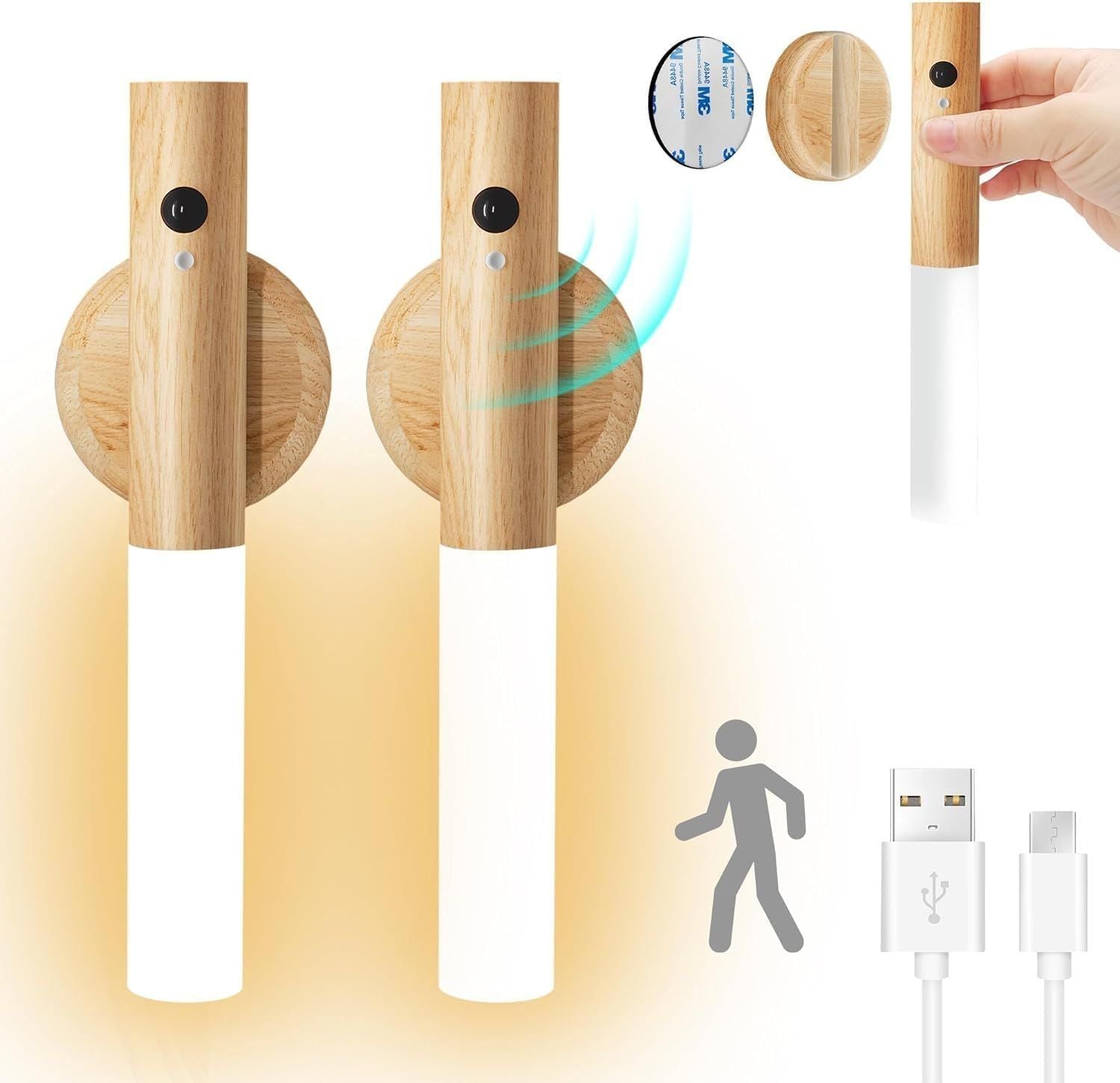


The night lamp handles low-level light for getting up in the dark, the light projector is the atmospheric option, and the electric dryer is genuinely useful given how long large covers take to dry.
Frequently asked questions about a body pillow
What length body pillow should I buy?
One that runs from around your shoulder to below your knees. For most adults that means a long bolster rather than a medium one. Anything that stops at mid-thigh leaves the knees unsupported, which removes the main benefit.
Can I use one on a single bed?
Yes, provided you choose a straight bolster rather than a U-shape. On a single mattress a wraparound pillow leaves almost no room for you, and it will end up half off the edge by morning.
Does a body pillow replace my head pillow?
No. The two do different jobs. Your head pillow fills the gap between your ear and the mattress and sets neck alignment; the long pillow supports the trunk, arm and legs. Using one without the other usually creates a new complaint.
Will it make me too hot?
It can, because it adds an insulated surface along your body. A cotton cover and a lighter fibre fill reduce the effect considerably. In peak summer some people use just the knee section rather than the full length.
How often should the cover be washed?
On the same schedule as your bed linen, roughly every one to two weeks. Buying a second cover makes this far easier to keep up, because the pillow is never unusable while one cover is in the machine.
Is a body pillow safe to use in pregnancy?
Large support pillows are widely used during pregnancy, and the listing for this product names that use. What position to sleep in, though, is a question for your midwife or doctor; the pillow simply makes holding a chosen position more comfortable.
A body pillow is a straightforward purchase with one important variable: get the length right for your height and the cover breathable enough for the room you sleep in. Position it at the knees first, keep your head pillow separate, wash the cover with your sheets, and give it a full week before judging. See the full details on the Cuddling Body Pillow page, or browse more bedroom items in the Decor section.







Add comment