An electric blackhead remover facial vacuum is a small handheld device that draws softened debris out of a pore using gentle suction instead of squeezing. It has become popular because it removes the one thing dermatologists ask people to stop doing at home: pressing hard on skin with fingernails. This guide covers how a blackhead remover facial vacuum actually works, what separates a usable device from a frustrating one, and the preparation that makes the difference between visible results and irritated skin. You will also find a safe step-by-step routine, aftercare, cleaning instructions, a troubleshooting list, a buying checklist and six frequently asked questions, followed by the gentle suction pick stocked at WLD Store.
What a blackhead remover facial vacuum does and why suction helps
A blackhead is a pore plugged with sebum and dead skin cells that has been exposed to air, which is why the surface darkens. The medical name is an open comedo, and the plug is far more solid than most people expect. That single fact explains almost everything about how these devices should be used.
Suction cannot pull out a plug that is still hard and firmly seated. What a blackhead remover facial vacuum can do is lift material that has already been softened by warmth and moisture, which is why every sensible routine begins with steam or a warm towel rather than with the device itself. Skip the softening step and you will get very little out and a ring of red skin instead.
The advantage over fingers is control. Squeezing applies uneven pressure sideways through the pore wall, and that lateral force is what causes bruising, broken capillaries and marks that outlast the blackhead by weeks. Suction pulls straight up along the axis of the pore, so the surrounding tissue is loaded far more evenly.
It is also worth being realistic about the outcome. A blackhead remover facial vacuum is a maintenance tool for congested skin, not a cure for acne. Congestion returns because sebum production continues, so the goal is a manageable weekly or fortnightly routine rather than a single dramatic session.
What makes a good blackhead remover facial vacuum
Devices in this category look nearly identical online. The features below are the ones that change how the thing behaves against real skin.
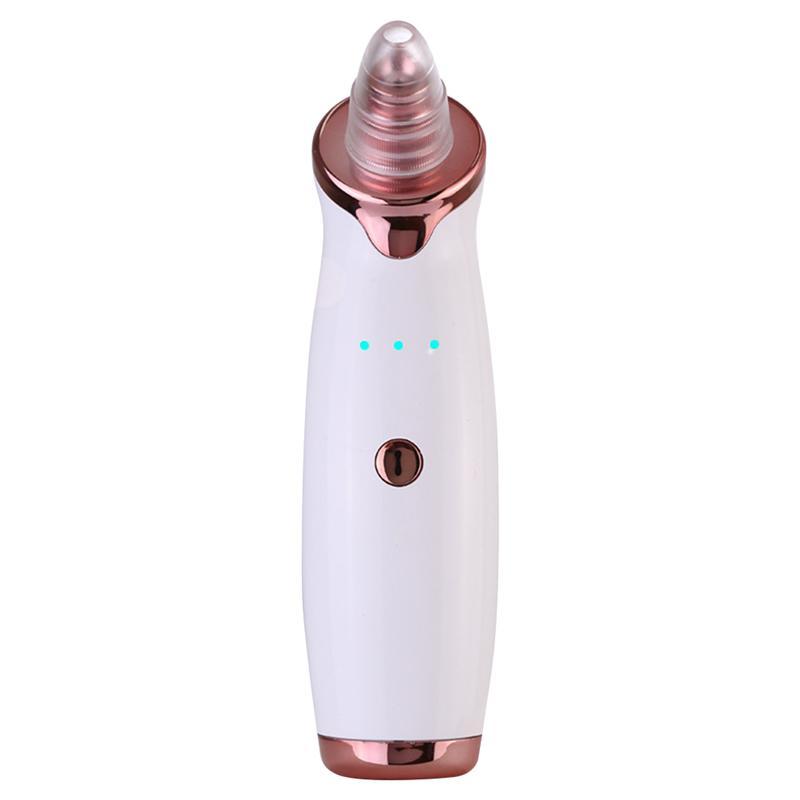
Adjustable suction levels
One fixed suction setting is the most common reason people give up on these devices. Skin on the nose tolerates far more than skin on the cheeks, and the same person needs different settings in winter than in summer. Multiple levels let you start at the lowest and step up only if nothing is being drawn out, which is the correct order of operations.
A useful habit is to treat the lowest level as your default and reserve higher settings for the nose alone. Most marks left by a blackhead remover facial vacuum come from someone starting on maximum because it felt more effective.
The tips and what each one is for
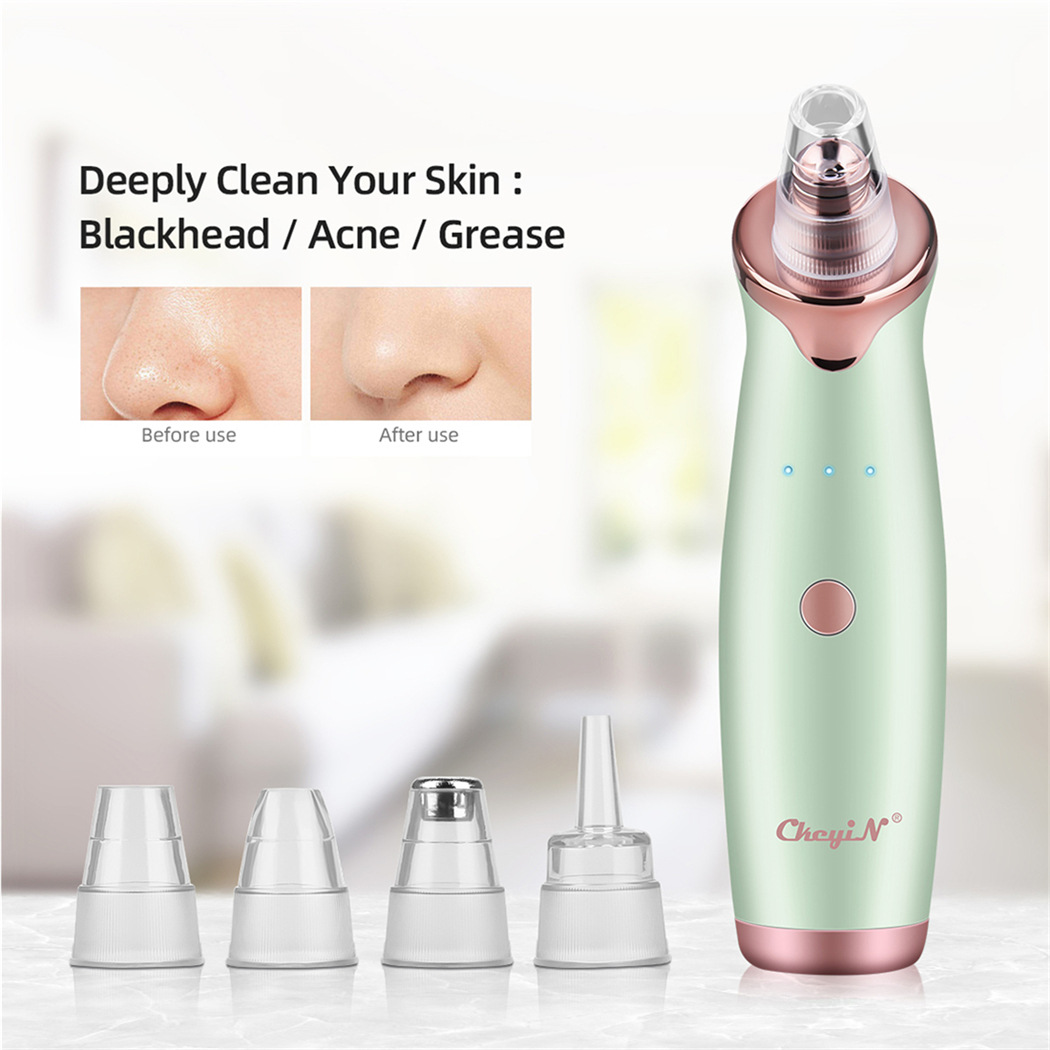
Most devices ship with a set of interchangeable heads. A small round tip concentrates suction on individual pores and suits the nose and chin. A large round tip spreads the same suction over more area for the forehead and cheeks. An oval or slot-shaped tip is designed for awkward contours such as the sides of the nose. Some sets include a rough-surfaced tip intended for gentle exfoliation rather than extraction.
What matters practically is that the tips seal cleanly against skin and detach easily for washing. A tip that will not come off is a tip that never gets properly cleaned.
Battery, charging and run time
These are cordless devices, and a rechargeable battery with a common charging cable is far more convenient than one needing a proprietary lead. Run time is rarely the limiting factor, because a session should last minutes rather than half an hour, but a device that will not hold charge between uses becomes a drawer ornament very quickly.
Build, grip and how it feels in the hand
You are steering this thing around your own face, often in a mirror, so weight and balance matter more than they sound. A slim body that can be held like a pen gives better control near the nostrils than a fat cylinder. An indicator that shows the current level is genuinely useful, because otherwise you are guessing which setting you left it on.
Motion, not pressure
The final feature is not on any spec sheet: the device must let you glide. A good blackhead remover facial vacuum is used by moving it steadily across the skin, never by holding it still on one spot. Anything that grips so hard you cannot slide it is set too high, and holding still is what leaves circular marks.
The WLD Store pick: Electric Blackhead Remover Facial Vacuum
These are the details WLD Store lists for this product, with nothing invented:
- Product: Electric Blackhead Remover Facial Vacuum
- Brand: WLD
- Category: Beauty & Personal Care
- What it is: a gentle suction tool that clears blackheads for smoother, cleaner skin
- Availability: available across the USA through secure checkout
- SKU: WLD-US-0016-(CJ-CJBJMRDD00019)
The word that matters in that description is gentle. A blackhead remover facial vacuum aimed at everyday home use should be about steady, controlled extraction rather than the strongest possible pull. Photographs, options and current availability are on the Electric Blackhead Remover Facial Vacuum product page.
How to use a blackhead remover facial vacuum safely
The routine below is deliberately slow. Almost every bad outcome reported with these devices comes from rushing one of the first three steps.
- Cleanse first. Remove makeup, sunscreen and oil. Suction applied over a layer of product does nothing useful.
- Soften the skin for five to ten minutes. A warm shower, a bowl of hot water at a safe distance, or a warm damp towel held against the area. This step decides whether anything comes out at all.
- Pat almost dry. The tip needs a little grip. Streaming wet skin breaks the seal and dripping water can enter the device.
- Start on the lowest level with the smallest tip. Test on a small patch of the nose before going anywhere near the cheeks.
- Glide, never park. Move in one direction in short strokes, lifting the tip at the end of each pass. Two seconds in any one place is already too long.
- Work outwards from the nose. Nose, then chin, then forehead. Cheeks last and on the lowest setting, since that skin is thinnest.
- Stop at ten minutes. Set a timer if you are prone to getting absorbed. Longer sessions do not extract more; they only inflame skin.
Never pass the device over the same track repeatedly hoping for a better result. If a pore does not release after two gentle passes, leave it, soften it again next session and try then. Patience is the whole technique with a blackhead remover facial vacuum.
Aftercare: what to do in the ten minutes afterwards
Extraction leaves pores open and skin slightly flushed, so the minutes after a session matter as much as the session. Rinse with cool water to help the skin settle, then apply something calming and simple rather than an active treatment.
Avoid strong acids, retinoids, scrubs and alcohol-heavy toners on the same evening. Skin that has just been through suction is not the place to test an exfoliating serum. A plain moisturiser and, the following morning, sunscreen, will do more for the result than any extra product.
Redness that fades within an hour or two is normal. Redness still visible the next day means the suction was too high or the device sat in one place, and the next session should drop a level. Treat the redness rule as your calibration method for the whole device.
Timing helps too. Use a blackhead remover facial vacuum in the evening rather than before work or an event, so any flush has all night to settle and you are not tempted to cover it with makeup over freshly opened pores.
What to expect in the first month
Expectations are where most disappointment with these devices comes from, so here is a realistic timeline.
Session one usually produces the most visible material, simply because congestion has been accumulating for months. It is also the session where people most often overdo it, so keep to the lowest setting even though it feels tempting to push further.
Session two, a week later, will look less dramatic. That is a sign the routine is working, not failing. A blackhead remover facial vacuum is maintaining a cleared state rather than clearing a backlog.
By week four you should have a settled rhythm and a clear idea of which areas need the device and which do not. Most people find the nose and chin need every session while the cheeks rarely need it at all.
If after a month you see no difference whatsoever, the problem is almost always insufficient steaming rather than the device. Extend the warm compress step to a full ten minutes before concluding that a blackhead remover facial vacuum does not suit your skin.
Suction device, pore strips or manual extraction?
These three approaches get compared constantly, and each has a real place.
Pore strips are cheap and satisfying, but they only grip material that already sits proud of the pore, and the adhesive pulls on the skin surface itself. They also do nothing for the deeper part of the plug, which is why blackheads reappear so quickly afterwards.
Manual extraction with fingers or a metal loop can be genuinely effective in trained hands and genuinely damaging in untrained ones. The pressure is applied sideways and it is very hard to judge how much force you are using on your own face.
A blackhead remover facial vacuum sits between the two: more thorough than a strip, far more controlled than fingers, and repeatable at home. Its limitation is that it only works on softened plugs, so it demands the steaming step the other two methods let you skip.
Used together sensibly, a warm compress and a blackhead remover facial vacuum every week or two will keep congestion in check better than either strips or squeezing.
Who should not use one
This is the section that gets skipped and should not be. A blackhead remover facial vacuum is not appropriate for everyone or for every day.
- Active or inflamed acne. Suction over pustules and cysts spreads bacteria and worsens inflammation. Wait until the skin is calm.
- Broken skin, sunburn or eczema. Anything that compromises the skin barrier should be healed first.
- Very thin, fragile or easily bruised skin, including skin prone to broken capillaries.
- Recent professional treatments such as peels, laser or microneedling. Leave a proper gap and follow whatever your practitioner advised.
- Anyone using prescription retinoids without checking with the prescriber first, since those already thin the outer layer.
If you are unsure whether your skin is suitable, ask a dermatologist before buying. A blackhead remover facial vacuum is a cosmetic device, not a medical one, and no home tool replaces professional advice about persistent acne.
Cleaning and maintenance
A device that suctions debris off skin becomes dirty by design, and a dirty tip pressed against a face is a bad idea. Cleaning takes two minutes.
- Clean the tip after every single use. Remove it, wash with warm soapy water, rinse and let it dry completely before it goes back in the case.
- Wipe the body, never submerge it. The handle holds a motor and battery. A damp cloth on the outside is as far as it should go.
- Empty any collection chamber if the device has one, otherwise residue dries inside and restricts airflow.
- Store the tips separately and dry. Damp tips left sealed in a pouch are how a blackhead remover facial vacuum starts to smell.
- Charge it every few weeks even when unused. Lithium batteries left flat for months lose capacity permanently.
Replace tips when the rim looks scratched, deformed or discoloured. A worn rim seals poorly, which feels like weak suction and tempts people to turn the level up when the real fix costs almost nothing.
Common problems and quick fixes
- Nothing is coming out. The skin was not softened long enough, or the tip is not sealing. Re-steam for a further five minutes and check the tip is seated squarely before raising the suction.
- Round red marks on the cheeks. The device was held still or the level was too high for that area. Drop to the lowest setting, use the larger tip and keep the device moving.
- Suction feels weaker than it was. Usually a blocked or worn tip rather than a failing motor. Wash the tip thoroughly, check the airway is clear and replace it if the rim is damaged.
- The device will not switch on. Charge it fully with a known-good cable before assuming a fault, since these batteries drain slowly in storage.
Buying checklist
- Does it have more than one suction level? A single fixed level is the fastest route to giving up on the device.
- How many tips are included, and do they come off easily? Removable tips are the only ones that stay hygienic.
- Is the charging cable a common type? A proprietary lead becomes a problem the day it is lost.
- Can I hold it comfortably at the angle I need? Control around the nose is the whole game with a blackhead remover facial vacuum.
- Is my skin actually suitable? Read the exclusions above honestly before ordering.
Other Beauty & Personal Care picks at WLD Store
Worth a look alongside a blackhead remover facial vacuum if you are browsing the personal care range:
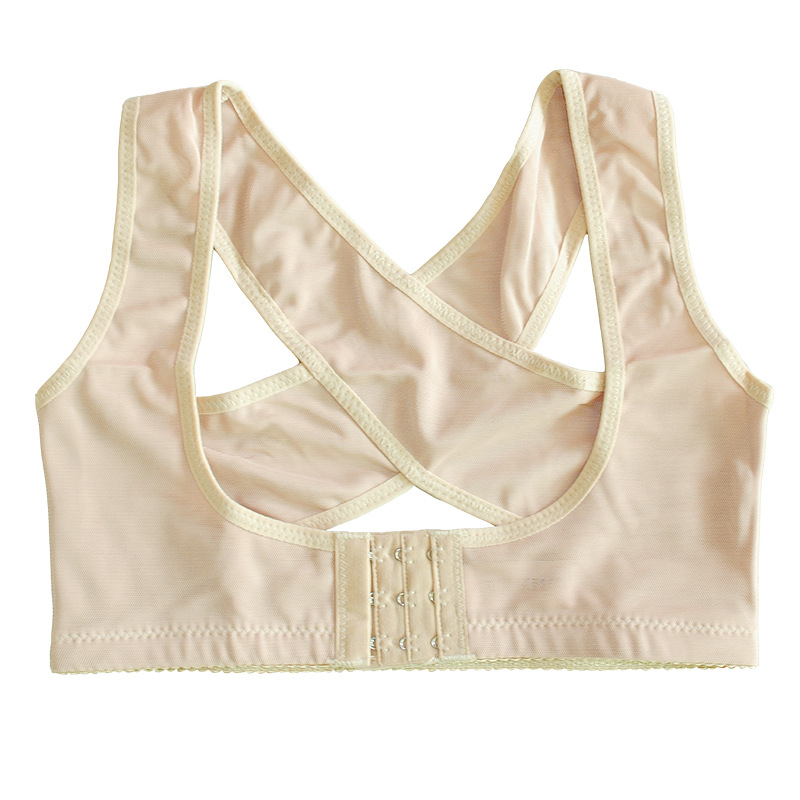
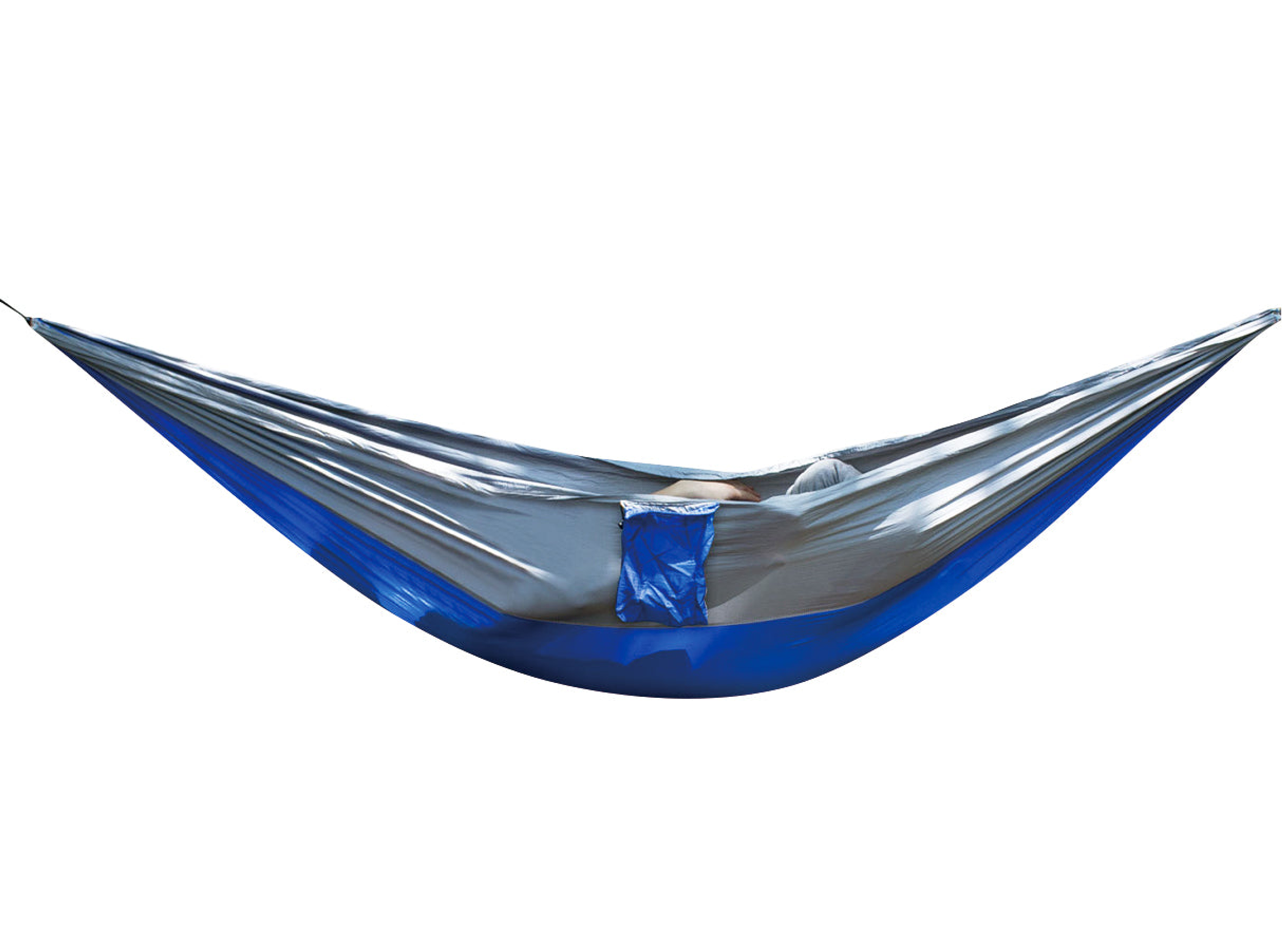
Frequently asked questions about a blackhead remover facial vacuum
How often should I use a blackhead remover facial vacuum?
Once a week is plenty for most people, and once a fortnight suits sensitive or dry skin. Daily use is the single most common mistake. Pores refill over days, not hours, so more frequent sessions increase irritation without increasing what comes out.
Does it hurt?
It should not. A correctly set device feels like a firm tug that moves with you. Sharp pinching means the level is too high or you have stopped moving. Pain is a signal to reduce suction immediately, not to push through.
Will it make my pores smaller?
Pore size is largely genetic and does not permanently change. What does change is how visible a pore looks when it is not packed with oxidised debris, so cleared pores often appear finer. Expect a tidier look rather than a structural change.
Can I use it on other parts of my body?
Many people use these on the nose, chin, forehead and sometimes the upper back, where congestion is common. Keep well away from the eyelids, lips and any thin or delicate area, and never use one on a mole, wound or irritated patch.
Why did I get a bruise?
A bruise means suction was applied to one spot for too long. It is not dangerous but it takes days to fade. Drop a level, switch to a wider tip and keep the device moving, and it will not happen again.
Do I still need cleansing and moisturising?
Yes. A blackhead remover facial vacuum is an occasional extra, not a replacement for a routine. Daily cleansing controls the oil and dead skin that create blackheads in the first place, and moisturiser keeps a barrier that has just been through suction comfortable.
The short answer
Soften the skin properly, start on the lowest setting, keep the device moving and stop after ten minutes. Get those four habits right and a blackhead remover facial vacuum becomes a quiet, low-cost part of a weekly routine instead of a device that leaves marks.
Full photographs and current availability are on the Electric Blackhead Remover Facial Vacuum page, and the rest of the range is in the Beauty & Personal Care section. Available across the USA through secure checkout.



Add comment