An ayatul kursi ring carries one of the most recited verses in the Quran on a band you wear every day, which makes choosing one a slightly different exercise from buying ordinary jewellery. This guide covers the practical side properly: how to judge engraving quality, which metals hold up to Saudi heat and daily washing, how to measure your finger accurately at home, what to think about regarding respectful wear, and how to keep the lettering readable for years rather than months. There are also honest notes on skin sensitivity and on who should choose a pendant instead.
The verse and why it appears on jewellery
Ayat al-Kursi is verse 255 of Surah Al-Baqarah, widely known in English as the Throne Verse. It is among the most memorised passages in the Quran and is recited daily by many Muslims, which is precisely why it appears so often on rings, pendants and wall pieces.
An ayatul kursi ring is usually chosen as a reminder rather than an ornament. The wearer sees it during the day and it prompts recollection, in the same way that a tasbih in a pocket does. That intent shapes what “good” means here: legibility and durability matter more than sparkle.
It is also a common souvenir. Pilgrims returning from Hajj or Umrah often bring small pieces home, and an ayatul kursi ring is compact, unbreakable in a suitcase and appropriate for almost any recipient.
Worth saying plainly: scholarly opinion differs on wearing Quranic text, particularly on carrying it into the bathroom. If that question matters to you, ask a scholar you trust rather than relying on a shopping guide. This article deals with the material and practical side only.
What makes a good ayatul kursi ring
The difference between an ayatul kursi ring that still reads clearly after three years and one that turns into an illegible blur comes down to four things.
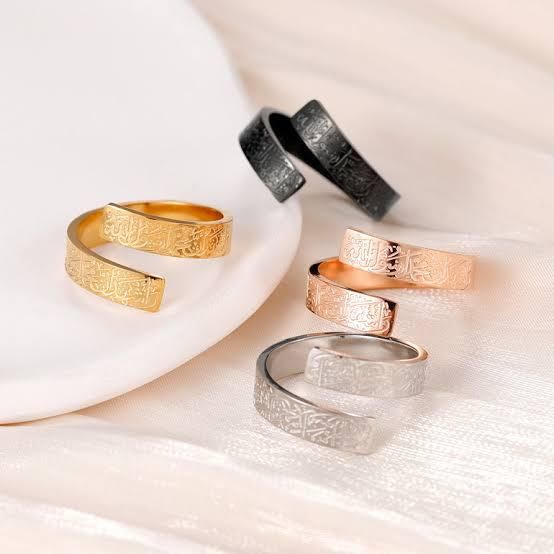
Engraving depth and legibility
On an ayatul kursi ring this is the single most important factor. Shallow, laser-etched surface marking looks crisp in a product photo and wears away with daily contact. Deeper engraving survives far longer. Zoom into the listing images and look at whether the letters have visible depth and clean edges; on a good ayatul kursi ring the script stays readable even where the surface has been polished by wear.
Metal choice
Stainless steel is the workhorse of this category. It resists corrosion, tolerates sweat and washing, and holds an engraving well. Silver is softer and tarnishes, which means more upkeep but easier resizing. Plated base metals are the weakest option, because once the plating wears through at the knuckle the piece looks tired quickly.
Band profile and comfort
A flat band with sharp inner edges digs into the finger; a comfort-fit band with a slightly domed interior sits far better over long days. Width matters too — a wide ayatul kursi ring looks impressive and is noticeably harder to wear while typing, driving or making wudu.
Finish and contrast
Engraving is readable because of contrast, not just depth. A blackened or oxidised infill makes the script stand out against a bright surface. That infill is also the part most likely to fade first, so ask yourself whether the piece still reads well if the darkening wears away.
How to read the listing photographs
Product photography for engraved jewellery is almost always shot under bright, angled light, which exaggerates depth. Knowing that, look for the shots that are least flattering rather than the hero image.
- Find a photograph taken straight on. Angled shots hide shallow marking; a flat view shows how much depth is really there.
- Look at the inside of the band. A clean, smooth interior suggests care in finishing; visible tool marks suggest the opposite.
- Check whether the script wraps or sits in a panel. A wrapped design puts lettering at the knuckle, where wear is heaviest.
- Compare the colour between images. Large shifts usually mean heavy editing rather than a real finish.
- Look for a photograph on a hand. It is the only reliable way to judge how wide an ayatul kursi ring will actually look on you.
The WLD Store pick: Ayatul Kursi Ring
These details come from the WLD Store listing, presented as the seller’s description rather than independently verified measurements:
- Product: Ayatul Kursi Ring, described as intricately engraved for maximum clarity.
- Material per the listing: premium stainless steel.
- Suggested uses per the listing: daily wear, Eid gifting, and Hajj and Umrah souvenirs.
- Category: Fashion, filed under Islamic Jewelry & Accessories.
- Brand: WLD | SKU: WLD-KSA-0004-(KD-KD0091)
- Availability: listed for customers across Saudi Arabia, with secure checkout.
The listing does not state band width, available sizes or the exact steel grade, so check the current product page for sizing options before ordering. Full details are on the Ayatul Kursi Ring product page.
Measuring your finger properly
An ayatul kursi ring is among the least forgiving things to buy online, because a size out either way makes the piece unwearable. Ten minutes of care prevents almost every return.
- Measure at the end of the day. Fingers swell as hours pass, and a ring fitted first thing in the morning often will not go on by evening.
- Use a strip of paper, not string. String stretches. Wrap paper snugly around the base of the finger, mark the overlap and measure flat against a ruler.
- Measure three times. Take the average rather than trusting one reading.
- Account for the knuckle. If your knuckle is much wider than the base of the finger, size to slide over the knuckle and accept a little movement below it.
- Remember the band width. A wide ayatul kursi ring fits tighter than a narrow one at the same nominal size, so consider going up a half size.
- Do not measure in air conditioning and buy for outdoors. Saudi summers change finger size noticeably between a cooled office and a car park.
If you are buying as a surprise gift, borrowing a ring the person already wears on the same finger is far more reliable than guessing from hand size.
Wearing it thoughtfully
Because the piece carries Quranic text, some considerations go beyond fashion. The most commonly discussed is whether to remove it before entering the bathroom; scholars hold different positions, and the safest course is to follow the guidance of someone qualified whose view you follow.
A second, purely practical point: if you do remove the ring regularly, you need a habit for where it goes. More rings are lost on the edge of a sink than anywhere else. Keeping a small dish in one fixed place solves it entirely.
Third, treat it as you would any item bearing sacred text — do not leave it on the floor, and do not throw it into a bag with keys and coins. That is respect and sensible care at the same time, since keys are also what scratch an ayatul kursi ring fastest.
Skin sensitivity and metal reactions
A small number of people react to jewellery metals, most often to nickel present in some alloys. The symptoms are itching, redness or a rash under the band, and they typically appear after prolonged contact rather than immediately.
Good-quality stainless steel is generally well tolerated, but sensitivities vary and steel grades differ. If you know you react to costume jewellery, introduce a new ayatul kursi ring gradually — a few hours a day at first — and stop if irritation appears. Persistent skin reactions are worth showing to a doctor, since contact dermatitis has causes beyond jewellery.
Trapped moisture is a separate and more common issue. Soap and water sitting under a band irritates skin all by itself, which is why drying the finger properly after wudu matters more than most people realise.
Care and cleaning
An ayatul kursi ring needs slightly different care from plain jewellery, because dirt collects in the letters and dulls the contrast that makes the script readable.
- Clean your ayatul kursi ring weekly with warm water, a drop of mild soap and a soft toothbrush, working gently along the lines of the engraving.
- Dry it fully with a soft cloth. Water left in the script is what causes dull patches and, on some metals, staining.
- Avoid bleach, chlorine and household cleaners entirely — they attack finishes and can damage an ayatul kursi ring permanently.
- Take it off before swimming pools, gym weights and any manual work. Impact damages engraving faster than years of ordinary wear.
- Store it in a small pouch or box rather than loose in a drawer with other metal.
Do not use abrasive polish or a rotary tool on engraved script. Polishing compounds remove metal, and on an ayatul kursi ring that means slowly erasing the very thing you bought it for.
What actually wears an engraving away
It is rarely dramatic. Engraving on an ayatul kursi ring fades through thousands of small contacts: steering wheels, keyboards, gym equipment, sand, and the constant friction of a pocket.
The parts that wear first are the raised edges and the outer face at the knuckle side. If you want an ayatul kursi ring to stay crisp, the most effective single habit is removing it for tasks that involve grip and grit. Gardening, DIY and weight training in one week can do more damage than a year of office work.
Sunscreen, perfume and cleaning sprays also play a part, particularly on darkened infills. Applying them before you put the ring on, rather than over it, makes a visible difference over a year.
The first month of ownership
Give a new piece a short settling-in period. In the first week, wear it only when you are at home or at a desk, so you learn how it behaves before you take it into rougher situations.
Watch two things in particular: whether the skin underneath stays comfortable after several hours, and whether the ring rotates when your hands are cool. Both are much easier to correct in the first weeks than after months of wear, when a return is no longer realistic.
By the end of the month you should know whether the size is right and whether your ayatul kursi ring needs a fixed place to live when it comes off. Establishing that habit early is what stops a piece being lost in year one.
Common problems and quick fixes
- The script is going faint. Usually the infill has worn, not the engraving. A careful clean sometimes restores contrast; if not, this is normal ageing and cannot be reversed at home.
- Green or dark marks on the finger. Typical of plated or low-grade alloys reacting with sweat. Keep the finger dry, and consider a solid steel or silver piece next time.
- The ring spins on the finger. It is a half size too large. A jeweller can fit sizing beads; a temporary guard is a stopgap, not a fix.
- It is stuck. Cool the hand, raise it above the heart for a few minutes, and use soap. Never force it — if it will not move and the finger is swelling, get help rather than persisting.
Buying checklist
- Is the engraving deep enough to survive daily wear, judging by the closest photograph available?
- What metal is it, and do I know how my skin reacts to that metal?
- Have I measured my finger at the end of the day, three times, with paper?
- Does the band width suit how I use my hands day to day?
- Am I comfortable with how I will handle an ayatul kursi ring around washing and the bathroom?
Who should choose something else
If your work involves machinery, heavy lifting or anything that could catch a ring, jewellery on the hand is a genuine safety hazard rather than a style question. A pendant achieves the same thing without the risk.
People whose fingers change size significantly — during pregnancy, with certain medications, or in very hot months — often find rings frustrating. And if you are uncertain about the etiquette of wearing Quranic text on the hand, that uncertainty is itself a reason to choose a different format until you have asked someone qualified.
Finally, if you want something to last generations, a plated ayatul kursi ring will not do it. Solid metal is the only honest answer for an heirloom.
Ring, pendant or bracelet?
The same verse appears on all three formats, and they suit different lives. An ayatul kursi ring is only one of the options worth weighing.
A ring is the most visible to the wearer, which is what makes it effective as a reminder. It is also the most exposed to knocks and the hardest to size correctly. A pendant sits protected under clothing, needs no sizing, and is easy to remove and store — the practical choice for anyone in a hands-on job.
A bracelet sits between the two: less exposed than a ring, more visible than a pendant, but prone to catching on sleeves. If you are buying a first piece and cannot decide, a pendant is the safest default; an ayatul kursi ring is the better pick when you specifically want it in your own line of sight.
Buying it as a gift
An ayatul kursi ring is a common Eid and homecoming gift, and it goes wrong mainly on sizing. Borrow a ring the recipient already wears, or choose a pendant instead and remove the problem.
Keep the presentation simple and respectful — a clean box rather than elaborate wrapping suits the nature of the piece. And if you are giving an ayatul kursi ring to someone with sensitive skin, mention the metal openly so they can decide how to wear it.
Other picks at WLD Store
Three more listings from the same Islamic accessories catalogue:
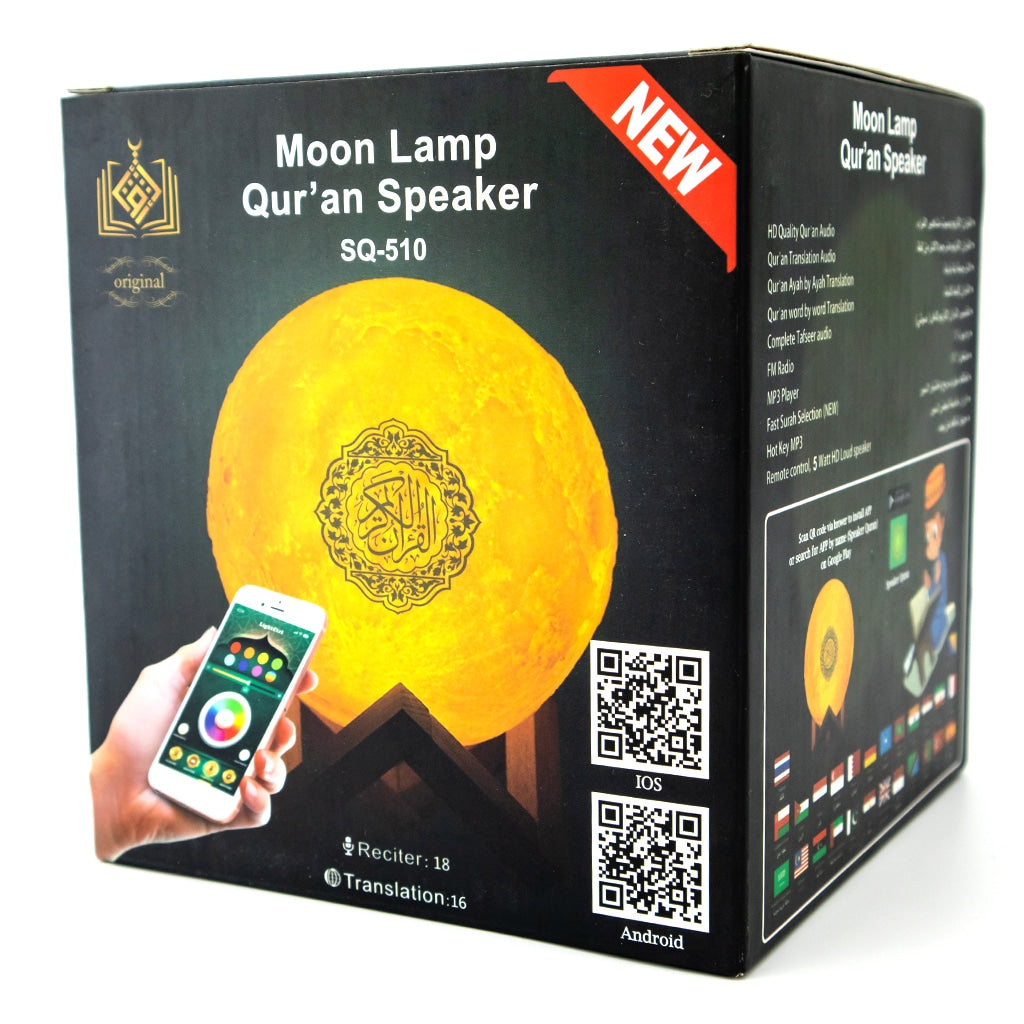
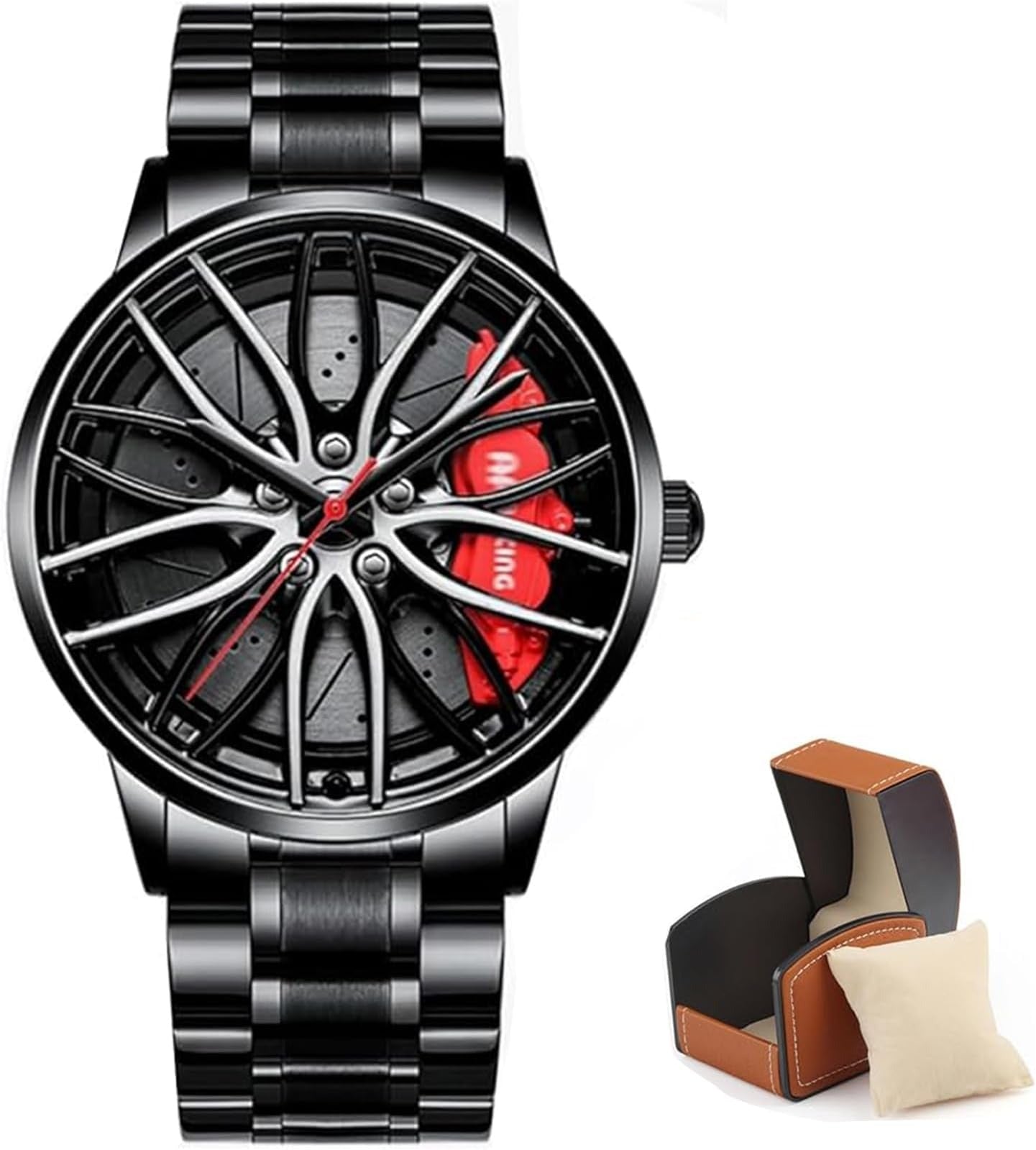
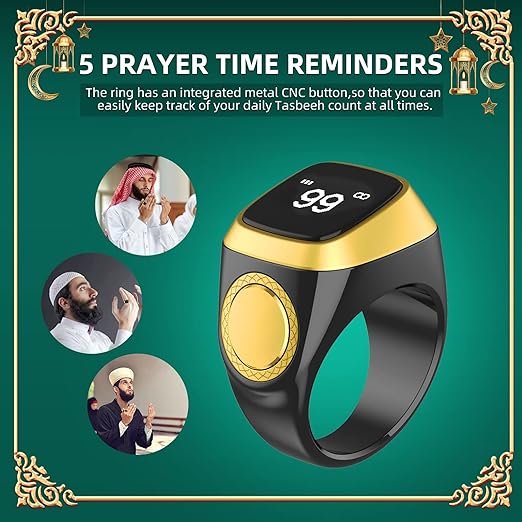
The Equantu Qibla Ring Tasbih Counter is the closest relative, worn the same way for a different purpose. The Moon Lamp Quran Speaker suits the same gifting occasions, and the 3D Car Wheel Rotating Wrist Watch covers the wider men’s accessories range.
Frequently asked questions about the ayatul kursi ring
Can I wear it all the time?
Physically, a solid steel piece handles daily wear well. Religiously, views differ on wearing Quranic text in certain places, so the right answer depends on the guidance you follow. Ask a qualified scholar rather than assuming either way.
Will the engraving wear off?
Deep engraving lasts a very long time; surface etching does not. The darkened infill that provides contrast usually fades before the engraving itself. Removing the ring for gritty or high-grip tasks is the most effective way to slow both.
Is stainless steel a good choice?
For daily wear, yes. It resists corrosion, tolerates sweat and water, holds engraving and needs little upkeep. Silver looks warmer and is easier to resize but tarnishes and scratches more readily.
How do I know my size without a jeweller?
Measure the base of the finger with a paper strip at the end of the day, repeat three times and take the average. Size over the knuckle if it is significantly wider. If in doubt between two sizes, the larger one is usually the safer choice.
Is it suitable for both men and women?
The verse itself is not gendered. In practice, choose band width and finish to taste — narrower bands are generally more comfortable, and an ayatul kursi ring in a slimmer profile suits a wider range of hands.
Can it be resized?
Silver and gold resize easily. Stainless steel is much harder to alter, and resizing risks damaging engraving that runs around the band. Buying the correct size the first time matters more with steel than with softer metals.
Choose depth of engraving over decoration, measure your finger properly, and give the piece the small amount of care it needs — that is genuinely the whole of it. Done well, an ayatul kursi ring stays legible and comfortable for many years. You can see this piece on its product page, or browse the wider selection in the Islamic Jewelry & Accessories section.



Add comment