A cooking utensils set that is genuinely safe for non-stick pans is one of the cheapest ways to protect the most expensive things in your cupboard. A single metal edge dragged across a coated pan starts damage that never stops spreading.
This guide is about that specific problem: which materials belong near coated cookware, what heat ratings actually mean, how handles and seams affect daily comfort, and when a tool should be retired. It also covers the 12-piece set WLD Store stocks for Saudi Arabia, with a checklist and six questions at the end.
Why the material of a cooking utensils set matters more than the price
Most kitchens today run on coated pans. They are easy to cook with, easy to wash and, in a busy household, they do most of the daily work. They also have one weakness: the coating is a surface layer, and surface layers scratch.
Once a coating is broken, the damage spreads outward with every heat cycle. Food starts sticking in that spot, you scrape harder, and the patch grows. Most pans that get thrown away are not worn out; they were scratched early by the wrong tool.
A soft-edged cooking utensils set removes that risk entirely. Silicone, nylon and wood cannot cut a coating, so a set made from them protects every pan you own for as long as you own it.
There is a comfort argument too. Soft tools are quieter in the pan, they do not scrape and rattle, and they flex enough to get the last of a sauce out of a curved pan wall. Once you have cooked with them for a week, metal in a coated pan feels crude.
What makes a good cooking utensils set
Listings in this category all promise the same things, so the useful comparisons happen at a level of detail the marketing skips. These are the areas worth examining in any cooking utensils set.
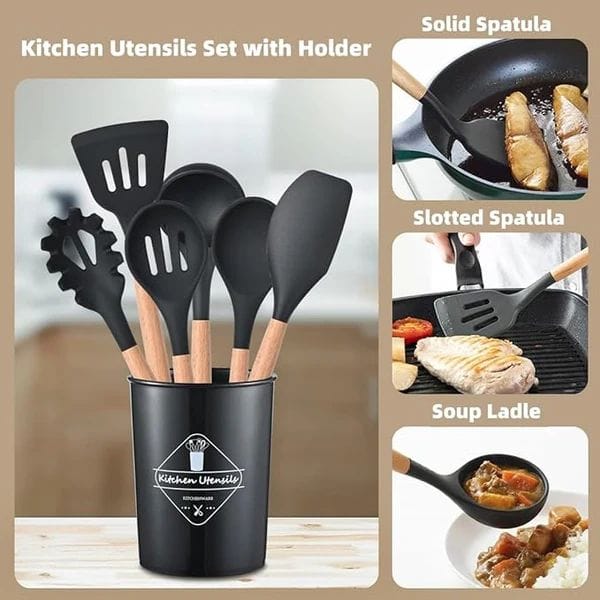
The head material
Silicone is the most forgiving: soft, heat-tolerant, and it will not mark a coating. Nylon is firmer and better for lifting, but has a lower heat limit and can nick if it is thin. Wood is gentle and pleasant to use but must be hand washed and dried. Any of the three is safe for coated pans; metal is not.
The stated heat limit
Every cooking utensils set is described as heat resistant, and the meaningful detail is the temperature on the packaging. That figure is a limit, not a target. A tool left leaning in a hot dry pan can reach it easily, and softening is permanent.
The handle
Handles decide whether cooking is comfortable. Length keeps your hand away from steam and spitting oil; a slight taper stops the tool twisting during a hard stir; a hanging loop decides where it will be stored. Thin, perfectly round handles are the ones people quietly stop using.
The seam between head and handle
This is where cheap tools fail and where food hides. One-piece moulded tools have no seam at all and are the easiest to keep clean. If a set uses separate heads, check the joint is tight and flush rather than a visible gap.
Coverage without duplication
Look for a turner, a solid spoon, a slotted spoon, a ladle, a scraper and something for tossing. A twelve-piece cooking utensils set that covers those tasks is more useful than a twenty-piece one with four similar spoons.
The WLD Store pick: 12 Pcs Cooking Utensils Set
For readers who want a specific product rather than category advice, this is the set stocked for the Saudi market. Everything below is taken from the product listing itself.
- Product: 12 Pcs Cooking Utensils Set, described as a complete non-stick safe collection.
- Contents: the listing names spatulas, ladles and spoons among the pieces.
- Handles: the listing describes heat-resistant handles.
- Materials: the listing describes BPA-free materials intended for safe daily cooking.
- Suggested use: the listing positions it as a housewarming or Eid gift.
- Category: Home & Kitchen, also listed under Kitchen Tools. Brand: WLD.
- SKU: WLD-KSA-0022-(KD-KD0184). Market: available across Saudi Arabia through secure checkout.
Current images, the full piece list and the order page are on the 12 Pcs Cooking Utensils Set product page. The exact maximum temperature, the polymer used and the individual dimensions should be confirmed there and on the packaging rather than taken from any guide.
How to use a cooking utensils set without damaging it
These tools are hard to break and easy to ruin, and the difference is entirely in a few habits.
- Never park a tool in the pan. A utensil resting against a hot pan wall is the single most common cause of heat damage. Use a spoon rest.
- Do not use them on a dry, empty pan over high heat. An empty pan gets far hotter than one with food in it.
- Lift rather than scrape. Soft tools work by getting under food, not by chiselling it. If something is stuck, add liquid and wait.
- Keep one tool per job while cooking so raw and cooked food do not meet on the same head.
- Wash promptly. Oil left to bake onto silicone is much harder to remove the next day than it is in the first ten minutes.
One more habit is worth adopting with any cooking utensils set: check the head before each use. A nick, a rough patch or a lifted edge means that piece is now capable of scratching, and it should be retired.
Matching a cooking utensils set to the pan in front of you
Different cookware wants different treatment, and knowing which is which saves both pans and tools.
Non-stick and ceramic-coated. Silicone, nylon or wood only, and never a metal edge of any kind. This is where a soft cooking utensils set is not a preference but a requirement.
Stainless steel. Anything works. Metal is genuinely better here for scraping the browned base of a pan, which is where a lot of flavour lives.
Cast iron. Wood and metal are both fine. Silicone is too soft to lift what has stuck to bare iron.
Enamelled cast iron. Treat it as a coated pan. Enamel chips rather than scratches, and a chip cannot be repaired.
Air fryers and baking trays with coatings. Same rule as non-stick pans, and worth remembering because people who are careful with pans often forget the tray.
Heat, plastics and what is actually safe
Questions about plastics in the kitchen are reasonable, and the honest answers are fairly simple.
“BPA-free” is a statement about one specific compound not being used in the material. It is a manufacturer’s claim about composition, and where a listing makes it, that is what it means and nothing more.
The bigger practical safety factor is heat. Any polymer used within its stated temperature limit behaves predictably; the same polymer overheated can deform and discolour. Staying inside the printed limit is the useful rule rather than choosing between materials on instinct.
Silicone is widely used in cookware precisely because it tolerates high temperatures well. Nylon has a lower limit than silicone, which is why nylon tools are more often the ones found warped in a drawer.
If a tool from any cooking utensils set has visibly melted, deformed or developed a rough surface, replace it. That is not a scare story; it is simply a tool that no longer works properly and can now scratch a pan.
Care and maintenance for a cooking utensils set
The routine below takes almost no time and adds years to a collection.
Wash before first use in warm soapy water, then rinse and dry, even if the set is described as dishwasher safe.
Follow the dishwasher guidance exactly. Where a set allows it, the top rack and a normal cycle are kinder than the hottest programme, which is hard on handles over time.
Hand wash anything wooden and dry it straight away. Wood left soaking splits, and a split handle cannot be repaired.
Deal with stains sensibly. Tomato and turmeric stain silicone; it is cosmetic. Wash promptly and let the piece sit in sunlight, which lifts a surprising amount of discolouration.
Store them apart from knives. A blade loose in the same drawer will eventually cut a soft tool head, which is a slow way of undoing everything a non-stick safe set is for.
Soft tools, metal tools or wooden tools
Each of the three families does something the others cannot, and the best-equipped kitchens usually hold a little of each.
Soft tools. Silicone and nylon are the only sensible choice around coated pans, they are light, and they clean easily. They flex, so they are poor at lifting anything firmly stuck to bare metal.
Metal tools. Rigid, precise and excellent for scraping a steel or iron pan. They are also the fastest way to ruin a coating, which is why a metal tool and a coated pan should never share a drawer within easy reach.
Wooden tools. Kind to every surface, pleasant in the hand and quiet in the pan. The trade is maintenance: no soaking, no dishwasher, and occasional oiling.
A practical arrangement for most homes is a soft cooking utensils set as the default, one wooden spoon for stirring, and a single metal turner kept for steel pans only. That covers everything without putting your coated pans at risk.
Storage that keeps a cooking utensils set together
Twelve tools scattered across three drawers stop feeling like a set very quickly, and the pieces you cannot find are the ones you replace unnecessarily.
A holder by the hob is the best home for the four or five tools you use daily. Keep it close enough to reach without stepping away from the pan, and wash the holder itself occasionally.
A drawer with a divider suits the rest. Laying tools in one direction rather than piling them stops the drawer jamming, which is the usual reason a set ends up spread around the kitchen.
Keep knives separate. This is worth repeating because it is the most common cause of damaged soft heads. A blade loose among silicone tools will cut one eventually.
Hang what has a loop. A rail costs little, frees drawer space and keeps a cooking utensils set visible, which in practice means it actually gets used.
Cooking for a crowd: what changes
Large gatherings put different demands on kitchen tools, and a set that is comfortable for a weeknight dinner can feel undersized during Ramadan or Eid.
Volume is the first change. Stirring a large pot needs a longer handle than stirring a saucepan, both for reach and to keep your hand away from rising steam. Check the longest tool in the set before a big cooking day.
Duplication becomes useful rather than wasteful. Two spoons and two turners mean raw and cooked food never share a tool and nothing has to be washed mid-service, which is exactly when a larger cooking utensils set earns its keep.
Heat exposure rises as well. Pans stay on the hob longer and get hotter, so the habit of never leaving a tool resting in a pan matters more than usual. Set out a couple of spoon rests before you start.
Finally, plan the washing up. Soft tools clean quickly if they are rinsed as you go and become genuinely tedious if a dozen of them are left to dry hard overnight.
Common problems and quick fixes
- A greasy film that survives washing. Use hotter water and a degreasing detergent, and wash the piece separately rather than in a crowded load.
- Orange staining. Cosmetic and normal on silicone. Sunlight fades it; bleach is not needed and is not kind to the material.
- A warped or softened head. The tool has exceeded its heat limit. It cannot be reshaped, so replace that piece of the cooking utensils set rather than continuing to use it.
- A loose head on the handle. Water has worked into the joint. Stop using it for hot food, since a head coming off in a pan is a real burn risk.
- Food sticking despite soft tools. The pan coating, not the tool, is likely worn. Check the pan surface in good light before blaming the utensils.
When to replace a piece of a cooking utensils set
Tools rarely fail suddenly, so it helps to know the signals that a piece is done.
Replace anything with a nick or a lifted edge on the head, because that edge is now hard enough to mark a coating. Replace anything that has visibly changed shape from heat. Replace a handle that has cracked, since cracks trap water and grow.
Replace a wooden piece that has split or gone furry, and any silicone head that stays sticky after a proper wash. A sticky surface usually means the material has degraded rather than that it is dirty.
Replacing one tool at a time is normal and sensible. There is no need to discard a whole cooking utensils set because two pieces have aged, and buying a single replacement is usually straightforward.
Who a soft-edged cooking utensils set is not for
There are cooks for whom this category is the wrong choice, and saying so is more useful than pretending it suits everyone.
If you cook almost entirely in stainless steel or bare cast iron at high heat, metal and wooden tools will serve you better. Soft tools flex when you want them to bite, and that is frustrating when you are deglazing a steel pan.
If you regularly cook for large numbers in heavy pots, a lightweight cooking utensils set will feel flimsy. Commercial-weight tools exist for a reason.
And if your existing drawer already holds tools you like, buying twelve more creates a storage problem. Replace the specific pieces that are unsafe for your pans instead of buying a whole collection.
Buying checklist for a cooking utensils set
- Is every piece soft-edged, or does the set mix in metal that could reach a coated pan?
- Is a maximum temperature printed on the packaging?
- Are the tools one-piece, or is there a seam that will trap food?
- Do the handles feel comfortable and long enough to keep your hand clear of steam?
- Does the piece list cover turning, stirring, straining, ladling and scraping without duplication?
Other Home and Kitchen picks at WLD Store
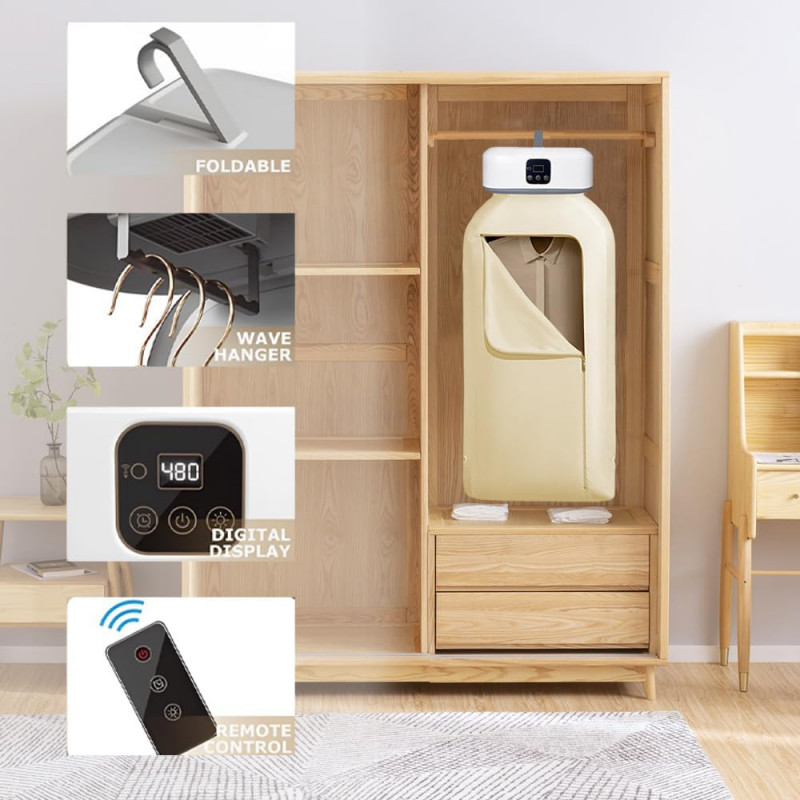
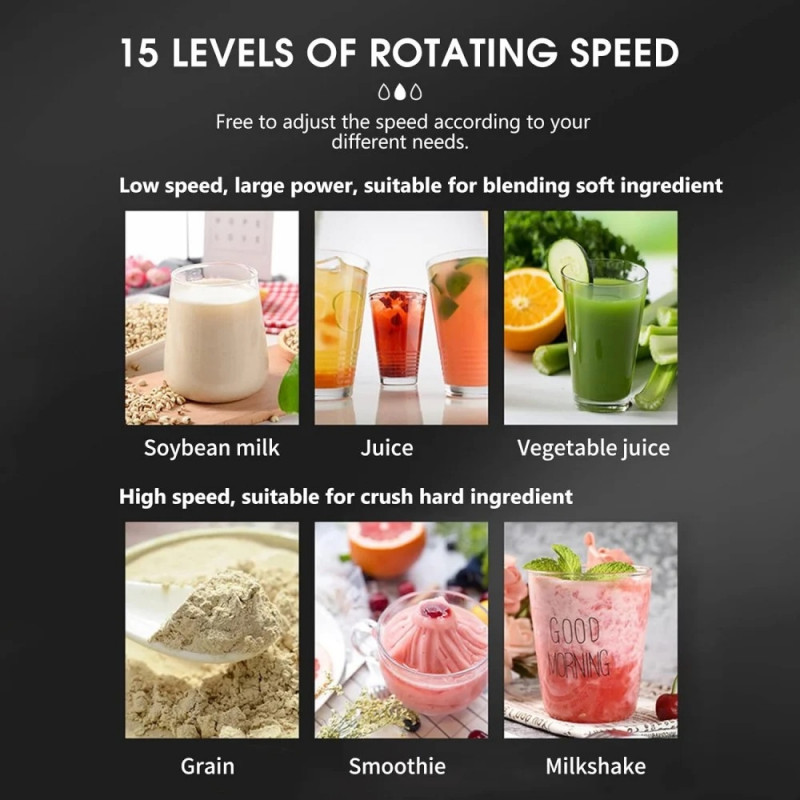
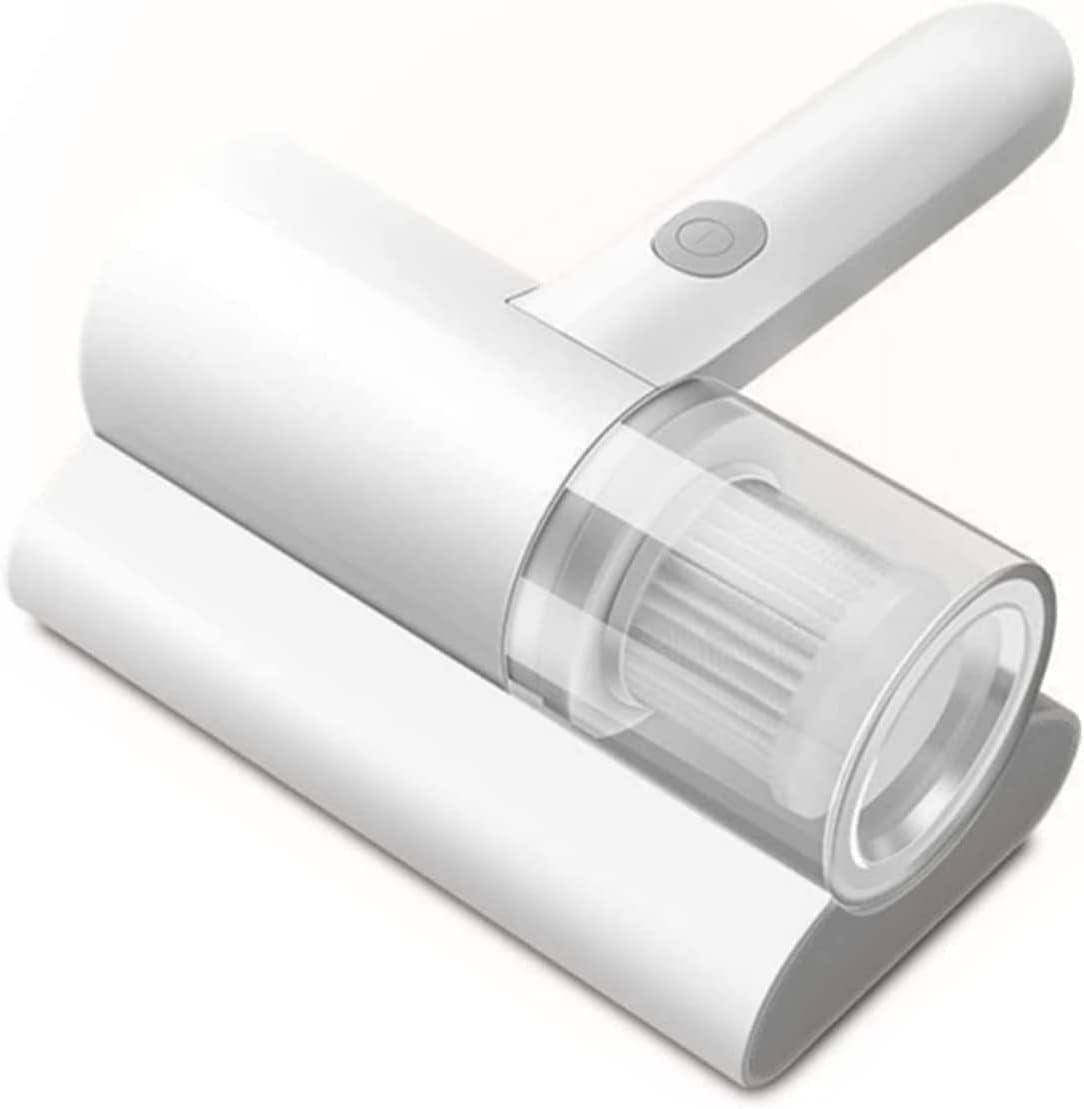
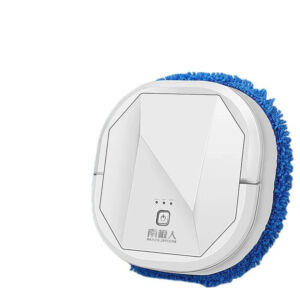
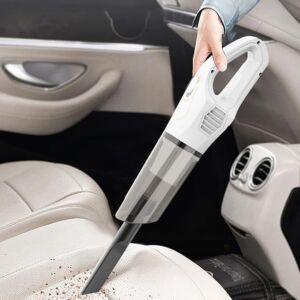
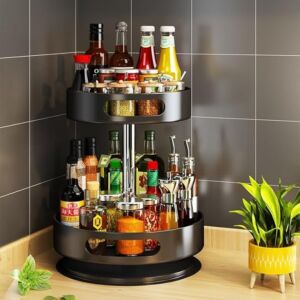
If you are fitting out a kitchen rather than replacing a few tools, these three sit nearby in the catalogue and work well alongside a cooking utensils set.
Frequently asked questions about the cooking utensils set
Will a cooking utensils set really protect my non-stick pans?
Soft-edged tools cannot cut a coating, so yes, provided every piece you actually use in the pan is soft-edged. The usual failure is one metal spoon that stays in the drawer and gets grabbed in a hurry. Remove it and the risk goes with it.
Is silicone or nylon better?
Silicone generally tolerates higher temperatures and is gentler; nylon is firmer and better at lifting heavy items. Many sets combine both for that reason. Either is safe on coated pans as long as you respect the stated heat limit.
Can I put the set in the dishwasher?
Follow the packaging. Where it is allowed, use the top rack and avoid the hottest cycle. Wooden pieces should always be washed by hand and dried immediately, whatever the rest of the set permits.
What does BPA-free mean on a listing?
It is a statement that a particular compound is not used in the material. Treat it as the manufacturer’s description of composition. The practical safety habit that matters most is keeping tools within their printed temperature limit.
How many pieces do I actually need?
Six or seven tools cover the great majority of home cooking. A twelve-piece cooking utensils set adds convenience, spares and a few specialised pieces, which is useful in a busy kitchen where washing up mid-recipe is not practical.
Is it a good gift?
It is a reliable practical gift for a new home, a first flat or a wedding, because it needs no sizing and fills a real gap. Choose a soft-edged set if you do not know what pans the recipient owns, since that suits every kind of cookware.
Choosing a cooking utensils set is less about the number of pieces and more about one question: can anything in this box scratch the pans you already own? Answer that first, respect the printed heat limit, retire damaged pieces promptly, and a modest set will outlast several sets of pans. You can see the 12-piece option on its product page, read more about the tools themselves in the spatula article on Wikipedia, or browse the wider range in the Kitchen Tools section.


Add comment