A travel hair straightener has a harder job than the one on your dressing table. It has to survive a suitcase, work in an unfamiliar bathroom, heat quickly because you are always running late, and cool down fast enough to pack before checkout. This guide covers what actually matters when you buy one, how to pack it safely, how to use it in hotel humidity, how to pick a heat setting for your hair, and how to keep it working. It also looks at one comb-style model listed by WLD Store for shoppers in Saudi Arabia.
Why travel changes what you need from a styler
At home you can leave a styler plugged in on a heatproof mat, use the mirror you know, and take your time. On a trip none of that is true. You get a small counter, a mirror at the wrong height, uneven light, and a deadline. A travel hair straightener has to be forgiving rather than clever.
Space is the second pressure on any travel hair straightener. Every centimetre in a bag is contested, and a full-size styler with a long cable is bulky and awkward. Compact tools win not because they perform better but because they actually get packed.
Then there is time. Hotel routines are compressed, and a tool that takes several minutes to reach temperature costs you exactly the minutes you do not have. Fast heat-up is the single most appreciated feature in a travel hair straightener, and it is the one people notice first.
Finally, environment. Airport air, hotel air conditioning and pool chlorine all change how hair behaves, so the tool that works perfectly at home can behave differently on the road. Knowing that in advance saves a lot of frustration.
What makes a good travel hair straightener
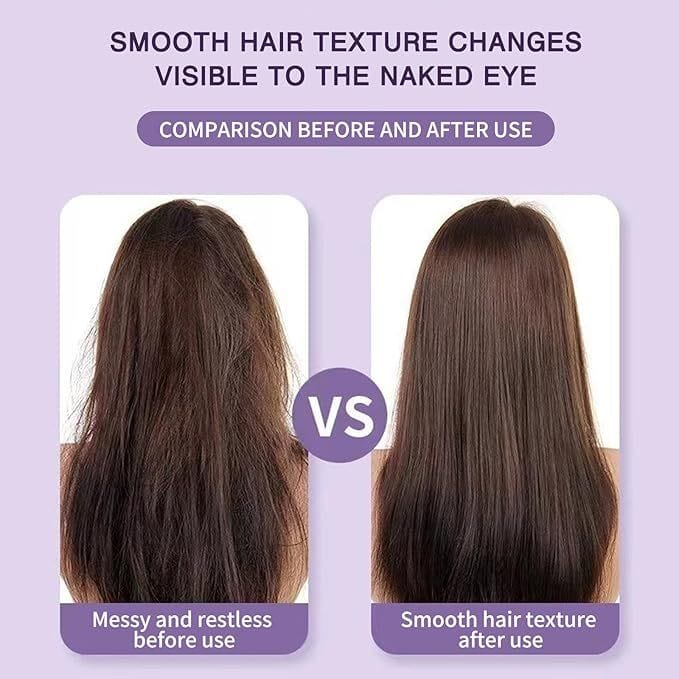
The travel hair straightener category is full of near-identical looking tools with very different day-to-day behaviour. These are the details that separate them.
Size, weight and shape
Length matters more than weight when packing a travel hair straightener. A short body slots into a bag alongside everything else, while a long one dictates how the whole case is arranged. Comb and brush styles are usually bulkier through the head but easier to handle one-handed, which is useful when you are working without a proper mirror.
Heat-up time
A travel hair straightener that reaches working temperature in well under a minute changes how likely you are to use it at all. Slow heat-up is the main reason travel tools get left in the bag and hair gets tied back instead.
Temperature control
Adjustable heat is not a luxury. Fine, bleached or chemically treated hair needs a lower setting, and using a single fixed high temperature on it is how damage happens. A travel hair straightener with at least two or three settings is far more useful than one with none.
Comb, brush or plates
Classic plates give the sleekest finish and the most control on small sections. A heated comb or brush passes through hair in one movement, detangling as it goes, and gives a softer, more natural straightness. For travel, the comb style is often more forgiving because it is harder to clamp a crease into hair by mistake.
Cable, plug and voltage
Check the voltage rating on a travel hair straightener before you fly, not at the hotel. Many stylers are single-voltage, and plugging one into the wrong supply can destroy it instantly. A swivel cable of a sensible length prevents the tangle that shortens the life of most travel tools.
Safety features
Automatic shut-off on a travel hair straightener is worth paying attention to when you are leaving a room in a hurry. A cool tip, a heat-resistant stand or a supplied pouch all make a real difference on a counter that has no free space.
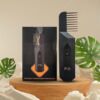
The WLD Store pick: Portable Hair Straightener Comb
WLD Store lists a Portable Hair Straightener Comb for customers in Saudi Arabia. Here is exactly what the listing states:
- Product: Portable Hair Straightener Comb
- Category: Beauty & Personal Care — Hair Care
- Brand: WLD
- SKU: WLD-KSA-0013-(KD-KD0182)
- Design: the listing describes a dual-function heating brush that straightens and detangles in one pass
- Heat-up: the listing states it heats up in seconds
- Control: the listing states it has adjustable temperature settings
- Portability: the listing describes it as compact enough for travel
- Market: available across Saudi Arabia through secure checkout
Details and images are on the product page: Portable Hair Straightener Comb at WLD Store. The listing describes it as safe for all hair types; that is the manufacturer’s wording, and as with any heated tool the honest advice is to start at the lowest useful setting for your own hair rather than the highest available.
Packing a travel hair straightener safely
Let the travel hair straightener cool completely first. This sounds obvious and is the most commonly ignored step, usually because of a late checkout. A hot tool packed against clothing can scorch fabric, and heat trapped inside a closed case has nowhere to go.
Use a heat-resistant pouch if one came with the tool, and if not, a folded towel is better than nothing. Wrap the cable loosely around the body rather than pulling it tight — sharp bends at the base of the cable are the most common failure point on any travel hair straightener.
Pack the travel hair straightener in the middle of the case, surrounded by soft items. Edges and corners take the impact when a bag is thrown onto a belt, and a cracked housing on a heated tool is not something to keep using.
Carry it in hand luggage where possible. Corded heated tools are normally accepted in both cabin and hold baggage, but rules vary by airline and change, so check your carrier’s current guidance rather than assuming. Cordless tools with batteries, and anything gas-powered, follow different and stricter rules.
Using it well on the road
- Start with completely dry hair. Any moisture turns to steam against a hot surface, which damages the strand. This applies to every heated styler, not only a travel hair straightener.
- Use a heat protectant. A small decanted bottle takes no space and does more for hair condition than any setting on the tool.
- Section the hair. Three or four sections, working from underneath upward, gives an even finish without repeated passes.
- One slow pass beats three fast ones. Repeated passes at speed apply more total heat than a single controlled one.
- Keep it moving. Never rest a heated tool in one place, even for a second, and especially not near the scalp.
- Finish cool. Let hair cool fully before tying it up, or the shape you just created will fold in.
- Unplug and set it down safely. A hotel counter is usually stone or laminate, but bath mats and towels are not heat-safe surfaces.
Hotel bathrooms, humidity and hard water
Bathrooms are humid by design, and humidity undoes much of what a travel hair straightener just achieved. Style in the bedroom rather than the bathroom if there is any usable mirror there, and let the room air out after a shower before you start.
Hard water leaves hair rougher and less cooperative, which is why the same routine can feel different in another city. A leave-in conditioner or a light serum compensates for most of it, and it travels in a very small bottle.
Air conditioning is drying, and dry hair takes heat less well. If you are in an air-conditioned room for a week, lower the temperature setting rather than raising it, and add moisture back with a conditioning treatment.
Outdoors in a hot, humid climate, accept that results will not last as long as they do at home. Loose styles, a lighter product and a lower expectation of glass-smooth finish will serve you better than turning the heat up.
Choosing a heat setting for your hair
Fine, light-coloured, bleached or chemically relaxed hair belongs at the lowest setting that works. These hair types conduct heat quickly and show damage first, and a travel hair straightener at full power is rarely the right answer for them.
Medium, healthy, untreated hair usually sits comfortably in the middle range of a travel hair straightener. Start low, do one section, and only step up if the section does not hold its shape.
Coarse or very curly hair may need more heat, but more heat is not the same as more passes. Work in smaller sections instead — that gives a better result at a lower temperature than fighting a thick section on maximum.
Whatever your hair type, if you smell burning or see steam, stop. Those are not signs the tool is working; they are signs something is wrong, usually residual moisture or product build-up on the plates.
Care and maintenance
Wipe the plates or comb teeth of your travel hair straightener when cool. Styling product bakes onto a heated surface and then transfers back into your hair as a sticky residue, which is the usual reason a tool that used to glide starts to drag.
Never immerse a heated tool in water or hold it under a tap. A barely damp cloth on a cold tool is all that is needed, and it must be completely dry before the next use.
Check the cable regularly where it enters the body. Fraying, stiffness or discolouration there means the tool should be retired rather than repaired at home. Electrical faults in heated appliances are not worth the risk.
Store it dry and uncoiled where possible. If your travel hair straightener lives permanently in a wash bag, take it out between trips so the cable is not held in the same tight bend for months.
Common problems and quick fixes
- Hair goes limp again within hours. Usually humidity or residual moisture in the hair. Dry fully, use a lighter product, and let the hair cool before touching it.
- The tool drags through hair. Product build-up on the surface, or hair that needs detangling first. Clean when cold and comb through before styling.
- Uneven results at the back. A mirror problem rather than a tool problem. Work in smaller sections by feel, or use a second mirror.
- It does not switch on abroad. Check voltage compatibility before blaming the tool, and never use a plug adapter as if it were a voltage converter — they do different jobs.
Who does not need a travel hair straightener
If you travel rarely and your hair is naturally straight or you wear it curly by choice, a travel hair straightener is an extra thing to carry for no gain. A good comb and a light serum handle most trips.
If your hair is currently damaged, over-processed or breaking, adding heat on the road is the wrong move. Repair first, and travel with protective styles until the hair is in better condition.
People who cover their hair for most of a trip often find a full styling routine unnecessary, and a smoothing serum plus a wide-tooth comb gives a tidier result with no heat at all.
The travel hair straightener compared with the alternatives
A full-size straightener gives more control, wider plates and a faster job on long, thick hair. It also takes real space, and for a two-night trip that is a poor trade. Keep the full-size tool for home.
A hotel hair dryer plus a round brush can achieve a smooth finish without carrying anything, but the technique takes practice and hotel dryers vary wildly in power. It is a good backup rather than a plan.
A cordless styler removes the plug problem entirely and is genuinely useful, but battery rules for air travel are stricter and heat output is usually lower. A corded travel hair straightener is simpler if you are staying in hotels with reliable power.
Building a one-bag styling kit
A styling tool on its own rarely gives a good result away from home. The kit around it matters just as much, and it can be genuinely small: a wide-tooth comb, four sectioning clips, a decanted heat protectant, a light serum and a folded microfibre cloth. That whole set weighs less than the tool itself.
Decant liquids rather than carrying full bottles. Small travel bottles reduce weight, satisfy cabin-bag limits, and remove the risk of a full-size product leaking over everything else in the case. Label each one so you are not guessing at six in the morning.
Add a cheap folding mirror if you can. Hotel mirrors are almost always fixed at the wrong height and lit from above, and a small propped mirror does more for the quality of your result than any feature on a travel hair straightener.
Keep the kit permanently packed. A pouch that stays assembled between trips means nothing gets forgotten, and it stops the cable being unwound and rewound at every departure.
Timing your routine in a hotel
Work backwards from when you need to leave. Hair needs to be fully dry before heat, and fully cool before it is tied or covered, and those two gaps are what people underestimate. Ten minutes of buffer removes most of the stress.
Wash the night before where you can, before the travel hair straightener is even unpacked. Sleeping on dry, loosely braided hair gives you a head start in the morning and reduces how much heat you need from a travel hair straightener at all.
If the room is small, plug in away from the bathroom and away from the bed. A heated tool needs a clear, hard surface it can rest on, and hotel rooms rarely offer one without a little rearranging.
Buying checklist
Five questions to settle before you order a travel hair straightener:
- Does the length and shape genuinely fit the bag I travel with?
- How fast does it reach working temperature from cold?
- Are there enough heat settings for my hair type, including a low one?
- Is the voltage compatible with where I actually travel?
- Does it come with a pouch or heat-resistant rest, and does it shut off on its own?
Other beauty picks at WLD Store
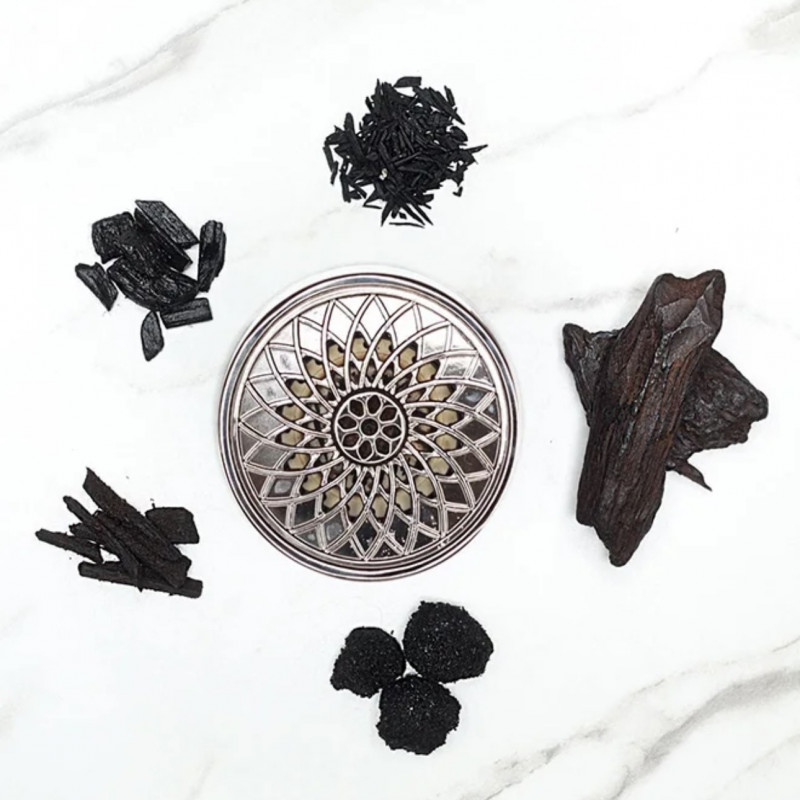
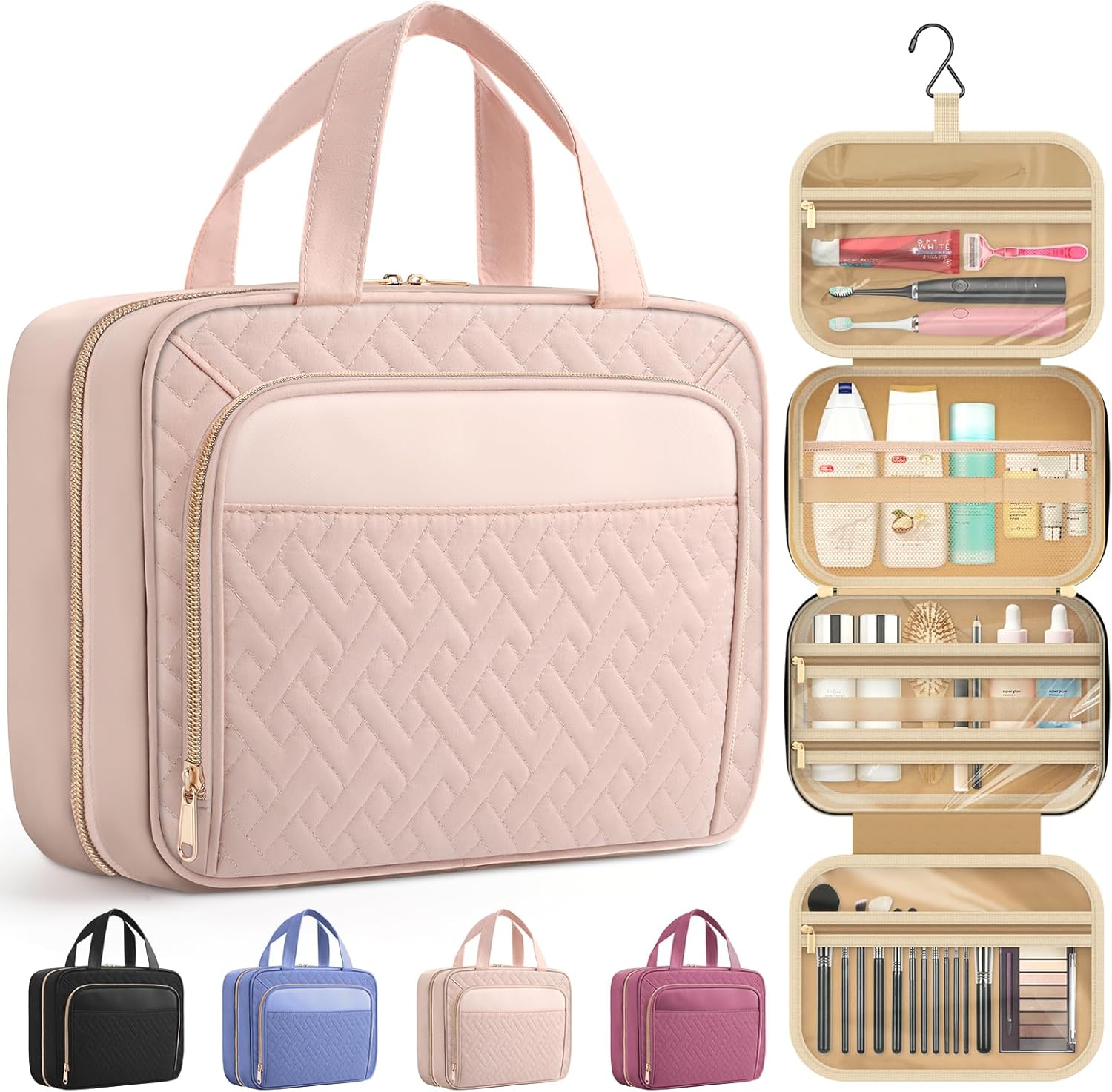
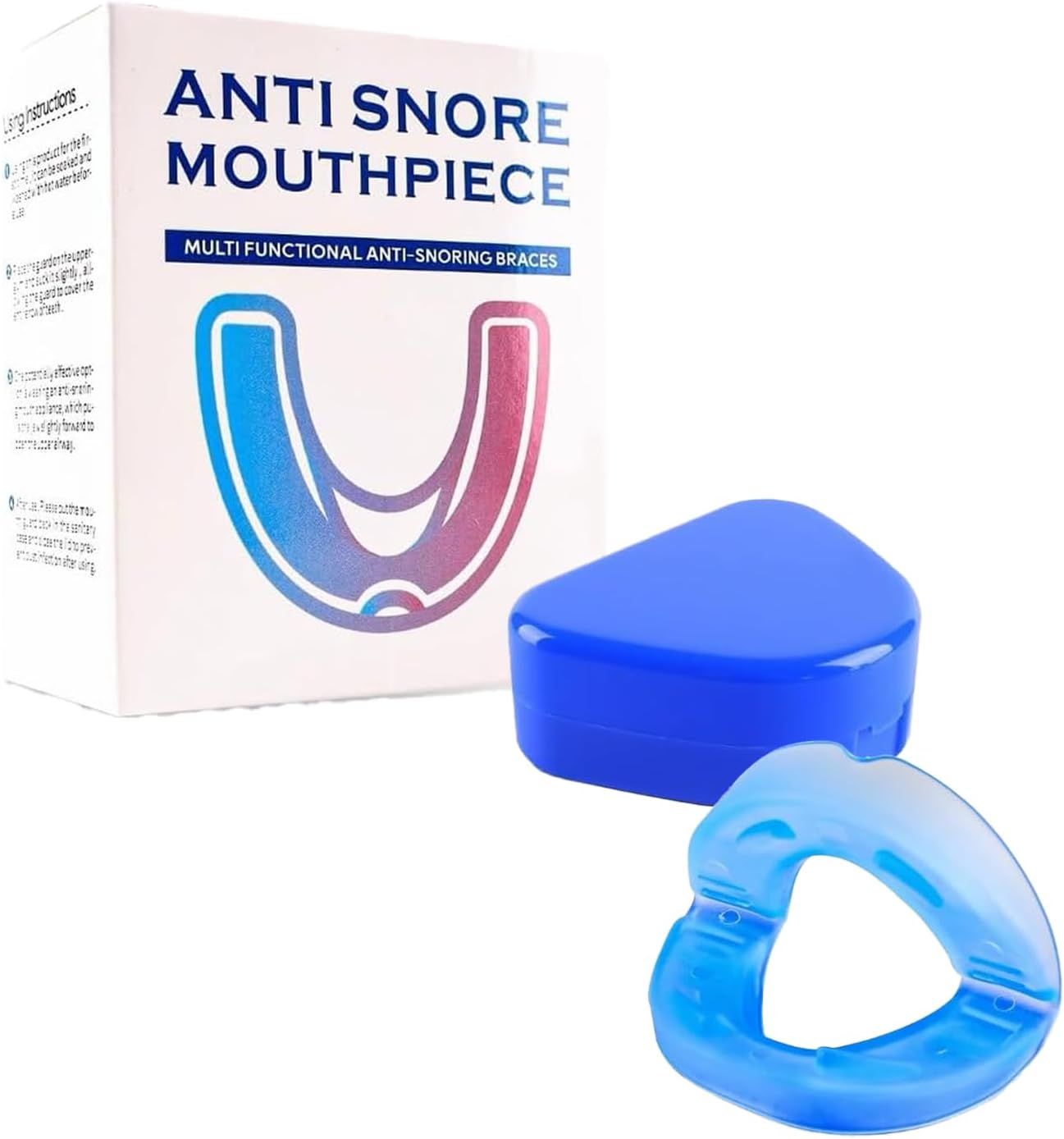
Three more items that travel well alongside a styling tool:
Frequently asked questions about the travel hair straightener
Can I put one in checked luggage?
Corded heated stylers are usually accepted in both cabin and hold bags, while cordless models with built-in batteries generally must travel in the cabin. Airline policies differ and change, so check your carrier’s current rules before you pack rather than relying on a previous trip.
Do I need a voltage converter?
Only if the tool is single-voltage and the country’s supply differs. A plug adapter changes the shape of the pins and nothing else. Read the small print on the tool itself, where the voltage range is printed.
Is a heated comb as effective as plates?
It depends what you want. Plates give a sleeker, more polished finish; a comb gives a softer, more natural straightness and is quicker on a whole head. For travel, many people prefer the comb because it is more forgiving in a rushed routine.
How often can I use heat safely?
Less often than most people do. Every heated pass costs the hair something, so keep a travel hair straightener for the days it matters and use protective styles in between, especially on a long trip.
Can I use it on damp hair?
No. Unless a tool is explicitly designed and rated for wet use, damp hair plus high heat creates steam inside the strand and causes real damage. Dry first, always.
How do I stop frizz returning?
Cool the hair fully before touching or tying it, use a light anti-humidity product, and avoid over-handling. In a humid climate, expect some softening of the finish and plan a style that still looks intentional when that happens.
A last word before you pack
The best tool for a trip is the one you will actually take out of the bag: quick to heat, easy to hold, and gentle enough that a rushed morning does not cost you hair condition. For a neutral technical overview of how heated stylers work, the Wikipedia article on hair irons is a clear, non-commercial reference.
If a comb-style tool suits you, the Portable Hair Straightener Comb is listed for shoppers across Saudi Arabia, and the full range is in the Hair Care section. Whichever travel hair straightener you choose, pack it cool, start low, and let your hair cool before you tie it up.

Add comment