A resistance training machine that folds flat and weighs less than a bag of rice sounds like a compromise, and for years that reputation was deserved. Spring-loaded trainers have improved a great deal, and the compact ones now offer a genuine training stimulus for people who will never own a squat rack. This guide explains how the mechanism works, how to judge build quality, how to set the resistance sensibly, and where this kind of equipment fits alongside bodyweight work. It also covers the folding model WLD Store lists for shoppers in Saudi Arabia.
Why a resistance training machine suits small homes
Space is the reason most home gyms fail. A bench, a rack and a set of plates need a dedicated room, and very few apartments have one to spare. A folding resistance training machine solves that by living behind a wardrobe door between sessions.
Noise is the second reason. Dropped dumbbells travel through concrete floors and cause arguments with neighbours. A spring-loaded trainer makes almost no impact noise, which matters in a flat and matters even more if you train early or late.
There is a psychological factor too. Equipment that takes ten minutes to set up gets used far less than equipment you can unfold in twenty seconds. A resistance training machine that is genuinely quick to deploy removes the excuse that most home routines die on.
Finally, this category is forgiving for beginners. The path of the movement is guided by the frame, so there is less to get wrong than with a barbell, and the resistance is capped, so you cannot accidentally load something far beyond your current strength.
How spring-loaded resistance actually works
Understanding the mechanism helps you use it properly. Instead of gravity acting on a mass, the load comes from springs or elastic elements that resist being stretched or compressed.
That produces a different force curve. A dumbbell is hardest where leverage is worst and easier elsewhere. A spring gets progressively harder the further it travels, so the end of the range is always the toughest part. Neither curve is superior, but they train the muscle differently.
The practical consequence is that you should slow down. Snapping through a repetition lets the spring do the returning for you, which removes most of the training effect. Controlling the return is where the work actually happens on a resistance training machine of this type.
What makes a good resistance training machine
Four factors separate a unit you keep for years from one that gets donated after a month. None of them appear in the headline marketing.
Frame rigidity and hinges
Everything depends on the frame. Sit on it, apply load and watch the joints. A frame that flexes under a moderate pull will flex more as the springs wear in, and flex is what eventually cracks welds and plastic joints.
Hinges on a folding resistance training machine deserve particular attention because they are the part that moves every single session. Metal pivots outlast plastic ones, and a hinge with a locking pin is safer than one held only by friction.
Resistance range and adjustability
A single fixed resistance is useless within weeks. You want defined levels so you can progress and, just as importantly, drop back down on a day when you are tired or recovering. The WLD Store listing for the model below states six resistance levels, which is enough to cover a beginner and a much stronger user.
Check how the level is changed, too. If it takes a spanner, you will never adjust it mid-session. A clip, pin or hook system is far more likely to be used the way it was intended.
Padding and contact points
Padding is not a luxury on this kind of equipment because the load is transmitted through a small area of your body. Thin foam over a hard bar becomes uncomfortable quickly and encourages you to shift position, which changes which muscles are doing the work.
Look for closed-cell foam that will not soak up sweat, and check that covers are stitched or bonded rather than merely stapled in place.
Folded size and weight
Measure your storage space before you order, not after. Note the folded thickness in particular: a unit that folds thin enough to slide under a bed or behind a door will be used far more often than one that has to stand in a corner.
Weight is a trade-off. Very light units are easy to move but tend to slide during hard repetitions, so a small amount of mass is actually helpful.
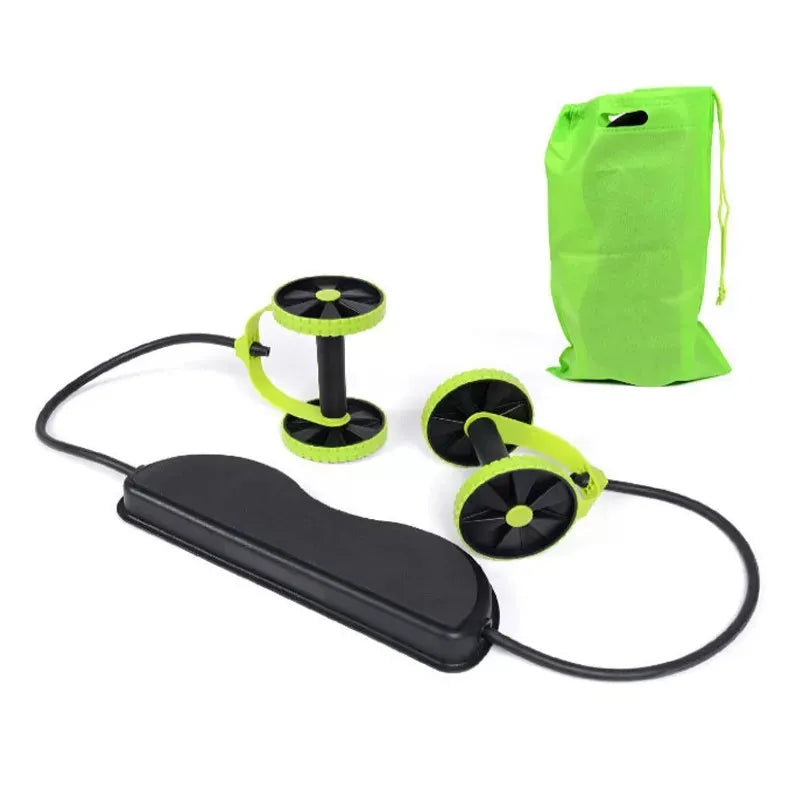
The WLD Store pick: Revoflex Extreme Resistance Training Machine
These are the details the WLD Store listing gives, stated exactly as they appear, with nothing added.
- Product: Revoflex Extreme Resistance Training Machine, a compact core workout trainer.
- Category: Sports & Fitness.
- Brand: WLD.
- SKU: WLD-KSA-0155-(KD-FMLY CNTR 458).
- Mechanism: described as a spring-powered ab trainer.
- Resistance: the listing states six resistance levels.
- Portability: presented as lightweight and foldable for home or gym use.
- Claimed target areas: the listing says it works the abs, arms and back at the same time.
- Availability: sold across Saudi Arabia through secure checkout.
The Revoflex Extreme product page carries the full specification and current availability, and should be treated as the authoritative source rather than any article, since listings are updated over time.
Setting up a resistance training machine correctly
Ten minutes of careful setup prevents most of the problems owners report later.
- Unfold on a flat, non-slip surface. Rugs bunch up under load and tile can be slippery; a thin exercise mat solves both.
- Confirm every locking pin is fully engaged. A partially seated pin is the single most common cause of a collapse mid-repetition.
- Start on the lowest resistance level. Learn the movement path before you make it hard.
- Check the springs are seated evenly. An unevenly hooked spring pulls the frame off line and loads one side of your body more than the other.
- Leave clear space behind you. If a grip slips, you want somewhere safe to fall.
- Re-check the fasteners after the first two sessions. New equipment settles, and bolts that felt tight on day one often need a turn.
How to train on a resistance training machine
The most common mistake is treating it like a cardio device and racing through repetitions. Speed hides poor technique and lets the springs do the work.
Set a tempo instead. Two seconds out, a brief pause, three seconds back. At that pace, twelve repetitions is a serious set, and you will feel the difference immediately compared with fast, bouncy reps.
Keep the trunk braced throughout. Whatever the marketing says about targeting the abs, the abdominal work only happens if you actively hold the position rather than letting your lower back sag into the frame.
Breathe out on the effort and in on the return. Holding your breath under load raises blood pressure sharply, which is worth avoiding for anyone, and particularly for anyone with a cardiovascular condition.
Stop a set when your form changes, not when you hit a number. On a resistance training machine the last two ugly repetitions contribute almost nothing and account for most of the strains people report.
A four-week resistance training machine plan
This plan assumes three sessions a week and no recent training history. It builds control before it builds load.
- Week one. Lowest resistance. Two sets of ten slow repetitions, focusing entirely on the return phase. Expect to feel it in the arms as much as anywhere.
- Week two. Same resistance, three sets of ten, adding a one-second pause at full extension. If you cannot pause, the level is too high.
- Week three. Move up one level. Drop back to two sets of eight while the new load feels unfamiliar, then build to three sets.
- Week four. Three sets of twelve at the new level, or move up again if all twelve are genuinely controlled. Keep one easy session a week.
After a month, progress by adding a level rather than endless repetitions. Sets beyond fifteen or twenty reps on a resistance training machine become an endurance exercise, which is fine as a goal but is not what most buyers are after.
Resistance training machine care and maintenance
A resistance training machine needs a little more attention than a dumbbell, because the parts under tension are the parts that fail.
- After each session: wipe the pads and grips. Sweat degrades foam and corrodes exposed metal over time.
- Weekly: inspect every spring or elastic element for stretching, thinning or surface cracks. Retire anything that looks different from its neighbours.
- Weekly: check the hooks and anchor points where the springs attach. These take the highest stress on the whole frame.
- Monthly: tighten all accessible fasteners and check the hinges open and close cleanly without grinding.
- Monthly: look for rust at the fold points, especially in humid coastal cities, and wipe with a lightly oiled cloth if you see any.
- Storage: store folded and dry, out of direct sunlight. Ultraviolet exposure ages elastic components faster than use does.
Where to use a resistance training machine at home
Placement is not a detail. The unit needs a flat patch of floor slightly longer than the frame, plus room to get in and out of position without knocking anything over.
Hard, level flooring is ideal. Deep pile carpet lets one side of the frame sink slightly, which subtly twists the movement and loads one shoulder more than the other. If carpet is all you have, put a firm mat under the frame.
Think about the ceiling and the walls as well. Some positions on a resistance training machine take your arms overhead or well behind your torso, and low shelving or a light fitting in that arc is a genuine hazard.
In Saudi homes, a shaded indoor space is worth insisting on. Storing or using elastic and spring components in a hot, sunlit room shortens their life noticeably, and metal parts on a sunlit balcony can become too hot to hold comfortably.
Finally, choose a spot you pass every day. A resistance training machine tucked into a spare room you never enter is a resistance training machine you will not use.
Common problems and quick fixes
- The frame slides during repetitions. Put a rubber mat underneath and check you are pulling straight rather than at an angle.
- One side feels harder than the other. Almost always an unevenly seated spring. Unhook everything and reseat it symmetrically.
- A hinge squeaks or sticks. Clean out dust and apply a small amount of light lubricant to the pivot only, never to the pads or grips.
- You feel it in your lower back instead of your abs. Your trunk is sagging. Reduce the resistance level and brace deliberately before each repetition.
Resistance training machine versus free weights and bands
It helps to be clear about what each option does best, because buying the wrong one is an expensive way to learn.
Free weights give the most transferable strength and the widest exercise selection. They also need the most space, the most storage and the most technique coaching, and they are the loudest option by a wide margin.
Resistance bands are the cheapest and most portable choice, and their force curve resembles a spring. The drawback is durability and consistency: bands wear invisibly, snap without much warning, and the resistance is hard to quantify from session to session.
A folding resistance training machine sits between the two. It gives you defined, repeatable levels like a machine and folds away like a band set, at the cost of a limited exercise selection. If you want a small number of movements done consistently in a small flat, it is a sensible middle path. For a broader view of the principles behind all three, see the Wikipedia article on strength training.
Who a resistance training machine is not for
Being straight about the limits saves disappointment. If your goal is a heavy squat, deadlift or bench press, this equipment will not get you there and nothing about it pretends otherwise.
It is also a poor fit for anyone who wants huge exercise variety. The frame guides the movement, which is helpful for beginners but means you are largely restricted to the patterns the design allows.
Anyone with a hernia, an existing back injury, uncontrolled high blood pressure or a recent abdominal operation should get medical clearance before using resistance equipment of any kind. The bracing involved raises internal pressure, and that is not trivial for those conditions.
Children should not use adult resistance equipment unsupervised. Springs pinch, and folding frames can trap fingers at the hinges.
What this equipment will and will not change
Honest expectations matter more than enthusiasm, because most abandoned equipment was bought on a promise it could never keep.
What you can reasonably expect in two or three months of consistent use is better trunk endurance, a stronger and more controlled pulling pattern, and noticeably better posture under everyday load. Those are real, measurable gains.
What no resistance training machine can do on its own is reduce body fat in a chosen area. Spot reduction is not how the body works, and any marketing that implies otherwise should be treated with caution.
Likewise, it will not build maximal strength the way heavy barbell work does. The resistance is capped by the springs, and once you are comfortable at the highest level your progress comes from tempo, pauses and volume rather than more load.
Set the goal accordingly: consistent, joint-friendly conditioning in a space that could never hold a squat rack. Judged against that goal, this kind of equipment does very well.
Resistance training machine buying checklist
- Where exactly will it be stored? Measure the gap before you order, including folded thickness.
- How many resistance levels are there, and how are they changed? Tool-free adjustment is the one you will actually use.
- Is the padding adequate at your contact points? Thin foam over metal gets unpleasant fast.
- Does the frame lock positively when unfolded? Friction alone is not enough.
- Do you have a flat, non-slip patch of floor? A mat is a cheap and worthwhile addition.
Other Sports & Fitness picks at WLD Store
If you are assembling a compact home setup, these three items from the same category cover patterns a folding trainer does not.
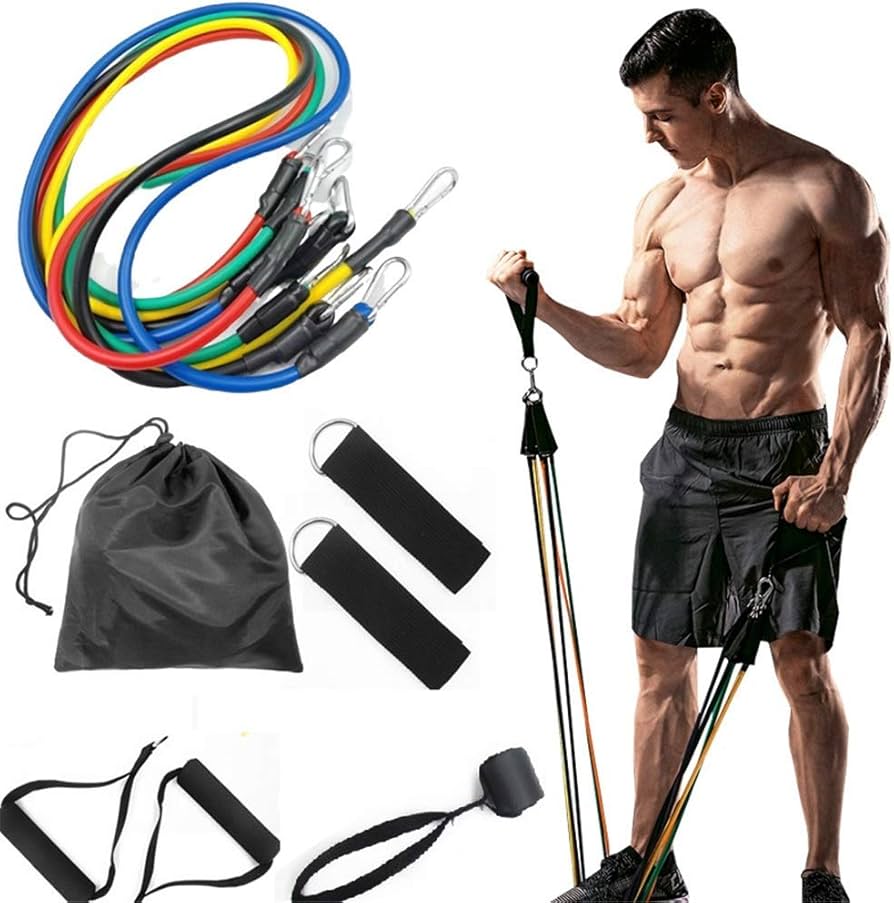
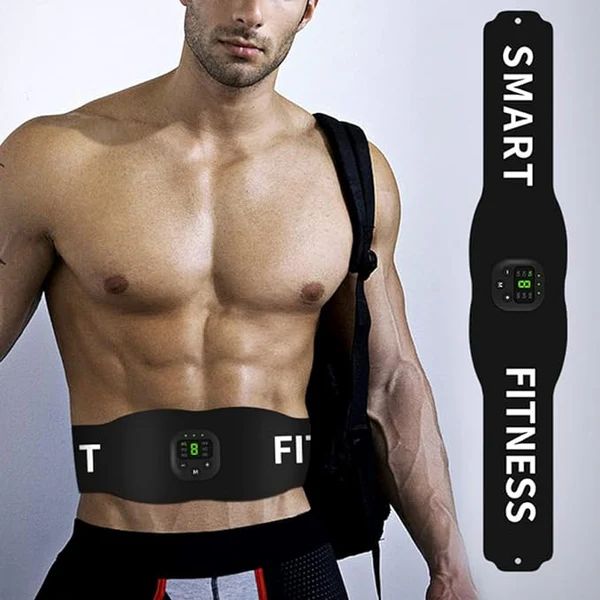
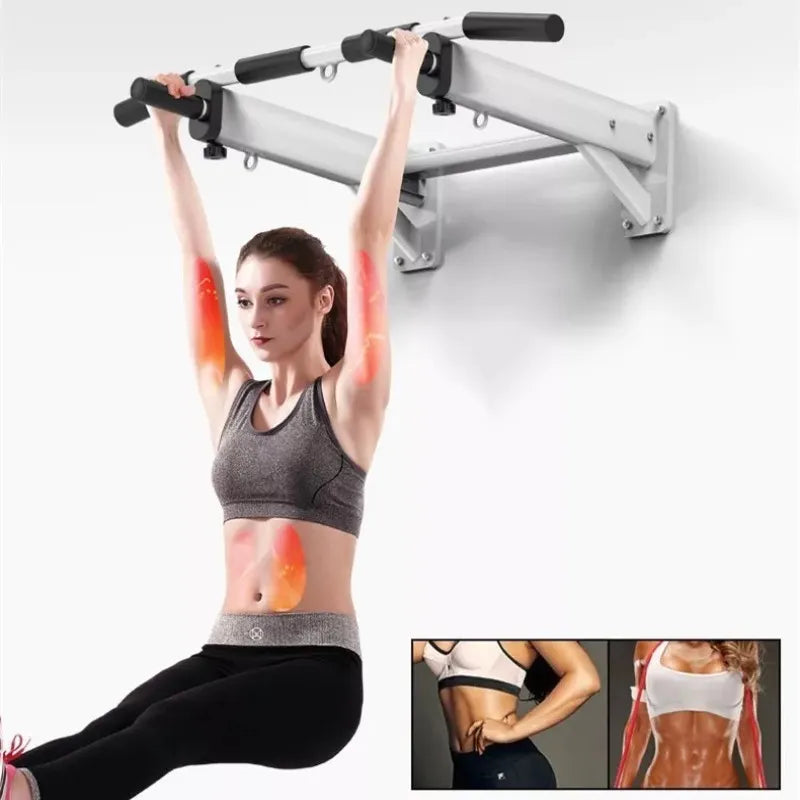
The exercise band set adds portable variable resistance, the fitness belt is a separate accessory, and the pull up bar covers vertical pulling, which folding frames rarely do well.
Frequently asked questions about the resistance training machine
Is a resistance training machine effective for beginners?
Yes, and arguably it suits beginners better than experienced lifters. The guided movement path removes much of the technique risk, and defined levels make progression obvious without needing a coach to watch your form.
How many resistance levels do I really need?
Three is workable, six is comfortable. What matters is having a level below your working setting for recovery days and one above it to grow into, so you are never stuck at the same load for months.
Can a resistance training machine replace a gym membership?
For general fitness and core conditioning it can cover a great deal. For heavy barbell strength, competitive sport or serious rehabilitation, it complements a gym rather than replacing one.
How often should I use a resistance training machine?
Three sessions a week suits most people, with at least one rest day between them. The muscles worked overlap heavily from session to session, so daily use tends to produce fatigue rather than faster progress.
Do the springs wear out?
All elastic and spring components lose tension eventually, and the rate depends on use, heat and storage. Inspect them weekly and stop using any element that looks stretched, thinned or cracked compared with the others.
Is it safe to fold and unfold every day?
Yes, provided the hinges are metal and the locking pins seat fully each time. Keep fingers clear of the pivot points while folding, and never leave a partly folded frame standing where someone could lean on it.
A resistance training machine of this type is a practical answer to a real problem: how to train seriously in a home with no spare room. Set the level honestly, control the return phase and check the springs every week, and it will earn its cupboard space. The Revoflex Extreme Resistance Training Machine is listed at WLD Store, and the wider range is in the Sports & Fitness section.



Add comment