A portable clothes drying hanger solves a problem most flats create and few tackle well: you have laundry, you have limited floor space, and you do not have a permanent line. A rack that opens in seconds and folds flat afterwards fixes that without any drilling or commitment.
This guide explains what to look for in the frame, the bars and the folding mechanism, how to load one so clothes actually dry, how to look after it, and where the foldable aluminium model stocked at WLD Store fits. There is a buying checklist and six common questions at the end.
Why a portable clothes drying hanger is worth the space
Machine drying is fast but hard on fabric, and many garments in a normal wardrobe should never see a tumble dryer. Wool, delicate synthetics, printed cotton, activewear and anything with elastane all last longer on a rack. A portable clothes drying hanger gives those items somewhere to go.
There is a practical argument too. Flats and villas in Saudi Arabia often have a balcony or a utility area but no fixed line, and fitting one is not always possible or permitted. A freestanding rack sidesteps the problem entirely, and it moves with you when you move.
Then there is capacity at peak times. Even households that own a dryer hit days when the machine is full and the washing keeps coming. A portable clothes drying hanger absorbs that overflow instead of leaving damp clothes sitting in a basket, which is how laundry starts to smell.
Finally, cost and control. Drying in air costs nothing to run, and you can hang things exactly as you want them so they keep their shape. For anyone who cares about how clothes look after fifty washes rather than five, that matters more than speed.
What makes a good portable clothes drying hanger
Every rack in this category folds and every listing says it saves space. The differences show up on the tenth use, not the first. These are the areas worth checking before buying any portable clothes drying hanger.
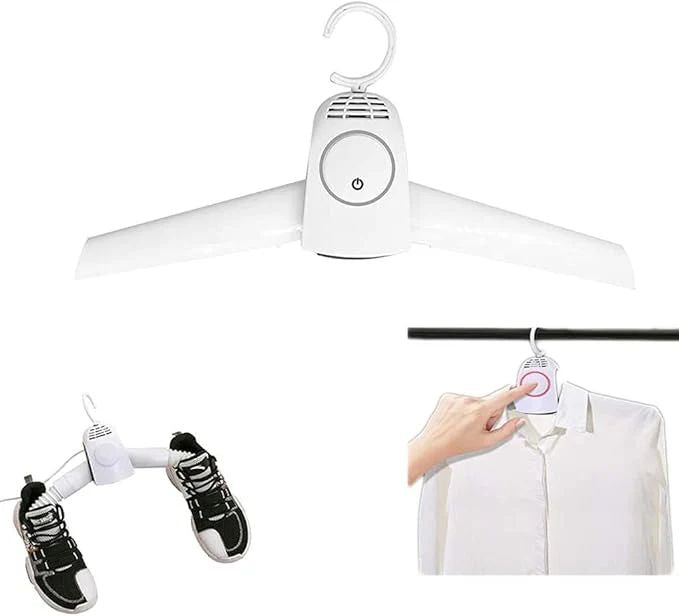
Frame material
Aluminium is light and resists rust, which matters enormously for something that spends its life holding wet fabric. Coated steel is stronger but the coating is the whole defence: once it chips, rust follows and rust marks transfer onto clothes. Whichever you choose, inspect the joints, because that is where coatings fail first.
The folding mechanism
This is the part that decides whether the rack gets used. A mechanism that opens with one hand and locks positively will be pulled out for three shirts. One that needs both hands, a knee and a moment of concentration will stay behind a door. Open and close any rack a few times before deciding you like it.
Bar spacing and total hanging length
Manufacturers quote total metres of line, which sounds generous until you hang a bath towel across four bars. What actually matters is the gap between bars, because clothes need air on both sides. Wide spacing dries faster; tight spacing holds more but dries slower.
Stability when loaded
A rack is at its least stable exactly when it is full and wet, which is also when tipping does the most damage. Look for wide feet, a low centre of gravity and a frame that does not flex when you push the top bar. A portable clothes drying hanger that wobbles empty will be worse loaded.
Folded footprint
Check how flat it truly goes and whether it will stand up on its own when folded. A rack that folds to a slim panel slides behind a door or a wardrobe; one that folds into an awkward wedge has to lie on the floor somewhere.
The WLD Store pick: Portable Clothes Drying Hanger
If you want a specific product rather than a category overview, this is the foldable rack WLD Store stocks for Saudi Arabia. Everything below is taken from the product listing itself.
- Product: Portable Foldable Clothes Drying Hanger, described as a space-saving laundry rack.
- Setup: the listing states it unfolds in seconds and holds multiple garments securely.
- Frame: the listing describes a lightweight aluminium frame that is rust-resistant.
- Storage: the listing states it folds flat for easy storage.
- Category: Home & Kitchen. Brand: WLD.
- SKU: WLD-KSA-0024-(KD-KD0126).
- Market: available across Saudi Arabia through secure checkout.
Current images, dimensions and the order page are on the Portable Clothes Drying Hanger product page. Anything not printed there or on the packaging, including exact folded size, bar count and maximum load, is not something this guide will guess at.
How to load a portable clothes drying hanger properly
Most complaints about slow drying are loading mistakes. Air, not heat, does the work, so the goal is to give every garment its own moving air.
- Shake each item out before hanging. Creases trap water and a shaken shirt dries noticeably faster than a crumpled one.
- Leave a gap. Two garments touching dry as slowly as one thick garment. Space beats capacity every time.
- Heavy items on the outer bars where air moves most, light items in the middle.
- Hang trousers by the waistband and shirts over two bars so the fabric opens rather than folds.
- Turn dark items inside out if the rack sits in direct sun, because sunlight fades dyes quickly here.
Halfway through drying, turn the thickest items over. Two minutes of attention on a full portable clothes drying hanger can cut an hour off the total time, particularly with towels and jeans.
Where to put a portable clothes drying hanger, room by room
Placement decides drying speed more than any feature on the box, so it is worth thinking about before the first load.
Balcony. The fastest option for most of the year in Saudi Arabia. Watch for dust on windy days and bring the rack in before a sandy afternoon rather than after.
Utility or laundry room. Convenient and out of sight, but often the worst airflow in the home. Open a window or run an extractor, or drying will take twice as long.
Living room or hallway. Fine occasionally, and a portable clothes drying hanger that folds flat means it need not stay there. Keep it away from soft furnishings so damp air is not trapped against them.
Bedroom. Best avoided as a habit. Drying laundry releases a surprising amount of moisture, and a closed bedroom is where that shows up on walls first.
Near an air-conditioning outlet. Genuinely effective, because conditioned air is dry and moving. Just keep fabric clear of the unit itself.
Rack, tumble dryer or balcony line: an honest comparison
Each drying method is best at something, and knowing which is which saves money and disappointment.
A tumble dryer is unbeatable on speed and on towels. It is also the harshest option for fabric, needs power, and cannot take a large share of a normal wardrobe.
A fixed balcony line costs almost nothing, dries fast in this climate and holds a lot. It is permanent, exposed to dust, and simply not an option in many rented flats.
A portable clothes drying hanger sits between the two. It goes wherever the air is best, stores flat, needs no installation and treats clothes gently. What you give up is capacity and speed compared with a dryer.
For most households the sensible answer is a rack plus whatever else you already have. It costs little, it takes the delicate items a dryer should never see, and it disappears when the laundry is done.
Care and maintenance for a portable clothes drying hanger
Racks are simple, which is exactly why people neglect them until something snaps or stains a shirt.
Wipe the bars before the first use and every few weeks after. Dust settles on horizontal bars and transfers straight onto wet fabric, which is the most common cause of mystery marks on clean laundry.
Dry it before folding. Folding a wet frame into a cupboard traps moisture in the joints. Aluminium resists rust well, but fittings, rivets and springs may not be the same metal.
Check the joints monthly. Tighten anything that has loosened and look for cracks near the hinges, which carry the most stress when the rack is opened and closed.
Do not overload it. A frame bent by one very heavy load never folds properly again. If the top bar sags visibly, take something off.
Store it upright and out of the sun. Long spells of direct sunlight are hard on plastic end caps and any coating, and a rack stored flat on a balcony floor collects dust in its joints.
Fabric by fabric: what to hang and how
Different fabrics want different treatment, and a rack lets you give it to them in a way a tumble dryer never can.
Cotton shirts and blouses. Hang them on a hanger hooked over the top bar rather than draped across it. They dry with the shoulders in shape and usually need no ironing at all.
Jeans and heavy cotton. Hang by the waistband with the legs open and the pockets pulled out. Pockets are the last part to dry and the part most likely to smell if you fold the garment away early.
Knitwear. Never hang a wet jumper by the shoulders, because the weight of the water stretches it permanently. Lay it flat across several bars of the portable clothes drying hanger so the weight is spread.
Activewear and elastane. Air drying is strongly preferable to heat, which degrades stretch fibres. Give these items space, since technical fabrics hold water in their seams.
Towels. The heaviest and slowest thing you will hang. Spread a towel across two or three bars rather than folding it over one, and turn it once during drying.
Abayas and long garments. Use a hanger over the top bar so the hem does not touch the floor, and dry in shade to protect the colour.
Building a laundry routine around a portable clothes drying hanger
A rack works best when it has a rhythm rather than being pulled out in an emergency. A simple pattern removes most laundry stress in a small home.
Wash in the evening, hang overnight. Clothes get a full night of quiet drying with nobody stepping around the frame, and the rack is clear again by morning.
Separate by thickness, not just colour. A load of thin items dries in a fraction of the time of a mixed load, so splitting them means the rack turns over twice as fast.
Hang immediately. Damp laundry left in the machine for hours develops a smell that survives drying. Getting it onto a portable clothes drying hanger straight away is the single easiest laundry habit to adopt.
Fold the rack away when it is empty. A rack that lives folded gets opened when needed; one that lives open becomes a permanent piece of furniture nobody wanted.
Common problems and quick fixes
- Clothes still damp after hours. The rack is overloaded or the room has no airflow. Halve the load, open a window and turn thick items over halfway.
- It tips when you hang a towel. Load from the centre outwards and put heavy items low. Never hang a full bath towel on one end bar of a folded-out frame.
- Rust or grey marks on clothes. Stop using that bar, wipe the frame, and check for chipped coating. Marks from a portable clothes drying hanger usually come from dust or a damaged coating, not the metal itself.
- The hinge is stiff. Clean grit out of the joint first. Only add a tiny amount of lubricant if the instructions allow it, and wipe away any excess before hanging clothes.
- It will not fold flat any more. Something is bent or a locking catch has not released. Open it fully, release each catch in turn, then fold with even pressure on both sides.
Using a portable clothes drying hanger in the Saudi climate
Local conditions change the calculation, and a rack that works badly in a humid country can work extremely well here.
Dry heat is the biggest advantage. For much of the year, laundry on a balcony dries remarkably fast, and a portable clothes drying hanger can turn around two or three loads in a day without any machine at all.
Dust is the matching disadvantage. On windy days, clean washing left outside comes back needing a rinse. Check the sky before hanging, and keep the rack close enough to a door that bringing it in takes seconds.
Sun fading is real and quicker than most people expect. Turn coloured and dark items inside out, and dry them in shade where you can. White cotton is the exception and generally benefits from sunlight.
Coastal humidity in cities such as Jeddah and Dammam slows outdoor drying considerably in summer. Indoors with air conditioning is often faster than outdoors on a still, humid afternoon.
Who a portable clothes drying hanger is not for
This category is not the right answer for everyone, and it is more useful to say so than to pretend otherwise.
If you wash for a large family every day, a single rack will not keep up and you will resent it. Two racks or a proper fixed line will serve you better. If your home has no ventilation at all and no balcony, indoor drying may add more moisture to the air than the building can cope with.
A portable clothes drying hanger is also the wrong tool for heavy bedding. Duvets, thick blankets and mattress protectors are too heavy and too bulky for a folding frame, and trying anyway is how frames bend permanently.
Buying checklist for a portable clothes drying hanger
- Does it open and lock with one hand, every time?
- Is the frame aluminium or well-coated, with joints that look properly finished?
- Is the bar spacing wide enough for air, rather than just maximising quoted line length?
- Does it stand firm when you push the top bar, and will it stay firm when loaded?
- Where will it live folded, and does it fit that gap?
Other Home and Kitchen picks at WLD Store
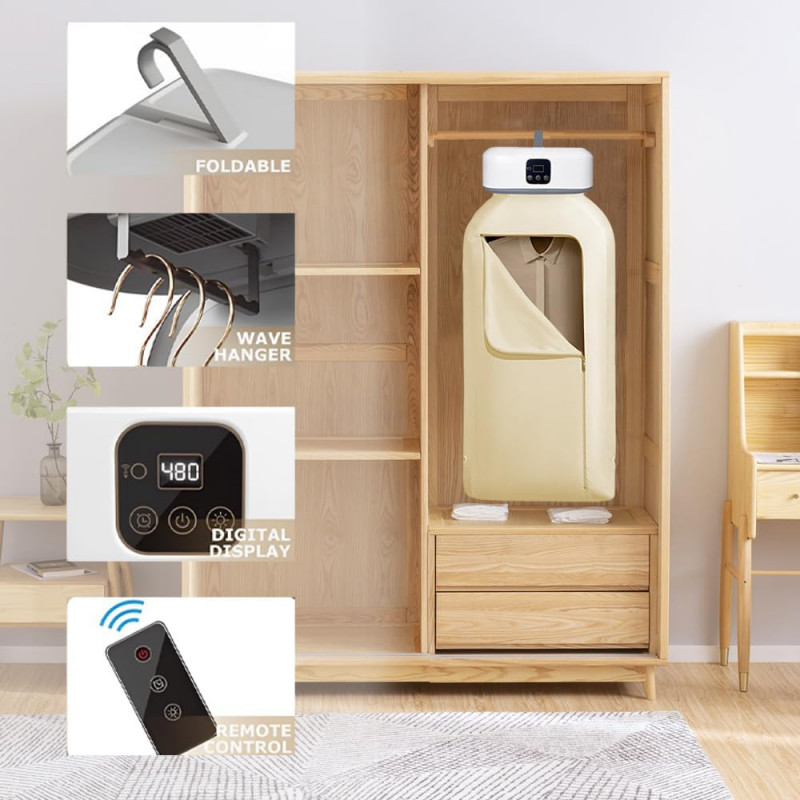
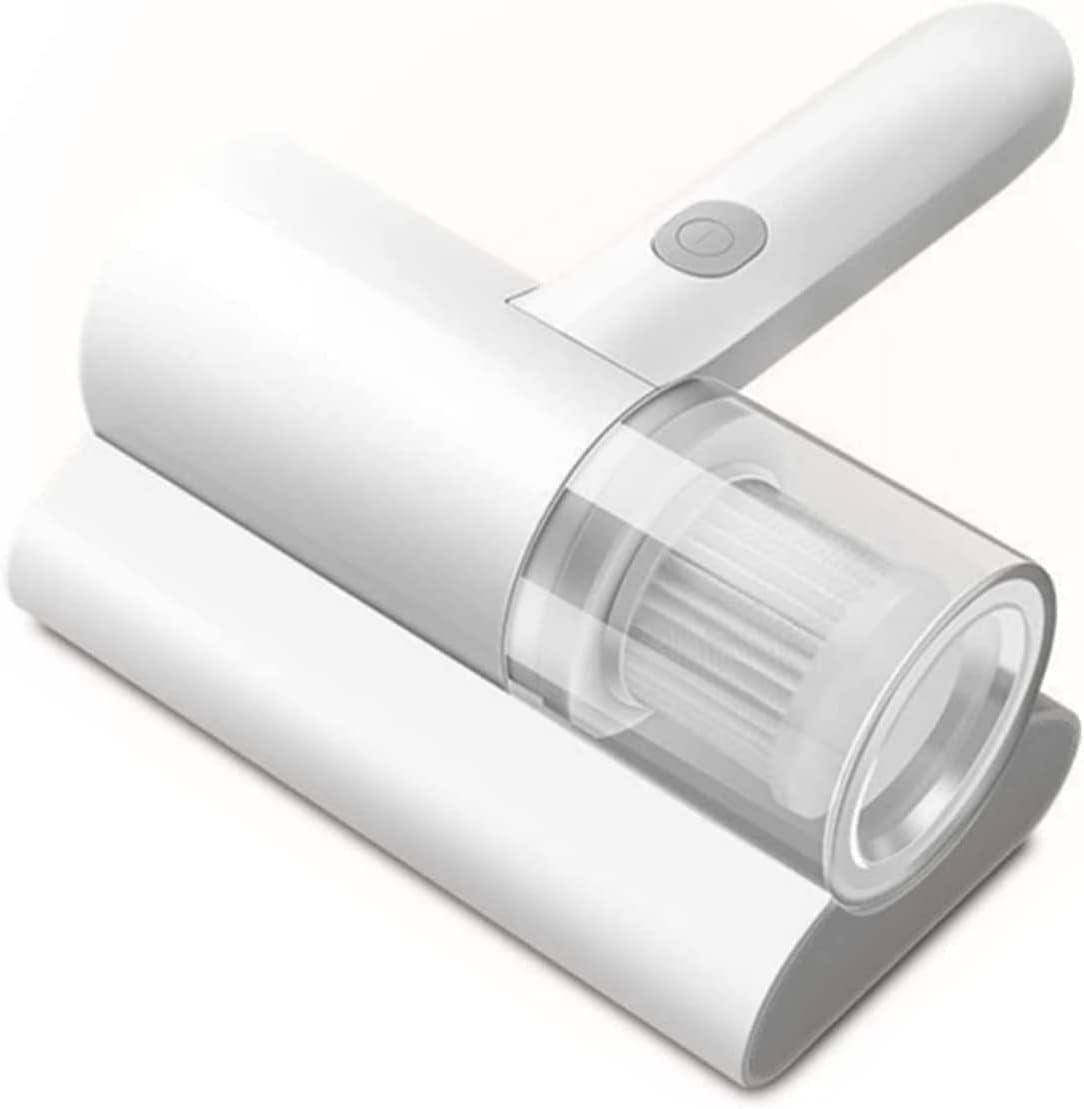
If you are setting up a home rather than buying one item, these three sit close by in the catalogue and work well alongside a portable clothes drying hanger.

Frequently asked questions about the portable clothes drying hanger
How long do clothes take to dry on a portable clothes drying hanger?
Anywhere from two hours to a full day, depending on fabric thickness, airflow and how densely you loaded it. Thin cotton in moving air is quick; jeans and towels in a closed room are slow. Airflow makes more difference than temperature.
Can I use a portable clothes drying hanger indoors all year?
Yes, provided the room has some ventilation. Drying laundry indoors releases moisture into the air, so open a window, run an extractor or use a room with air conditioning. Avoid making a closed bedroom your regular drying spot.
Will an aluminium frame rust?
Aluminium itself resists rust well, which is why it is common in this category. Fittings, rivets and springs are not always the same metal, so drying the frame before folding it away remains worthwhile whatever the main tubes are made of.
How much weight can a portable clothes drying hanger hold?
That varies by model, so follow the figure on the packaging rather than a general rule. The practical guide is that if the top bar visibly bows, the load is too heavy and the frame is being damaged.
Is it suitable for a small balcony?
It is one of the best options for a small balcony precisely because it folds flat and moves easily. Set it against a wall out of the wind, and bring it inside on dusty days rather than leaving washing exposed.
Does a portable clothes drying hanger work for delicates?
Yes, and this is one of its strongest uses. Knitwear should be dried flat where possible rather than hung, since hanging a wet jumper stretches the shoulders. Everything else in a delicates wash is well suited to a rack.
A portable clothes drying hanger is one of those purchases that quietly improves a week: clothes last longer, the dryer runs less, and nothing has to be drilled into a wall. Buy for the frame and the folding mechanism, load it with space between garments, and dry it before you fold it away. You can see the foldable model on its product page, read about the history of the clothes horse on Wikipedia, or browse the rest of the range in the Home & Kitchen section.




Add comment