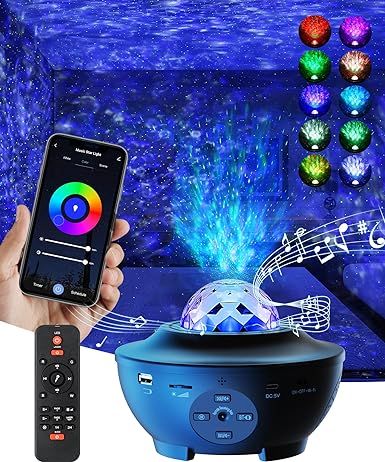
A galaxy ocean light projector is one of the few decorative gadgets that changes a room completely for the price of a lamp. Switch it on in a dark bedroom and the ceiling stops being a ceiling: it becomes a drifting starfield or a slow wash of water light moving across the walls.
This guide explains what a galaxy ocean light projector actually produces, which specifications decide whether the effect looks impressive or cheap, how to set one up so the projection lands where you want it, and how to use it sensibly around children. There is a checklist, six answered questions, and the WLD Store pick described exactly as the listing states it.
What a galaxy ocean light projector actually does
The name covers two distinct effects that most units in the category combine. The first is a starfield: hundreds of small points of light scattered across the ceiling, usually static or very slowly rotating.
The second is the water effect, produced by shining light through a moving textured element so the projection ripples like light reflecting off a pool. Layered together, the two create the impression of depth that makes the category worth owning.
Many models add a nebula or aurora layer: broad, soft clouds of colour that shift slowly behind the stars. This is what most people picture when they think of a galaxy ocean light projector, and it is the layer that varies most in quality between units.
What none of them do is illuminate a room. This is a decorative light, not a lamp. In a room with any other light on, the effect largely disappears, which is worth knowing before you buy one expecting a functional night light.
What makes a good galaxy ocean light projector
Product photographs of a galaxy ocean light projector are unusually flattering, so it pays to know which specifications actually predict the result you get at home.
Coverage and projection distance
Coverage is the single most important figure and the one least often stated clearly. A unit that covers a small bedroom ceiling will look thin and scattered in a large living room, because the same amount of light is spread across more surface.
Distance from the surface changes everything. Move a galaxy ocean light projector closer to a wall and the pattern gets smaller, brighter and sharper; move it further away and it spreads, softens and dims. Plan on experimenting for ten minutes rather than getting it right first time.
Number and quality of modes
Mode count is the specification most inflated in marketing. Twenty modes usually means a handful of genuine effects multiplied by colour combinations. What matters is whether the individual layers can be run alone.
The most useful control is being able to switch the star layer and the water layer independently. Stars alone are calm enough to sleep under; the moving water layer alone is better for a party. A galaxy ocean light projector that only runs everything at once is much less flexible.
Brightness control
Adjustable brightness matters more than colour choice. What looks pleasant at bedtime is far dimmer than what looks impressive in a demonstration video, and a unit stuck on one brightness will be too much for a bedroom.
Timer and auto-off
A timer is what makes the difference between a novelty and something used nightly. Being able to set it to switch off after an hour means it runs while a child falls asleep and then stops, rather than running until morning.
Remote control and app control
A physical remote is genuinely useful for a device that sits across the room in the dark. Check whether the remote needs line of sight, and whether the unit remembers its last setting when powered on, which saves reaching for the remote every night.
Motor noise
The moving water effect is produced mechanically, which means a motor. In a living room nobody notices. In a quiet bedroom, a whining motor is exactly the sort of small noise that keeps a light sleeper awake, so look for comments on noise before buying.
Power and placement flexibility
Most units are mains powered through an adapter, which means the placement options depend on where your sockets are. Measure the distance from the socket to where you want the unit to stand before ordering, and factor in whether a trailing cable is acceptable in a child’s room.
The WLD Store pick: Galaxy Ocean Light Projector
WLD Store lists this as a colour-changing LED night light with projection effects. Everything below is drawn from the listing itself.
- Product: Galaxy Ocean Light Projector, described as a colour-changing LED night light
- Effects: the listing states it projects starry skies, moving waves and aurora effects across walls and ceilings
- Controls: timer, remote control and multiple modes, according to the listing
- Light source: LED
- Suggested uses: children’s bedrooms, relaxation rooms and parties
- Category: Decor, also filed under Home & Kitchen
- Brand: WLD | SKU: WLD-KSA-0054-(KD-KD0177)
- Market: available across Saudi Arabia with secure checkout
The complete description, all photographs and current availability are on the Galaxy Ocean Light Projector product page. Nothing beyond what the listing states has been added here.
Setting up a galaxy ocean light projector in a bedroom
Ten minutes of positioning is the difference between a good effect and a disappointing one. Work in a fully dark room, because you cannot judge any of this with a light on.
- Start with the unit on the floor, angled up. This is the classic ceiling setup and usually the most impressive first try.
- Move it around the room, not just up and down. A projector in a corner throws across the whole ceiling; one in the middle lights a circle above itself.
- Aim slightly off-centre. Pointing directly overhead creates a bright hotspot in the middle. Angling at roughly forty-five degrees spreads the pattern more evenly.
- Try a wall as well as the ceiling. The water effect in particular often looks better across a plain wall than overhead.
- Test brightness from the bed, not from beside the unit. The view that matters is the one you will actually have.
- Fix the cable down. Tape or a cable clip along the skirting stops a trailing lead becoming a trip hazard in the dark.
Surface matters too. A white or pale matte ceiling gives the best result. Dark paint absorbs the light, gloss finishes create reflections, and heavily textured surfaces break up the star points. If your ceiling is dark, a galaxy ocean light projector will underperform no matter what you spend.
Using a galaxy ocean light projector in a child’s room
Children are the biggest audience for a galaxy ocean light projector, and a few points make it work better and more safely.
Use the timer every night rather than leaving it running. Light through the night is not helpful for sleep, and the timer is what turns the projector into part of a bedtime routine rather than a permanent fixture.
Prefer the calmer settings after lights out. Slowly moving stars in a warm colour are settling; fast colour cycling is stimulating and works against the purpose. Many parents run the bright modes during the story and switch to a single static colour for sleep.
Keep it out of reach and secure the cable. The unit itself is low risk, but a mains adapter, a trailing lead and a curious toddler are not a good combination. A high shelf angled downward often works better than the floor anyway.
Do not let children look directly into the light source. This holds for any projector regardless of technology, and it is worth saying out loud to a child who will otherwise want to peer straight into it.
Finally, treat a galaxy ocean light projector as a comfort object rather than a sleep aid. It can make a dark room feel friendly, which helps some children settle, but it is not a substitute for a consistent routine.
Using a galaxy ocean light projector at gatherings
The other main use is entertaining, and the settings that suit it are almost the opposite of the bedtime ones.
For a party, maximum brightness and the fastest colour transitions are what you want, with the water layer running to keep the room moving. Two units at opposite corners cover a large room far better than one in the middle.
Turn other lights off or right down. Any competing light source flattens the effect, so a room lit by the projector alone, or by the projector plus a few candles, looks dramatically better than one with a ceiling light on.
Consider what the light lands on. Pale walls, plain curtains and a light ceiling all carry the pattern; bookshelves, patterned wallpaper and dark furniture swallow it. Pointing a galaxy ocean light projector at the largest plain surface in the room is the simplest way to improve the result.
For outdoor use on a terrace, check the product is rated for it before assuming. Most units in this category are designed for indoor use only, and dust and humidity are hard on the moving parts.
Colour choices and time of day
Most units offer a colour wheel, and the temptation is to cycle through everything at once. Choosing deliberately gives a much better result, and the right choice changes through the evening.
Blue and green read as water and are the most convincing settings for the ocean layer. They are also the coolest colours available, and cool, blue-rich light is generally the least settling before sleep, so save them for the earlier part of the evening.
Warm amber and soft red are the calmer options. A galaxy ocean light projector running a single warm colour at low brightness, with the moving layer switched off, is close to the ideal bedtime setting.
Multi-colour cycling belongs to parties and to the twenty minutes when a child is still playing. It is visually busy by design, which is exactly what you do not want once the lights are meant to be going out.
A practical habit: pick two presets and stick to them. One bright cycling mode for the evening, one dim warm static mode for sleep. Everyone in the house learns those two buttons, and the galaxy ocean light projector stops being fiddled with every night.
Galaxy ocean light projector care and maintenance
There is not much to do, but the little there is protects the effect quality.
- Keep the lens clean. Dust on the lens shows up as blurred stars. A soft dry microfibre cloth is all that is needed; never use solvents on optical plastic.
- Do not disassemble the projection head. The moving element is aligned at the factory, and once it is disturbed the pattern rarely goes back to how it was.
- Give it ventilation. LEDs and small motors both generate some heat. Leave clear space around the body rather than tucking it into a shelf recess.
- Switch it off at the socket when away. A galaxy ocean light projector left permanently powered continues to draw a small amount, and there is no benefit to standby here.
- Handle the adapter with care. The cable joint at the plug end is the most common failure point on any small appliance; do not yank it out by the lead.
- Store it in a box, not loose. The lens scratches easily, and a scratched lens is a permanently degraded projection.
If you are interested in the light source itself and why LED units run cool and last so long compared with older lamp technologies, the Wikipedia article on light-emitting diodes is a clear technical overview.
Common galaxy ocean light projector problems and fixes
- The stars look faint and washed out. Almost always ambient light. Close curtains fully and cover any standby LEDs on other devices; the effect improves dramatically in true darkness.
- The pattern is sharp in one area and blurred elsewhere. The unit is angled steeply across a surface, so parts of the projection are further away. Reduce the angle or move the projector back.
- The remote has stopped working. Change the battery first, then check for line-of-sight obstruction. Most remotes in this category are infrared and need to point at the receiver.
- A buzzing or grinding noise has developed. The motor driving the water effect is struggling, often because the unit is not sitting level or something is pressing on the housing. Reposition it on a flat surface and stop using it if the noise continues.
Galaxy ocean light projector or a plain night light
These solve different problems, and buying the wrong one is a common mistake.
A plain night light provides a low, steady glow so a child can find the door and a parent can check on them. It is functional, boring and exactly right for that job.
A galaxy ocean light projector provides an experience. It changes how a room feels, it is genuinely impressive the first few times, and it is what a child asks for. What it does not do is light a path to the bathroom at three in the morning.
Most households that own a projector also keep a small plug-in night light, and that combination works well: the projector for the twenty minutes before sleep on a timer, the night light for the rest of the night.
Who a galaxy ocean light projector is not for
It is a poor fit for a room that cannot be made properly dark. If street light comes through the curtains or a hallway light stays on, the effect will always look weak.
It is also wrong for anyone who wants a permanent, unobtrusive decorative feature. A galaxy ocean light projector is a deliberate, noticeable effect. Nobody uses one as background ambience for months on end; the novelty settles into occasional use.
And it is not suitable for a very light sleeper who reacts to small mechanical noise, unless you plan to run the static star layer only with the motor off.
Galaxy ocean light projector buying checklist
- Can the layers run independently? Stars without the moving water layer is the setting most people use for sleep.
- Is brightness adjustable? A single fixed brightness is too much in a bedroom and too little in a living room.
- Is there a timer? This is what turns a novelty into something used nightly.
- What surface will it project onto? Pale, matte and plain gives the best result; dark or textured ceilings undermine any unit.
- Where is the nearest socket? Measure before ordering, and plan how the cable will be secured in a child’s room.
Other Decor picks at WLD Store
If you are furnishing a bedroom rather than buying a single gadget, these three sit nearby in the catalogue.
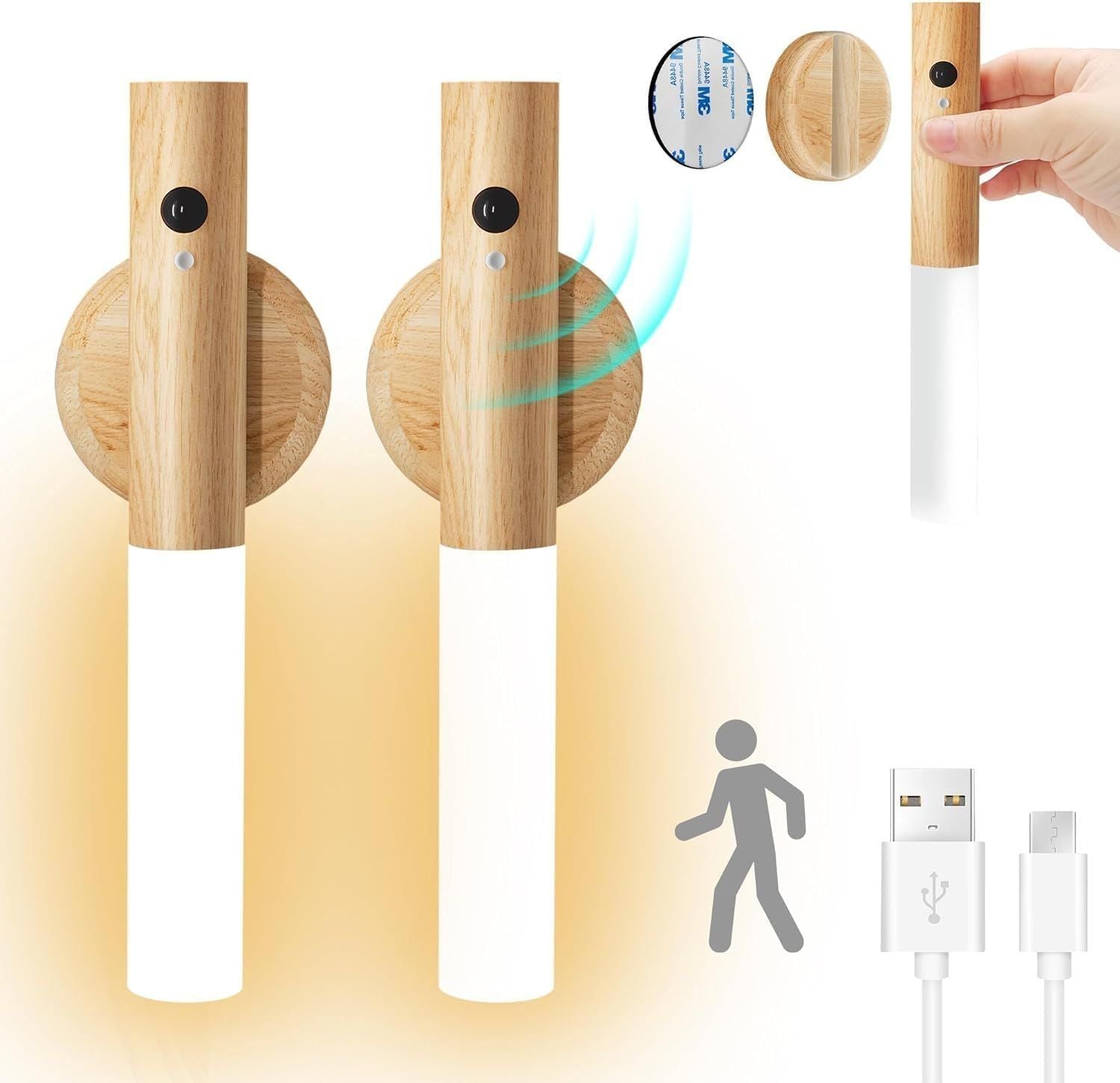
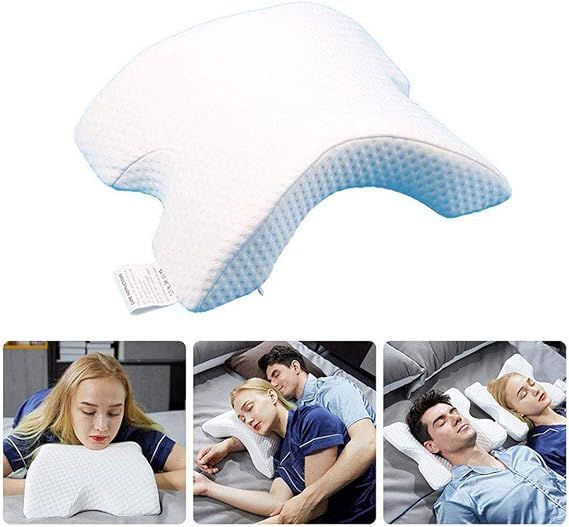
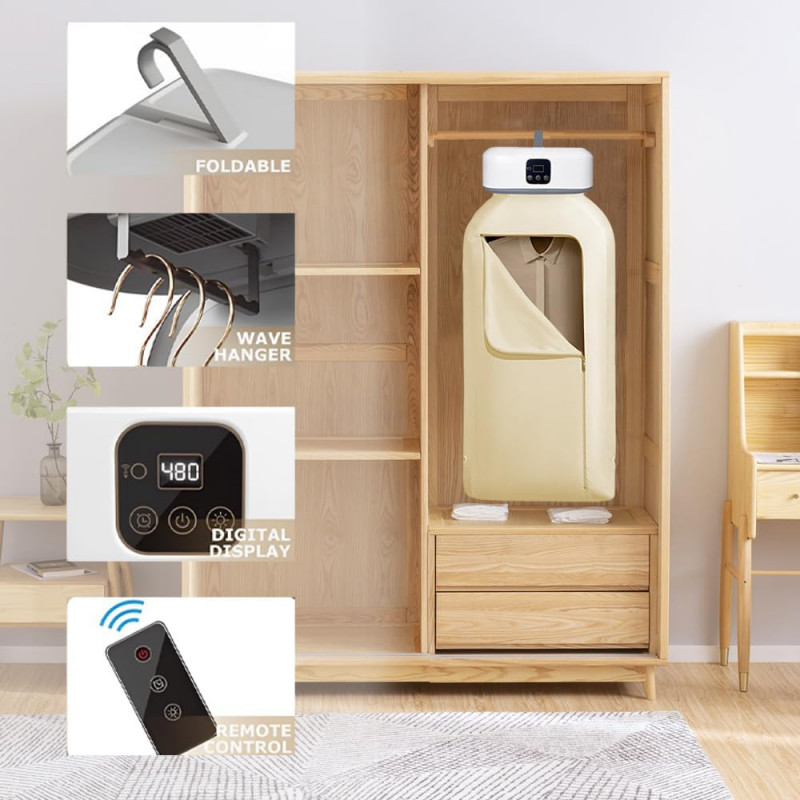
The induction night lamp is the practical companion mentioned above, the body pillow belongs to the comfort side of the bedroom, and the electric dryer sits in the wider home range.
Frequently asked questions about a galaxy ocean light projector
Does a galaxy ocean light projector work in a lit room?
Not well. The effect depends on contrast, so any competing light source washes it out. Full darkness, with curtains closed and other devices covered or switched off, is what makes the projection look like the photographs.
How large an area will it cover?
That depends on the unit and, just as much, on how far it stands from the surface. Moving it back spreads the pattern wider but makes it dimmer, so there is a trade-off between coverage and intensity in every room.
Can it be left on all night?
It can, but a timer is the better approach. Light through the night is not helpful for sleep, and switching off after an hour also spares the motor that drives the moving effects. Most units in this category include a timer for exactly this reason.
Is it safe for a baby’s room?
The light itself is low intensity, but the practical risks are the mains adapter and the cable. Place it out of reach, secure the lead, use a low brightness setting and do not let anyone look directly into the lens. A galaxy ocean light projector is decorative, not a sleep aid.
Why do my stars look blurry?
Usually dust on the lens, or too steep an angle across the surface so part of the pattern is much further away than the rest. Wipe the lens with a dry microfibre cloth first, then adjust the angle before assuming a fault.
Can I use two in one room?
Yes, and for a large space it works considerably better than one. Place them in opposite corners aimed across the ceiling so the patterns overlap in the middle, which fills the room far more evenly than a single unit ever will.
A galaxy ocean light projector is a small purchase that gives a disproportionate result, provided you can make the room genuinely dark and you spend ten minutes finding the right position and angle. Use the timer, keep the lens clean, and pick the calmer settings for bedtime. See the full details on the Galaxy Ocean Light Projector page, or browse the rest of the decor range in the Decor section.



Add comment