A fitness stepper machine is the smallest piece of cardio equipment that still gives a real workout. It fits under a sofa, it needs no power, and it lets you train legs and lungs in a flat with neighbours below, which is more than most cardio machines can claim.
This guide covers how mini steppers actually work, how they compare with a treadmill or a bike, correct form, a beginner routine you can follow from week one, how to keep the noise down in an apartment, maintenance, troubleshooting and six questions buyers in Saudi Arabia ask most often.
Why stepping works as home cardio
Stepping is one of the oldest forms of exercise there is, and a fitness stepper machine keeps almost all of the benefit in a fraction of the space.
The movement uses the largest muscles in the body, which is what makes it demanding on the heart and lungs. Working the legs is the fastest route to raising your heart rate without running.
It is also relatively low impact. Both feet stay in contact with the pedals, so there is none of the repeated landing shock of running, which suits people carrying extra weight or returning from a break.
Then there is the practical argument. A fitness stepper machine is small enough to leave in a corner, which matters far more than it sounds: equipment you can see and step onto in ten seconds gets used, and equipment stored in a cupboard does not.
Background on the exercise itself is on the stair climbing reference page, which covers why it is such an efficient way to raise cardiovascular demand.
How a mini stepper actually works
Understanding how a fitness stepper machine works explains both the strengths and the honest limitations of this category.
Most compact steppers use hydraulic cylinders under the pedals. Pressing one pedal down forces fluid through a restriction inside the cylinder, and that resistance is what your legs work against.
The two pedals are usually linked, so one rises as the other falls. That is what produces the natural alternating rhythm of stepping rather than two independent presses.
Resistance on a fitness stepper machine is normally adjusted by a dial or knob that changes how freely the fluid can move. The WLD Store listing describes adjustable resistance on this model.
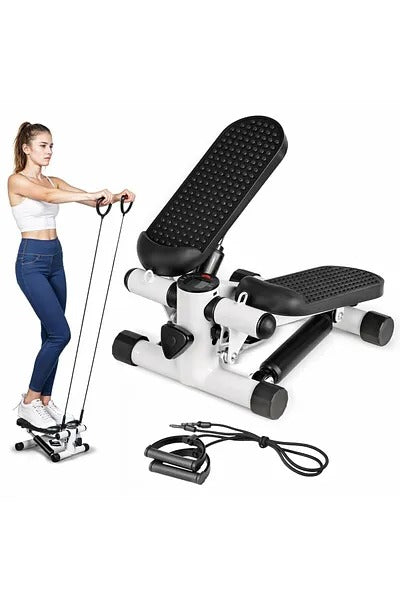
Dual-action versions add ropes or bands for the arms, so the upper body works against tension while the legs step. The listing describes a dual-action design that works legs, glutes and arms at the same time.
One honest limitation is worth stating early: hydraulic cylinders warm up during sustained use, and resistance can feel different after twenty minutes than at the start. That is normal behaviour for the design rather than a fault.
Stepper, treadmill, bike or rower
Choosing between a fitness stepper machine and the alternatives is mostly about space, noise and what you will actually do.
Treadmills give the most familiar workout and take the most space, cost the most and make the most noise. In an apartment above other people they are rarely the neighbourly choice.
Exercise bikes are comfortable and quiet, and they take up a permanent footprint of roughly a square metre. They are seated, which suits some people and bores others.
Rowers are excellent full-body machines and are long, heavy and awkward to store in a small home.
A fitness stepper machine is the compact option. It gives less variety than a treadmill and takes a fraction of the space, costs far less, and can be lifted with one hand.
The listing describes this model as compact, quiet and foldable for small spaces, which is exactly the argument for the category.
What makes a good fitness stepper machine
Five things separate a fitness stepper machine that survives daily use from one that develops a wobble in a month.
Base stability
Everything about a fitness stepper machine depends on the frame. A wide base with non-slip feet keeps the unit planted; a narrow base lets it rock, and rocking is both distracting and unsafe.
Check the feet on any fitness stepper machine when it arrives. Rubber pads protect the floor and stop the frame walking across smooth tiles during a hard set.
Pedal size and grip
Pedals need to take a whole foot, including a trainer, with a textured surface that stays grippy when you are sweating. Small, smooth pedals are the most common complaint about cheap steppers.
Adjustable resistance
Fixed resistance means the machine is too hard on day one and too easy by month three. Adjustment is what lets a fitness stepper machine grow with you.
Arm resistance
Ropes or bands add upper body work and, more usefully, help with balance and rhythm. They are the difference between a leg exercise and a whole-body one.
Noise and smoothness
Hydraulic steppers are naturally quiet, but a badly assembled one clicks at the top of each stroke. Listen to it on a low resistance setting before deciding where in the home it will live.
The WLD Store pick: Fitness Stepper Exerciser with Rope
Here is what the WLD Store listing states about this fitness stepper machine, with nothing added.
- Product: Fitness Stepper Exerciser with Rope, listed under Sports & Fitness.
- Brand: WLD.
- Described as: a dual-action step machine that tones legs, glutes and arms at the same time.
- Resistance: the listing states resistance is adjustable.
- Included: the listing states a jump rope is supplied for added cardio intensity.
- Form factor: described as compact, quiet and foldable for small spaces.
- Market: available across Saudi Arabia, with secure checkout.
- SKU: WLD-KSA-0033-(KD-KD0255).
Dimensions, weight and current photographs are on the Fitness Stepper Exerciser product page. Check the listed size against the space you intend to use before ordering.
Setting it up and your first session
Assembly of a fitness stepper machine is usually minimal, but the first ten minutes decide whether you enjoy it or give up.
- 1. Set it on a flat, hard surface. Thick carpet lets the frame rock; a mat over hard flooring is the ideal combination.
- 2. Start on low resistance. Beginners consistently set a fitness stepper machine too hard and then dislike it.
- 3. Stand tall. Chest up, shoulders back, eyes forward rather than down at your feet.
- 4. Press through the whole foot, not just the toes. Toe-only stepping loads the calves and misses the glutes entirely.
- 5. Use the full range. Let each pedal rise properly instead of shuffling in the middle of the travel.
- 6. Keep a soft knee. The supporting leg should never lock straight at the bottom.
- 7. Hold the ropes lightly and pull with the back, not by yanking with the arms.
- 8. Breathe steadily. If you cannot speak a short sentence, the resistance is too high for now.
- 9. Stop before you are exhausted on the first day. Soreness two days later is what stops people returning.
Wear proper trainers rather than sandals or bare feet. A fitness stepper machine puts continuous load through the arch of the foot, and unsupported feet get sore quickly.
A four-week beginner routine
Consistency beats intensity every time on a fitness stepper machine, especially with home equipment that is easy to skip.
Week one: three sessions of eight to ten minutes at low resistance. The goal is rhythm and getting used to the movement, nothing more.
Week two: three or four sessions of twelve to fifteen minutes. Add the arm ropes for half of each session once the leg movement feels automatic.
Week three: keep the duration and raise the resistance one step. This is where most people first notice a fitness stepper machine getting genuinely demanding.
Week four: introduce intervals. Two minutes at a comfortable pace, one minute faster, repeated five or six times, then a few minutes of easy stepping to finish.
Add the supplied jump rope on separate days rather than the same session at first. Skipping is high impact and demanding on the calves, and stacking it on top of a stepper workout is how beginners get sore shins.
If you have any joint, heart or blood pressure condition, speak to a qualified professional before starting a new exercise routine. General guidance in an article is not a substitute for advice about you.
Being realistic about results
Marketing around small cardio machines tends to overpromise, so it is worth being straightforward.
The listing describes a machine that tones legs, glutes and arms. Stepping certainly works those muscles, and consistent use builds strength endurance in them.
What no machine does is target fat loss in one area. Body composition changes come from overall energy balance, sleep and consistency over months, and a fitness stepper machine contributes to that as part of a routine rather than on its own.
The honest advantage is accessibility. Ten unremarkable minutes a day, done most days, beats an ambitious plan that lasts a fortnight, and small equipment is what makes the ten minutes realistic.
Noise, floors and neighbours
Noise matters more in an apartment than any feature listed on a fitness stepper machine box.
Put a mat underneath. An exercise mat or a piece of dense rubber absorbs both vibration and the small impacts that travel through a concrete floor to the flat below.
Keep the movement smooth rather than bouncing. Most of the noise from a fitness stepper machine comes from the pedal reaching the end of its travel hard, not from the mechanism itself.
Position it away from shared walls where you can, and avoid very early or very late sessions if the building is quiet. A machine on tiles against a party wall is the worst combination.
Tighten the frame bolts if a rattle develops. Loose fasteners are the usual source of a click that neighbours notice more than you do.
Care and maintenance
A fitness stepper machine needs very little maintenance, and doing it keeps the unit smooth for years.
Wipe the frame and pedals after each session. Sweat is corrosive, and it collects exactly where the pedal meets the frame.
Check every bolt monthly. Vibration loosens fasteners on any fitness stepper machine, and a wobble is almost always a loose bolt rather than a broken part.
Give hydraulic cylinders a rest on long sessions. If resistance fades noticeably, stop for a few minutes rather than pushing on; the cylinders are simply warm.
Store it out of direct sun and away from damp. Heat is unkind to hydraulics and seals, and a balcony in summer is the wrong place for any exercise equipment.
Keep the jump rope coiled loosely rather than knotted, and check the handles for splits before use.
Common problems and quick fixes
Four issues cover almost everything fitness stepper machine owners report.
- The unit rocks or walks across the floor. The surface is uneven or the feet have lost grip. Use a mat and check all four feet are seated.
- Resistance feels different left to right. One cylinder is warmer or the adjustment is uneven. Reset the dial fully and re-adjust both sides equally.
- It squeaks or clicks at the top of the stroke. Usually loose fasteners. Tighten the frame bolts before assuming anything has failed.
- Your calves burn but your glutes do nothing. A form problem, not a machine problem. Press through the whole foot and use the full pedal travel on the fitness stepper machine rather than short, quick steps.
Buying checklist
Five questions before ordering any fitness stepper machine.
- Where will it live? Equipment stored out of sight is used far less than equipment left in a corner.
- Is the resistance adjustable? Fixed resistance limits how long the machine stays useful.
- Do you want arm work? Ropes or bands make it a whole-body session and help with balance.
- What is underneath? A mat is close to essential on tile, and important in an upstairs flat.
- Is the pedal big enough for your foot in a trainer? Small pedals are a daily annoyance.
Who it is not for
A fitness stepper machine is genuinely useful for many people and the wrong purchase for some.
If you already run regularly and want a serious cardio machine, a stepper will feel limited. A rower or a bike gives more range and more measurable progress.
If you have knee problems, get advice first. Stepping is low impact but it does load the knee through a bent-leg range, and a fitness stepper machine is not automatically gentle just because your feet stay on the pedals.
And if balance is a concern, look for a model with handlebars rather than ropes. Free-standing stepping requires steady balance that not everyone has on day one.
Fitting ten minutes into a real day
The hardest part of home cardio is never the exercise. It is starting, and the way around that is to attach the session to something you already do.
Pick an anchor: before the first coffee, after the school run, or while a familiar programme is on. A fitness stepper machine is quiet enough to use in front of a television, which removes most of the excuses.
Leave your trainers next to it. The gap between deciding to exercise and being able to start is where most intentions are lost, and shoes in another room are a surprisingly effective barrier.
Set a low bar on difficult days. Five minutes still counts, and five minutes done on a bad day protects the habit far better than a skipped session followed by a guilty long one.
Track it simply. A mark on a calendar for each session is enough, and seeing a run of marks is what keeps most people going through week three.
Folding and storing it
The listing describes this model as foldable, and how you store it changes how often it gets used.
If you have the space, do not store it at all. A fitness stepper machine left in a corner with a mat under it is used several times more often than one folded behind a wardrobe.
Where it must be put away, choose the least inconvenient home you can: behind a door, under a bed or beside a sofa rather than in a storeroom on another floor.
Store it dry and out of direct sun, and never on a balcony in summer. Heat is hard on hydraulic seals, and the frame finish suffers too.
Check the folding mechanism occasionally for loose pins or catches, and never step onto the unit until you have confirmed it is fully unfolded and locked.
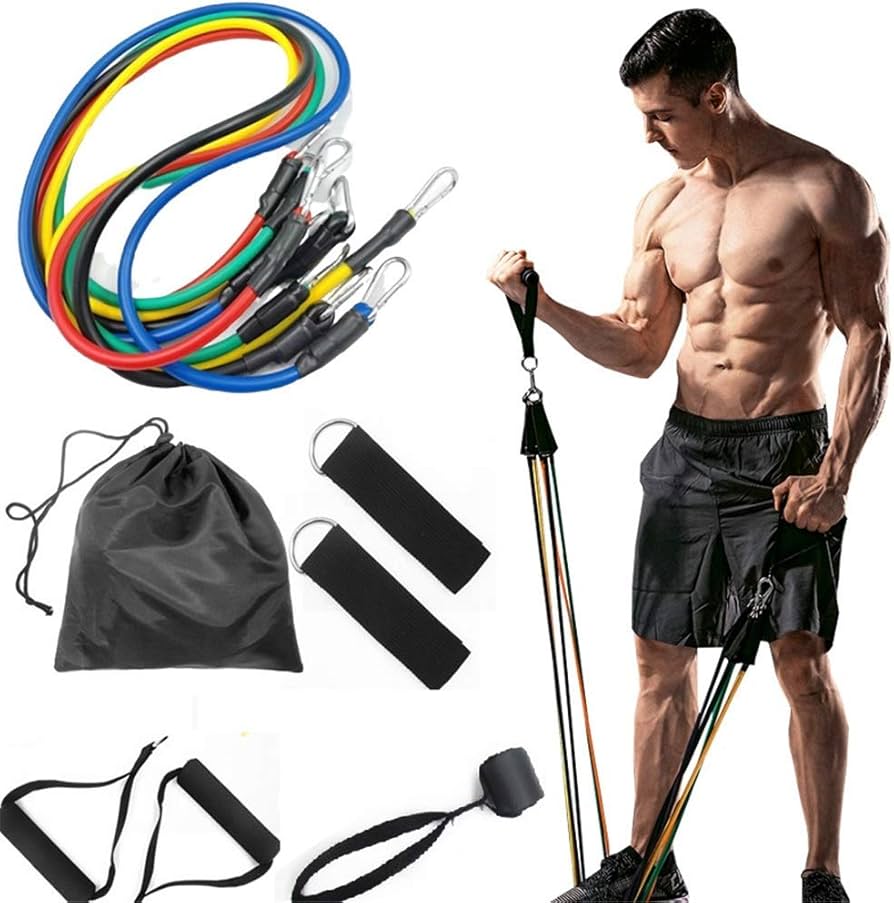
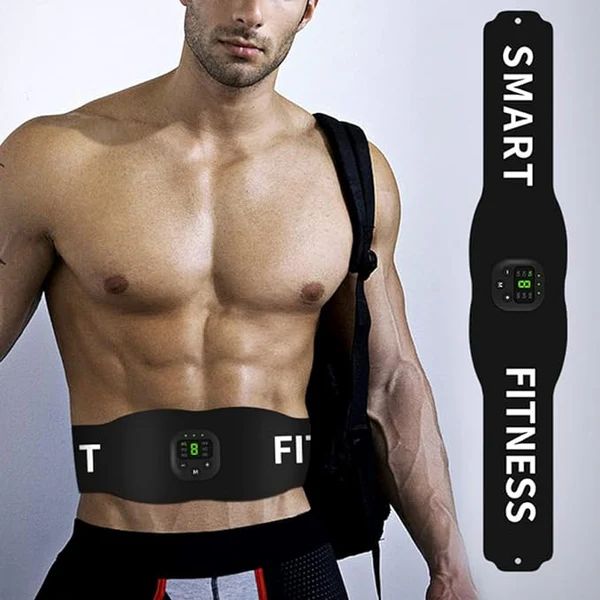
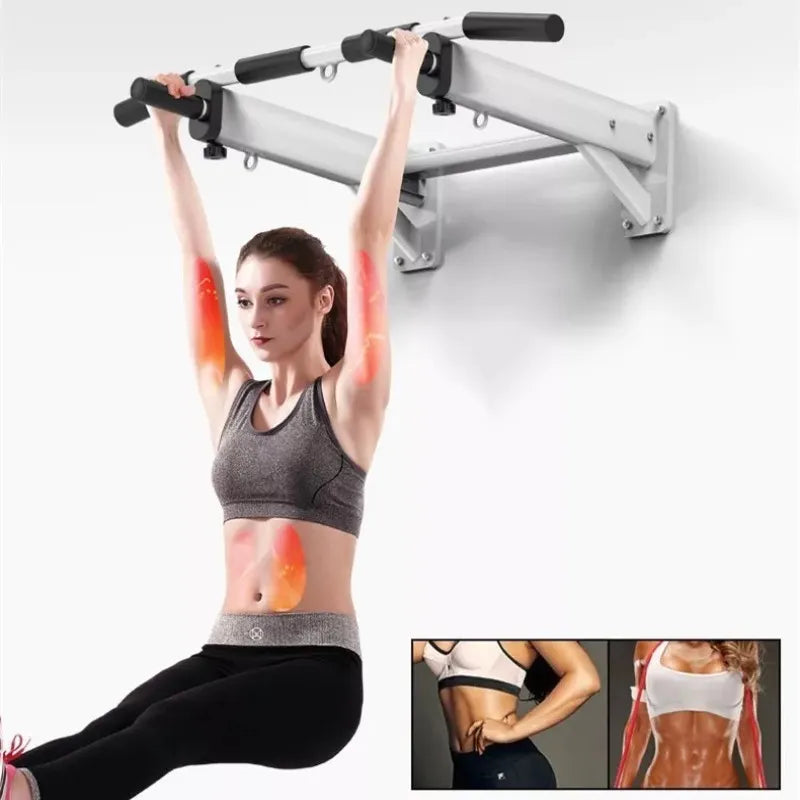
Other Sports & Fitness picks at WLD Store
Three more items from the same range that pair well with home cardio.
Frequently asked questions about the fitness stepper machine
How long should a session be?
Start with eight to ten minutes and build up. Twenty to thirty minutes at a moderate pace is a solid target once you are used to it, and several short sessions a week beat one long one.
Is it hard on the knees?
It is lower impact than running because your feet never leave the pedals, but it still loads the knee joint. Keep a soft knee at the bottom of the stroke, and take advice if you have an existing problem.
Does it really work the arms?
With the ropes attached, yes, though the legs still do most of the work. Treat arm resistance on a fitness stepper machine as a useful addition rather than a replacement for strength training.
Will it disturb the neighbours?
Much less than a treadmill. Use a mat, step smoothly rather than bouncing, and keep sessions to reasonable hours in a shared building.
Why does the resistance change during a workout?
Hydraulic cylinders warm up with use, which changes how the fluid flows. It is normal for the category; rest for a few minutes if it becomes noticeable.
Can I use it every day?
Yes, at moderate effort. Alternate harder and easier days, and if anything hurts rather than simply feeling tired, take a rest day rather than pushing through.
Small equipment wins on consistency: keep it where you can see it, start easier than you think you should, use the full pedal travel and add resistance as you improve. You can see the current listing on the Fitness Stepper Exerciser page, or browse the rest of the fitness range in the Sports & Fitness section.


Add comment