A star projector night light does something no lamp can manage: it removes the darkness a child is afraid of without filling the room with the brightness that keeps everyone awake. Instead of a glowing bulb in the corner, the ceiling becomes something worth lying still and looking at. This guide covers how a star projector night light works, what separates a good one from a toy that dies in a fortnight, where to place it, how to fold it into a bedtime routine, and the safety points that rarely appear on the box.
Why a star projector night light changes a bedroom
Bedtime resistance is usually not about sleep at all. It is about the moment the light goes off and a familiar room turns into shapes and shadows. A conventional night light solves the fear by adding brightness, which is why so many parents end up with a child who sleeps badly in a room that never really gets dark.
A star projector night light works differently. The light is moving, low and directed at the ceiling rather than at eye level, so the room stays dim while giving a child something to focus on. Watching a slow rotation is close to the old trick of counting sheep, and it gives a restless mind a place to settle.
It also changes the negotiation. Turning the projector on becomes the last step of the routine, which gives a child something to look forward to at exactly the moment the day usually falls apart. Plenty of parents find the argument shrinks once the ceiling becomes the reward for being in bed.
Adults buy them for themselves as often as for children. A rotating starfield is a genuinely relaxing thing to fall asleep under, and in a shared flat it gives a bedroom an atmosphere that an overhead light never will. The same device that settles a five-year-old works perfectly well on someone reading in bed at thirty.
How a star projector night light works
Almost every star projector night light uses the same principle. An LED sits inside a housing with a patterned shell or lens around it, and light escapes only through the gaps. Rotate the shell slowly and the projected points drift across the ceiling.
The pattern quality depends on how sharp those gaps are and how far the light travels before it lands. Small, crisp openings throw defined points that read as stars; wide or soft openings throw blurred blobs. Distance sharpens or softens the effect too, which is why the same lamp looks different in a small bedroom and a large one.
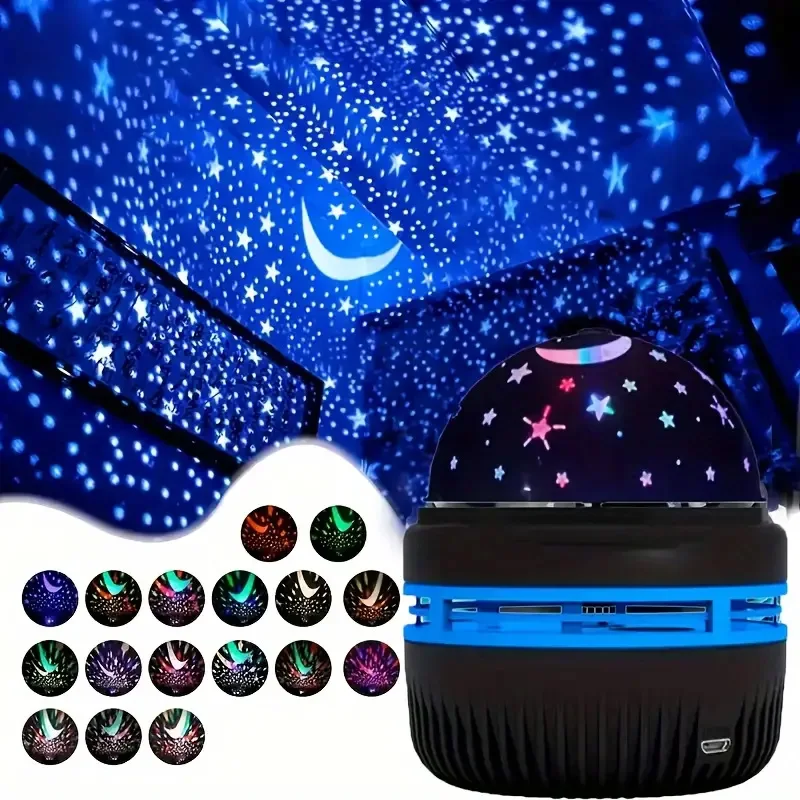
Colour usually comes from more than one LED, and the mixing is what produces the nebula effect people associate with these lights. A moon and star pattern, like the one on this model, is the more literal version of the idea and tends to appeal most to younger children.
None of this is complicated engineering, which is good news: a star projector night light has very little to go wrong. What varies is the quality of the housing, the motor that turns it and the power connection, and those are exactly the things worth checking before you buy.
What makes a good star projector night light
Four things decide whether a star projector night light becomes part of the nightly routine or a novelty that ends up in a drawer.
Pattern sharpness and coverage
Look at how the pattern lands at a realistic distance rather than in a close-up photograph. Good coverage reaches across the ceiling and down the upper walls; poor coverage puts a bright disc directly above the lamp and nothing elsewhere. A star projector night light that only lights a metre of ceiling will disappoint in any normal bedroom.
Brightness control
The single most useful feature is the ability to be dim. A projector that is too bright defeats the purpose, because it keeps the room lit rather than decorated. If a model has a brightness setting or a choice of modes, the lowest one is usually the one you will use every night.
Rotation speed and noise
Rotation should be slow enough to be soothing rather than busy. Just as important, the motor should be quiet. In a silent bedroom a faint whirr is audible, and a child who is listening for it will not settle. If you can, run it before you commit to the position.
Build, power and stability
Check the base, the cable entry and how the shell attaches. These lamps get knocked off bedside tables, so a wide, stable base matters more than it seems. Look at how the power lead connects and how long it is, since a star projector night light stranded a metre from the socket is no use at all.
The WLD Store pick: Galaxy Star Projector Night Light
WLD Store lists this star projector night light under Electronics as a starry-sky projector and magic ball light. The listing details are these.
- Product: Galaxy Star Projector Night Light, described as an LED starry sky magic ball lamp
- Brand: WLD
- Category: Electronics
- Effect: a rotating LED starry-sky projection with a moon and stars
- Suggested uses: a children’s night light, a game-room atmosphere light, or a gift
- SKU: WLD-KSA-0144-(DS-GALAXY)
- Availability: available across Saudi Arabia through secure checkout
You can see the full listing on the Galaxy Star Projector Night Light product page. The rotating moon-and-stars pattern is the classic version of this idea, and it is the one that works across the widest age range, from a toddler’s room to a teenager’s gaming corner.
Placement: where to put a star projector night light
Placement changes what a star projector night light does more than any setting on the device. Spend ten minutes on this once and you will not think about it again.
- Aim across the room, not straight up. A projector standing directly under the point you want lit produces a tight circle. Set at an angle from a corner or a shelf, the pattern stretches across the whole ceiling.
- Get some distance. Two to three metres between the lamp and the far ceiling is usually the sweet spot in a bedroom. Closer means a small bright patch; much further means faint dots.
- Keep it out of direct sightlines. Nobody should be looking into the lens from the pillow. Place it behind or beside the head of the bed rather than facing it.
- Use height. A shelf, a chest of drawers or a windowsill beats the floor. Height widens the spread and keeps the lamp away from feet and pets.
- Mind the cable. The route from socket to lamp should never cross a walkway or hang where a child can pull it. This is the single most common mistake with any bedroom device.
Dark ceilings and busy wallpaper swallow the effect, while a plain, pale ceiling reflects it beautifully. If the pattern looks weak, the surface is often the reason rather than the star projector night light itself.
Building it into a bedtime routine
A star projector night light is most useful when it marks a point in the evening rather than running all night. Children learn sequences quickly, and a light that appears at the same moment every night becomes a reliable signal that the day is over.
A simple order works well: bath, teeth, story with the main light on, then the overhead light off and the star projector night light on for the last few quiet minutes. The change in the room does the work that a raised voice usually has to do.
Whether to leave it running is a personal decision. Sleep tends to be deeper in a fully dark room, so many families switch it off once the child is asleep, or use a timer socket to do it for them. Others leave it on all night because the fear of the dark matters more in their house than perfect darkness does.
For a child who wakes at night, the projector is also a useful anchor. Being able to turn on their own ceiling of stars, rather than calling out, gives an older child a small piece of independence at three in the morning.
Beyond the nursery: other uses
Gaming corners are the most common adult use. A slow starfield behind a desk reads well on camera, softens the glare of a monitor and costs almost nothing to run.
It also works as occasional atmosphere. Birthdays, sleepovers, a film night on the floor or a quiet evening on a balcony are all improved by a ceiling full of moving points of light, and a star projector night light packs away in a drawer afterwards.
Some people use one purely as a wind-down cue for themselves. Turning off screens and turning on a slow projection is a clearer signal to the brain than simply deciding to sleep, and it is a much cheaper habit than most sleep gadgets.
As a gift it is unusually safe. It suits a wide age range, it does not need to fit anyone, and it is the sort of thing people enjoy but rarely buy for themselves.
Star projector night light versus other bedroom lighting
A plain plug-in night light is cheaper, always on and completely predictable. It is the better choice if the goal is purely to light a route to the bathroom, because a projected starfield does not illuminate a floor.
Fairy lights give a warm static glow and look good permanently strung around a headboard. They do not move, they do not settle a restless child in the same way, and strings of them are a tangle to store. A star projector night light concentrates the whole effect into one object you can move between rooms.
A dimmable bedside lamp is the most flexible option for reading, and no projector replaces it. The honest summary is that these are complementary rather than competing: a lamp for tasks, a low night light for navigation, and a projector for atmosphere and settling down. Many bedrooms end up with all three, each doing the job it is actually good at.
Safety points worth knowing
These are simple devices, but they sit in bedrooms and often in children’s rooms, so a few rules matter.
- Never place it inside a cot or on a crib rail. Any device with a cable belongs well outside a baby’s reach, on a surface a child cannot pull from.
- Route the cable safely. Cables should run behind furniture, never across a walkway or dangling where they can be tugged.
- Do not stare into the lens. Bright directed light is uncomfortable at close range, and small children will look straight at it if it is within reach.
- Keep it dry and ventilated. No bathrooms, no windowsills that get rained on, and nothing draped over it while it runs.
- Use the right power supply. Use the supplied lead and a good-quality adapter rather than the cheapest unbranded one in the drawer.
Care and maintenance
A star projector night light needs very little maintenance, which is part of the appeal, but three habits keep the effect sharp.
Dust the shell regularly. The pattern is thrown through small openings, and dust in those openings dulls the whole projection. A dry microfibre cloth every couple of weeks is enough; avoid solvents, which can craze plastic.
Keep the lens clean and free of fingerprints. Children touch these lamps constantly, and a smeared lens softens every point of light. Wipe it with a lens cloth rather than a sleeve.
Store it properly when it is not in use. If a star projector night light goes into a drawer, wrap the cable loosely rather than tightly around the body, because tight coiling is what eventually breaks the wire where it enters the housing.
Common problems and quick fixes
- The pattern looks faint. The room is not dark enough, the ceiling is too dark, or the lamp is too far away. Fix the room before blaming the lamp.
- Only one bright circle appears. The projector is aimed straight up and too close. Move it to one side and angle it across the room.
- The rotation stopped. Check for a hair or a thread caught where the shell meets the body, which is by far the most common cause.
- It flickers. Suspect the power connection first: a loose plug, a worn cable end or an underpowered adapter.
Who might not want one
Anyone who sleeps best in total darkness should think twice. If light of any kind wakes you, a projector is a decoration for the evening rather than something to run all night.
Very light-sleeping babies are another case. Some settle beautifully under a moving pattern and others find it stimulating, and there is no way to know in advance which you have. Start with short sessions before bedtime rather than leaving it on.
If what you actually need is enough light to safely cross a room at night, buy a proper low-level night light instead. A star projector night light is atmosphere, not illumination, and expecting it to light a floor will only disappoint.
Buying checklist
- Will the pattern reach across my ceiling from a realistic position in the room?
- Can it be set dim enough to use every night without lighting the whole room?
- Is the rotation slow and quiet enough for a bedroom at midnight?
- Is the base stable, and can the cable reach a socket without crossing the floor?
- Is my ceiling pale and plain enough to show the effect properly?
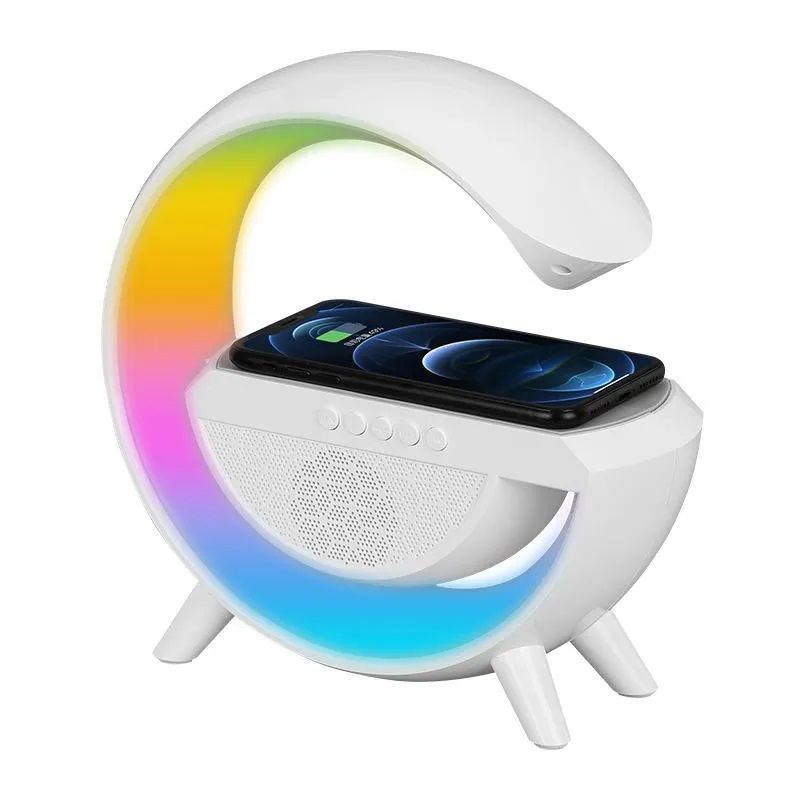
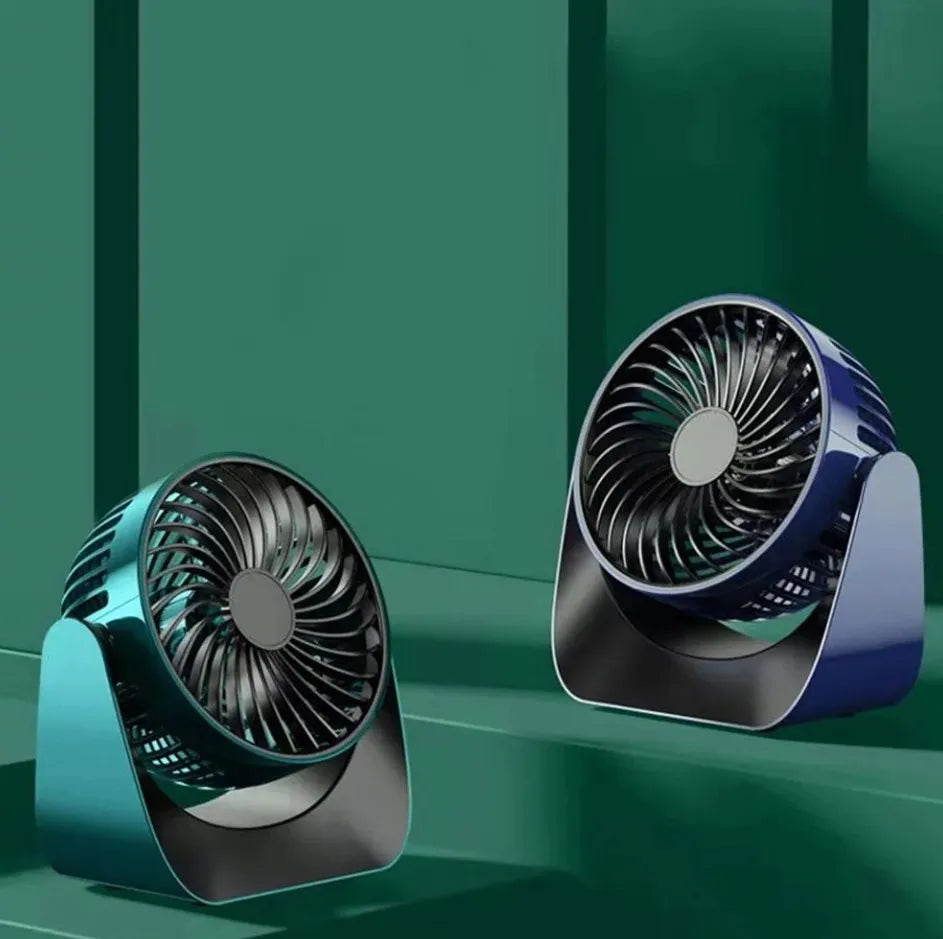
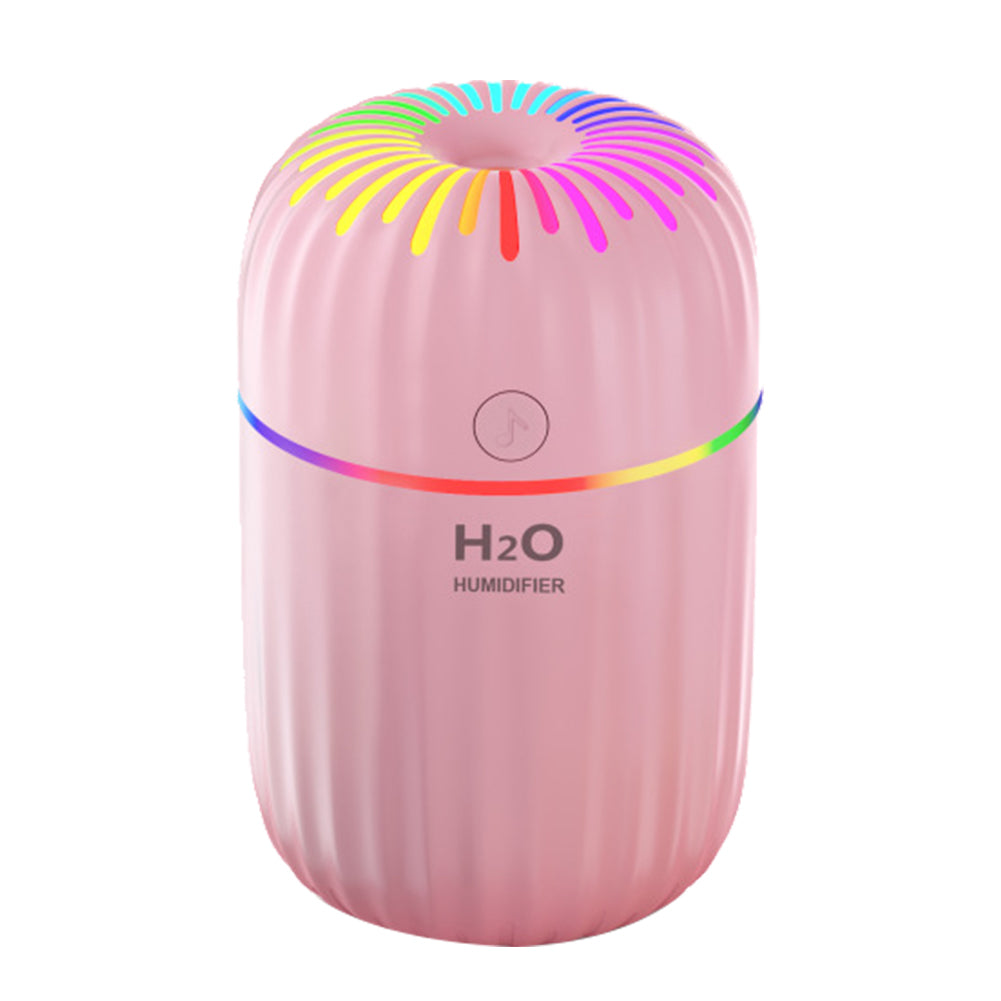
Other Electronics picks at WLD Store
These three sit in the same part of the catalogue if you are setting up a bedroom or desk.
Frequently asked questions about the star projector night light
What age is a star projector night light suitable for?
The effect appeals from toddler age upwards, and plenty of adults use one too. For babies, keep the device well outside the cot, run it only while you are in the room at first, and watch whether it settles or stimulates before making it part of the routine.
How dark does the room need to be?
Dark enough that you would struggle to read. Streetlight through thin curtains is the usual culprit when a projection looks weak, so blackout curtains often improve the effect more than a different lamp would.
Can I leave a star projector night light on all night?
Many people do, and these lamps draw very little power. Sleep is generally deeper in a fully dark room, so a timer socket that switches it off after an hour is a good compromise, especially for older children.
Will it work on a high or sloped ceiling?
Yes, though the pattern spreads wider and fades as the distance grows. On a high ceiling, place the lamp higher up and closer to the wall to keep the points defined rather than washed out.
Does the colour of the ceiling matter?
A great deal. White and pale ceilings reflect the light and show fine detail, while dark, glossy or heavily patterned surfaces absorb or break it up. This is the most common reason a star projector night light looks better in a shop video than at home.
Is it a good gift?
It is one of the safer gift choices available, because there is no size to get wrong and it suits children, teenagers and adults. A star projector night light also has the advantage of being something most people enjoy receiving but never think to buy for themselves.
Used well, this is a small purchase that changes the feel of a room and takes the friction out of bedtime. Place it off to one side, keep it dim, give it a plain pale ceiling to work with, and it will earn its place every single night. You can view the listing on the Galaxy Star Projector Night Light page or browse the wider catalogue in the Electronics section. If the night sky itself is the interesting part, the article on the planetarium on Wikipedia traces how the same idea grew from projected dots to full domes.




Add comment