A facial hair remover is one of the few grooming tools that is genuinely about convenience rather than results you could not get elsewhere. Threading, waxing and plucking all work. What they do not offer is the ability to fix a stray hair in ninety seconds before leaving the house, without an appointment, without redness and without waiting for growth to reach a length a salon can work with. This guide explains how an electric facial hair remover works, where it fits alongside other methods, the technique for eyebrows and for the upper lip, how to keep it hygienic, and what to check before buying one.
Why so many people keep a facial hair remover at home
Facial hair is completely normal, and how much of it anyone chooses to remove is a personal decision rather than a standard. What has changed is expectation about timing. People want to deal with it when they notice it, not when a salon has an opening, and that is the gap an at-home tool fills.
The salon methods all share one requirement: hair must be long enough to grip. Threading and hair removal by waxing both need visible regrowth, which means walking around with the exact thing you wanted removed while you wait. A facial hair remover works on short hair, so touch-ups happen the moment they are needed.
The second factor is skin comfort. Waxing lifts the top layer of skin along with the hair, which is why redness follows and why the treatment does not suit everybody. A tool that cuts or lifts hair at the surface, without pulling at the skin, is a gentler proposition for daily use. The listing for this model describes it as painless and gentle on skin.
Third is privacy and cost over time. A single tool that lives in a drawer replaces a recurring appointment for people who mainly need small maintenance rather than a full reshape. Many people use both: a professional for the shape, a facial hair remover for the fortnight in between.
What makes a good facial hair remover
The category covers several different mechanisms, and the details matter more than the marketing photographs suggest.
The head and how it sits on skin
Facial skin is thin and follows curves, especially around the jaw, the upper lip and the brow bone. A small head can follow those contours; a large one skips over hollows and misses hairs. For eyebrow work in particular, precision matters more than coverage, because a single millimetre in the wrong place is visible from across a room.
Two functions in one tool
Eyebrow shaping and general facial hair removal are different tasks. Shaping is about clean edges and control near a line you must not cross. Removing fine hair on the cheek or lip is about coverage and comfort over a wider area. A 2-in-1 facial hair remover is designed to do both, which is why it replaces two separate purchases.
Power source
USB rechargeable is the sensible standard for a small grooming device. It removes the hunt for tiny batteries, it means the tool can be charged from a laptop or a power bank while travelling, and it avoids the gradual power loss that makes battery-powered trimmers pull instead of cut.
Size and grip
You use this at arm’s length in front of a mirror, often with one hand holding skin taut. A slim body that can be held like a pen gives far better control than a bulky handle, and control is the entire game when working near an eyebrow.
Cleaning and hygiene
Anything used on the face collects skin cells and oil. A head that detaches for cleaning, and a brush included for the purpose, keeps a facial hair remover hygienic. This is not a small point, because a dirty head on facial skin is a route to irritation and blocked pores.
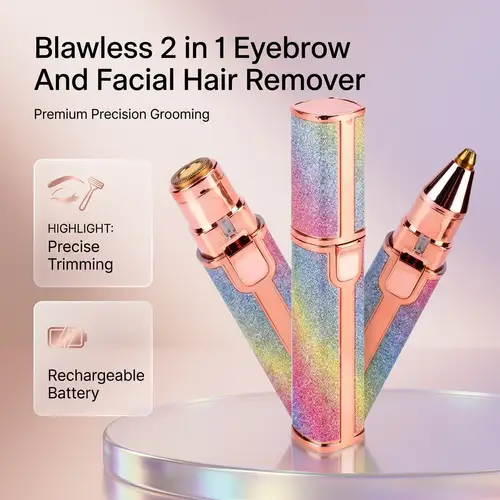
The WLD Store pick: Blawless 2-in-1 Eyebrow and Facial Hair Remover
This is the facial hair remover listed at WLD Store, from the Blawless brand.
- Product: Blawless 2-in-1 Eyebrow and Facial Hair Remover.
- Two jobs, one tool: eyebrow shaping and facial hair removal.
- Comfort: described in the listing as painless and gentle on skin.
- Power: USB rechargeable.
- Intended use: daily touch-ups.
- Category: Beauty and Personal Care.
- Brand: Blawless.
- SKU: WLD-PK-0004-(HHC-3763870).
- Availability: available across Pakistan through secure checkout.
Full listing: Blawless 2-in-1 Eyebrow and Facial Hair Remover at WLD Store.
Technique: how to use a facial hair remover well
Good results come from lighting, skin preparation and patience rather than from pressing harder. Rushing is what produces patchy results and irritation.
- Start with clean, dry skin. Remove makeup and any oil or cream first. Product on the skin clogs the head and stops it sitting flat.
- Get proper light. Natural daylight near a window shows fine hair that bathroom lighting hides completely. Bad lighting is the most common cause of a missed patch.
- Hold the skin taut. Use your free hand to stretch the area gently. Loose skin moves with the head instead of presenting the hair to it.
- Use light pressure and small movements. Let the tool do the work. Pressing a facial hair remover into the skin does not remove more hair, it just increases the chance of irritation.
- Work in one direction. Pick a direction and be consistent across an area, rather than going back and forth over the same spot repeatedly.
- Eyebrows: work from underneath, and stop early. Shape below the natural line, never through it, and remove less than you think. You can always take more off; you cannot put it back.
- Upper lip and chin: go slowly. These areas are more sensitive and more visible. Short passes with a check in the mirror between them are better than one long sweep.
Do a patch test on a small, less visible area the first time, especially if your skin reacts easily. If you have active acne, a rash, a mole or broken skin in the area, work around it and speak to a dermatologist rather than pressing on.
Care, hygiene and charging
A grooming tool touches your face, so cleaning it is not optional maintenance, it is basic hygiene.
- Clean it after every session. Brush out trapped hair with the small brush rather than blowing it out or tapping the head against a hard surface.
- Do not share it. A facial hair remover is a personal item, like a toothbrush, and sharing one spreads skin bacteria.
- Keep water away from the body unless the instructions state it is washable. Water inside a motor housing is the usual cause of premature failure.
- Store it with the cap on. The cap protects the head from dust and protects the head from impact in a bag.
- Charge it before it dies. A weak motor drags hair instead of cutting cleanly, which is uncomfortable and gives a poor result.
- Replace the head when performance drops. Every cutting surface dulls eventually. A blunt head pulls, and pulling is what causes redness.
Follow the specific cleaning, charging and replacement guidance supplied with your device ahead of any general advice here.
Aftercare: the part most people skip
What you do in the ten minutes after a session affects how the skin looks far more than the tool does. Freshly groomed facial skin has had its surface disturbed slightly, even by a gentle method, and it responds well to being left alone.
Keep it simple immediately afterwards. Rinse with cool water if the area feels warm, pat dry rather than rubbing, and apply a plain, fragrance-free moisturiser. This is not the moment for an acid exfoliant, a strong vitamin C serum, a retinoid or an alcohol-based toner, all of which can sting on freshly treated skin.
Timing matters too. Doing your touch-ups in the evening gives the skin overnight to settle before makeup goes on, which is why many people schedule a facial hair remover session as part of their evening routine rather than five minutes before leaving the house.
Sun exposure deserves a mention. Skin that has just been groomed is more reactive than usual, so a hat or shade is sensible on a bright day, along with whatever sun protection you normally use.
Watch how your own skin responds over the first few sessions. Mild pinkness that fades within an hour is common. Persistent redness, bumps that appear a day later, or any area that becomes sore is a signal to reduce frequency, lighten your pressure, and check whether the head needs cleaning or replacing. If something does not settle, a pharmacist or dermatologist is the right person to ask rather than a product review.
Used sensibly, a facial hair remover should be entirely unremarkable in daily life: a two-minute job with no visible aftermath, which is exactly the point of owning one.
Common problems and quick fixes
- It misses fine hairs. Almost always lighting or skin tension rather than the tool. Move to daylight, stretch the skin, and change the angle of approach.
- The skin looks pink afterwards. Usually too much pressure or too many passes over the same spot. Lighten the touch, reduce repeat passes, and leave the area alone for a day.
- It pulls instead of cutting. Check the charge first, then check the head for trapped hair, then consider whether the head has simply worn out.
- Regrowth appears quickly. That is how surface removal works. A facial hair remover of this type does not affect the follicle, so hair returns on its normal cycle. That is precisely why it is designed for regular quick touch-ups.
Buying checklist: five questions before you order
- What do I need it for most? Eyebrow shaping needs precision; general facial hair needs comfortable coverage. A 2-in-1 tool aims at both.
- How sensitive is my skin? If waxing leaves you red for hours, a gentle surface method is a better fit for frequent use.
- Will I travel with it? USB charging and a cap make a facial hair remover far easier to pack than anything requiring a plug adapter.
- Can I clean it properly? A detachable head and a cleaning brush are what keep it hygienic over months of use.
- Am I replacing salon visits or supplementing them? Most people do the second, and that is a perfectly good reason to own one.
Other beauty and grooming picks at WLD Store
Three more items from the same part of the range.
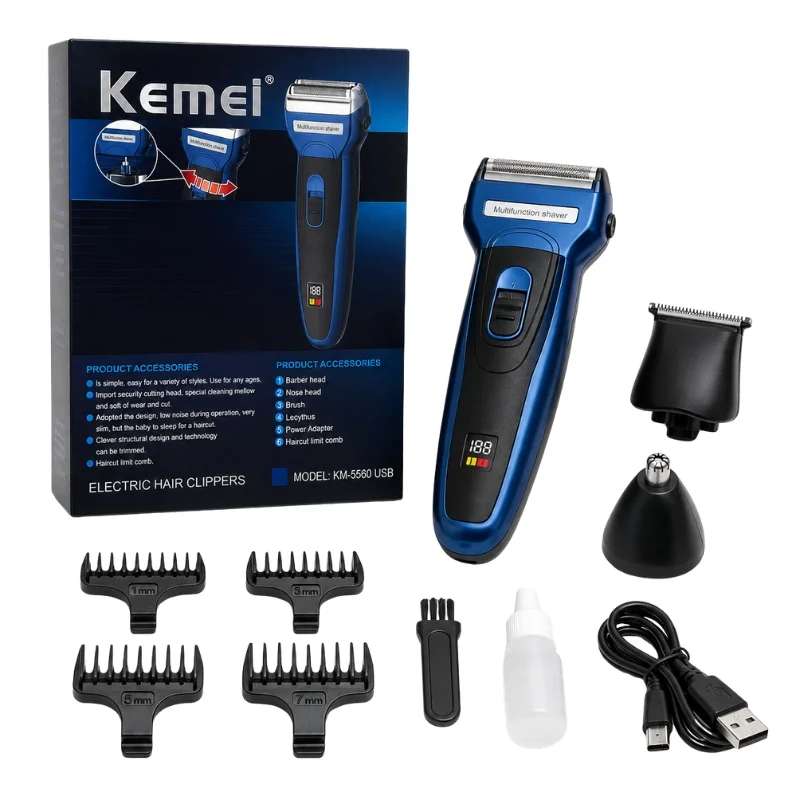
Kemei KM-5560 Electric Hair Clipper for haircuts at home.
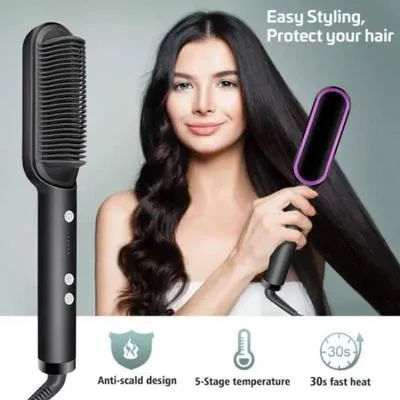
Hair Straightener Brush for styling in one pass.
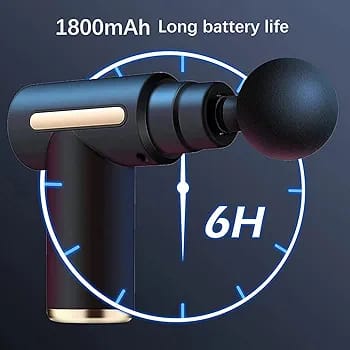
Rechargeable Massage Gun for post-workout recovery.
Facial hair remover, threading, waxing or a razor: what actually differs
All four remove hair from the face. What separates them is where the hair is cut or pulled, how long the result lasts, and how much the skin has to recover afterwards.
A facial hair remover shaves at the surface with a fine rotating head behind a guard. Nothing is pulled from the root, so there is no regrowth cycle to wait for and no ingrown risk from the removal itself. The trade-off is that the result is short-lived, because the hair was never taken out below the skin.
Threading and waxing pull hair from the follicle. That buys weeks rather than days, but it also means waiting for enough regrowth before the next session, some redness for a few hours afterwards, and a real risk of ingrowns on curly hair. Both need either a salon appointment or genuine practice at home.
A razor sits closest to a facial hair remover in principle but not in practice. A blade rides directly on the skin, which is why it nicks, and why it is harder to control around the nose and the top lip. The guard is what makes a facial hair remover forgiving enough to use in a hurry.
- Speed on a weekday morning: a facial hair remover, easily.
- How long the result lasts: waxing and threading, by weeks.
- Gentlest on reactive skin: usually the device, since nothing is pulled from the root.
- Precision on brow shape: threading, done by someone who does it daily.
- Cost across a year: a home device, once it replaces regular salon visits.
When a facial hair remover is the wrong tool
The honest version of a buying guide includes the days you should not use the thing at all.
Skip it over broken skin. Active spots, cold sores, sunburn, eczema flare-ups, fresh cuts and anything weeping or scabbed should be left to heal first. Dragging a rotating head across inflamed skin spreads bacteria and slows healing down.
Skip it over raised moles, skin tags and warts. A guard cannot follow a bump the way it follows flat skin, and catching one is painful. Work carefully around them, or ask a professional to deal with that area.
Give the skin time after treatments. Chemical peels, strong retinoids, microdermabrasion and laser work all leave the surface more fragile than it looks. Wait until any peeling or sensitivity has fully settled, and treat your own practitioner as the authority on timing rather than a general guide.
Finally, be clear about what the device is for. A facial hair remover manages fine hair on the upper lip, chin, jawline and around the brows. It is not a beard tool, and it is not permanent hair reduction. Anyone hoping to reduce growth over time rather than remove it today is looking at a different category of treatment and should speak to a qualified clinic.
Frequently asked questions about the facial hair remover
Does using a facial hair remover make hair grow back thicker?
No. This is one of the most persistent myths in grooming. Removing hair at the surface does not change the follicle, so it cannot change how thick or dark the hair that grows from it is. Regrowth can feel coarser at first because a cut end is blunt rather than tapered, but the hair itself is unchanged.
How often can I use it?
It is designed for regular touch-ups, and many people use one every few days. Let your skin guide the frequency: if an area is still pink or tender, wait. Frequent gentle passes are better than occasional aggressive sessions.
Is it better than threading or waxing?
It is different rather than better. Threading and waxing remove hair from the root, so results last longer, but they need regrowth and can leave skin red. A facial hair remover works on short hair with far less skin disturbance, but the results are shorter-lived. Many people combine the two approaches.
Can it be used on eyebrows safely?
Yes, with care and restraint. Work under the natural brow line, take a little at a time, and step back to check the shape in good light. If you want a significant reshape rather than maintenance, having it done professionally first and then maintaining it yourself is the safer sequence.
Will it work on coarse or dark hair?
Surface removal works on hair of any colour, unlike light-based methods that depend on pigment. Coarser hair may need a slower pass and a second check in daylight, and it will be visible again sooner simply because it grows more noticeably.
Can men use it?
Yes. A facial hair remover of this type is used for tidying brows, cheek lines, ears and necks by anyone who wants a neat edge without a razor. Nothing about the tool is specific to one gender, whatever the packaging in this category tends to suggest.
The short version
Clean skin, good daylight, taut skin, light pressure, and stop before you think you should. Those five rules matter more than any specification, and they are what make a facial hair remover a reliable part of a routine rather than an occasional mistake. You can see this one on its product page, or browse the wider range in the Beauty & Personal Care section.



Add comment