A pet hair remover roller is the tool that finally ends the sticky-tape habit. Anyone living with a cat or a dog knows the routine: peel a sheet, roll twice, peel again, and hope the roll lasts until the end of the sofa. A reusable pet hair remover roller does the same job with no refills at all, emptying into its own base instead. This guide explains how these rollers work, what makes one worth owning, the technique that doubles the amount of fur collected, how to keep it clean, and where a different tool does the job better.
Why fur is so hard to remove from fabric
Pet hair does not simply rest on a surface. Individual hairs have a scaled outer layer that catches on woven fibres, and short undercoat hairs work their way into the weave point-first until they are effectively stitched in place.
Static makes it worse. Dry air, synthetic upholstery and friction all build a charge that holds fur against fabric far more firmly than gravity ever could, which is why a sofa looks clean until you brush a hand across it in the wrong direction.
Different fabrics behave differently too. Smooth cotton releases fur easily, velvet and boucle grip it hard, and loose knits swallow it completely. A pet hair remover roller works because it combines directional bristles with that same static effect, lifting hair out of the weave rather than skimming the surface.
The final complication is volume. A shedding cat or dog produces hair continuously, so the goal is never a permanently fur-free house. The goal is a five-minute routine that keeps things presentable, and that only happens with a tool you can pick up without preparing anything first.
How a self-cleaning pet hair remover roller works
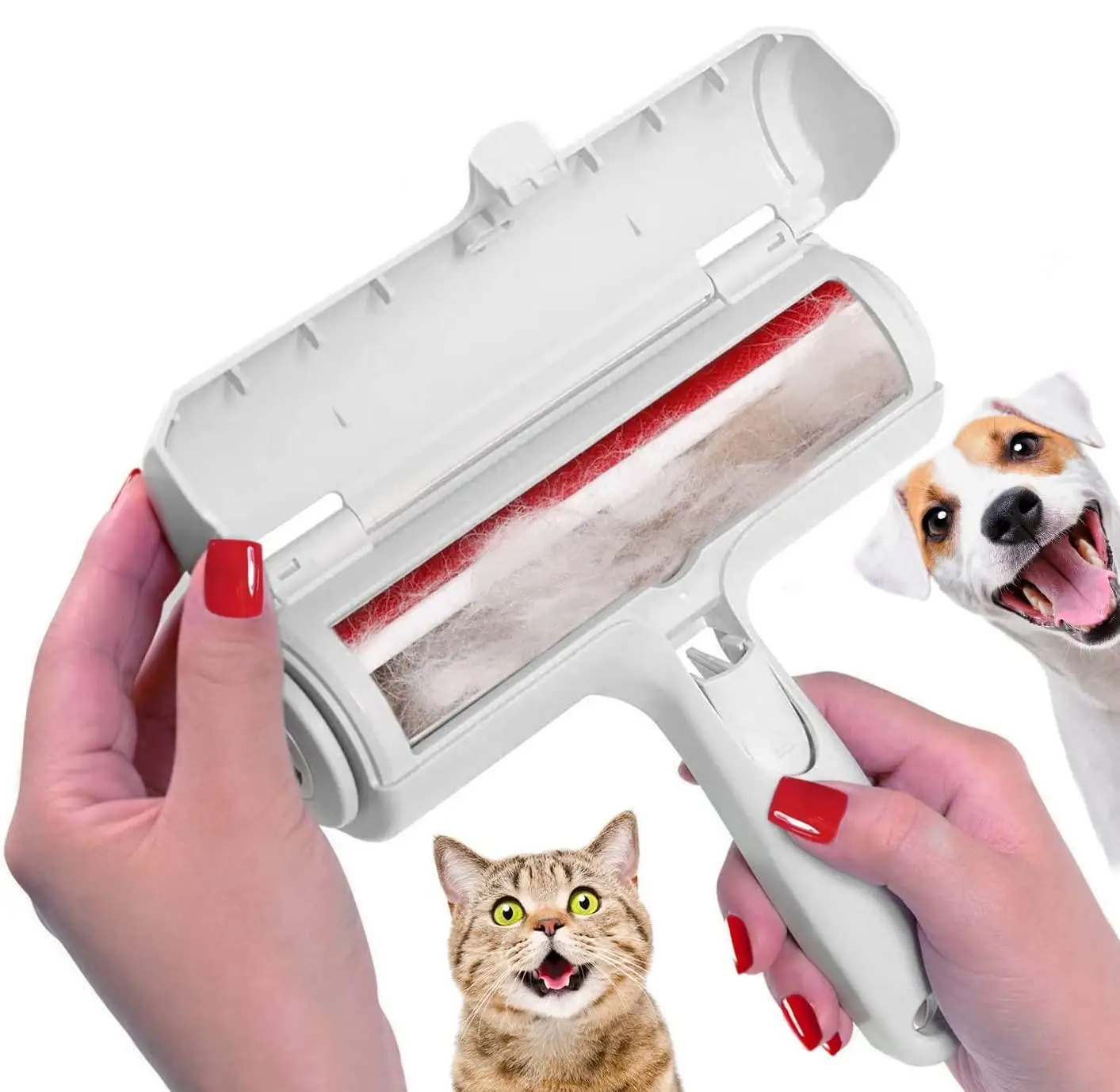
The mechanism inside a pet hair remover roller is simple and mechanical. Inside the head is a roller covered in fine, angled bristles or a directional nap. Push it forward and the bristles rake fur out of the fabric; the same angle then holds that fur so it cannot fall back out.
The collected fur travels into a chamber in the body. When the chamber fills, you open the base, lift out the pad of compacted hair and throw it away. Nothing is consumed, which is the entire point of a reusable pet hair remover roller compared with an adhesive one.
Because the bristles are directional, these rollers work in one direction only. Rolling back and forth like a paint roller undoes half the work, pushing collected hair back into the fabric. Short forward strokes, lifting between each one, are what makes the difference.
There is no power source and nothing to charge, so a pet hair remover roller can live beside the sofa permanently. That accessibility matters more than any feature, because the tool that is within arm’s reach is the one that actually gets used.
What makes a good pet hair remover roller
Four details separate a pet hair remover roller that collects a thick pad of fur from one that pushes it around.
Bristle quality and roller width
Fine, dense, angled bristles reach into the weave; coarse ones skate across the top. Width is a trade-off: a wide head covers a sofa quickly, while a narrower one gets into seams, stair edges and car footwells. For most homes a medium width is the practical choice.
The self-cleaning chamber
Check how the base opens and how easily the collected pad comes out. A good pet hair remover roller releases the fur in one piece into a bin without you picking at it. A chamber that needs fingers inside it every time is the reason some rollers get abandoned.
Handle, grip and balance
You will be leaning across a sofa and reaching up a stair carpet, so the handle should be comfortable at an angle rather than only straight on. A light body with the weight over the head lets you press evenly, which is what pulls embedded hair free.
Build quality that survives daily use
The pivot where the head meets the handle takes all the strain, so look for a solid joint rather than thin plastic. Nothing here should feel flimsy, because a pet hair remover roller gets used almost daily in a house with animals and lives a rough life between the sofa and the floor.
The WLD Store pick: Pet Hair Remover Roller
WLD Store lists this pet hair remover roller under Home and Kitchen as a self-cleaning fur remover for dogs and cats. These are the listing details.
- Product: Pet Hair Remover Roller, a self-cleaning dog and cat fur remover
- Brand: WLD
- Category: Home and Kitchen
- Design: a reusable roller with a self-cleaning base, so there are no refills and no sticky tape
- Surfaces: sofas, carpets, abayas and clothes
- SKU: WLD-KSA-0142-(DS-PETROLL)
- Availability: available across Saudi Arabia through secure checkout
The full listing is on the Pet Hair Remover Roller product page. The reusable design is the part worth weighing up: adhesive rollers cost a little every month forever, while a pet hair remover roller is bought once and emptied into a bin.
The technique that collects twice as much fur
Most people use these rollers wrongly on the first attempt. The method below takes a minute to learn and makes a visible difference.
- Roll in one direction only. Short forward strokes of twenty to thirty centimetres, lifting the head at the end of each one, rather than sweeping back and forth.
- Overlap each pass. Cover half of the previous stroke so nothing is missed along the edges where hair concentrates.
- Use moderate pressure. Enough to compress the fabric slightly. Too little skims the surface; too much stops the roller turning freely.
- Work the seams last. Cushion edges, piping and the gap at the back of a sofa hold the most fur, and doing them last stops you spreading it over cleaned areas.
- Empty before it packs solid. A full chamber stops collecting. Check it after each large surface rather than waiting for the roller to stop working.
- Finish clothes in a mirror. Shoulders, the back of a thobe or abaya and the backs of trouser legs are the areas you cannot see and everyone else can.
On heavily loaded fabric, two lighter passes collect more than one hard pass. The first lifts the surface layer, and the second reaches what was underneath it.
Which surfaces it suits, and which it does not
Sofa cushions, armchairs, fabric headboards, blankets and throws are the natural home for a roller like this, along with car seats, which collect more fur than most people realise.
Clothing is the other everyday use. A pet hair remover roller handles cotton, denim, wool coats, abayas and thobes well, and it is far faster than tape for a whole garment. Dark fabrics show the difference most.
Carpets and rugs work, though with a caveat: for a full room, a vacuum is the correct tool and the roller is for the edges, the stairs and the patch by the door where the dog lies. Nobody should be rolling an entire living-room carpet.
Be careful with delicate fabrics. Fine knits, loose weaves, silk and anything with pulled threads can snag on stiff bristles, so test a hidden corner first and use very light pressure. Leather and vinyl need a damp cloth instead, since there is no weave for a pet hair remover roller to grip.
Shedding seasons and how to plan for them
Most cats and dogs shed year-round indoors, with heavier periods as daylight and temperature change. Indoor animals in air-conditioned homes shed more evenly through the year, which surprises new owners who expect two clear seasons.
During a heavy period, the honest approach is to increase the frequency rather than the effort. A quick pass over the sofa each evening keeps a household ahead of it; one large session per week never quite catches up.
Brushing the animal itself is the highest-value habit by far. Ten minutes of grooming removes hair before it reaches the furniture, and it means a pet hair remover roller has far less to deal with. A deshedding comb during a heavy shed is the single best purchase a fur-covered household can make.
It is also worth protecting the surfaces that matter. A washable throw over the favourite cushion, and a towel in the car seat the dog uses, means the fur lands on something that goes in a washing machine.
Pet hair remover roller versus tape rollers and vacuums
Adhesive lint rollers are excellent on a small area of smooth fabric, and there is a good reason people keep one in a drawer. They also run out, cost money continuously, lose their grip in humidity, and are useless on a whole sofa.
Vacuums are the right tool for floors, large carpets and anything with volume, since suction lifts grit as well as fur. What they handle badly is upholstery with woven-in undercoat, and dragging a vacuum out for one cushion is why the cushion stays furry.
Rubber brushes and damp gloves work well and cost almost nothing, but they gather hair into a loose pile you then have to pick up, which is exactly the step a self-cleaning chamber removes.
The realistic setup for a pet household is all three: a vacuum for floors, a pet hair remover roller for upholstery and clothes, and a small tape roller in the car or handbag for emergencies. They are not competing tools; they cover different ground.
Care and maintenance
- After each session: open the base and empty the collected pad straight into a bin. Do not let it compress for days, as packed fur is much harder to remove.
- Weekly: check the bristles for wound-on long hairs and threads, and pull them free with fingers or blunt tweezers.
- Monthly: wipe the head and the inside of the chamber with a barely damp cloth, then let it dry fully before closing.
- Occasionally: check that the roller still spins freely, since a stiff roller usually means hair has wrapped around the axle.
- Always: store it dry and out of direct sun, and never soak it, because water in the mechanism is the fastest way to ruin a pet hair remover roller.
Common problems and quick fixes
- It stops collecting. The chamber is full, or hair has wrapped the axle. Empty it, clear the roller, and it will work again immediately.
- Fur is being pushed around, not lifted. You are rolling both ways. Use one-directional forward strokes and lift at the end of each.
- It snags a knit. Too much pressure on a delicate weave. Lighten the pressure or switch to a rubber brush for that garment.
- The pad will not come out cleanly. It has been left too long and compacted. Empty more often, and lift the pad from one corner rather than the middle.
Who probably does not need one
Homes with leather or vinyl furniture and hard floors can manage with a damp microfibre cloth, which lifts fur from smooth surfaces faster than any roller.
Households with a short-haired, low-shedding animal and a robot vacuum running daily may find the sofa never gets bad enough to need a dedicated tool. A tape roller in a drawer is enough in that situation.
And if the real problem is fur deep in wall-to-wall carpet across a whole house, the answer is a proper vacuum with a turbo brush. A pet hair remover roller is for upholstery, clothes and edges, and expecting it to replace a vacuum leads to disappointment on both sides.
Buying checklist
- Are the bristles fine and angled enough to reach into a weave rather than skate over it?
- Does the base open easily and release the collected pad in one piece?
- Is the head the right width for my main surfaces, whether that is a large sofa or car seats?
- Is the joint between head and handle solid enough for daily use?
- Do I have delicate fabrics that will need a gentler tool alongside it?
Other Home and Kitchen picks at WLD Store
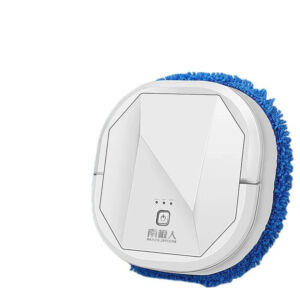
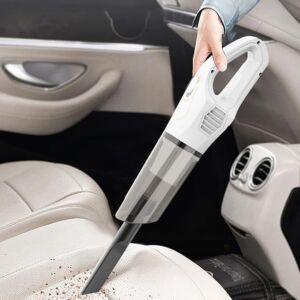
These three sit in the same part of the catalogue for households doing a general clean-up.

Frequently asked questions about the pet hair remover roller
Does a pet hair remover roller need refills or batteries?
No. A reusable roller has no adhesive sheets and no power source. The fur collects in a chamber in the base, and you empty it into a bin when it fills, which is the whole advantage over tape.
Will it damage my sofa or clothes?
On ordinary upholstery, denim, cotton and wool it is safe with normal pressure. Fine knits, silk and loose weaves can snag, so test a hidden area first and use a light touch on anything delicate.
How often should I use it?
A quick pass over the main sofa each evening is easier than a long session once a week, especially during a heavy shed. Two minutes daily keeps a room presentable in a way that a weekly deep clean does not.
Can I use it on an abaya or a thobe?
Yes, and dark garments are where the difference is most visible. Lay the garment flat, roll in one direction with light pressure, and check the shoulders and the back, which collect the most fur and are the hardest to see.
Does it work on carpets?
It works on edges, stairs, rugs and the patch where an animal sleeps. For a whole room, a vacuum with a brush head is faster and lifts grit as well as hair, so use the two tools for different jobs.
How long does a pet hair remover roller last?
With a monthly clean and hair cleared from the axle, there is very little to wear out. The parts that eventually fail are the bristles, if they are flattened by heavy pressure, and the hinge on the base, so avoid forcing either.
Fur and the laundry: what to do before and after washing
Washing furry clothes without preparation is how fur ends up spread across an entire load. Water swells fibres and loosens hair, and that loose hair then redistributes itself onto everything else in the drum.
- Roll the garment before it goes in. Thirty seconds with a pet hair remover roller removes most of the surface layer, and that is the layer that would otherwise migrate.
- Shake items out hard. Do it outdoors or over a bin. A firm shake dislodges more than people expect, especially from denim and heavy cotton.
- Tumble dry for ten minutes before washing, if the fabric allows. Dry heat and movement drive a surprising amount of hair straight into the lint filter.
- Do not overload the drum. Clothes need room to move for hair to be released and carried away by the water rather than pressed back in.
- Clean the lint filter every load. A blocked filter stops trapping fur, which is why the problem often returns after a few weeks of good results.
- Wipe the drum between loads. A damp cloth around the rubber seal catches the hair that would otherwise attach itself to the next wash.
After drying, one more short pass finishes the job. A garment that came out of the machine looking clean will often still hold hair along the seams and inside cuffs, and that is exactly where a pet hair remover roller earns its place.
The five-minute routine before guests arrive
Every household with animals needs a fast version of the clean-up, and the order matters more than the effort.
Start with the cushions people will sit on, rolling the seat and then the back in one direction. Move to the arms, which collect fur from hands and from an animal jumping up. Do the seams last, then lift the loose throw and shake it outside rather than trying to clean it in place.
Finish with the entrance: the mat by the door and the chair nearest it usually carry the most visible fur, and they are the first things anyone sees. Empty the pet hair remover roller before you start, because a chamber that fills halfway through the sofa is what turns five minutes into fifteen.
Living with animals means accepting a certain amount of fur and getting efficient about the rest. Groom the animal, protect the favourite cushion with a washable throw, keep a roller within reach of the sofa, and use short forward strokes rather than scrubbing. You can view the listing on the Pet Hair Remover Roller page or browse the wider range in the Home & Kitchen section. If you have ever wondered why fur clings so stubbornly to synthetic fabric, the article on static electricity on Wikipedia explains the physics behind it.



Add comment