A mini vacuum cleaner is not a shrunken version of the machine in your hall cupboard, and treating it as one is the fastest way to be disappointed. It is a precision tool for the small, awkward messes that a full-size vacuum handles badly or cannot reach at all: crumbs between keyboard keys, dust in a car air vent, pencil shavings in a drawer, cat hair along a dashboard seam.
This guide explains what the category is genuinely good at, how to judge suction and attachments, what USB power really means for runtime, and where a handheld unit belongs in a cleaning routine. There is a maintenance schedule, a troubleshooting list, a buying checklist, six common questions and a frank section on what this product cannot do.
Why a mini vacuum cleaner solves a problem big vacuums cannot
Household vacuums are optimised for floor area. Wide heads, long hoses and high airflow are exactly right for a rug and exactly wrong for a laptop keyboard. Point a full-size hose at a desk and you either knock things over, scratch a surface, or spend five minutes wrestling a metre of tubing for a job that takes twenty seconds by hand.
The gap that a mini vacuum cleaner fills is the space between a cloth and a real vacuum. A cloth pushes dust around and cannot lift anything from a crevice. A full machine is too blunt. A small handheld sits in the middle, with enough suction to lift crumbs and grit but a nozzle narrow enough to get into the gap between a car seat and the centre console.
The second thing worth understanding is frequency. Small messes accumulate daily; nobody drags out a floor vacuum daily. Because a mini vacuum cleaner lives in a desk drawer or a glovebox, it gets used when the mess appears rather than at the weekend. Over a month that changes how a workspace actually looks, and it is the real argument for owning one.
The third is the surfaces involved. Electronics, upholstery, dashboards and drawer liners all reward a gentle, targeted approach. A brush attachment on a small unit agitates dust without dragging a heavy head across a screen bezel or a leather trim panel. That is a different job from cleaning a floor, and it deserves a different tool.
What makes a good mini vacuum cleaner
Marketing for this category leans heavily on one number, and that number is rarely the one that matters. Judge a mini vacuum cleaner on four fronts instead.
Suction that suits the job
You do not need floor-vacuum suction here, and chasing it costs you noise and battery. What you want is consistent airflow through a narrow opening, because narrowing the aperture is what converts modest power into useful lifting force at the tip. A well-designed mini vacuum cleaner will pick up crumbs, sand, ash, hair and paper dust reliably. It will not pull embedded grit out of deep carpet pile, and no honest listing claims otherwise. If you need that, you need a different machine.
Attachments that earn their place
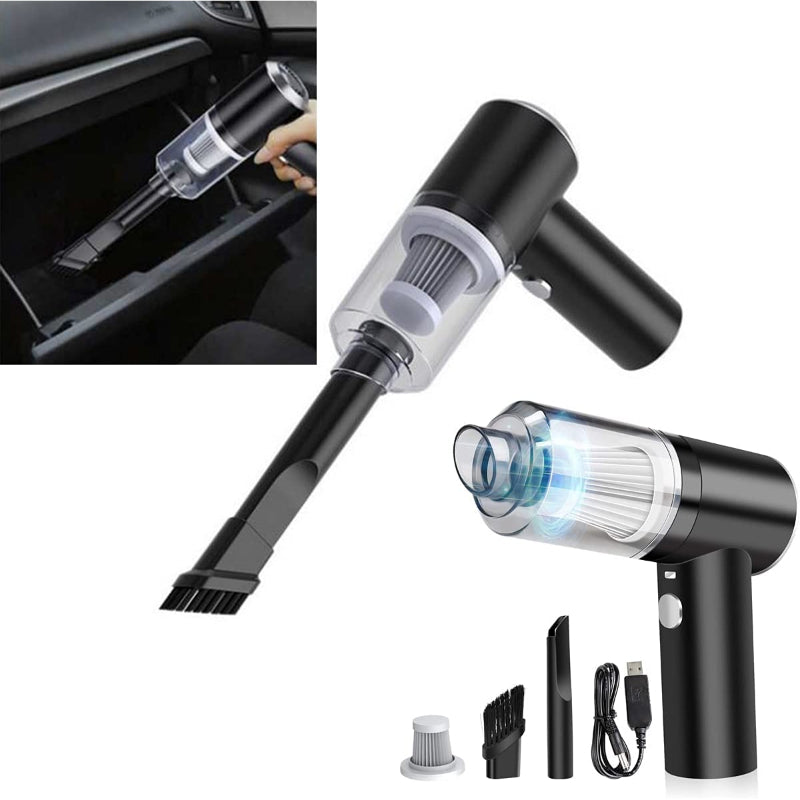
Three attachments is the sweet spot, and each has a distinct job. A flat nozzle concentrates airflow for general pickup on open surfaces. A soft brush loosens dust so airflow can carry it away, which is what you want on keyboards, vents and speaker grilles. A crevice tool reaches into channels a finger cannot. Anything beyond those three tends to sit unused in the box. Check that they clip on firmly, because an attachment that wobbles leaks air and kills performance.
Power source and realistic runtime
USB power is the norm in this category and it is genuinely convenient, since the same cable that charges your phone keeps the unit running. It also sets expectations: a compact device draws modest power, so sessions are short and targeted rather than long. If you want the background on the connector standard itself, the Wikipedia article on USB covers it well. Plan to use a mini vacuum cleaner in bursts of a few minutes, which is all most desk and car jobs need.
Noise, weight and one-handed handling
A quiet unit gets used in a shared office; a screaming one gets left in the drawer. Weight matters for the same reason. Anything under half a kilogram can be held at an odd angle, under a desk or across a passenger seat, without your wrist complaining. A mini vacuum cleaner that is light and quiet is one you reach for without thinking, and that habit is where the value lives.
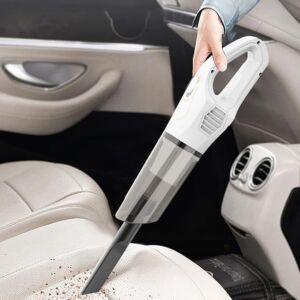
The WLD Store pick: Portable 3 in 1 Mini Vacuum Cleaner
Here is what the product record confirms, with nothing added.
- Product: Portable 3 in 1 Mini Vacuum Cleaner, a USB desk cleaner
- Category: Automotive, and equally at home on a desk
- Brand: WLD
- SKU: WLD-KSA-0129-(KD-016)
- Attachments: three, a flat nozzle, a brush and a crevice tool
- Power: USB powered, described as whisper-quiet in use
- Weight: 400g
- Intended surfaces: keyboards, desks, car interiors and tight spaces
- Availability: available across Saudi Arabia with secure checkout
Photos and current options are on the Portable 3 in 1 Mini Vacuum Cleaner product page. Prices are left out of this guide on purpose, since listings change and an out-of-date figure is worse than none. The 400g figure is worth pausing on: that is roughly the weight of a full water bottle, light enough to hold steadily at arm’s length.
Nine easy ways to get more from a mini vacuum cleaner
- Match the attachment before you switch on. Swapping mid-job wastes battery and usually means you started with the wrong tool.
- Brush first on textured surfaces. Loosen the dust, then let the airflow lift it. Suction alone slides over fabric weave.
- Work top to bottom. Vents, then dashboard, then seats, then footwell. Anything you dislodge falls into territory you have not cleaned yet.
- Keep the tip close but not sealed. Pressing flat against a surface blocks airflow entirely. A two-millimetre gap moves far more debris.
- Use short passes, not long sweeps. Overlapping strokes of ten centimetres clear a keyboard better than one continuous drag.
- Tilt a keyboard before you start. Gravity does half the work; a mini vacuum cleaner does the other half.
- Empty the container early. A canister at half capacity already draws less. Do not wait until it is packed.
- Give it a rest between rooms. Small motors run warm. A minute of downtime costs nothing and extends the life of the unit.
- Store it where the mess is. A desk drawer or a glovebox, not a cupboard in another room.
Where a mini vacuum cleaner actually shines
At a desk. Keyboards are the classic case. Crumbs, hair and eraser dust settle between keycaps where no cloth reaches. A soft brush plus steady airflow clears them in under a minute. The same goes for the ledge behind a monitor stand and the cable channel at the back of a desk.
In a car. Sand is the local reality, and it collects in seat rails, cup holder wells and door pockets. A crevice tool follows those channels precisely. A mini vacuum cleaner will not replace a proper valet before a long trip, but it keeps the interior presentable between them, which is usually what people want.
Around hobbies and small workspaces. Sewing corners, model-making benches, craft tables and study desks all produce fine debris in small volumes. So do drawers full of stationery. This is exactly the volume a compact canister is sized for.
On upholstered edges and stairs of a single flight. Sofa seams, the join between cushion and frame, and the corners of an armchair are awkward for a floor head and easy for a handheld with a narrow tip.
Care and maintenance
Nothing degrades performance in this category faster than a neglected filter. Airflow is the whole mechanism, and a clogged filter strangles it long before the motor gives any sign of trouble.
After each use. Empty the canister. Tap out the loose dust rather than digging with a finger, and give the nozzle a quick look for hair wrapped around the opening.
Every few uses. Remove the filter and tap it clean over a bin. If the filter is washable, rinse it in cool water and let it dry completely, which usually means overnight. Refitting a damp filter is the most common way people ruin a small vacuum, because moisture plus dust equals a solid cake.
Monthly. Wipe the attachments, check the USB cable for fraying at the strain relief, and inspect the canister seal. A seal that has hardened lets air bypass the filter, and a mini vacuum cleaner with a leaking seal feels weak no matter how clean everything else is.
Two things to avoid entirely: liquids and ash that is still warm. This is a dry vacuum. Water, damp coffee grounds or fresh ash will clog the filter, and in the case of hot ash create a real fire risk inside the canister.
Common problems and quick fixes
- Suction has faded over a few weeks. The filter is the first suspect, the canister the second. Clean both before assuming the motor is failing.
- It picks up dust but not crumbs. Usually the wrong attachment. The flat nozzle lifts larger debris; the brush is for fine dust and textured surfaces.
- Debris blows back out. The canister is full, or the filter is seated incorrectly and air is escaping the wrong way. Reseat it and check it clicks home.
- It runs but sounds strained. Something is caught in the nozzle. Switch it off, disconnect the power, and clear the blockage before running it again.
- The unit gets warm quickly. Normal for continuous use in a small body. Work in short bursts and let it cool. If it also loses power, clean the filter, which is usually the underlying cause.
Buying checklist: five questions to ask
- What will I clean most often? If the honest answer is floors, buy a floor vacuum. If it is desks, drawers and car interiors, a mini vacuum cleaner is the right tool.
- How many attachments will I really use? Three well-chosen tools beat six mediocre ones.
- Is the filter accessible and cleanable? If you cannot easily remove it, suction will decline permanently within months.
- How does it get its power? A USB unit is easy to keep running near a desk or a car port; plan around that rather than expecting long cordless sessions.
- Where will it live? A tool stored beside the mess gets used; one stored in a cupboard does not.
Who a mini vacuum cleaner is not for
If your goal is to clean an apartment, this is not the purchase. Canister volume alone rules it out: you would be emptying it every few minutes and the job would take an afternoon. Buy a proper vacuum and, if you like, add a handheld later for detail work.
It is also the wrong tool for anyone dealing with construction dust, large volumes of pet hair across whole rooms, or wet spills. Fine building dust clogs small filters almost immediately, and liquid does not belong in a dry unit at all. Households with heavy allergy needs should look at machines with sealed filtration systems rather than expect a compact device to manage airborne particles.
Finally, if you want one machine to do everything, you will find a mini vacuum cleaner frustrating. It is deliberately specialised, and its value comes from being small, quiet and instantly available rather than from being powerful.
Mini vacuum cleaner versus a full-size machine
A full-size vacuum wins on capacity, filtration and raw airflow, and it will always clean a floor faster. Its weaknesses are setup time, bulk and clumsiness at close range. Nobody carries one to a desk to deal with a spilled biscuit.
A handheld inverts that. It has a small canister and modest power, but it is in your hand in three seconds and it fits where a floor head cannot. The general engineering behind both is covered on the Wikipedia vacuum cleaner page if you want the wider context.
In practice most homes want both, and the compact unit gets used more often even though it does less. Think of a mini vacuum cleaner the way you think of a paring knife next to a chef’s knife: smaller, sharper in its niche, and reached for constantly.
Mini vacuum cleaner or compressed air for electronics?
Canned air is the other common answer to a dusty keyboard, and the two work in opposite directions. Compressed air pushes debris outward, which clears a gap instantly but relocates the dust rather than removing it. In a closed office that means it lands on the next surface along, and in a laptop it can drive particles further into the chassis instead of out of it.
A mini vacuum cleaner pulls in the other direction. Debris ends up in a canister you can empty, which is why it suits an enclosed workspace far better. The trade is speed: a burst of air is faster on a wide open surface, while suction needs a few deliberate passes.
The practical answer is to lead with suction and keep air as a follow-up. Brush and vacuum first, then use a short burst of air only for a gap the nozzle genuinely cannot enter. Doing it the other way round means vacuuming twice.
A simple weekly routine for a desk and a car
Twice a week, at the desk. Two minutes with the brush across the keyboard, the monitor base and the cable channel. Little enough that it never becomes a task, frequent enough that dust never builds a film.
Once a week, in the car. Crevice tool along the seat rails, cup holder wells and door pockets. Sand is relentless, and a mini vacuum cleaner kept in the glovebox turns a monthly chore into a five-minute habit.
Once a month, everywhere else. Drawers, the space behind a desk, and any hobby surface that produces fine debris. Empty the canister and clean the filter afterwards, since a monthly deep pass is exactly the session that fills both. A mini vacuum cleaner rewards a routine far more than it rewards occasional heroic effort.
Other picks at WLD Store
These three sit in the same accessories family and pair naturally with a compact cleaner.

Frequently asked questions about a mini vacuum cleaner
Is a mini vacuum cleaner powerful enough to be useful?
For the jobs it is designed for, yes. Crumbs, dust, sand, hair and paper debris on hard surfaces and shallow fabric are well within reach. Deep carpet pile and heavy household cleaning are not, and that is a design choice rather than a fault.
Can I use it on a laptop keyboard safely?
Yes, with the brush attachment and a light touch. Keep the tip just off the keys rather than pressing down, and switch the laptop off first so a dislodged crumb does not land on a live keystroke. Avoid forcing anything under a keycap.
Does USB power mean it works while charging?
USB-powered handhelds in this class run from the cable, which is why the design stays light and compact. The practical effect is that you work near a port, a laptop, a power bank or a car socket, in short focused sessions rather than long ones.
How often should the filter be cleaned?
Every few uses for light desk work, and immediately after any dusty job such as a car footwell. Filter neglect is the single biggest cause of a mini vacuum cleaner feeling weaker than it did when new.
Can it pick up liquid or wet material?
No. This is a dry vacuum. Water, damp grounds and wet crumbs will clog the filter and can damage the motor. Blot liquids with a cloth first and let the area dry completely before vacuuming.
Is 400g light enough to use one-handed for long?
Comfortably. At that weight most people can work at an awkward angle, under a desk or across a car seat, without fatigue. Since sessions are typically a few minutes, weight rarely becomes the limiting factor.
The case for a mini vacuum cleaner is not that it replaces anything. It is that a small, quiet, always-available tool changes how often small messes get dealt with, and that is worth more day to day than raw suction figures suggest. Choose one with three sensible attachments and a filter you can actually reach, then keep it where the crumbs are.
You can see the model on its product page, or browse the rest of the range in the Automotive section.




Add comment