A good kitchen peeler set is one of those quiet upgrades that changes how a kitchen feels. Peeling is not glamorous work, but it sits at the front of almost every meal that involves vegetables or fruit, and a dull or awkward tool turns five minutes into fifteen. This guide walks through what actually matters when you choose a peeler, how to use one safely, how to keep it sharp and clean, and which questions are worth asking before you buy. It also covers the copper-plated set stocked at WLD Store, plus a few related kitchen picks worth a look.
Everything here applies whether you cook every night or only assemble the occasional salad. The aim is a practical reference you can come back to, not a sales pitch, so treat the kitchen peeler set sections as a checklist rather than a recommendation you have to follow.
Why a kitchen peeler set matters more than you expect
Most home cooks own one peeler, bought years ago, and quietly put up with it. The blade has gone soft, the handle is slippery when wet, and peeling a butternut squash feels like a wrestling match. Because the tool is cheap, nobody thinks to replace it. That is exactly why a fresh kitchen peeler set is such a noticeable improvement: the baseline most people compare it to is a worn-out tool.
The second reason is waste. A sharp blade skims off a thin ribbon of skin. A dull blade digs, tears, and takes a layer of flesh with it. Over a year of cooking, that difference adds up to real food thrown in the trash, which is a quiet argument for keeping a working kitchen peeler set rather than one tired tool. Peeling with a paring knife is worse still, since even a careful hand removes more than a purpose-built blade does.
Safety is the third reason, and it is underrated. People reach for a knife when the peeler is not up to the job, and knives slip on curved, wet produce. A tool that bites properly on the first pass keeps your other hand out of trouble. A kitchen peeler set with more than one blade profile means you are less likely to force the wrong tool through a stubborn skin.
Finally, there is speed. Prep is the part of cooking most people say they dislike, and peeling is a big share of it. Shaving fifteen or twenty seconds off each carrot does not sound like much until you are doing a sheet pan of roasted vegetables on a weeknight.
What makes a good kitchen peeler set
Peelers look almost identical in a product photo, so it helps to know which details separate a kitchen peeler set you keep for years from one that ends up in the back of a drawer. Four things do most of the work: the blade, the handle, the materials, and whether the pieces genuinely cover different jobs.
Blade type and how it cuts
Two shapes dominate. A straight or swivel peeler has the blade in line with the handle and is pulled down the length of the food, which suits long items like carrots and parsnips. A Y-peeler holds the blade crossways at the top, like a razor, and is drawn towards you in short strokes. Y-shapes tend to feel more controlled on round produce such as apples, potatoes and squash. Many cooks eventually want both, which is one of the arguments for buying a kitchen peeler set instead of a single tool.
Whichever shape you choose, the blade should float slightly rather than sit rigid. A swiveling blade follows the bumps and dips of real vegetables, so it keeps contact instead of skipping. Serrated blades are a third option and are worth knowing about: the tiny teeth grip soft, waxy skins like tomatoes and peaches that a plain blade slides straight off. If a kitchen peeler set includes one, it will quickly become the piece you reach for in summer.
Handle comfort and grip
Handle shape decides whether a peeler is pleasant or punishing over a big batch. Look for something wide enough that your fingers are not pinched into a single point, with a surface that stays grippy when your hands are wet. Peeling is done with damp hands almost by definition, so a handle that turns slick is a genuine hazard.
If anyone in your home has arthritis or limited grip strength, favor the thickest handle you can find and the Y-shape, which lets you push with your whole hand rather than pinching. A well-chosen kitchen peeler set can make prep possible again for someone who had given it up.
Materials and finish
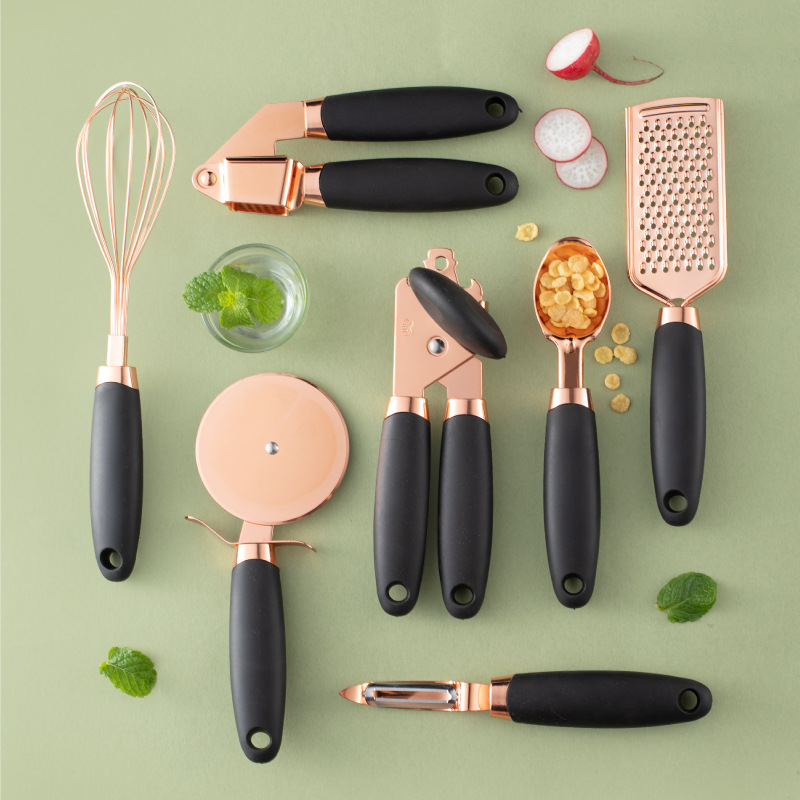
Blades are almost always steel, because it takes and holds an edge. Handles vary far more widely, from molded plastic to metal to coated finishes. A copper-plated finish, like the one on the WLD Store set below, gives the tools a warm metallic look that reads more like a display piece than a drawer filler. If you keep utensils in a crock on the counter, appearance is a fair thing to weigh when comparing one kitchen peeler set against another.
What matters underneath the finish is that the join between blade and handle is tight. Water works its way into loose seams, and that is where discoloration and wobble start. Give any new peeler a firm twist: there should be no play at all where the two parts meet. For background on why steel is the standard choice for blades that meet food and water daily, the overview of stainless steel on Wikipedia is a clear read.
What the set actually includes
A set is only useful if the pieces do different things. Two near-identical peelers in different colors is a worse buy than one peeler and one julienne blade. Before ordering, look at the product photos and ask what job each piece is for. The best kitchen peeler set covers a straight pull, a crossways cut, and ideally something for fine shreds or garnish work.
Storage is part of this too. Loose blades in a drawer are the fastest way to lose an edge and to catch a finger while rummaging. Sets that nest together, hang, or sit in a small block stay sharper and are safer to reach for.
The WLD Store pick: Copper-Plated Kitchen Peeler Gadget Set
If you want the short version, here is what WLD Store lists for this particular kitchen peeler set. These are the details taken from the product listing itself, with nothing added or assumed.
- Product: Copper-Plated Kitchen Peeler Gadget Set
- Brand: WLD
- Category: Home & Kitchen, filed under Kitchen Tools
- In short: a handy copper-plated peeler set built to make prep quick and clean
- Availability: available across the USA
- SKU: WLD-US-0010-(CJ-CJCF1025484)
Full photographs, current options and secure checkout are on the Copper-Plated Kitchen Peeler Gadget Set product page. Check the listing images for the exact pieces included before you order, since that is the detail that decides whether a kitchen peeler set suits the way you actually cook.
How to get the best from your kitchen peeler set
Technique matters more with peelers than with almost any other kitchen tool, mostly because nobody is ever taught it. A few habits make an immediate difference.
- Wash and dry the produce first. A wet, muddy skin clogs the blade slot and makes the tool skid. Dry produce peels faster and more cleanly.
- Flatten one side. Slice a thin sliver off a round vegetable so it sits still on the board instead of rolling under the blade.
- Peel away from your body. With a Y-peeler, brace the food against the board and draw the blade towards the board, not towards your palm.
- Let the blade do the work. Pressing harder does not peel deeper, it just tears. If you need force, the blade is dull or you are using the wrong piece from your kitchen peeler set.
- Turn as you go. Rotate the item a strip at a time rather than trying to chase the last patches at the end.
- Peel over a bowl or a folded sheet of paper. Skins land in one place and the countertop stays clear.
There is also a small pile of tricks a kitchen peeler set unlocks beyond peeling. A steady hand can shave hard cheese into ribbons, cut chocolate curls for a cake, make cucumber ribbons for a salad, or strip thin lengths of zucchini to use in place of pasta. Butter shavings for a bread board come off the same way, straight from a cold block.
Asparagus is the classic case for a peeler people forget. Running the blade down the lower third of each spear removes the woody outer layer and saves the part most cooks snap off and discard. The same logic applies to broccoli stems, which are perfectly good once the tough skin is off.
Care and maintenance
Peelers are simple, so care is simple, but the two or three things that shorten their life are all avoidable.
Wash by hand, straight after use, in warm water with a little detergent. Dishwashers are hard on small blades: the heat, the harsh detergent and the knocking against other items all dull an edge faster than anything you will do while cooking. A soft brush gets into the blade slot, which is where fibers from carrots and potatoes collect and dry hard.
Dry immediately and completely. Water sitting in the join between blade and handle is what causes spotting and, eventually, a loose fit. This is the single most useful habit for any kitchen peeler set with a plated or coated finish, since moisture trapped under a fitting has nowhere to go.
Store the pieces so the blades are not banging against other metal. A drawer insert, a magnetic strip, a small stand or the original packaging all work. If you keep them loose, at least give them their own corner of the drawer.
Do not try to sharpen a peeler on a knife steel. The blade is thin, the bevel is tiny, and a steel will usually roll the edge over rather than restore it. Peelers are consumable: when a blade stops biting on a firm potato skin, replace that piece. Treat a kitchen peeler set the way you treat a razor rather than the way you treat a chef’s knife.
Common problems and quick fixes
Nearly every complaint about a kitchen peeler set comes down to one of four things, and none of them means the tool is faulty.
- The blade skips instead of cutting. Usually a wet or waxy skin. Dry the produce, and use a serrated blade for tomatoes, peaches and similar soft, slippery items.
- Peel clogs in the slot. Rinse under a running faucet mid-batch and flick the tool dry. A quick brush through the slot before the fibers set solves it for good.
- You are taking off too much flesh. Almost always too much downward pressure. Ease off and take a second light pass instead of one heavy one.
- Spots or dullness on the finish. Trapped moisture. Dry the whole tool with a cloth rather than leaving it on a rack, and keep the set out of the dishwasher.
Buying checklist for a kitchen peeler set
- Do the pieces genuinely do different jobs, or is it the same peeler twice?
- Is at least one blade a Y-shape for round produce, and one a straight pull for long produce?
- Will the handle still be grippy when your hands are wet?
- Is there a sensible way to store the pieces so the blades are protected?
- Does anyone in the household need a thicker handle or a lighter tool for grip reasons?
If a kitchen peeler set clears all five, it will earn its place on the counter. If it fails the first two, you are really buying one useful tool and some spares you will never reach for.
What to peel, and what to leave alone
Half of getting value from a kitchen peeler set is knowing when not to use it. Skin is not automatically waste, and peeling by reflex costs you both nutrition and texture.
Leave the skin on new potatoes, carrots that have been scrubbed properly, zucchini, eggplants and most apples destined for a crumble. In each case the skin holds fiber and flavour, and it helps the pieces keep their shape through cooking. A firm scrub with a brush is usually all that is needed.
Peel when the skin is genuinely tough, waxy or bitter: butternut squash, celeriac, rutabaga, older carrots that have gone woody, ginger, and any citrus you are zesting rather than juicing. Store-bought apples and cucumbers are often waxed for transport, and a quick pass with a peeler removes that coating along with the skin.
Then there is the middle ground, where it comes down to the dish. Mashed potatoes are smoother peeled and more rustic unpeeled. Roasted potatoes crisp beautifully either way. Soup blends fine with skins on if your blender is strong enough. None of this is a rule so much as a habit worth questioning, and a kitchen peeler set that lives within reach makes it easy to decide dish by dish rather than out of routine.
Who a kitchen peeler set is not for
It is worth being honest about the limits. If you buy pre-cut vegetables, cook mostly from tins and frozen packs, or your idea of prep is opening a bag of salad, a multi-piece set will sit unused. One decent peeler is plenty.
Equally, a kitchen peeler set is not a substitute for a mandoline or a food processor. It shaves and it strips, but it will not slice two pounds of potatoes into even rounds in two minutes. If that is the job you keep running into, buy for that job instead.
And if your kitchen storage is already overflowing, think about where the pieces will live before you order. A tool you cannot find in the drawer is a tool you do not own.
Other Home & Kitchen and lifestyle picks at WLD Store
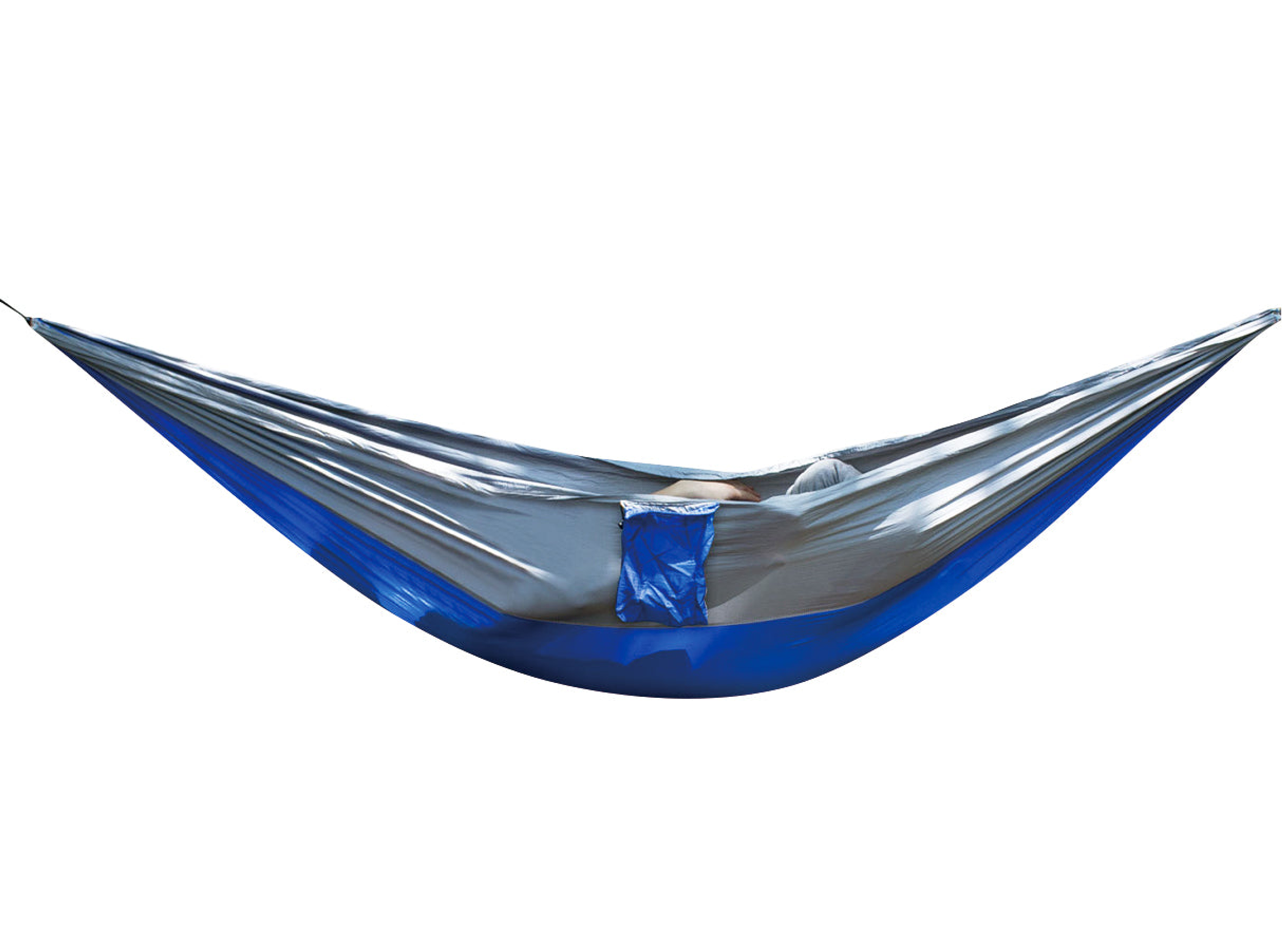
If you are already browsing after sorting out a kitchen peeler set, these three sit nearby in the WLD Store range and cover very different corners of home life.


Frequently asked questions about a kitchen peeler set
Is a kitchen peeler set better than one good peeler?
It depends entirely on what you cook. If your vegetable rotation is carrots, potatoes and the occasional apple, one well-made peeler covers you. If you regularly deal with squash, ginger, asparagus and soft-skinned fruit, having two or three blade profiles saves real time and frustration. Think about the last month of cooking rather than an imagined future one.
Can a kitchen peeler set go in the dishwasher?
You can, but you should not make a habit of it. Dishwasher heat and detergent are aggressive on thin blades, and small tools knock against everything else in the basket. Hand washing takes about ten seconds per piece and roughly doubles the useful life of the edge. If a piece from your kitchen peeler set does go through the machine, dry it by hand afterwards rather than leaving it to drip.
How do I know when a peeler needs replacing?
Test it on a firm, raw potato. A blade in good shape catches immediately and lifts a continuous ribbon. If it slides before it bites, or the ribbon keeps breaking, that piece is done. Peelers are not really sharpenable at home, so replacement is the normal answer rather than a failure on your part.
What is the difference between a Y-peeler and a straight peeler?
A straight peeler has the blade in line with the handle and is pulled along the length of the food, which suits carrots, parsnips and cucumbers. A Y-peeler holds the blade across the top and is drawn in short strokes, which gives more control on round items like potatoes and apples. Most people find one shape suits their hand better, which is why a kitchen peeler set with both is a safe gift.
Is a copper-plated finish just for looks?
The finish is mainly about appearance, and there is nothing wrong with that. Utensils that live on the counter rather than in a drawer get judged on how they look, and a warm metallic finish sits well with wood and stone. What you should still check is the build underneath: a tight blade-to-handle join and a comfortable grip matter far more to daily use than the color.
Are peelers safe for children to use?
Older children can use a Y-peeler under supervision, and many find it easier than a knife because the cutting edge is short and shielded by the frame. Set the rules first: peel away from the body, keep the free hand behind the blade, and work over a board rather than over a hand. Store the set out of reach of younger children the same way you would a knife.
A kitchen peeler set is a small purchase that quietly improves every meal you prep, and the only real mistake is keeping a blunt tool for a decade out of habit. If you want to see the copper-plated option in detail, the product page has the full listing, and you can browse the rest of the range in the Kitchen Tools section. Take five minutes to test your current peeler on a potato first, though. If it bites cleanly, keep it. If it slips, you already know what to do.





Add comment