A hands-free baby feeding bottle is designed around a simple observation: babies spend a lot of their day feeding, and parents only have two hands. Bottles in this category use a soft internal straw so milk reaches the teat whatever angle the bottle is held at, which changes how feeding works in a car seat, a pram or a bouncer, and later on when a baby wants to hold the bottle themselves. This guide explains what to look for, how to use one safely, and how to keep it genuinely clean, alongside the 240ml bottle stocked at WLD Store.
What a hands-free baby feeding bottle actually changes
A conventional bottle only feeds when it is tipped far enough for milk to cover the teat. That sounds trivial until you are holding a bottle at a precise angle for twenty minutes at three in the morning, or trying to keep it tilted while a baby squirms in a reclined seat. A straw-fed design removes the angle requirement, so the milk keeps coming whether the bottle is upright, sideways or somewhere in between.
The second change is about the baby rather than the parent. Somewhere around the middle of the first year most babies start grabbing at the bottle, and their grip is far better than their sense of geometry. A hands-free baby feeding bottle tolerates the odd angles a small child will hold it at, which makes the transition to self-feeding less frustrating for everyone.
Travel is the third case. Feeding in a moving car, on a plane or in a carrier is awkward with any bottle, and the constant readjustment is what makes it awkward. A hands-free baby feeding bottle removes one of the two things you are managing at once.
What it does not change is supervision. The name describes the way the bottle feeds, not permission to leave a baby alone with it. That distinction matters and we come back to it below.
Night feeds are where parents notice it most. Holding a bottle at a fixed angle in the dark, half asleep, is a small ordeal repeated several times a night, and a hands-free baby feeding bottle takes away the part where you keep checking whether the teat is still covered.
What to look for in a hands-free baby feeding bottle
Bottles are one of the few baby products you will handle a dozen times a day, so small design decisions compound quickly.
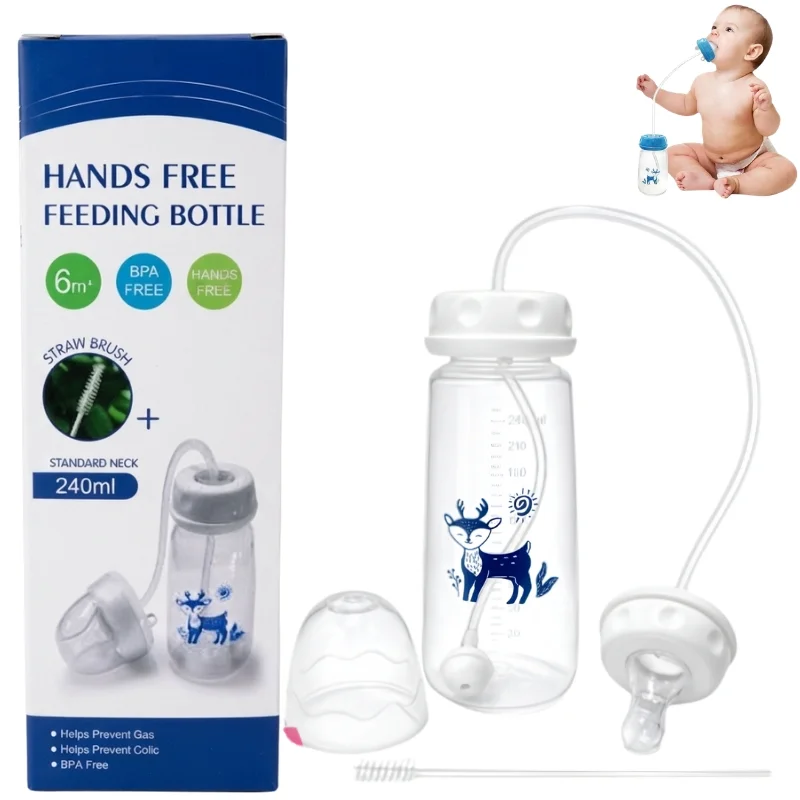
The anti-colic system
Air swallowed during a feed is uncomfortable for a baby, and anti-colic designs exist to reduce how much of it gets in. They usually work with a vent that lets air into the bottle to replace the milk leaving it, so the teat does not collapse and the baby is not pulling against a vacuum. When you compare an anti-colic hands-free baby feeding bottle with a plain one, check where the vent sits and whether it can be taken apart to clean, because a vent you cannot reach is a vent that will eventually clog.
The straw and how it feeds
The straw is what makes the bottle hands-free. A soft silicone tube runs from near the base to the teat, so milk is drawn up regardless of tilt. Two things matter: the straw should be soft enough to sit comfortably in the bottle without kinking, and it should detach completely for washing. A fixed straw is a hygiene problem waiting to happen. Silicone is the usual material because it tolerates heat and repeated sterilising without hardening.
Materials and safety marking
BPA-free is the baseline expectation for any bottle sold today, and it is worth confirming rather than assuming. Beyond that, look at how the plastic behaves in practice: does it cloud after sterilising, does the neck thread stay smooth, does the teat keep its shape. The background on baby bottles is a useful primer on how materials in this category have changed over time.
Leak-proofing and travel
A leak-proof seal is the difference between a nappy bag that survives an outing and one that has to be emptied and washed. Check that the collar tightens against a positive stop rather than spinning indefinitely, and that there is a cap that covers the teat properly for transport. A hands-free baby feeding bottle carries more internal parts than a plain one, so the seal has more work to do.
Cleaning access
Count the parts before you buy. Every extra component is another item to wash, sterilise, dry and reassemble at speed while a baby complains in the background. What you want is a design where every part separates fully and none of them has a blind cavity you cannot get a brush into.
The WLD Store pick: Hands-Free Baby Feeding Bottle 240ml
Here is the hands-free baby feeding bottle we stock, using only what the product listing states:
- Product: Hands-Free Baby Feeding Bottle 240ml
- Brand: WLD
- Category: Baby and Kids
- Capacity: 240ml
- Design: anti-colic, with a silicone straw so the bottle feeds hands-free
- Materials: stated as BPA-free
- Seal: described as leak-proof
- SKU: WLD-PK-0013-(YM-Ki-90-00-00-905)
- Availability: available across Pakistan through WLD Store with secure checkout
240ml is the general-purpose size most parents settle on after the newborn stage, large enough for a full feed without being unwieldy in a small pair of hands. Full details and current availability are on the Hands-Free Baby Feeding Bottle 240ml product page.
Using a hands-free baby feeding bottle safely
Read this section before the convenience section, because the two are easy to confuse. A hands-free baby feeding bottle is hands-free in the sense that you do not need to hold it at an angle. It is not a licence to leave a baby feeding alone.
- Never prop a bottle and walk away. Unsupervised bottle feeding carries a choking risk at any age. Stay with your baby for the whole feed, every time.
- Assemble and check the flow before you start. Tip the bottle, confirm milk moves through the straw and teat freely, and make sure the collar is tight.
- Check the temperature on your wrist. Warmed milk should feel neutral, not hot. Never use a microwave, which heats unevenly and creates hot spots.
- Support your baby in a semi-upright position. Flat-on-the-back feeding is uncomfortable and increases the chance of milk pooling.
- Watch the pace. If your baby is gulping, gasping or turning away, pause and let them breathe. A teat flowing too fast is a common cause of an unsettled feed.
- Wind them afterwards. Even with an anti-colic design, some air gets swallowed.
- Discard leftover milk. Milk that has been fed from should not be saved for later, because bacteria from the mouth get into the bottle.
If your baby is regularly unsettled during or after feeds, that is a conversation for your paediatrician or health visitor rather than something to solve by changing equipment. No bottle design is a treatment.
Cleaning and sterilising
A hands-free baby feeding bottle has more parts than a basic one, and every one of them needs attention. Milk residue is an excellent food for bacteria, and warm bottles left in a sink overnight are the classic mistake.
- Build the routine around the straw. If the straw of your hands-free baby feeding bottle gets a proper brush every day, the rest follows easily; if it does not, no amount of sterilising will fix the smell.
- Take it apart completely after every feed. Teat, collar, cap, straw, vent, body. If a piece comes off, it comes off for washing.
- Rinse in cold water first. Hot water sets milk protein onto plastic, making it much harder to shift.
- Use a bottle brush and a thin straw brush. The straw is the part most people clean badly, because you cannot see inside it. A dedicated narrow brush is worth having.
- Sterilise according to the instructions supplied. Steam, boiling and cold-water solutions all work; follow the method the product supports rather than assuming.
- Air dry on a clean rack. Drying with a tea towel reintroduces exactly what you just removed.
- Store assembled but loose. Once fully dry, put the parts together without tightening so nothing warps and no damp is trapped.
- Replace worn teats and straws. Silicone that has gone cloudy, sticky, swollen or torn should be replaced rather than sterilised harder.
Common problems and quick fixes
- The bottle leaks around the collar. Usually the teat is not seated flat in the ring, or the collar has been cross-threaded. Take it apart, reseat the teat evenly and retighten without forcing.
- Milk is not coming through the straw. Check for a kinked straw, a blocked vent or a teat hole clogged with dried milk. A hands-free baby feeding bottle depends on air replacing the milk, so a blocked vent stops the flow entirely.
- Your baby gulps and pulls away. The flow is too fast for their stage. Move to a slower teat if the range offers one, and hold the bottle less steeply.
- The straw smells of old milk. It has not been brushed through properly. Soak, brush the full length, sterilise, and if the smell persists, replace the straw.
Buying checklist
Take this list to any shop, not only ours. Every question below can be answered by picking a hands-free baby feeding bottle up off the shelf and looking at it properly.
- Does every part come off for washing? Especially the straw and the vent. Anything sealed in is a long-term hygiene problem.
- Are replacement teats and straws available? These are consumables and you will need them.
- Is the size right for your baby’s stage? Very small babies rarely need a large bottle; 240ml suits most from a few months onward.
- Does it seal well enough for a bag? Test the cap and collar with water before trusting it with milk.
- How many parts will you be washing at 2am? Fewer, simpler parts win when you are tired.
More Baby and Kids picks at WLD Store
These three often go into the same basket as a hands-free baby feeding bottle:
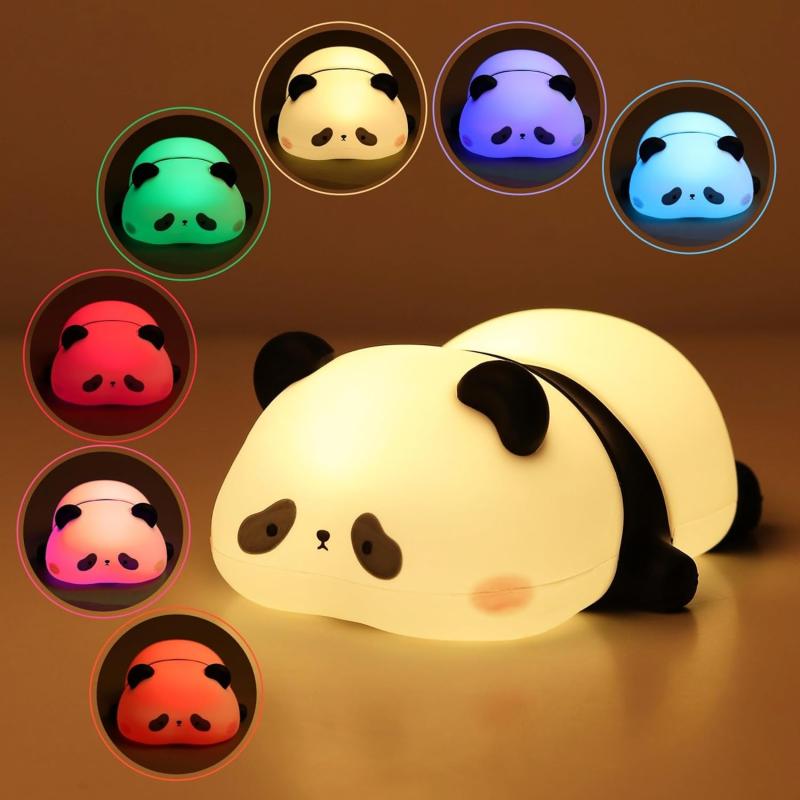
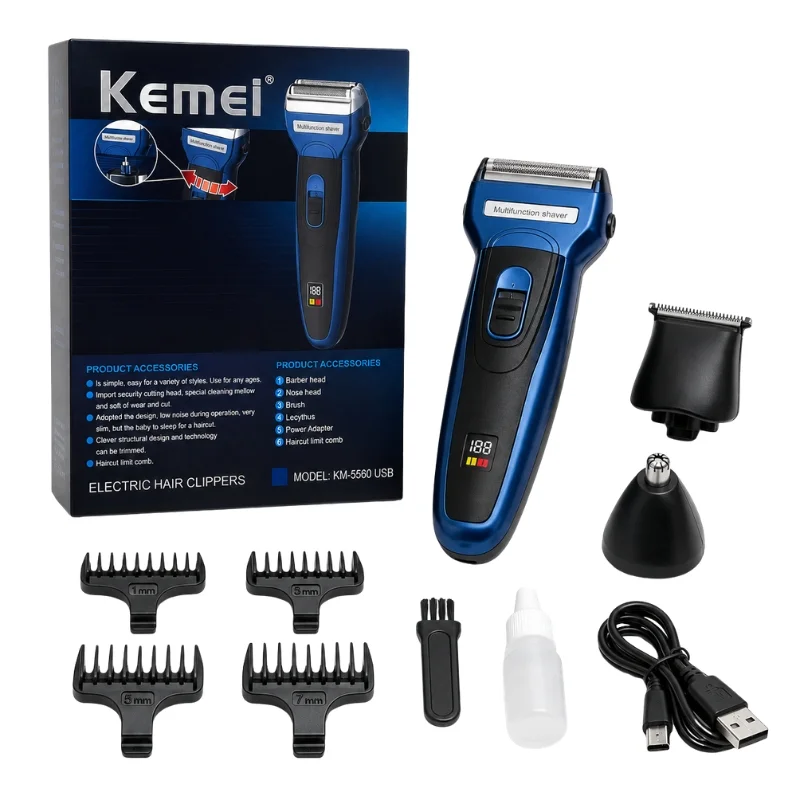
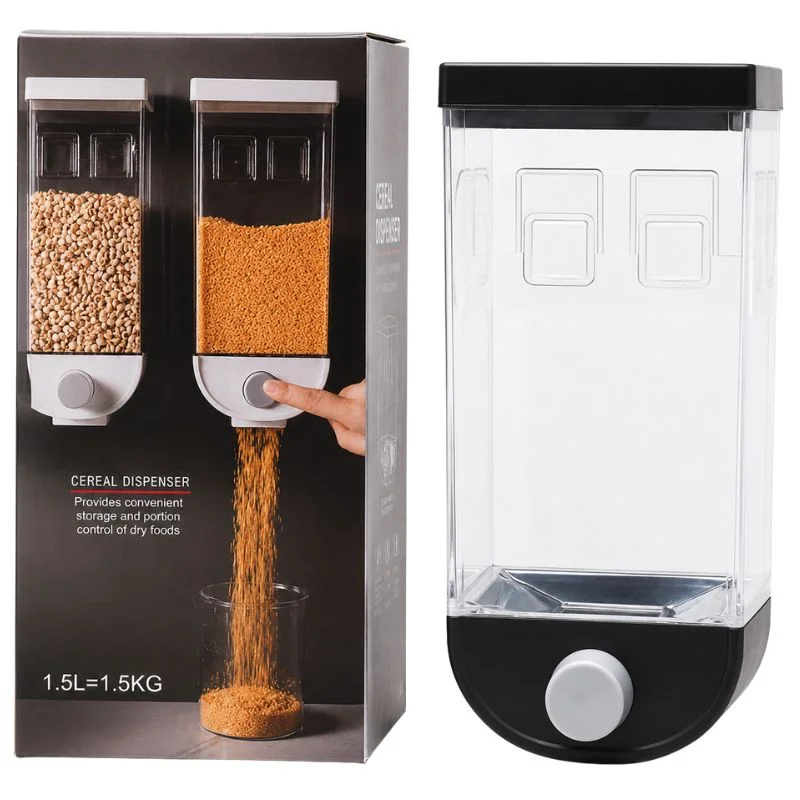
Hands-free baby feeding bottle vs a standard bottle and a propping cushion
Three things get lumped together here and they are worth separating. A standard bottle is held by an adult for the whole feed. A propping cushion or a rolled towel wedges an ordinary bottle against a baby’s mouth so that nobody has to hold it, which is the practice health visitors and paediatric guidance consistently warn against. A hands-free baby feeding bottle is a shaped bottle designed to be supported or held by the baby, with an adult present throughout.
That last clause is the whole distinction, and it is not a small one. The value of a hands-free baby feeding bottle is in freeing a parent’s hands while they stay right beside the baby: steadying an older sibling, eating their own meal, sorting out a bag in a stationary car. It is not a device for leaving a baby to feed alone, and no bottle of any design makes that safe.
Against a standard bottle, the trade is convenience for feel. When you hold a bottle yourself you sense the pace of the feed through your hand: the pauses, the swallowing, the moment a baby has had enough. A hands-free baby feeding bottle asks you to read those same cues by watching instead, which is easy once you are used to it and worth practising deliberately for the first few feeds.
Against a propping cushion there is no real comparison to make. Propping raises the risk of choking, of milk pooling in the mouth and of milk tracking towards the ears. A hands-free baby feeding bottle used as intended, with an adult beside the baby, is a different proposition entirely, and it is the reason to buy something designed for the job rather than improvising with a folded blanket.
Who a hands-free baby feeding bottle is not for
A hands-free baby feeding bottle has clear limits, and knowing them before you order saves disappointment later.
- Newborns and very young babies. Head control and a settled latch come first. Early feeds are close, held feeds, and there is no shortcut there worth taking.
- Babies with reflux, a cleft or any diagnosed feeding difficulty. Feeding position is part of the care plan. Ask your paediatrician or health visitor before changing anything about how your baby feeds.
- Anyone hoping to leave the room. This still requires an adult present and watching, at every single feed, without exception.
- Use in a moving car. Feeding a baby in a moving vehicle is unsafe whatever the bottle. Stop the car first.
- Breastfed babies who refuse bottles. The shape of the bottle is rarely the reason for a refusal, and a new bottle is an expensive way to test that theory.
If you are unsure whether your own baby is ready, the usual signs are practical ones. They can sit up with support, hold their head steady without help, reach for the bottle and bring it towards their mouth, and push it away once they have had enough. Babies arrive at that point at very different ages, so watch your baby rather than a chart. Until all of those are comfortably true, a hands-free baby feeding bottle is simply something you hold for them, which is still easier than juggling an ordinary bottle one-handed.
Bought with clear expectations, a hands-free baby feeding bottle is a genuinely practical thing for the busiest stretch of the day, whether that is the evening feed with a toddler also demanding attention or the one where you finally eat something yourself. Treat it as a way to free your hands rather than your attention, and it does exactly the job it was designed to do.
Frequently asked questions about a hands-free baby feeding bottle
Can I leave my baby to feed alone with it?
No. This is the most important thing to understand about the category. Hands-free describes the way milk reaches the teat, not a safe way to feed unattended. Propping a bottle and leaving a baby with it carries a choking risk regardless of the design, so stay with your baby throughout every feed.
At what age can a baby hold it themselves?
Babies typically start reaching for and gripping a bottle somewhere in the middle of the first year, but it varies widely and there is no rush. A hands-free baby feeding bottle helps at that stage because it still feeds at the awkward angles a beginner will hold it, but you should stay with them while they practise.
What does anti-colic actually mean?
It describes a venting design intended to reduce how much air a baby swallows during a feed. It is a design feature, not a medical treatment, and no bottle can be promised to prevent discomfort. If your baby is persistently unsettled, speak to a health professional.
How do I clean the silicone straw properly?
Remove it completely, rinse in cold water first, then push a narrow straw brush through the entire length before sterilising. Cleaning by rinsing alone leaves a film inside that you cannot see and will eventually smell. Replace the straw if it stays cloudy or sticky after a proper clean.
Is 240ml the right size to start with?
For most babies past the newborn weeks, yes. Smaller bottles suit the earliest feeds, but they are outgrown quickly. A 240ml hands-free baby feeding bottle covers a full feed for a long stretch of the first year and stays useful for water later on.
Can I put it in a steriliser?
Follow the instructions supplied with the product for the sterilising methods it supports, and take every part off first so steam or solution reaches all surfaces. Never sterilise a bottle assembled, and never microwave milk in it.
Choosing a hands-free baby feeding bottle comes down to how easily it comes apart, how well it seals and whether you can clean the straw properly, because those are the things you live with daily. If the 240ml anti-colic bottle fits your routine, the full listing is on the product page, and the wider baby range is in the Baby & Kids section.


Add comment