A facial firming oil is a leave-on treatment applied to clean skin, usually at night, made from plant oils and added actives. It sits in the part of skincare where marketing runs furthest ahead of evidence, so this guide is written to help you buy with clear expectations rather than to sell you a transformation.
It covers what oils genuinely do for skin, what “firming” can and cannot mean in a topical product, how to apply one in the right order, and the safety points that matter. Because the product WLD Store lists in this category contains bee venom, there is a full section on allergy risk that you should read before buying.
What a facial firming oil does and does not do
Facial oils work mainly at the surface. They reinforce the skin barrier, slow water loss from the outer layers, and leave skin feeling softer and looking smoother. Those are real, useful effects and they happen reasonably quickly.
Well-hydrated skin also looks plumper, which reduces the appearance of fine lines. That is genuine, but it is an appearance effect from hydration rather than a structural change, and it fades if you stop.
Firmness, by contrast, comes from collagen and elastin deep in the dermis. Changing those meaningfully with any topical is difficult, and claims about stimulating collagen production are made far more often than they are demonstrated for a specific finished formula.
So the honest position is this: a facial firming oil can reasonably be expected to soften, smooth and comfort skin, and to improve how it looks day to day. Treat anything promising to reverse ageing as a marketing claim belonging to the brand, not a statement of fact.
Bee venom: the allergy warning to read first
The product covered later in this guide is described as containing bee venom extract, and that carries a specific risk that other cosmetic ingredients do not.
If you are allergic to bee or wasp stings, do not use this product. Allergic reactions to bee venom can be severe, including anaphylaxis, which is a medical emergency. This applies whether or not the venom is applied to broken skin, and it is not a risk worth testing on yourself.
If you have any history of allergy to insect stings, asthma triggered by allergens, or a previous severe allergic reaction to anything, speak to a doctor or pharmacist before using a facial firming oil that contains bee venom. Anyone who carries an adrenaline auto-injector should treat that as a clear signal to avoid it.
Even without a known allergy, a patch test on the inner forearm 24 to 48 hours before first facial use is essential rather than optional with this ingredient. Stop at any sign of hives, swelling, widespread redness or difficulty breathing, and seek medical help immediately for the last of those.
You can read a factual overview of the substance in the apitoxin article on Wikipedia. None of this is intended to alarm anyone unnecessarily; it is simply information a shopper deserves before buying rather than after.
What makes a good facial firming oil
Setting the specific ingredient aside, these are the practical things worth checking before buying any facial firming oil.
A published ingredient list
This is the most useful thing a brand can give you, and it is the only way to check for something you have reacted to before. A facial firming oil that publishes a full list can be assessed; one that does not, cannot.
Packaging that protects the oil
Plant oils degrade with light, heat and air. Dark or opaque glass with a dropper or pump is far better than a clear bottle with a wide neck. An oil that has oxidised smells faintly of old nuts and should be replaced rather than used up.
Texture and how quickly it absorbs
Some oils sink in within a minute; others sit on the surface for much longer. Neither is better in the abstract, but a heavy oil under makeup in a Saudi summer is unpleasant, so match the texture to when you will use it.
Fragrance
Added fragrance is one of the most common causes of reactions in leave-on products. If your skin is sensitive or reactive, an unscented formula removes a variable, and essential oils count as fragrance for this purpose.
Clear directions and a patch test instruction
Good packaging tells you how much to use, when to use it and what to do if irritation occurs. Where a facial firming oil arrives with no directions at all, that absence is itself worth noting.
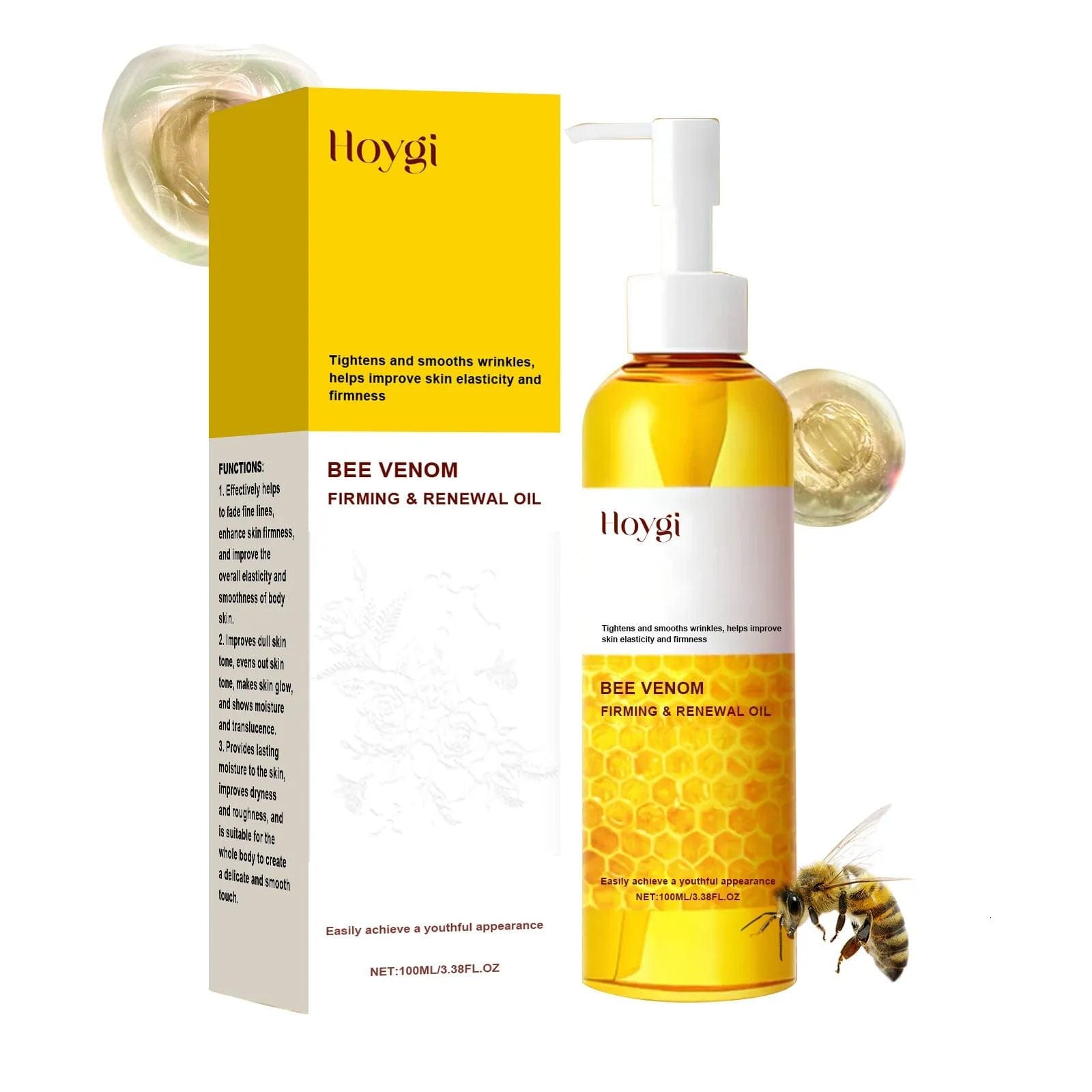
The WLD Store listing: Bee Venom Firming and Renewal Oil
For readers who want the specific product, this is what WLD Store lists for the Saudi market. The claims below are the listing’s own wording, presented as the brand’s description rather than as verified outcomes.
- Product: Bee Venom Firming & Renewal Oil.
- Manufacturer’s claim: the listing describes an anti-ageing serum that stimulates collagen production, firms sagging skin and visibly reduces fine lines and wrinkles.
- Stated contents: the listing describes natural bee venom extract and nourishing botanicals.
- Category: Beauty & Personal Care, also listed under Skin Care. Brand: WLD.
- SKU: WLD-KSA-0017-(KD-KD0114).
- Market: available across Saudi Arabia through secure checkout.
Images, the full description and the order page are on the Bee Venom Firming and Renewal Oil product page. Read the ingredient list and directions printed on the packaging you receive, since that is the authoritative source for any cosmetic. Do not buy it at all if you are allergic to bee stings.
How to apply a facial firming oil in the right order
Layering order matters more than most people realise, because oils are designed to seal what is underneath them.
- Cleanse first and pat the skin almost dry, leaving it very slightly damp.
- Apply water-based products before oil. Toners, essences and water-based serums go on first; an oil applied underneath them will block them.
- Warm two or three drops between your fingertips rather than dripping them straight onto the face.
- Press, do not drag. Press the facial firming oil gently into the skin with flat fingers. Vigorous rubbing and pulling at the skin is counterproductive.
- Avoid the eye area unless the product is specifically labelled as safe for use around the eyes.
- Moisturiser last if you use both, or use the oil as the final step in a simpler routine.
Two or three drops is genuinely enough for a whole face. Using more does not improve results; it simply leaves a film that transfers onto a pillowcase.
Building a facial firming oil into a morning and evening routine
Where you place an oil in the day changes how well it works and how comfortable it feels.
Evening is the natural home. Skin is not competing with makeup, sunscreen or heat, and an oil has all night to do its work. Most people find a facial firming oil more comfortable at night for exactly this reason.
Morning use is possible but needs a light hand. One drop, fully absorbed, under sunscreen. In summer heat many people prefer to skip it in the morning altogether.
Introduce one new product at a time. Starting an oil and a retinoid and an acid in the same week makes it impossible to know what caused a reaction. Give any new product two weeks alone.
Be careful combining actives. Layering a facial firming oil over strong exfoliating acids or a prescription retinoid can increase irritation for some people. Alternate nights is a safer starting point.
Consistency beats intensity. A modest routine followed every night does more than an elaborate one followed occasionally.
The honest truth about skin ageing
Any guide that discusses firming without mentioning this is not being straight with you.
The largest controllable factor in how skin ages is ultraviolet exposure. Photoageing accounts for a very substantial share of visible lines, uneven tone and loss of firmness, and in a climate with intense year-round sun that matters enormously.
Daily sunscreen, shade and covering up therefore do more for the long-term appearance of skin than any oil in any price bracket. That is not an exciting message and it does not sell products, but it is the accurate one.
Not smoking, sleeping properly and managing overall health also show in the face over years. A facial firming oil sits on top of all of that as a comfort and appearance product, not as a replacement for any of it.
If your main concern is significant sagging or deep structural change, no topical will address it and a dermatologist is the right person to ask about what actually can.
Facial firming oil safety, patch testing and when to stop
Beyond the bee venom point above, a few general rules apply to any leave-on facial product.
Patch test every new product. A small amount on the inner forearm, left for 24 to 48 hours, before anything goes on your face.
Stop if you react. Persistent stinging, burning, redness, itching, small bumps or swelling all mean stop and let the skin recover fully before considering anything new.
Keep it away from the eyes and rinse thoroughly with water if it gets in. Oils blur vision temporarily and are uncomfortable to remove.
Do not use it on broken or inflamed skin, on active eczema, on sunburn or over an untreated skin condition.
Ask a doctor first if you are pregnant or breastfeeding, if you use prescription skincare, or if you have a diagnosed skin condition. A pharmacist can also check an ingredient list against anything you take.
Keep cosmetics away from children, and never use an adult facial firming oil on an infant.
Storing a facial firming oil and knowing its shelf life
Plant oils are perishable, and how you store them decides whether the last third of the bottle is still worth using.
Keep it cool and dark. A cupboard beats a bathroom windowsill by a wide margin, particularly through a Saudi summer where a sunlit bathroom gets genuinely hot.
Close it properly. Air is what oxidises oil, so a dropper left resting in the neck of an open bottle shortens its life.
Check the period-after-opening symbol, the small open-jar icon with a number of months in it, and note the date you opened the bottle.
Trust your nose. An oil that smells sharp, stale or faintly like old nuts has oxidised. Discard it rather than putting it on your face, since oxidised oils can irritate.
Do not decant it into another container. Transferring introduces air and contamination and removes the batch information printed on the original packaging.
Skin type by skin type
The same bottle behaves very differently on different skin, and matching the product to your own is what decides whether you get on with it.
Dry skin. The clearest case for this category. Oils reduce water loss from the surface, and dry skin usually feels immediately more comfortable. Apply over a damp face and a water-based hydrator for the best result.
Combination skin. Use it where you are dry and skip the areas that are not. There is no rule that a facial firming oil has to be applied uniformly across the whole face.
Oily skin. Proceed carefully with a light hand, or skip oils altogether. A single drop on alternate nights tells you plenty; congestion tells you to stop.
Sensitive or reactive skin. Choose the shortest, simplest ingredient list you can find and avoid added fragrance. Patch test properly and introduce the product on its own for two weeks before adding anything else.
Mature skin. Often the most appreciative of a facial firming oil in terms of comfort and surface smoothness, provided expectations stay on appearance rather than structural change.
Common facial firming oil problems and quick fixes
- Skin feels greasy all night. Too much product. Two or three drops is the whole face, and pressing it in absorbs it faster than rubbing.
- Small bumps or congestion. Some skins do not tolerate heavier oils. Stop, let the skin settle, and reintroduce a lighter formula on alternate nights if you want to try again.
- Stinging on application. Stop using it. Stinging is not a sign that a facial firming oil is working; it is a sign that your skin objects to something in it.
- Makeup will not sit properly over it. The oil has not fully absorbed. Move it to your evening routine, which suits most people better anyway.
- The oil looks cloudy or smells different. It has likely oxidised or been stored somewhere too warm. Replace it rather than finishing the bottle.
Oil, moisturiser or serum: what each one is for
These three get used interchangeably in conversation and they are not the same thing.
A serum is usually water-based and carries active ingredients into the upper layers of skin. It goes on early in a routine and is where most targeted actives live.
A moisturiser combines water, humectants and emollients. It hydrates and softens in one step and suits people who want a simple routine.
A facial firming oil contains little or no water. It seals, softens and reinforces the barrier, which is why it works best applied over something water-based rather than instead of it.
Oily and acne-prone skin often does better with a light moisturiser than with a facial oil. Dry, tight or mature skin frequently prefers the oil. Neither preference is wrong, and there is no obligation to use all three.
Who a facial firming oil is not for
Being direct about this is more useful than a disclaimer nobody reads.
Anyone allergic to bee or wasp stings should not use a bee venom product at all, and should choose a different formula entirely. That is the clearest exclusion in this guide.
People with very oily or acne-prone skin often find heavier oils unhelpful, and a lightweight non-comedogenic moisturiser is usually the better route.
Anyone expecting a facial firming oil to reverse significant sagging will be disappointed, because that is not what topical products do. If that is your goal, a dermatologist can explain what is realistic.
And anyone in the middle of treating an active skin condition should finish that treatment, and ask their doctor, before adding anything new on top of it.
Buying checklist for a facial firming oil
- Have you checked the full ingredient list against any allergy you have, especially to insect stings?
- Is the packaging dark or opaque, with a dropper or pump rather than an open neck?
- Does it include directions and a patch test instruction?
- Is the texture right for when you plan to use it, morning or night?
- Are your expectations set on comfort and appearance rather than structural change?
Other Beauty and Personal Care picks at WLD Store
If you are building a routine rather than buying one bottle, these three sit nearby in the catalogue.

Frequently asked questions about the facial firming oil
Is a facial firming oil safe if I am allergic to bee stings?
Not if it contains bee venom. Reactions to bee venom can be severe, so anyone with a sting allergy should avoid these formulas entirely and choose an oil without that ingredient. If you are unsure whether you are allergic, ask a doctor before buying rather than testing it yourself.
Will it really reduce wrinkles?
It can make fine lines look softer by hydrating and smoothing the skin surface, and that effect is real but temporary and appearance-based. Claims about reversing ageing or rebuilding collagen belong to the brand making them. Daily sunscreen does more for long-term skin appearance than any oil.
When should I apply a facial firming oil?
Evening suits most people, after cleansing and after any water-based serum. Use two or three drops, press them in rather than rubbing, and let the skin absorb it before bed. Morning use is fine if the texture is light and it goes under sunscreen.
Can I use a facial firming oil with retinol or acids?
Cautiously, and not all in the same night when you are starting out. Layering an oil over strong actives can increase irritation for some people. Alternate nights, introduce one product at a time, and stop if skin becomes sensitised.
How long does a bottle last?
At two or three drops a night, a small bottle typically lasts a few months. Check the period-after-opening symbol on the packaging and note the date you opened it, since plant oils degrade over time regardless of how much is left.
Is it suitable for oily skin?
Sometimes, but a lighter formula and a smaller amount are important. Many people with oily or acne-prone skin do better with a light moisturiser instead. If a facial firming oil causes congestion, that is your skin giving you a clear answer.
A facial firming oil is best bought as what it is: a comfort and appearance product that softens skin, smooths the surface and makes a routine feel better, applied sparingly at night. Check the ingredient list against your own allergies before anything else, patch test, use two or three drops, and rely on sunscreen rather than any bottle for the long game. You can see the product on its product page, or browse the rest of the range in the Skin Care section.







Add comment