When the outside temperature climbs past anything a ceiling fan can help with, a bladeless neck fan starts to look less like a gadget and more like sensible equipment. This guide covers how a bladeless neck fan actually moves air without exposed blades, what separates a comfortable unit from one you take off after twenty minutes, and how to look after the battery so it lasts more than one season. It also covers fit, cleaning, honest limits in extreme heat, the faults that come up most often, and six questions buyers ask before ordering.
Why a bladeless neck fan suits a hot climate
Handheld fans have an obvious flaw: they occupy a hand. Anyone who has tried to carry shopping, hold a phone and fan themselves at once knows the problem. A bladeless neck fan solves it by sitting on the shoulders like a pair of headphones, leaving both hands completely free while air moves continuously past your neck and face.
The neck is a deliberate target rather than a convenient mounting point. Major blood vessels run close to the surface there, and airflow across that area feels disproportionately cooling compared with the same air aimed at an arm. It is the same reason a cold cloth on the back of the neck works so well.
The bladeless part matters most to anyone with long hair. Traditional small fans with exposed spinning blades are a genuine hazard around hair, loose clothing and curious children. A bladeless neck fan hides its impeller entirely inside the housing, so there is nothing exposed to catch, which is precisely why the design took over this category.
For daily life in a hot climate, the practical appeal is continuity. Walking between an air-conditioned building and a car, waiting outside, standing in a queue or working outdoors are all moments where a bladeless neck fan keeps working without you thinking about it.
How a bladeless neck fan moves air
Nothing exotic is happening inside a bladeless neck fan. Small impellers, hidden inside the arms of the unit, draw air in through intake vents and push it out through a row of outlet holes running along the inside of each arm.
Because the impeller is enclosed, the outlets can be shaped to spread air across a wide area rather than firing a single narrow jet. That is why a well-designed bladeless neck fan feels like a broad breeze rather than a stream pointed at one spot, and why it stays comfortable over long periods.
It is worth being clear about what any fan can and cannot do. A fan does not lower air temperature. It accelerates evaporation from your skin and displaces the warm layer of air that sits against you, and both of those make you feel cooler. This distinction becomes genuinely important in extreme heat, which is covered further down.
What makes a good bladeless neck fan
Listings look nearly identical, and the details that decide comfort are rarely photographed. Four things separate a unit you wear all day from one that irritates you by lunchtime.
Weight and how it sits on the shoulders
Weight is the first thing you stop noticing and the first thing that makes you take it off. A heavier unit presses on the trapezius muscles and, after an hour, produces the same ache as a bag strap. Balance matters as much as absolute weight: a bladeless neck fan whose mass sits low on the arms rides far more comfortably than one that is top-heavy.
Noise at the speed you will actually use
Every fan is quiet on its lowest setting. The number that matters is how loud it is on the speed you need in real heat, because that is where you will leave it. Since the unit sits centimetres from your ears, a bladeless neck fan that is merely acceptable at arm’s length can be tiring at neck level.
Battery life and charging convenience
Runtime falls sharply as speed rises, so a headline figure quoted at the lowest setting tells you little. What matters is whether it lasts the outing you have in mind at the speed you will use. USB charging is a practical necessity, since it means the same cable and power bank you already carry will do the job.
Neck band flexibility and fit
The band has to hold position without gripping. Too rigid and it presses on the sides of the neck; too soft and it slides forward every time you look down. A good bladeless neck fan uses a band with enough spring to stay put through normal movement and enough give to sit on different neck sizes without pinching.
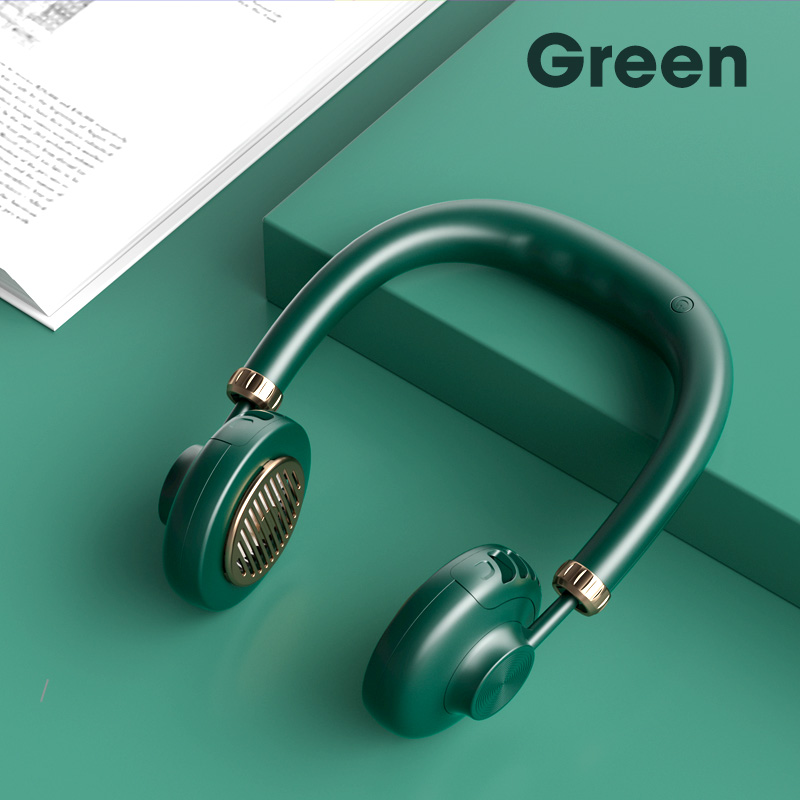
The WLD Store pick: Bladeless Hanging Neck Fan
WLD Store lists the Bladeless Hanging Neck Fan, aimed squarely at people who need portable cooling through a hot summer. Here is what the listing states, with nothing added:
- Product: Bladeless Hanging Neck Fan, portable cooling
- Categories: Home & Kitchen, Home Appliances
- Brand: WLD
- Design: hands-free bladeless neck fan intended for the Saudi summer
- Power: USB rechargeable
- Available in: Saudi Arabia, with secure checkout
- SKU: WLD-KSA-0141
Hands-free is the feature doing the real work here, since it is what makes a bladeless neck fan usable while carrying, driving errands or working. Current photographs and details are on the Bladeless Hanging Neck Fan product page.
Charging and battery care
The battery is the part that decides whether you own this for one summer or several. Nearly every portable unit of this type uses a lithium-ion battery, and those cells respond well to a few simple habits.
- Charge fully before first use, then use it normally. There is no special conditioning routine required.
- Avoid running it flat repeatedly. Topping up part-way through is better for the cell than draining it to zero every time.
- Never charge or store it in a hot car. Heat is the main enemy of these cells, and a parked car in summer is far hotter than anything the battery is designed for.
- Store it around half charged if you are putting the fan away for months, rather than completely full or completely empty.
- Use a normal phone charger. A very high-output charger offers no benefit here and generates unnecessary heat.
If you plan long days outdoors, a small power bank in a pocket effectively removes the runtime question altogether, since most units of this kind will run while charging.
Getting the fit right
Comfort over hours with a bladeless neck fan comes down to a few centimetres of positioning. Sit the band so it rests on the shoulders rather than hanging on the neck itself, with the arms sitting forward of your collarbones rather than pressed against your throat.
Check where the airflow lands. The outlets should direct air up along the jaw and neck, not straight into your eyes, which is drying and surprisingly irritating over time. Most people find a slight outward angle far more comfortable than aiming everything inwards.
Long hair needs one moment of attention. Although a bladeless neck fan has no exposed blades, the intake vents still pull air, and very fine loose hair can be drawn against the mesh. Tying hair up or wearing it forward over one shoulder avoids the issue entirely and improves airflow at the same time.
Where and when it works best
This is a device for the gaps between air conditioning, and it performs best in specific situations.
- Commuting and walking outdoors, particularly the short exposed stretches between buildings and vehicles.
- Waiting outside, at a school gate, a bus stop or a queue, where standing still in the heat is worst.
- Working with your hands, including cooking in a hot kitchen, light workshop tasks or gardening early in the day.
- Travel, where airports, coaches and crowded halls have unpredictable cooling.
- Events and outdoor gatherings, where a bladeless neck fan is far more socially acceptable than a handheld one.
It is less useful in genuinely still, enclosed heat with high humidity, where evaporation slows and airflow alone cannot do much. It is also unnecessary indoors with functioning air conditioning, though many people use one at a desk on the lowest setting.
Staying safe in extreme heat
This section matters more than any feature comparison. A fan makes you feel cooler, but feeling cooler and being cooler are not the same thing, and the gap between them is where people get into trouble.
When air temperature approaches or exceeds body temperature, moving that air across your skin delivers much less benefit, and in very hot dry conditions it can accelerate dehydration by speeding up moisture loss. A bladeless neck fan is a comfort aid, not protection against heat illness, and it should never be the reason you stay outside longer than you otherwise would.
Practical rules are simple: drink water regularly rather than waiting for thirst, seek shade or air conditioning at intervals rather than relying on airflow alone, and treat dizziness, headache, nausea or a sudden stop in sweating as signals to get out of the heat immediately and seek help. Children and older adults are affected sooner than healthy adults, so plan around the least heat-tolerant person present.
Cleaning and maintenance
Maintenance on a bladeless neck fan is minimal but not zero, and the intakes are what need attention. Dust, hair and lint collect on the intake mesh, and a blocked intake reduces airflow long before anything actually fails.
- Wipe the intake and outlet vents weekly in regular use with a dry brush or a can of compressed air.
- Clean the neck band with a barely damp cloth, since it collects sweat and sunscreen, then dry it before storing.
- Never rinse the unit under a tap. These are not waterproof, and water in the motor housing is terminal.
- Keep the charging port clear of lint and dust, which is a common cause of an apparently dead battery.
- Store it in a bag or box rather than loose in a drawer, so nothing presses the arms out of shape.
A quick clean every couple of weeks keeps a bladeless neck fan performing as it did on day one, and takes about a minute.
Common problems and quick fixes
Four issues account for most bladeless neck fan complaints, and three of them are easily solved.
- Airflow feels weaker than it was: almost always a clogged intake mesh rather than a failing motor. Clean both intakes and compare again.
- It will not hold charge: check the port for lint first, then try a different cable. Cables fail far more often than batteries do.
- It slides forward when you look down: a fit issue. Reposition it further back on the shoulders, and check the band has not been bent outwards.
- It sounds louder than before: usually debris against an impeller or dust build-up. Clean the vents thoroughly before assuming a fault.
Bladeless versus a bladed neck fan
The obvious alternative is the older style with two small exposed-blade fans on the ends of a band. They are not equivalent products despite looking similar in a listing.
Bladed units generally push more air for the same battery, because an open blade is simply more efficient than one behind a housing. The price is real: exposed blades catch hair, they are noisier at comparable speeds, and they concentrate airflow into two narrow points rather than distributing it.
A bladeless neck fan trades a little raw output for safety and comfort. Air arrives spread along the arms instead of blasting two spots, hair is a non-issue, and the whole thing is more pleasant to wear for hours. For anyone with long hair or young children nearby, that trade is not really a debate.
Who should skip it
Honesty is more useful than enthusiasm. Anyone who finds pressure on the neck or shoulders uncomfortable, including people with neck problems or shoulder injuries, should think carefully before buying, since even a light unit is constant contact.
It is the wrong tool if you need to cool a room rather than a person, and it will disappoint anyone expecting air-conditioner performance. It is also unsuitable for use while sleeping, and it should not be worn where loose clothing or long hair could be drawn towards the intakes, such as around machinery. Used sensibly, though, a bladeless neck fan is a genuinely practical bit of hot-weather kit.
Buying checklist
Five questions worth answering before ordering a bladeless neck fan.
- How long do I need it to run in one outing, at the speed I will realistically use?
- Is the weight low enough that I will still be wearing it after an hour?
- Can I tolerate the noise at neck level, not just at arm’s length?
- Does it charge over USB with a cable I already own?
- Will the band fit comfortably without gripping the sides of my neck?
Small habits that make it work better
A bladeless neck fan is more effective when it is not doing all the work alone. Airflow cools by helping sweat evaporate, so anything that supports evaporation multiplies the effect, and anything that blocks it wastes the battery.
Clothing is the easiest lever. Loose, light, breathable fabric lets air actually reach skin, while a tight synthetic layer traps a humid microclimate that no amount of airflow will clear. Cotton and linen work with a bladeless neck fan; a close-fitting polyester shirt works against it.
Water on the skin is the second. Lightly dampening the back of the neck before switching the fan on produces a noticeably stronger cooling sensation than dry airflow, because there is more moisture available to evaporate. A small spray bottle in a bag turns a modest fan into a genuinely effective one on the hottest afternoons.
Timing helps too. Switching a bladeless neck fan on before you feel hot is more effective than waiting until you are already uncomfortable, since it is easier to stay ahead of a rising core temperature than to bring one back down. The same logic applies to shade: use it in short, regular doses rather than waiting for the point of exhaustion.
Finally, keep the speed as low as the conditions allow. Running constantly on maximum drains the battery quickly, adds noise you will grow tired of, and rarely feels much better than a middle setting combined with light clothing and a damp neck.
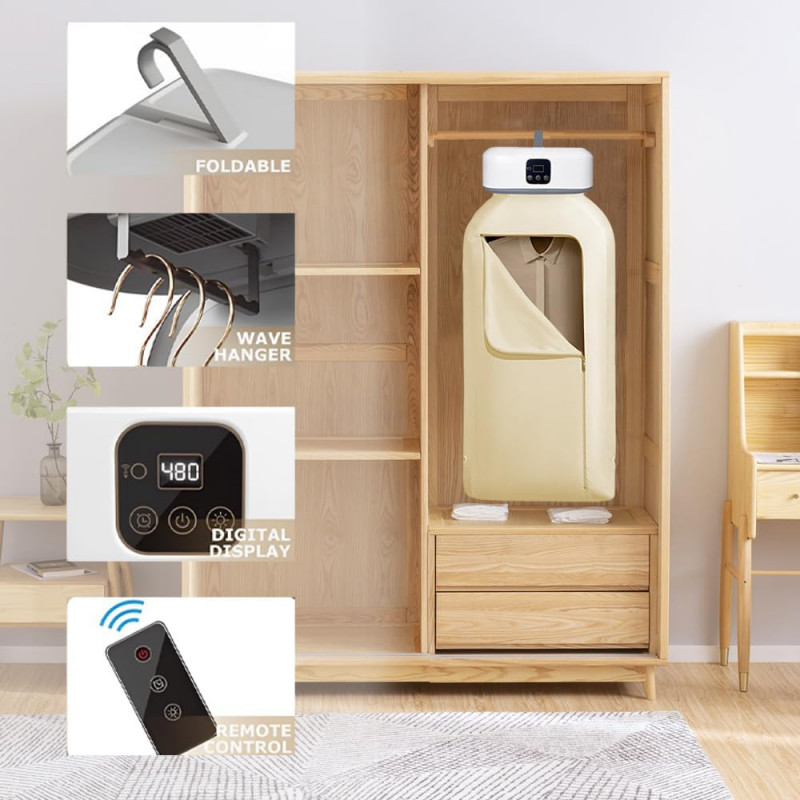
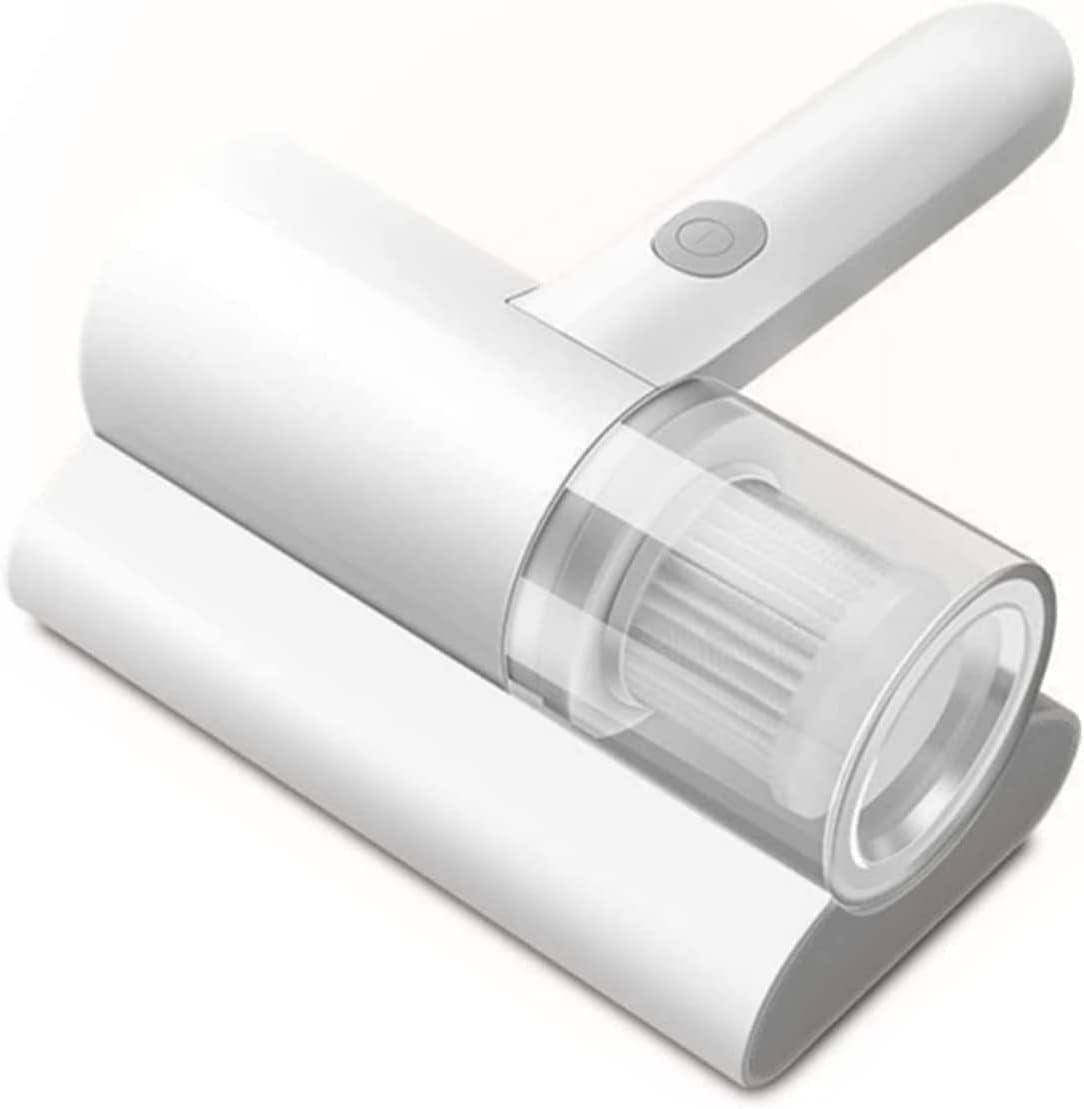
Other WLD Store picks worth a look
A few more practical items from the WLD Store range.

Frequently asked questions about the bladeless neck fan
Will it tangle my hair?
No, and that is the main reason this design replaced the bladed style. There are no exposed moving parts. Very fine loose hair can still be pulled against an intake mesh, so tying long hair back is worth doing, but tangling in the mechanism is not possible.
How long does a charge last?
It depends almost entirely on speed. Runtime on the highest setting is a fraction of the figure achieved on the lowest, so plan around the speed you will actually use in real heat. Carrying a small power bank removes the question, since most units run while charging.
Can I wear it while driving?
Many people do on short journeys, but treat anything that restricts head movement or distracts you as a hazard and follow local road rules. A bladeless neck fan is most useful before you get in and after you get out, while the car’s own cooling catches up.
Is it loud enough to be annoying?
On low settings it is generally unobtrusive. On maximum, it is clearly audible, and because the unit sits close to your ears it can become tiring over a long period. Try to judge a bladeless neck fan by its noise at mid to high speed rather than at its quietest.
Can I use it in the rain or while swimming?
No. These units are not waterproof, and moisture in the housing damages both the motor and the battery. Sweat is fine, since the outer surfaces tolerate it, but wipe the band down afterwards and let it dry.
Is it safe for children to wear?
The bladeless design removes the main hazard, so it is considerably safer than an open-blade fan. Even so, supervise younger children, keep long hair tied back, and be aware that a child overheating needs shade, water and rest rather than more airflow.
Chosen with weight and noise in mind and looked after with a little battery sense, a bladeless neck fan is one of the more genuinely useful hot-weather purchases available: hands free, hair safe and ready whenever you step out of the cool. Keep the intakes clean, avoid leaving it in a hot car, and never let it substitute for shade and water. You can view the Bladeless Hanging Neck Fan on the storefront, or browse more in the Home Appliances section.



Add comment