A foldable wireless charger solves a problem most people only notice while packing: a phone, a watch and a set of earbuds need three different cables, and one of them is always missing. Folding three charging pads into a single case that closes like a wallet is a neat answer, but the category has real compatibility traps. This guide explains how the magnets and coils work, what to check before ordering, how heat affects charging speed, and the safety points nobody prints on the box. It also covers the model WLD Store lists for Saudi Arabia.
Why a foldable wireless charger beats a bag of cables
The obvious advantage of a foldable wireless charger is count. One item replaces three cables, three plugs and the mental effort of remembering all of them, which matters most in the hour before a flight.
The less obvious advantage is placement. A folded stand puts your phone at a readable angle on a nightstand or a hotel desk instead of face down on the surface, so it works as a bedside clock and a video stand as well as a charger.
There is a durability angle too. Charging ports wear out because plugging and unplugging is mechanical, and a worn port is one of the most common reasons a working phone gets replaced. A foldable wireless charger removes most of that daily wear.
Finally there is tidiness. A single small case that unfolds and refolds keeps a nightstand clear, and it stops the tangle that a drawer of loose cables inevitably becomes.
How a foldable wireless charger actually works
Understanding the mechanism explains almost every quirk owners report. Wireless charging uses induction: a coil in the pad creates a changing magnetic field, and a matching coil in the device converts that field back into current.
Because the transfer happens between two coils, alignment is everything. Even a centimetre of offset reduces efficiency sharply, which is why magnetic alignment was such a useful addition. Magnets hold the coils concentric so you get the same result every time instead of hunting for a sweet spot.
Induction is also less efficient than a cable. Some energy is always lost as heat in the coils, which is why a phone charging wirelessly feels warmer and usually charges more slowly than the same phone on a good cable.
None of that is a fault in a particular foldable wireless charger; it is physics common to every inductive system. Knowing it helps you judge whether the unit is misbehaving or simply behaving normally.
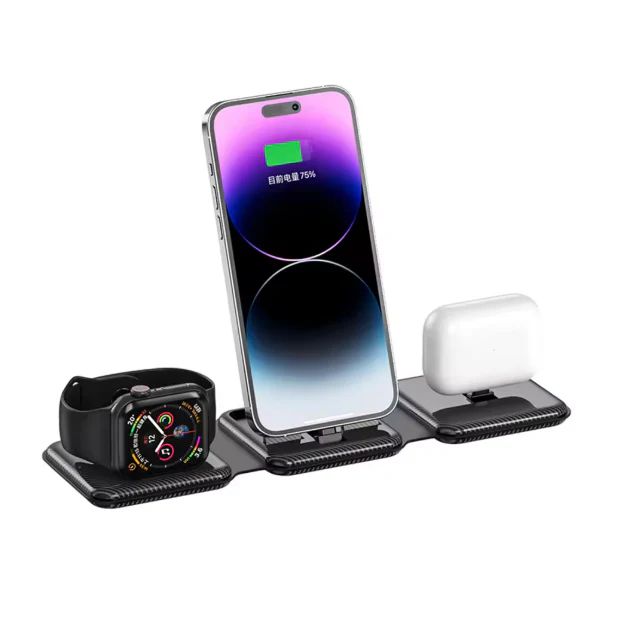
What makes a good foldable wireless charger
Five things decide whether one of these lives on your nightstand for years or in a drawer by the second month.
The hinge and the folded build
The hinge is the part that moves every day, so it is the part most likely to fail. Open and close it a few times and feel whether it holds intermediate positions or flops. A hinge that will not hold an angle makes the stand function useless.
Look at the material where the hinge meets the body. Fabric or leather-style hinges are light and quiet, while rigid plastic pivots are usually more durable but bulkier. Neither is wrong, but a foldable wireless charger with a flimsy joint will not survive being packed in a suitcase repeatedly.
Magnet strength and alignment
Magnets have to be strong enough to hold the phone against gravity at an angle, but not so strong that removing the phone drags the whole unit off the table. The best test is one-handed: you should be able to lift the phone off without holding the base.
Alignment also depends on your case. A thick case, a metal plate for a car mount, or a card holder between the phone and the pad will weaken the hold or block charging altogether.
What each pad actually supports
This is where the traps are. The three pads on a folding station are rarely equivalent: one is a full-power phone pad, one is a low-power pad for earbuds, and the third is often a watch charger that only works with a specific brand’s watch.
Read the listing carefully and match it against the devices you own. A pad designed for one brand of smartwatch will not charge another brand, because the coil geometry and communication protocol differ.
The power supply is not optional
Many charging stations ship without a wall adapter, and the one in your drawer may not be enough. A three-device station needs meaningfully more power than a single pad, and an underpowered adapter shows up as slow charging or as one pad refusing to work while the others run.
Check what the listing includes before assuming you are ready to use it on arrival.
Folded size and weight
Measure against the pocket in the bag you actually travel with. The appeal of a foldable wireless charger is that it disappears into luggage, and a unit that is thick when closed loses most of that advantage.
The WLD Store pick: Foldable Magnetic Wireless Charger
These are the details stated in the WLD Store listing, reported exactly as written with nothing added.
- Product: Foldable Magnetic Wireless Charger, described as a 3-in-1 charging station.
- Category: Accessories, also listed under Chargers & Cables.
- Brand: WLD.
- SKU: WLD-KSA-0030-(KD-KD0137).
- Devices named: the listing lists iPhone, AirPods and Apple Watch.
- Alignment: described as using magnetic alignment for wireless charging.
- Design: presented as foldable and portable for travel.
- Availability: sold across Saudi Arabia through secure checkout.
The Foldable Magnetic Wireless Charger product page carries the full specification and current availability, and is the authoritative source if any detail changes.
Foldable wireless charger compatibility checks
More returns in this category come from compatibility than from faults, so spend two minutes on this before buying.
First, your phone. Magnetic alignment relies on a ring of magnets in the phone or in its case. Phones without that ring will still charge on most pads, but they will not snap into place, so you have to position them by hand and they can drift out of alignment overnight.
Second, your case. Measure its thickness. Most wireless charging tolerates a few millimetres, but thick protective cases, wallet cases with cards, and any metal plate will reduce or block charging. Cards left between phone and pad can also be damaged.
Third, your watch. A watch pad on a foldable wireless charger is usually built for one brand’s charging system. If you own a different smartwatch, assume that pad will not work for you unless the listing says otherwise.
Fourth, your earbuds. Only some cases support wireless charging at all. If yours has no charging coil, the pad will do nothing, however correctly you place it.
Setting up a foldable wireless charger at home or in a hotel
- Unfold on a flat, hard surface. A soft bed or cushion blocks airflow and traps heat under the phone.
- Use a capable wall adapter. If one pad refuses to charge while the others work, the power supply is usually the reason.
- Set the phone angle before you sleep. A readable angle makes the alarm and the clock usable at night.
- Keep cards and keys off the pads. Magnets and hotel key cards do not mix well.
- Leave room around the unit. A charger pressed against a wall behind a nightstand runs warmer than one with air on all sides.
- Fold it the intended way when packing. Forcing the hinge backwards is the fastest route to a broken unit.
Heat, and why a foldable wireless charger runs warm
Some warmth during wireless charging is entirely normal and is not a sign of a defective product.
Heat matters because lithium batteries age faster when they are warm, and because phones deliberately slow charging when they detect high temperatures. That is why a phone can appear to charge more slowly on a hot afternoon than it did the night before.
In a hot climate this is worth managing. Charge in an air-conditioned room rather than on a sunlit windowsill, do not leave a foldable wireless charger and phone in a parked car, and remove very thick cases if you notice the phone getting unusually warm.
If the unit or the phone ever becomes too hot to hold comfortably, unplug it and let it cool. Persistent overheating is a reason to stop using a charger, not something to work around.
How to get the fastest charging from a foldable wireless charger
Wireless charging will never match a good cable, but the gap between a well-configured station and a badly configured one is larger than most people realise.
Start with the adapter. This is the single biggest factor. An old low-output plug left over from a previous phone will hold back every pad on a foldable wireless charger, and the symptoms look like a faulty product rather than a weak power supply.
Next, remove anything between the phone and the pad. Every extra millimetre of case, card or pop-socket base reduces the coupling between the coils, and a metal ring blocks it entirely.
Then think about temperature. A phone that is already warm from a video call or an afternoon in the sun will charge slowly whatever you do, because it protects the battery by limiting current. Charging in a cooler room genuinely helps.
Finally, be realistic about the earbuds and watch pads. Those are low-power by design and are meant to top up small batteries overnight rather than quickly. A foldable wireless charger is an overnight appliance, and judged that way it does its job well.
Foldable wireless charger magnets and safety
Magnetic accessories are safe for most people in most situations, but there are two genuine cautions worth stating plainly.
The first is medical devices. Magnets can interfere with pacemakers, implantable defibrillators and some other implanted devices. Manufacturers of such devices typically advise keeping magnets at a safe distance, and anyone with an implant should follow their own doctor’s guidance rather than general advice.
The second is magnetic stripe cards and older hotel keys. Keeping a bank card pressed against a magnetic charger is a good way to find it stops working. Keep wallets, cards and passports away from the pads.
Beyond that, the usual electrical sense applies. Do not use a damaged unit, do not charge anything on a bed or under a pillow, and do not place metal objects such as coins or keyrings on a charging pad, since they can heat up.
Foldable wireless charger care and maintenance
- Wipe the pads with a dry cloth. Dust between phone and pad increases the gap and reduces efficiency.
- Keep liquids away. These units are electronics, not kitchen accessories, and are rarely water-resistant.
- Check the cable at the strain point. Repeated packing bends the cable where it enters the body.
- Inspect the hinge every few months. Play or creaking is the first sign of wear.
- Store it closed. Folding it protects the pads from scratches, which is what the design is for.
- Avoid extreme heat in storage. Adhesives that hold pads in place soften at high temperatures.
Foldable wireless charger problems and quick fixes
- The phone charges intermittently overnight. Alignment drift. Use a magnetic case, or reposition and check the charging indicator before sleeping.
- One pad does nothing. Usually device compatibility or an underpowered adapter. Test that device on another charger to isolate the cause.
- Charging is much slower than by cable. Expected. Induction is less efficient, and heat makes phones throttle further.
- The magnets feel weak. Check case thickness first. Most weak-hold complaints are a case problem rather than a magnet problem.
Who a foldable wireless charger suits
Matching the product to the person avoids most of the disappointment in this category.
It suits frequent travellers more than anyone. If you pack a bag every few weeks, replacing three cables with one closing case is a real, repeated benefit, and the stand function turns any hotel nightstand into a usable setup.
It suits people whose devices come from a single ecosystem. When phone, watch and earbuds are all designed around the same charging system, every pad earns its place.
It suits anyone who values a tidy bedside table. A nightstand with one small folded object on it is quietly better than one with three leads running behind it.
It suits mixed-brand households far less. If your watch is from one manufacturer and your phone from another, one pad on a foldable wireless charger is likely to be dead weight, and a multi-port charger with cables serves you better for less money.
It also suits people who want maximum charging speed poorly. If you routinely need to add a lot of battery in twenty minutes before leaving the house, a cable is the honest answer and no foldable wireless charger will change that.
Foldable wireless charger versus a cable kit
The honest comparison helps you avoid buying something that will not suit you.
A multi-port charger plus short cables is faster, cheaper and works with every device you own regardless of brand. It is the better choice if charging speed is your priority or if your devices come from several manufacturers.
The trade-off is faff. Three cables tangle, they get left behind in hotel rooms, and the connectors wear. There is also nothing elegant about a nightstand with three leads on it.
A foldable wireless charger wins on convenience, tidiness and packing. It suits someone whose devices are all from one ecosystem and who values dropping the phone onto a stand over squeezing out the last few minutes of charging speed. For the technical background, Wikipedia has a clear article on inductive charging.
Foldable wireless charger buying checklist
- Does your phone have magnets, or a magnetic case? Without them, alignment is manual.
- Which watch does the watch pad support? Assume one brand only unless stated.
- Do your earbuds have a wireless charging case? Many do not.
- Is a wall adapter included, and is yours strong enough? Three pads need real power.
- How thick is it folded? Compare against the bag pocket you actually use.
Other Accessories picks at WLD Store
These three items from the same category cover the charging situations a folding station does not.
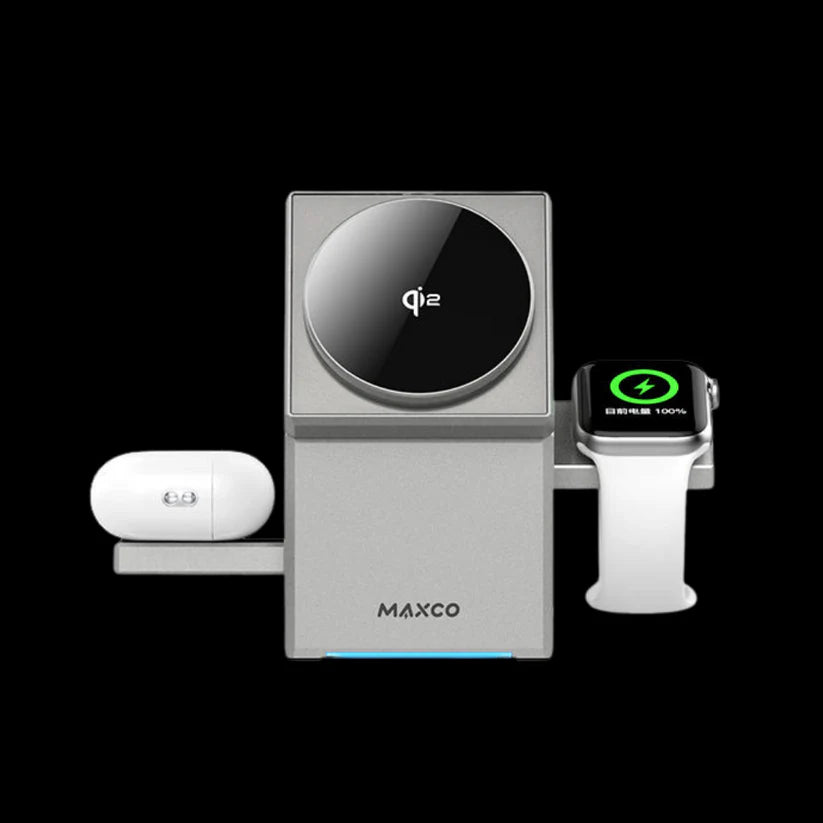

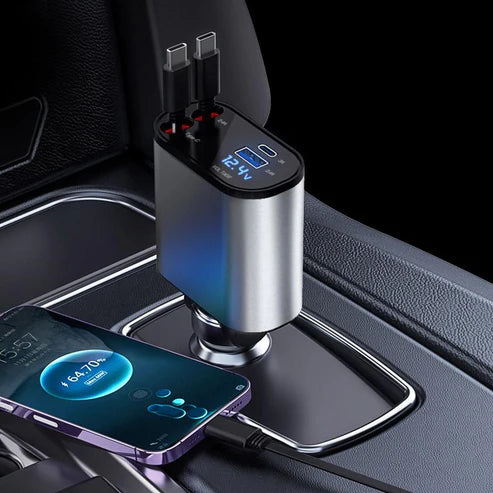
The multi-functional charger is a desk alternative, the car phone holder covers charging on the move, and the retractable charger is the sensible answer when your household mixes brands.
Frequently asked questions about the foldable wireless charger
Will a foldable wireless charger work with an Android phone?
The phone pad usually will, since standard wireless charging is widely supported. Magnetic snap-in alignment normally requires a magnetic case, and the watch pad is generally built for one specific brand of smartwatch.
Can a foldable wireless charger charge through a case?
Usually yes, up to a few millimetres. Thick protective cases, metal plates and wallet cases with cards inside will weaken or block charging, and cards left between phone and pad can be damaged.
Why is wireless charging slower than a cable?
Induction loses some energy as heat between the two coils, and phones deliberately reduce charging speed when they warm up. Both effects are normal and apply to every wireless charger, not just folding ones.
Is it safe to leave a phone on a foldable wireless charger all night?
For most modern phones, yes, since charging management is handled by the phone. Use a hard, ventilated surface rather than a bed, and stop using any charger that becomes uncomfortably hot.
Are the magnets strong enough to damage anything?
They can affect magnetic stripe cards and hotel keys, so keep wallets away. Anyone with a pacemaker or other implanted medical device should follow their doctor’s guidance about safe distances from magnets.
Does a foldable wireless charger come with a plug?
Often not, and an old low-power adapter is a common cause of disappointing performance. Check what the listing includes and make sure your adapter can supply enough power for three pads at once.
A foldable wireless charger is a genuinely useful travel accessory once you have checked that each pad matches a device you own and paired it with an adapter that can actually feed it. If that sounds like your setup, see the Foldable Magnetic Wireless Charger listing, or browse the wider range in the Chargers & Cables section.

Add comment