A stainless steel food chopper exists to solve one specific problem: the ten minutes of chopping that stand between you and actually starting to cook. Onions, garlic and herbs are in almost every savoury dish, and preparing them by hand is the slowest part of a weeknight meal.
This guide covers what these tools do well, what they genuinely cannot do, how to get an even result rather than a puree, how to handle sharp blades safely and how to keep the thing clean. It also introduces the manual chopper WLD Store stocks for Saudi Arabia, with a checklist and six questions.
Why a stainless steel food chopper saves real time
The time saving is not in the chopping itself but in everything around it. A knife requires a board, a stable surface, attention and then a cleaned board afterwards. A stainless steel food chopper compresses all of that into one container that goes straight into the sink.
Onions are the clearest case. Dicing an onion finely and evenly takes practice and a sharp knife, and it makes your eyes water for as long as it takes. A chopper does it in seconds with the lid closed, which keeps most of the irritating compounds inside the chamber rather than in the air.
Consistency is the second benefit and it matters more than people expect. Evenly sized pieces cook evenly, so a sauce built on uniform onion and garlic behaves predictably. Hand chopping when you are tired produces a mix of large and small pieces that cook at different rates.
The third benefit is confidence for people who are not comfortable with a large knife. A stainless steel food chopper keeps hands well away from the blade during use, which makes it a reasonable choice for a first kitchen or for anyone cooking with children nearby.
What makes a good stainless steel food chopper
Every listing in this category uses similar language, so the useful comparisons are in the details. These are the areas worth examining before buying any stainless steel food chopper.
The blades
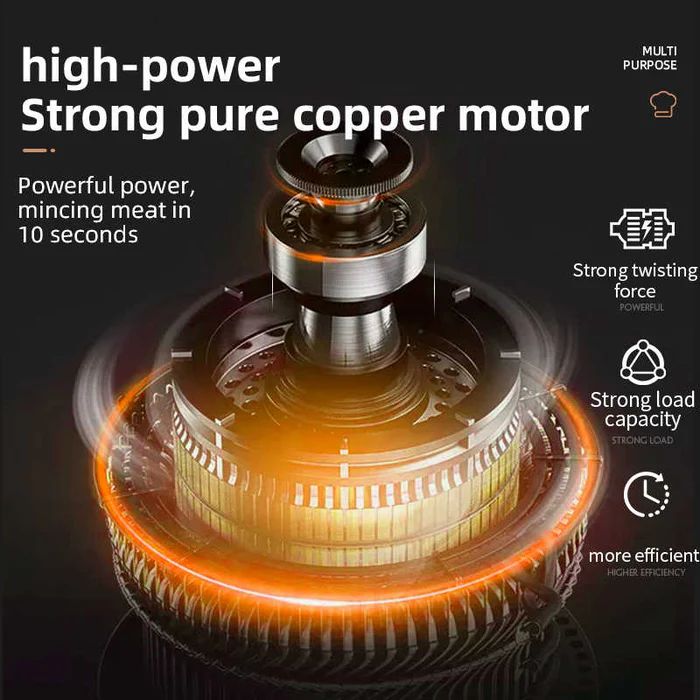
Stainless steel is the standard for good reason: it resists corrosion in a wet, acidic environment where carbon steel would stain within a week. Look at how many blades there are and how they are arranged, since the pattern determines whether you get an even dice or a mush in the middle.
The chamber
Capacity decides how many batches a recipe takes. A small chamber is quicker to clean but means chopping two onions in two goes. Look also at whether the chamber is smooth inside, because ridges and corners hold garlic and are irritating to clean.
The mechanism
Manual choppers use a pull cord, a plunger or a twist handle. Each is a different physical action, and which one suits you is genuinely personal. What matters in all of them is that the action is smooth, that it does not require you to hold the unit down with your other hand awkwardly, and that it stops cleanly.
The base and how it grips
A chopper that slides on the worktop while you use it is unpleasant and unsafe. A rubberised or suction base makes a bigger difference to the experience than almost anything else, particularly on the smooth tiled and stone worktops common here.
How it comes apart for cleaning
This is the feature that decides whether the tool stays in use. A stainless steel food chopper that separates into three or four simple parts will get washed straight away; one that traps food under a fixed collar will migrate to the back of a cupboard within a month.
The WLD Store pick: Stainless Steel Food Chopper
For readers who want a specific product rather than category advice, this is the chopper stocked for the Saudi market. Everything below comes from the product listing itself.
- Product: Stainless Steel Food Chopper, described as a manual vegetable cutter.
- Use: the listing states it dices onions, garlic, herbs and more in seconds.
- Blades: the listing describes dishwasher-safe stainless steel blades.
- Design: the listing describes it as compact, mess-free and easy to clean.
- Category: Home & Kitchen, also listed under Kitchen Tools. Brand: WLD.
- SKU: WLD-KSA-0019-(KD-KD0159).
- Market: available across Saudi Arabia through secure checkout.
Current images, the chamber capacity and the order page are on the Stainless Steel Food Chopper product page. Exact dimensions, blade count and the specific mechanism should be confirmed there and on the packaging rather than taken from a guide.
What a stainless steel food chopper handles well, and what it does not
Knowing the boundaries of the tool is the fastest route to being happy with it.
Excellent: onions, garlic, shallots, fresh herbs such as parsley and coriander, chillies, and softer vegetables like celery and peppers. These are the everyday items a stainless steel food chopper handles better than most people manage with a knife.
Good with care: carrots and other hard vegetables, provided you cut them into rough chunks first. Nuts, if you stop early, since they go from chopped to paste quickly.
Poor: anything you want in neat slices or batons. A chopper dices; it does not slice, julienne or cut chips. Wet ingredients such as tomatoes turn to pulp rather than dice.
Avoid entirely: ice, bones, frozen food and anything hard enough to chip a blade. Manual choppers are not built for those loads and the damage is permanent.
Stainless steel food chopper technique: avoiding puree
Almost every complaint about this category comes down to over-processing, and it is easy to fix.
- Cut large items into rough chunks first. Quarter an onion before it goes in. Whole items bounce around and chop unevenly.
- Fill the chamber no more than about two thirds. Overfilling stops the blades reaching everything and produces a mix of huge and tiny pieces.
- Count your pulls. Three or four actions is usually a coarse dice, six or seven a fine one. Stop and look rather than working blind.
- Keep ingredients separate where texture matters. Onion and garlic chop at different rates, so do them in turn.
- Shake the unit gently between pulls to redistribute the contents instead of just pulling harder.
The single most useful habit with a stainless steel food chopper is to stop one pull earlier than you think you need to. You can always do one more; you cannot undo a puree.
Blade safety on a stainless steel food chopper, in plain terms
These blades are sharp, they sit low in a chamber where you cannot see them well, and they are the part you have to clean. A few rules make the whole thing straightforward.
Never put your fingers into the chamber to clear or retrieve food. Tip the contents out, or use a spatula.
Remove the blade assembly by its hub or stem, not by touching the cutting edges, and put it down somewhere it cannot be picked up carelessly.
Wash it separately from other items, never in a sink full of soapy water where it disappears from view. That is how people cut themselves on any sharp kitchen tool.
Store it assembled or in its own box, not loose in a drawer where a hand might land on it.
Keep it out of reach of children. A stainless steel food chopper looks like a toy with a pull cord, which is exactly why it should be stored high or in a closed cupboard.
Care and maintenance for a stainless steel food chopper
Stainless steel is forgiving, but it is not indestructible, and the plastic parts usually need more care than the metal.
Rinse immediately after use. Onion and garlic residue is far easier to remove in the first two minutes than after it dries onto the blades.
Follow the dishwasher guidance on the packaging. Where blades are described as dishwasher safe, that is the manufacturer’s own statement. Lids with seals and any suction base are often better washed by hand.
Dry it properly before storing. Stainless steel resists rust well, but water trapped in a joint or under a collar can still leave marks, and any spring or fastener may not be stainless.
Deal with garlic smell early. Warm water with a little bicarbonate of soda, left for twenty minutes, removes most of it. Lemon juice helps on plastic parts.
Check the blades for damage every few months. A chipped or bent blade will not chop evenly and should end the tool’s working life rather than being persevered with.
Stainless steel food chopper, knife or electric processor
These three tools are compared constantly and each is genuinely best at something different.
A good knife and board gives complete control: slices, batons, fine dice, and any size you choose. It is the most versatile option and the one worth learning. It is also the slowest and needs the most washing up.
An electric food processor handles large volumes and does jobs a manual tool cannot, such as making pastry or blending. It takes worktop or cupboard space, needs a socket and is a chore to clean for a single onion.
A stainless steel food chopper sits in between and wins on the specific job of small-batch dicing. It needs no power, takes little space, and goes from cupboard to clean again in a couple of minutes.
For most households the honest answer is a knife plus a manual chopper. That combination covers nearly everything, and the electric machine only earns its place if you regularly cook in large quantities.
Batch prep, Ramadan and cooking for a crowd
Cooking for large numbers is where this tool changes a whole evening rather than saving a few minutes.
Preparing the aromatic base for several dishes at once is the most useful thing you can do with it. Chop onions and garlic for the whole day’s cooking in a few batches, store them covered in the fridge, and every subsequent dish starts faster.
Work in batches rather than overfilling. A stainless steel food chopper gives a much better result from three small loads than from one crammed chamber, and the extra time is under a minute.
Chopped garlic and onion do not keep indefinitely once cut. Refrigerate them in a sealed container and use them the same day where you can, rather than preparing days ahead.
Wash the unit between different ingredients if you are prepping chilli and then herbs. Chilli residue transfers, and it is unpleasant to discover in a salad garnish.
Pull cord, plunger or twist: choosing an action
Manual choppers use one of three mechanisms, and the choice is more about your hands and your worktop than about performance.
A pull cord spins the blades quickly with a horizontal tug. It gives fine control over how many rotations you use and works well for herbs. It does need a free hand to steady the unit, and the cord is the part that eventually wears.
A plunger or push-down action uses your body weight rather than arm strength, which suits anyone with limited grip. It needs headroom above the worktop and a base that grips well, since you are pushing straight down.
A twist handle is the slowest and the most controlled, and it is the easiest to stop precisely at a coarse dice. It asks the most of your wrist, which matters if you are preparing large quantities.
If you can, try the action before buying. It is the single feature of a stainless steel food chopper that people either get on with immediately or quietly give up on.
Storage and worktop space in a small kitchen
Small kitchens punish anything that has no obvious home, so it is worth deciding where this tool will live before it arrives.
Keep it assembled. A stainless steel food chopper stored in one piece is safer than a loose blade assembly in a drawer, and it is quicker to reach for.
Put it at working height. A tool in a cupboard at eye level gets used for a single onion; the same tool under the sink behind the cleaning products does not.
Store the parts together. Lids and bases that get separated are the usual reason these tools fall out of use, since nobody wants to hunt for two pieces to chop one clove of garlic.
Leave it dry. Storing it slightly damp with the lid on traps moisture around the blade hub, which is where marks and smells begin.
Common problems and quick fixes
- Uneven results. The chamber is overfilled or the pieces went in too large. Halve the load, cut items into chunks first, and shake between pulls.
- Everything turned to mush. Too many pulls, or the ingredient is too wet for dicing. Stop earlier, and cut tomatoes by hand.
- It slides on the worktop. Wipe both the base and the surface dry. A damp base cannot grip, and a stainless steel food chopper that moves is harder to control.
- Persistent garlic smell. Soak in warm water with bicarbonate of soda, then rinse. Repeat with lemon juice on plastic parts if needed.
- Food trapped under the blade hub. Dismantle fully rather than rinsing the assembled unit. If it cannot be dismantled easily, that is a design fault worth knowing about before you buy.
Who a stainless steel food chopper is not for
It is more useful to name the limits than to pretend the tool suits every kitchen.
If you already chop quickly and enjoy knife work, a chopper will not save you meaningful time and adds a second thing to wash. Buy a better knife instead.
If you need slices, batons or a precise julienne, this is the wrong tool entirely and no technique will change that. A mandoline or a knife is what those jobs need.
And if you routinely cook for twenty people, a manual stainless steel food chopper will have you working in batches all evening. At that volume an electric processor is the sensible machine, with the manual tool kept for small jobs.
Buying checklist for a stainless steel food chopper
- Does it come apart into simple pieces you can wash properly?
- Is the base rubberised or otherwise non-slip on a smooth worktop?
- Is the chamber big enough for the quantities you usually cook?
- Does the packaging state which parts are dishwasher safe?
- Is there a safe way to store it away from children and away from loose hands in a drawer?
Other Home and Kitchen picks at WLD Store
If you are equipping a kitchen rather than buying one tool, these three sit nearby in the catalogue and pair well with a stainless steel food chopper.
Frequently asked questions about the stainless steel food chopper
Does a stainless steel food chopper really dice, or does it just crush?
It dices if you use it correctly: rough chunks in, chamber no more than two thirds full, and a small number of deliberate pulls. Crushing happens when the chamber is overfilled or the tool is worked far past the point where the pieces are the size you wanted.
Can the blades go in the dishwasher?
Where the packaging says the blades are dishwasher safe, follow that guidance. Lids with rubber seals and suction bases are usually happier washed by hand, and hand washing also lets you check for trapped food that a dishwasher can miss.
Will stainless steel blades rust?
Stainless steel resists corrosion well, which is why it is used here, but it is not entirely immune, especially where salt and acid are involved. Rinse after use, dry before storing, and do not leave the unit sitting full of wet onion overnight.
Is it safe with children in the kitchen?
The blades are enclosed during use, which is safer than an exposed knife on a board. The risks are during cleaning and storage, so wash the blade assembly separately and keep the whole tool out of reach when it is not in use.
How do I get rid of the garlic smell?
Warm water with a spoon of bicarbonate of soda, left for twenty minutes, then a normal wash. Lemon juice helps on plastic. Washing promptly after use prevents most of the problem in the first place.
Can it replace a knife?
No, and it is not meant to. A stainless steel food chopper handles dicing quickly; a knife handles everything else, including slicing, trimming and portioning. The two work together rather than competing.
A stainless steel food chopper is a narrow tool that does its one job unusually well: it removes the least enjoyable ten minutes of cooking and gives you a more even result than most people manage by hand. Choose one that comes apart properly, keep the chamber two thirds full, stop a pull early, and treat the blades with respect. You can see the model on its product page, read more about the alloy itself in the stainless steel article on Wikipedia, or browse the wider range in the Kitchen Tools section.


Add comment