An led ring light is the cheapest fix for the single biggest problem in home video: light coming from the wrong place. Most rooms are lit from above, which drops shadows into the eye sockets and under the nose, and no camera setting rescues that. This guide covers what the ring shape actually does to a face, how to judge diameter, colour temperature and dimming quality, how to position one for calls, streaming and product photos, and the eye-comfort limits worth respecting. It also covers the foldable model WLD Store lists for Saudi Arabia.
Why an led ring light changes how you look on camera
Ceiling lights sit above and behind the face. That is fine for walking around a room and terrible for a camera, because the shadow of your brow falls straight across your eyes. Viewers read that as tired or unwell even when they cannot say why.
Placing a light at the camera position solves the geometry. The illumination arrives along the same axis as the lens, so the shadows fall behind you instead of across your features. This is the whole reason an led ring light became standard equipment for anyone appearing on video regularly.
The ring shape adds something a flat panel cannot. Because the light surrounds the lens, it produces an even wrap around the face with no single hard edge, and it leaves a distinctive circular reflection in the eyes. Photographers call that a catchlight, and it is what makes eyes look alive rather than flat.
Finally, consistency matters. Daylight from a window changes hour by hour and disappears entirely in the evening. An led ring light gives you the same look at nine in the morning and nine at night, which is what makes recorded content feel professional.
What an led ring light actually does to a face
Two properties decide how flattering any light source is: size relative to the subject, and distance. Both are easy to control once you know they matter.
A large source close to the face produces soft light, meaning shadows have gradual edges. A small source far away produces hard light with sharp shadow edges, which exaggerates skin texture. Bringing an led ring light closer makes it relatively larger and therefore softer, which is why creeping closer often improves the picture more than turning the brightness up.
The trade-off is intensity. Move a light twice as far away and the illumination falls to roughly a quarter. That relationship is why a small panel two metres away looks harsh and dim at the same time, while the same panel at arm’s length looks soft and bright.
What makes a good led ring light
Led ring light specifications are inconsistently reported across the market, so it pays to know which few actually change your results.
Diameter
Diameter is the most important number on any led ring light. A small ring around ten centimetres is a clip-on convenience for laptop calls. Something in the twenty-five to thirty centimetre range is the sweet spot for head-and-shoulders video, soft enough to flatter and small enough to sit on a desk.
Very large rings look superb but demand floor space and a sturdy stand. Before choosing, measure your desk and consider whether the light has to be moved and stored every day.
Colour temperature control
Colour temperature is measured in kelvin, and mixing sources with different values is what produces the orange-and-blue split you see on amateur video. An led ring light with adjustable colour temperature lets you match whatever else is lighting the room instead of fighting it.
The WLD Store listing for the model below states adjustable brightness and colour temperature settings, which is the combination worth having. As a rule of thumb, match warmer settings to household bulbs and cooler settings to daylight from a window.
Dimming quality and flicker
Cheap dimming circuits reduce brightness by switching the diodes on and off very rapidly. Your eye may not notice, but a camera shutter can, and the result is banding or pulsing in recorded video.
Test any led ring light by recording a few seconds at each brightness level before you commit to it for real work. Rolling bands across the frame mean the dimming is not smooth, and the usual workaround is to use the light at full output and control exposure in the camera instead.
Mount, stand and phone holder
The mount decides whether the light ends up in the right place or a convenient one. Check the standard thread size, whether the phone clamp grips your device with its case on, and whether the joint holds position when the phone is attached rather than slowly drooping.
Foldability matters if you travel. The listing describes this model as foldable and travel-ready, which is the difference between a light you take to a shoot and one that stays at home.
Power source
Most compact units run from USB. That is convenient, but the cable has to reach and a laptop port may not supply enough current for full brightness. A separate mains adapter or a power bank is often the more reliable option for long sessions.
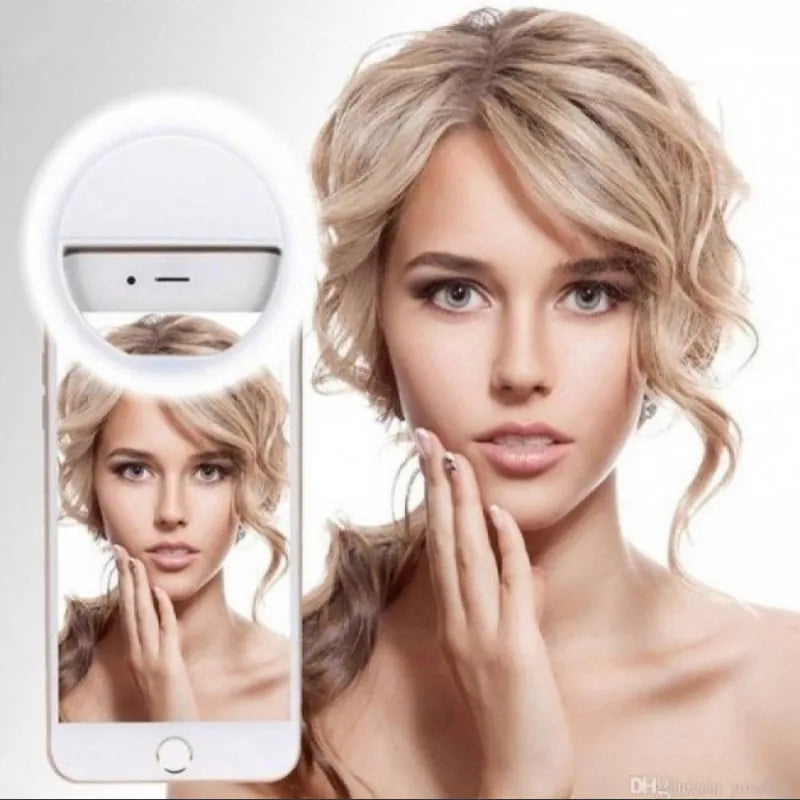
The WLD Store pick: Selfie Ring Light
These are the details stated in the WLD Store listing, reported as written with nothing added.
- Product: Selfie Ring Light, described as an LED studio light for content creators.
- Category: Electronics.
- Brand: WLD.
- SKU: WLD-KSA-0154-(KD-63733).
- Controls: the listing states adjustable brightness and colour temperature settings.
- Portability: presented as foldable and travel-ready.
- Intended uses: the listing names selfies, video calls and live streaming.
- Availability: sold across Saudi Arabia through secure checkout.
The Selfie Ring Light product page holds the full specification and current availability. Treat it as the authoritative source, since listings are updated over time and an article cannot track those changes.
How to position an led ring light
Positioning an led ring light does more for image quality than any amount of extra brightness, and it costs nothing to get right.
Start with the light directly behind or around your camera, centred on your face and raised so the middle of the ring sits slightly above eye level. Angle it down a few degrees. That small downward tilt keeps the catchlight high in the eye, which reads as natural.
Distance is next. Somewhere between fifty and eighty centimetres suits most faces: close enough to stay soft, far enough that you are not squinting. If your forehead is noticeably brighter than your chin, you are too close.
For a less clinical look, move the led ring light about thirty degrees to one side and raise it a little. You lose the perfectly symmetrical catchlight but gain some shape across the cheekbones, which suits interviews and talking-head video.
Finally, deal with the background. A face lit properly against a dim wall looks like a hostage video. Leave a lamp on behind you or angle the setup so some light spills past you onto the wall.
Led ring light settings for common situations
- Video calls. Medium brightness, colour temperature matched to the room, light straight on. The aim is to look normal, not lit.
- Live streaming. Slightly cooler and brighter, offset a little to one side, plus something illuminating the background so you separate from it.
- Makeup and skincare content. Warmer settings and a closer position show colour more truthfully than a cool white that shifts every shade.
- Product photos. Take the led ring light off the camera axis entirely and place it to one side, then bounce light back with a sheet of white card on the other.
- Late-night work. Drop the brightness far lower than feels right. A very bright light in a dark room is uncomfortable and looks worse on camera than a gentle one.
Using an led ring light with different cameras
The same light behaves differently depending on what is recording, and a few adjustments make each setup look considerably better.
With a phone, the main issue is automatic exposure. Phones meter for the whole frame, so a bright ring plus a dark background makes the camera darken your face. Tap and hold on your face to lock exposure before recording, then adjust the led ring light brightness rather than letting the phone guess.
With a laptop webcam, the sensor is small and struggles in low light, which is exactly the situation a ring solves. Keep the light close and moderate, and close any background window that could put a bright rectangle behind you and confuse the automatic settings.
With a dedicated webcam or a mirrorless camera, you have manual control, so set white balance to match the light rather than leaving it on automatic. Automatic white balance drifts mid-recording whenever anything in frame changes colour, and that shift is far more noticeable than a slightly imperfect fixed setting.
Whatever the camera, record a ten-second test before anything important. Checking framing, exposure and how the led ring light reflects in glasses or a screen takes almost no time and catches the problems that are impossible to fix afterwards.
Mistakes that make an led ring light look worse
Getting one is easy; a few habits stop it working as intended.
The first is running it at maximum out of habit. Full output at close range flattens skin, blows out highlights on foreheads and makes people blink. Brightness is a control, not a target.
The second is mixing colour temperatures. A cool white ring plus a warm ceiling bulb gives you two differently coloured shadows and skin that no white balance setting can fix. Turn the ceiling light off or match the ring to it.
The third is placing it too low. A light below the face throws shadows upwards, which is the classic effect used to make people look sinister in films. The centre of an led ring light should never sit below your chin.
The fourth is ignoring glasses. The ring reflects perfectly in lenses, and the fix is to raise the light slightly and tilt your head down a fraction until the reflection drops out of frame.
Led ring light care and maintenance
These units last for years with almost no attention, but a few habits help.
- Clean the diffuser with a dry microfibre cloth. Solvents cloud plastic diffusers permanently.
- Keep the cable strain-free. Most failures are at the connector, not in the light itself, so do not leave the cable pulled taut across a desk edge.
- Fold it the way it was designed to fold. Forcing a hinge is the fastest way to crack a housing on a travel model.
- Check the clamp grip periodically. Rubber pads harden with age, and a phone falling from a stand is an expensive way to discover that.
- Store out of direct sunlight and heat. Diffusers yellow with prolonged ultraviolet exposure, which shifts colour rendering.
- Do not cover it while running. Diodes and drivers need airflow, even though the surface stays fairly cool.
Common problems and quick fixes
- Banding or flicker in recordings. Use the light at full brightness and reduce camera exposure instead, or change your shutter setting.
- Skin looks orange or blue. Mixed sources. Match the ring to the room lighting or switch the room lighting off.
- The stand droops with a phone attached. The joint is undertightened or overloaded. Tighten gently, and move the phone closer to the pivot.
- A hard ring reflection in glasses. Raise the light and tilt it down slightly, or move it a little off axis.
Led ring light versus a softbox or a window
Each option has a job it does best, and knowing which is which saves money.
A window is free and, on an overcast day, genuinely beautiful. It is also uncontrollable: the direction changes through the day, the intensity swings, and after sunset it gives you nothing at all.
A softbox produces the softest, most natural-looking light of the three and is the professional default for interviews. It is bulkier, slower to set up and needs a stand with a real footprint, which rules it out for many desks.
An led ring light wins on convenience, on-axis mounting and eye catchlights. It is the practical choice for daily calls and phone content, and it can be combined with a window rather than competing with it. If you want to understand the kelvin numbers behind matching sources, Wikipedia has a clear explanation of colour temperature.
Led ring light eye comfort and sensible limits
This is worth saying plainly because the marketing never does. A bright light pointed at your face for hours is tiring, and comfort deserves as much attention as image quality.
Do not look directly into the diodes. There is no reason to, since you should be looking at the camera, and staring into any bright source causes afterimages and discomfort.
Use the lowest brightness that gives a good picture, and take a break from the setup every hour or so. If you get headaches or persistent eye strain during long sessions, reduce the output, increase the distance and raise the ambient light in the room so your eyes are not adapting between extremes.
People with light sensitivity, migraine triggered by bright light, or an eye condition should be especially cautious and seek medical advice if symptoms appear. Children should not point one at their own face unsupervised.
Led ring light buying checklist
- What diameter suits your desk and your subject? Measure before ordering, including the stand footprint.
- Is colour temperature adjustable, or fixed? Fixed units are much harder to match to a room.
- Does it dim smoothly on camera? Test-record at several levels early on.
- Will the clamp hold your phone with its case fitted? Thick cases defeat some holders.
- How will you power it for long sessions? Laptop USB ports are often the weak link.
Other Electronics picks at WLD Store
If you are putting together a desk or content setup, these three products from the same category sit naturally alongside a ring light.
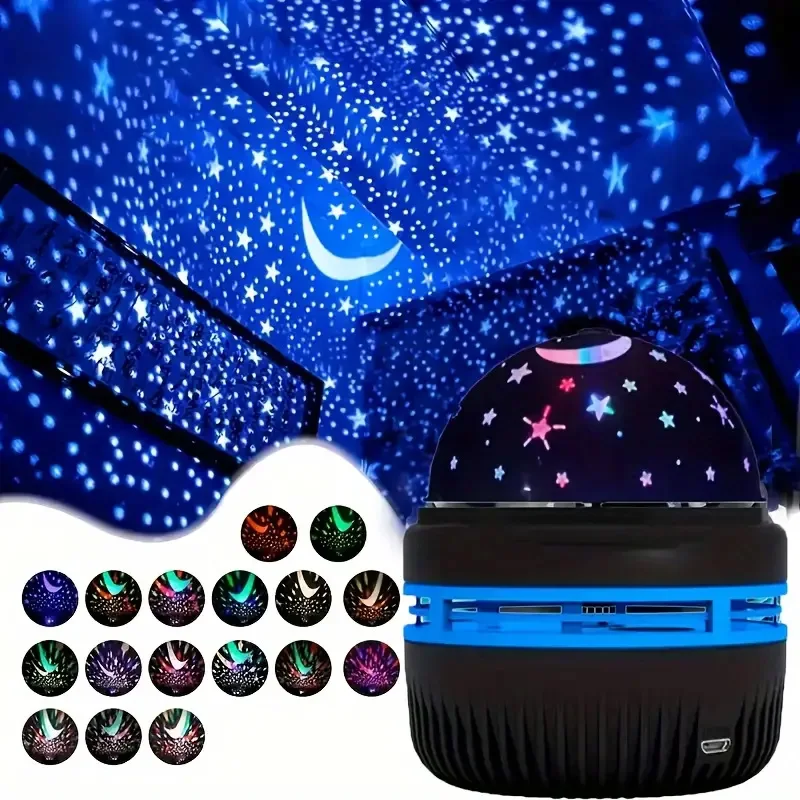
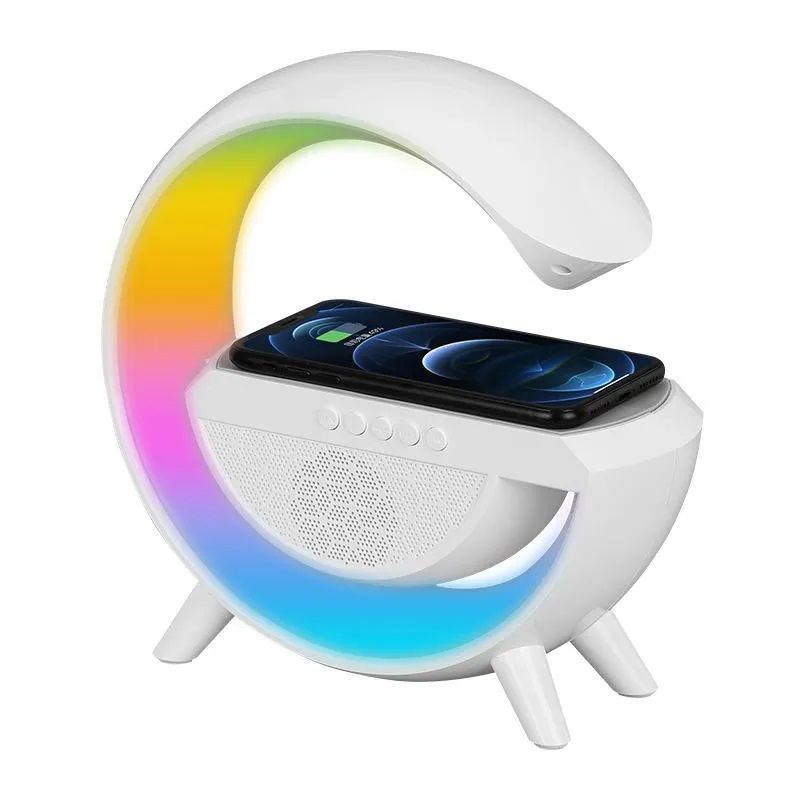
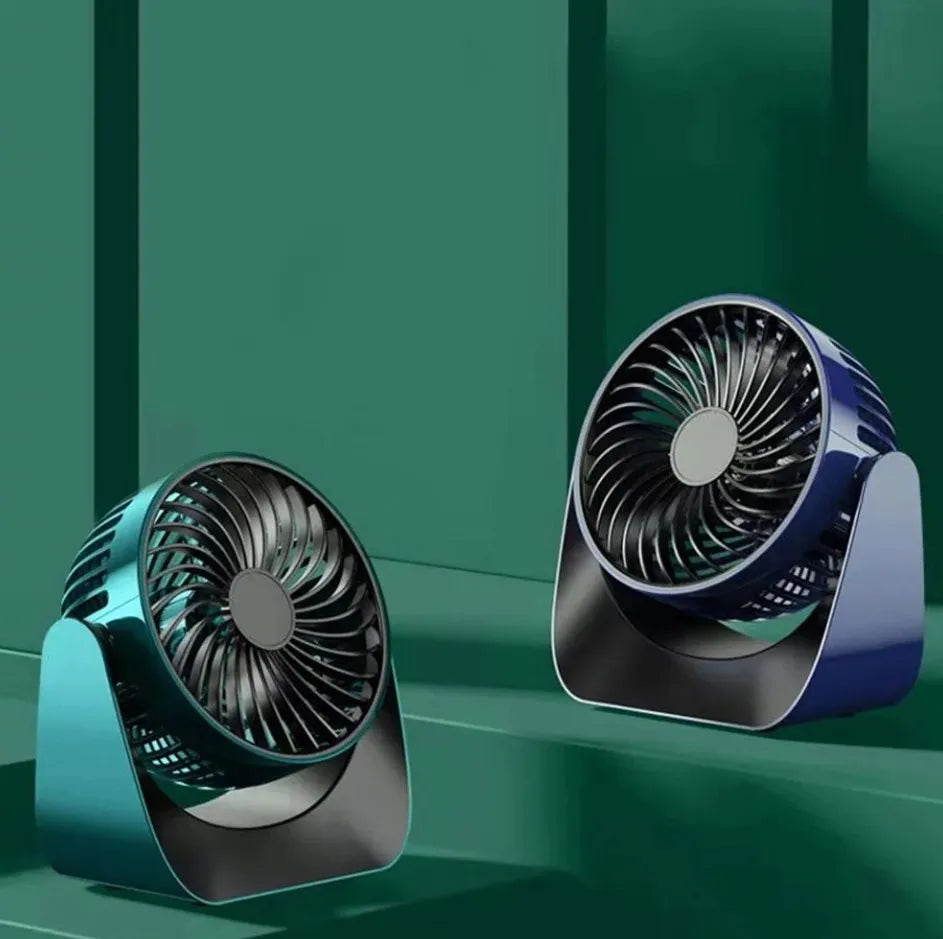
The star projector adds background interest for streams, the wireless charger speaker keeps a phone topped up between takes, and the desktop fan matters more than people expect once lights are on for an hour.
Frequently asked questions about the led ring light
What size led ring light is best for video calls?
Something in the twenty-five to thirty centimetre range covers a head and shoulders comfortably while still fitting on a desk. Smaller clip-on rings work for laptops but produce harder shadows because the source is physically small.
Should an led ring light be warm or cool?
Match whatever else is lighting the room. If you sit near a window during the day, cooler settings blend better; under household bulbs at night, warmer settings look more natural. Consistency between sources matters more than the exact value.
Why does my video flicker with the light on?
The dimming circuit is pulsing faster than your eye sees but slower than the camera samples. Run the light at full output and reduce exposure in the camera, or adjust your shutter speed until the banding disappears.
Can I use an led ring light for product photography?
Yes, though not from the camera axis. On-axis light flattens texture and creates a ring reflection on anything glossy. Move it to one side and bounce light back with white card for a far more three-dimensional result.
Is it safe to use one for several hours a day?
For most people, yes, at a sensible brightness and distance. Never look directly into the diodes, keep some ambient light in the room, and reduce the output if you notice eye strain or headaches during long sessions.
Do I still need one if I have a bright window?
A window is excellent while it lasts, but it changes through the day and vanishes at night. Many people use both: the window as the main source when it is available, and the ring as a consistent fill and evening replacement.
An led ring light is a small purchase that removes the most common flaw in home video, provided you position it slightly above eye level, keep the brightness moderate and match its colour to the room. If that sounds useful, see the Selfie Ring Light listing, or browse the wider range in the Mobile & Accessories section.





Add comment