An ab wheel roller looks like the simplest object in any gym, and it is quietly one of the hardest. Two handles, one wheel, no settings to adjust — yet a full rollout demands more control from the trunk than almost any machine in a commercial gym. That difficulty is exactly why the tool has survived decades of fitness fashions. This guide covers how the movement works, what to look for in a wheel, how to progress into it without hurting your back, and the compact model WLD Store lists for shoppers in Saudi Arabia.
Why an ab wheel roller works so well
Most abdominal exercises shorten the trunk. A crunch pulls the ribs towards the hips; a sit-up does the same through a longer range. An ab wheel roller does the opposite: it asks the trunk to resist being pulled open while the arms travel away from the body.
That resistance is called an anti-extension demand, and it is closer to what the core actually does in daily life. Carrying shopping, lifting a child, holding a heavy bag on one side — none of those involve curling up. They involve staying rigid while something tries to bend you.
The second reason is range. A rollout trains the abdominal wall through a long path under continuous tension, and the further you travel, the harder it gets. That built-in progression means one cheap tool can challenge a beginner and an advanced lifter with nothing more than a change in distance.
Third, an ab wheel roller recruits far more than the abs. The lats, the shoulders, the triceps and the hip flexors all work to keep the body in one line. Users often notice shoulder and upper-back soreness before abdominal soreness in the first week.
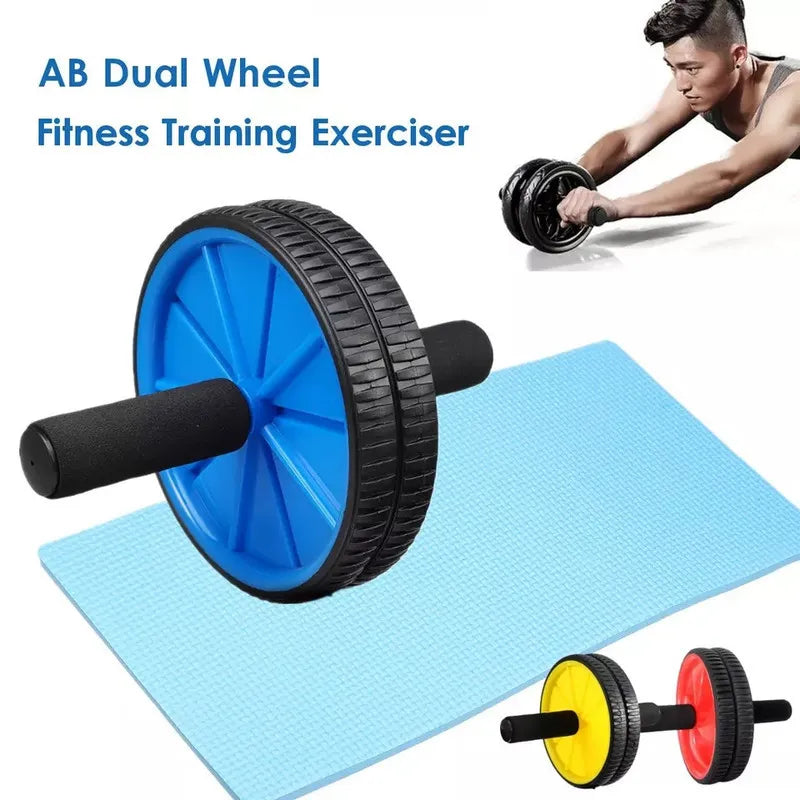
What makes a good ab wheel roller
The differences between models are small but they change how the exercise feels. Four things matter more than anything printed on the packaging.
Wheel width and tracking
A wider wheel, or a twin-wheel design, is more stable side to side and more forgiving while you are learning. A narrow single wheel wanders, which adds a rotational challenge that experienced users sometimes want and beginners almost never do. If this is your first ab wheel roller, favour stability.
Tracking also depends on the bearing. A wheel that rolls smoothly and coasts a little is easier to control than one that judders, because a juddering wheel makes you tense at the wrong moment.
Handle grip and comfort
Your hands hold your whole bodyweight through two small contact points, so grip matters. Look for a textured or foam-covered handle that will not slip once your palms are damp. WLD Store describes the model below as having a non-slip handle grip, which is the feature most worth checking on any ab wheel roller.
Handle diameter matters too. A very thin handle digs into the palm on longer sets, while an extremely thick one is hard to hold if you have small hands.
Surface material
Hard plastic wheels are fast and quiet on carpet but can slip on polished tile or marble. A rubberised tread grips harder floors better and makes less noise in an apartment. Given how common tile flooring is across Saudi homes, tread material is worth a moment of thought.
Size and portability
One of the real advantages of an ab wheel roller is that it disappears into a cupboard or a gym bag. The listing for the WLD Store model highlights exactly this: compact enough for home workouts and for carrying to a gym. If you travel, that portability is worth more than any feature on a bulkier machine.
The WLD Store pick: Ab Wheel Roller
Here is what the WLD Store listing actually states about this product, with nothing invented or added.
- Product: Ab Wheel Roller, a spinning wheel for arms and core workouts.
- Category: Sports & Fitness.
- Brand: WLD.
- SKU: WLD-KSA-0156-(KD-FMLY CNTR 455).
- Grip: the listing specifies a non-slip handle grip.
- Wheel: described as smooth-rolling for controlled movement.
- Size: presented as compact enough for home workouts and gym bags.
- Claimed benefit: the listing says it engages the abdominal region along with the arms and shoulders.
- Availability: sold across Saudi Arabia through secure checkout.
Full details and current availability are on the Ab Wheel Roller product page, which is the authoritative source if anything about the specification changes.
How to use an ab wheel roller safely
This is the section that matters most, because the ab wheel roller has an unusually high rate of people hurting themselves on day one. The injury is almost always the same: the lower back arches during the rollout, the hips sag, and the spine takes the load the abs were supposed to carry.
Start on your knees on a folded towel or a mat. Bare knees on tile will end the session before your abs do. Set your hands under your shoulders, grip the handles firmly and squeeze your glutes.
Before you move, flatten your lower back by tucking your pelvis slightly, as if you were trying to shorten the distance between your ribs and your hips. Hold that position. It is the single most important cue in the entire exercise.
Now roll forward only as far as you can go while keeping that flat back. For many beginners that is fifteen or twenty centimetres, and that is completely normal. The moment your lower back starts to arch, you have gone too far.
Pull yourself back by driving your hands towards your knees and squeezing your abs, not by yanking with your arms. Breathe out on the way back. Three sets of five clean repetitions beats three sets of fifteen sloppy ones every single time.
An eight-week ab wheel roller progression
Nobody should attempt a standing rollout in week one. This ladder gives the tissues time to adapt, and each stage has a clear exit criterion.
- Weeks one and two, wall rollouts. Kneel about a foot from a wall and roll until the wheel touches it. The wall caps your range so you cannot overreach. Move on when three sets of eight feel easy.
- Weeks three and four, short kneeling rollouts. Move away from the wall and roll to a marked point on the floor, keeping the back flat. Add two centimetres to the mark each session.
- Weeks five and six, full kneeling rollouts. Extend until your body forms a straight line from knees to hands. Stop the set the moment your form breaks, not when you reach a number.
- Weeks seven and eight, tempo work. Slow the rollout to a three-second count and pause for one second at full extension. This is much harder than adding repetitions and far safer than progressing to standing.
Only consider a standing rollout after several months of clean kneeling work, and even then most people never need it. The kneeling version with a slow tempo remains a serious challenge for years.
Ab wheel roller care and storage
There is very little to maintain, but a few habits keep the wheel rolling true and the grips safe.
- Wipe the handles after every session. Sweat makes foam and rubber slippery and degrades them over months.
- Clean the tread regularly. Dust and hair build up on the wheel surface and reduce grip on smooth floors.
- Check the axle every few weeks. Hold the wheel and try to rock it sideways. Noticeable play means it is time to stop using it.
- Inspect the handles for movement. A handle that has begun to rotate on the axle is a warning sign, not a quirk.
- Store it dry and out of direct sun. Heat and ultraviolet light make foam grips crumble faster than any amount of use.
- Keep it off balconies in summer. Surface temperatures on an exposed balcony are hard on plastics and adhesives.
Where an ab wheel roller fits in a weekly plan
Rollouts are demanding enough to count as a main exercise, not a finisher tacked onto the end of a session when you are already tired. Fatigue is what makes the lower back arch, so the order of your workout matters more than most people assume.
Two or three sessions a week is plenty. The trunk recovers reasonably quickly, but the shoulders and lats also take load, so back-to-back days tend to leave the upper body flat rather than the abs sore.
Place the ab wheel roller early: after your warm-up and either before or immediately after your main lift. If you train at home without weights, treat it as the second exercise of the session, once your shoulders are warm but before your grip is tired.
Pair it with movements that work the opposite pattern. Rows, pull-ups and hip hinges balance out an exercise that is heavily front-loaded, and that balance is what keeps shoulders healthy over months of training.
Finally, keep a simple record. Write down the distance you reached and how the back felt, not just the repetitions. Progress on an ab wheel roller shows up as extra centimetres of clean range long before it shows up as extra reps.
Ab wheel roller variations worth learning
Once the standard kneeling rollout is solid, the same wheel offers several genuinely different challenges without any extra equipment.
- Wide-stance kneeling rollouts. Setting the knees further apart shortens the lever slightly and lets you push range while keeping the pelvis tucked. A useful stepping stone.
- Angled rollouts. Roll out at roughly forty-five degrees to one side instead of straight ahead. This loads the obliques and exposes any side-to-side imbalance you have been hiding.
- Paused rollouts. Hold for two seconds at your maximum clean range. This builds control at the hardest point and is far safer than adding distance.
- Eccentric-only rollouts. Roll out slowly, then place your hips down and reset by hand. Good when you can control the way out but not yet the way back.
- Single-arm holds. Advanced and optional. Take one hand off at a short range for a second or two, only after months of clean work.
Rotate one variation in every few weeks rather than trying all of them at once. An ab wheel roller improves fastest with a narrow focus and consistent practice, and switching drills every session makes it hard to tell whether anything is working.
Common problems and quick fixes
- Your lower back aches afterwards. Your range is too long. Shorten it dramatically, re-learn the pelvic tuck, and build back up over weeks.
- The wheel slides sideways. Usually uneven hand pressure. Set your hands directly under your shoulders and press evenly through both palms.
- You cannot get back up. Completely normal at first. Use the wall progression until the return is under control.
- The wheel slips on tile. Put a thin mat or rug under it, or choose a rubberised tread rather than hard plastic.
Ab wheel roller versus planks and crunches
People often ask whether they still need other core work. The honest answer is that these tools do different jobs.
A plank is an isometric hold: you resist gravity in one fixed position. It is an excellent starting point and very safe, but it stops challenging you once you can hold it for a couple of minutes.
A crunch shortens the abdominal wall through a small range. It builds the muscle, but it does not train the trunk to stay rigid under load, which is the demand most people meet in real life.
An ab wheel roller sits above both. It is a moving anti-extension exercise with a long range and continuous tension, which is why it stays difficult indefinitely. A sensible plan uses planks to learn the position, then an ab wheel roller to load it. For background on how these movements are classified, Wikipedia has a useful overview of abdominal exercise.
Who should avoid an ab wheel roller
This tool is not for everyone, and pretending otherwise would be unhelpful.
Anyone with a history of disc problems, sciatica or ongoing lower-back pain should speak to a physiotherapist or doctor before attempting rollouts. The loaded lumbar extension that occurs when form fails is precisely the position most back conditions dislike.
People who are pregnant or recently postpartum should also seek professional guidance first, as should anyone with a diagnosed abdominal separation. Shoulder injuries are another reason to wait, because the rollout puts the shoulder into a loaded overhead position.
If you cannot yet hold a plank with a flat back for thirty seconds, build that first. An ab wheel roller magnifies whatever control you already have, and magnifying zero control produces an injury rather than a stronger core.
What to expect in your first month
Expectations decide whether people stick with an exercise or quietly abandon it, so it helps to know what normal progress looks like.
In week one, most beginners manage a very short range and feel it mainly in the shoulders and hip flexors. That is not a sign of doing it wrong; it is a sign that the trunk has not yet learned to hold position, so other muscles are compensating.
By week three, the abdominal wall usually starts taking over and the soreness moves where you expected it. Range typically grows by a few centimetres a week, which feels slow but adds up quickly.
By the end of the first month, a clean half-range kneeling rollout for sets of eight is a realistic target for most healthy adults. Anyone reaching full extension in four weeks should double-check their back position on video, because it is far more often a form illusion than genuine progress.
Above all, resist comparing your range to someone else’s. An ab wheel roller exposes leverage differences between body types, and a taller person with long arms will always find full extension harder than a shorter one.
Ab wheel roller buying checklist
- Is the wheel wide or twin, or a single narrow one? Wider is easier to control while you learn.
- Will the tread grip your actual floor? Tile and marble punish hard plastic wheels.
- Are the handles comfortable for your hand size? You are holding your bodyweight through them.
- Do you have a mat or towel for your knees? Buy one at the same time if not.
- Can you already hold a flat-backed plank? If not, start there and buy the wheel for later.
Other Sports & Fitness picks at WLD Store
These three products from the same category complement rollout training rather than duplicating it.
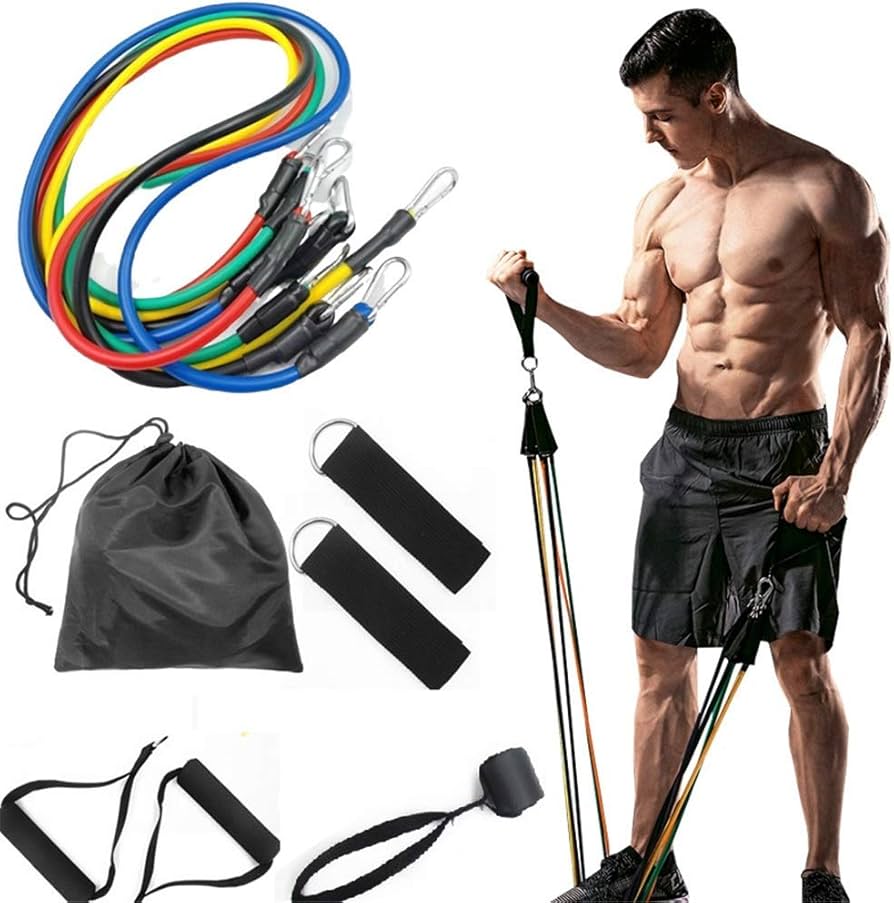
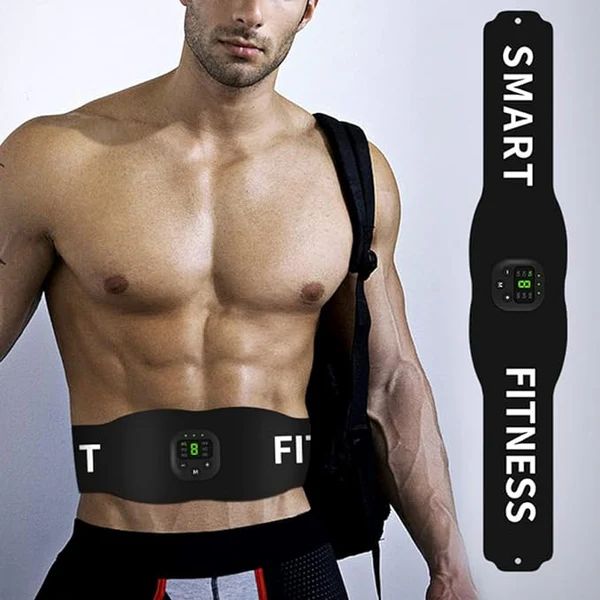
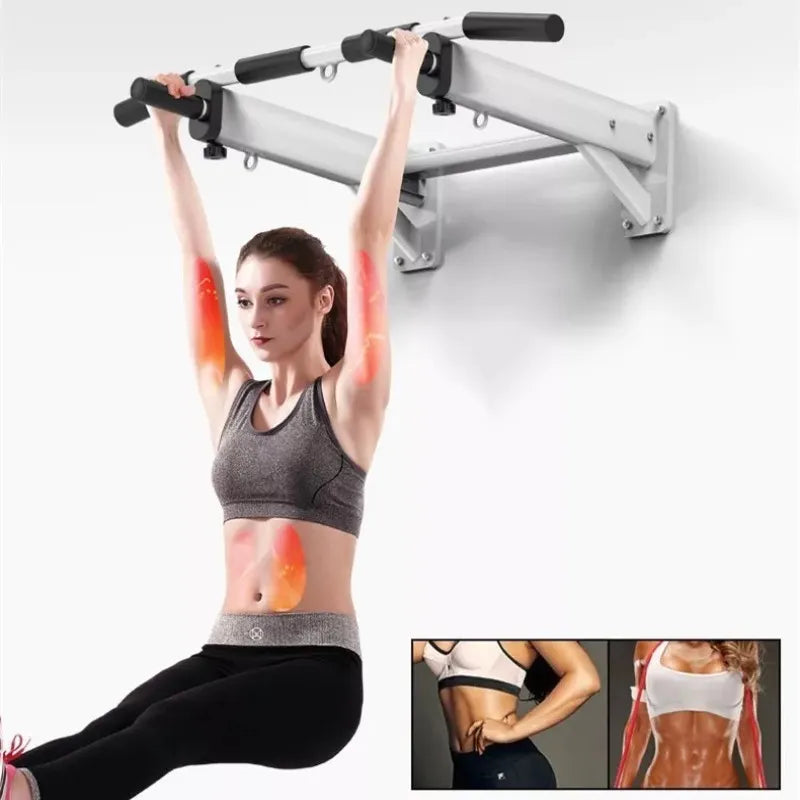
The exercise band set is useful for warming the shoulders before rollouts, the fitness belt is a separate accessory, and the pull up bar covers the pulling pattern that rollouts leave untouched.
Frequently asked questions about the ab wheel roller
Is an ab wheel roller good for beginners?
It can be, provided the beginner starts with wall-limited rollouts and never chases distance. The exercise scales entirely by how far you travel, so a very short range is a legitimate starting point rather than a failure.
How many repetitions should I do?
Quality decides the number, not a target. Three sets of five to eight controlled repetitions is a productive session for most people, and the set should end the moment the lower back stops staying flat.
Will an ab wheel roller give me visible abs?
It builds and strengthens the muscles, but visibility depends mostly on overall body composition, which is driven by diet and total activity. No single piece of equipment changes how much fat sits over the muscle.
Can I use one on a tiled floor?
Yes, but check the tread. Hard plastic can slide on polished tile or marble, so either choose a rubberised wheel or roll on a thin mat or rug for grip and to protect the surface.
Why do my shoulders hurt more than my abs?
That is common in the first weeks because the shoulders and lats work hard to hold the line. Warm the shoulders up first and reduce your range slightly; if pain persists rather than fading, stop and get it checked.
Do I need knee padding?
Yes. A folded towel, a yoga mat or a dedicated pad makes the difference between finishing a set and stopping because your knees hurt. It costs almost nothing and removes the most common reason people abandon the exercise.
An ab wheel roller is a small, portable tool that stays challenging for years, provided you respect the learning curve and treat a flat lower back as non-negotiable. If that suits how you want to train, take a look at the Ab Wheel Roller listing, or browse the full range in the Sports & Fitness section.



Add comment