A boxing reflex bag is one of the few pieces of home training gear that teaches timing rather than raw power. Instead of absorbing a punch the way a heavy bag does, it springs straight back at you, so every shot you throw creates the next problem you have to solve. This guide explains how the equipment works, what separates a stable unit from a wobbly one, how to set it up in a normal apartment, and how to train on it without picking up bad habits. It also looks at the freestanding model WLD Store lists for Saudi Arabia.
Why a boxing reflex bag belongs in a home gym
Most home fitness gear trains one quality: strength, endurance or flexibility. A boxing reflex bag is different because it trains reaction time, and reaction time is the thing that decays fastest when you stop practising. The ball moves the moment you touch it, which means you cannot switch off mentally for a single repetition.
That constant feedback is also what makes the sessions short. Five focused minutes on a boxing reflex bag will raise your heart rate and sharpen your eyes more than fifteen minutes of distracted shadow boxing. For anyone squeezing training into a lunch break, that ratio matters.
There is a coordination benefit too. Hitting a small, fast-returning target forces your eyes, hands and feet to work on the same clock. Coaches call this hand-eye coordination, and it carries over into racquet sports, football goalkeeping and anything else where you have to react to a moving object.
Finally, a boxing reflex bag is quiet compared with most striking equipment. There is no chain rattle and no bracket vibrating through a shared wall, which is why it suits flats and villas where a mounted heavy bag would cause complaints.
What makes a good boxing reflex bag
This gear looks simple in a product photo, but the differences between a unit you enjoy and one that annoys you come down to four things: the base, the shaft, the ball assembly and the finish. Work through them before you buy.
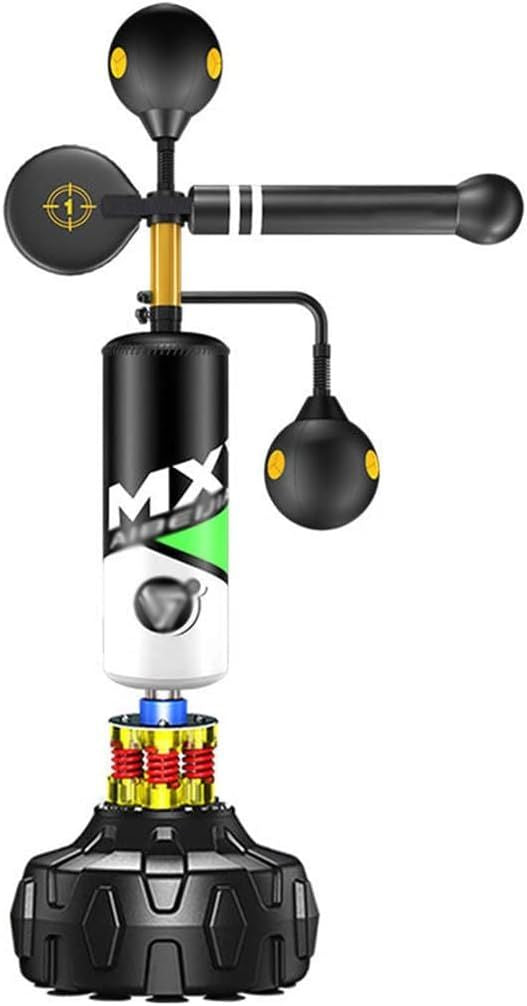
The base decides everything
A freestanding boxing reflex bag stays upright because the base is heavier than the force you apply at the top. Most designs use a hollow base you fill with water or sand. Sand is denser, so it gives you more stability for the same volume, but water is easier to drain when you want to move the unit.
Check that the base sits flat with no rocking before you fill it. A base that rocks on an even floor will rock much more once there is weight in it, and that wobble transfers straight into the ball, making the rebound unpredictable.
Height adjustment and who will use it
Height matters more on a boxing reflex bag than on almost any other trainer, because the ball should sit at roughly your own head height. Too low and you develop a habit of dropping your hands; too high and you stop moving your feet and start reaching with your shoulders.
If several people in the house will use the same unit, an adjustable shaft is not a luxury. WLD Store describes the model below as having a height-adjustable base that suits different ages and training levels, which is the feature that lets one purchase serve a whole family.
The ball and the return cord
The rebound speed comes from the cord or spring bar linking the ball to the shaft. A shorter, stiffer connection returns the ball fast and suits experienced boxers. A longer, softer one gives beginners a fraction more time to reset their guard. Neither is better in the abstract; it depends on where you are starting.
Look at how the ball is attached, too. A ball on a swivel returns more predictably than one on a fixed knot, and a swivel is usually the first part to wear out, so check that you can see how it is fastened.
Footprint and floor protection
Measure the base diameter and add at least a metre of clear space on every side. You need room to circle the target, not just stand square to it. On tile or polished concrete, put a rubber mat underneath: it stops the base creeping across the floor and protects the surface from scuffs.
The WLD Store pick: Boxing Reflex Speed Bag
WLD Store lists a freestanding boxing reflex bag aimed at home training in Saudi Arabia. Here is exactly what the listing states, with nothing added.
- Product: Boxing Reflex Speed Bag, a freestanding punching target with a spinning bar.
- Category: Sports & Fitness.
- Brand: WLD.
- SKU: WLD-KSA-0032-(KD-KD0115).
- Design: the listing says it stands on its own base, so no wall mounting is required.
- Adjustment: described as height-adjustable, suiting a range of ages and training levels.
- Claimed benefit: the listing positions it as a way to work on hand-eye coordination, timing and boxing technique.
- Availability: sold to customers across Saudi Arabia through secure checkout.
You can read the full specification and current availability on the Boxing Reflex Speed Bag product page. Because stock and configuration details can change, the product page is always the authoritative source rather than any article.
Setting up a boxing reflex bag correctly
Assembly usually takes ten to twenty minutes, and doing it carefully saves hours of frustration later.
- Assemble on the floor it will live on. A filled base is heavy and awkward to carry through doorways.
- Fill the base last. Fit the shaft and ball first while the unit is still light enough to tip and align.
- Fill it completely. A half-filled base sloshes, and moving liquid makes the whole unit sway after every punch.
- Set the ball to your head height. Stand in your normal stance and adjust so the ball centre lines up with your chin or nose.
- Tighten every collar and knob. Re-check them after the first session, because fasteners always settle once they take load.
- Leave a metre of clearance. The ball travels further than people expect on a hard shot.
How to train on a boxing reflex bag
A boxing reflex bag rewards accuracy, not force. Hitting it as hard as you can sends the ball on a wild arc that teaches you nothing and stresses the shaft. Think of it as a precision tool.
Start with single jabs. Throw one, let the ball return, catch it with a second jab. When you can string ten together without losing the rhythm, add the cross. Only then move on to combinations, and keep your feet moving between shots rather than standing flat.
A simple session structure works well: three rounds of two minutes with a minute of rest, building to five rounds as your conditioning improves. Set a timer rather than counting punches, because counting pulls your attention away from the target.
Wrap your hands and wear light bag gloves. The ball is small and a mistimed shot can catch a knuckle or a fingertip at an odd angle. Nobody needs a hand injury from a reflex drill.
Warm up your shoulders and neck first. The head movement that a boxing reflex bag encourages is genuinely useful, but only if the muscles doing it are ready. If you have any neck, shoulder or wrist problem, or you are new to striking of any kind, get advice from a qualified coach or clinician before you start.
Where to put a boxing reflex bag in a Saudi home
Placement decides whether a boxing reflex bag gets used or becomes a coat rack. A spare bedroom corner, a majlis that is not in daily use, or a shaded section of a covered terrace all work.
Avoid direct afternoon sun on a balcony. High surface temperatures are hard on rubber, foam and printed graphics, and a base filled with water will heat up considerably. If outdoors is your only option, bring the unit into shade between sessions.
Indoors, keep it away from glass cabinets, televisions and light fittings. A ball on a long cord can travel much further than the base suggests, particularly when a beginner catches it at an angle.
Boxing reflex bag care and maintenance
This is low-maintenance equipment, but a short routine keeps it safe and extends its life considerably.
- After each session: wipe sweat off the ball and shaft with a damp cloth. Salt residue degrades surfaces and smells within days.
- Weekly: check every fastener by hand. Vibration loosens collars faster than most owners expect.
- Weekly: inspect the cord or connecting bar for fraying, kinks or stretch. Replace or stop using it at the first sign of damage.
- Monthly: check the base for leaks or seepage, especially around the fill cap.
- Every few months: if the base is water-filled, drain and refill it. Standing water goes stale and can encourage growth inside the reservoir.
- Storage: if you drain the base for storage, dry the inside as far as you can before capping it.
Common problems and quick fixes
- The whole unit walks across the floor. The base is underfilled or the floor is slick. Top up the base and add a rubber mat underneath.
- The ball returns unpredictably. Usually a twisted cord or a seized swivel. Untwist the cord fully and check the swivel turns freely by hand.
- The shaft sinks during a session. The height collar is not clamped hard enough, or the clamping surface is dusty. Clean the shaft and retighten.
- You keep missing. Almost always a height problem. Lower the ball to chin height and slow down; speed comes after accuracy, never before it.
A four-week boxing reflex bag progression
Having a plan is the difference between a piece of equipment you use and one you walk past. This progression assumes three sessions a week and no prior boxing experience. Adjust it down if anything hurts.
- Week one, single shots. Three rounds of ninety seconds. Jab only. Let the ball come to a near stop between punches and focus on hitting the same spot every time.
- Week two, add the cross. Three rounds of two minutes alternating jab and cross. Keep your rear hand at your cheek while the lead hand works.
- Week three, add movement. Four rounds of two minutes. Take one step after every second punch so you are never standing still, and circle in both directions.
- Week four, add head movement. Four to five rounds. Slip once to the outside after each combination. This is where a boxing reflex bag genuinely outperforms shadow boxing, because the returning ball punishes a lazy slip.
Track only two things: how many clean contacts you make in a round, and whether your guard is still up at the end of it. Both improve faster than most people expect, and both are better markers than how hard you are hitting.
Once the four weeks are done, keep the format and vary the drill. Alternating single and double jabs, working only at half speed for a round, or setting a rule that every combination must finish with a step are all worth adding. A boxing reflex bag stays interesting because the target never behaves the same way twice.
Boxing reflex bag, speed bag or heavy bag?
These three pieces of equipment get confused constantly, and buying the wrong one is a common and expensive mistake.
A heavy bag builds punching power and conditioning. It needs a solid mounting point or a very heavy stand, it is loud, and it takes real space.
A traditional speed bag hangs from a mounted platform and trains rhythm and shoulder endurance. The platform has to be fixed to a wall or frame at exactly the right height, which rules it out for many renters and for anyone who cannot drill into a shared wall.
A boxing reflex bag sits between them. It is freestanding, so no drilling is needed, it is far quieter than either alternative, and it trains timing and head movement rather than power. If your goal is a stronger punch, buy a heavy bag. If your goal is sharper reactions in a small, shared space, a boxing reflex bag is the better fit. For a general background on traditional striking equipment, see the overview of the speed bag on Wikipedia.
Who a boxing reflex bag is not for
Honesty helps more than a sales pitch. If you want to build strength or burn calories through sheer volume, this is not the most efficient purchase; resistance bands or a heavy bag will serve you better.
It is also not ideal for very young children without supervision. The ball moves fast and returns towards the face, and a child who has not learned to keep their guard up can take a knock. Adults should set the height and stay in the room.
Anyone with an existing wrist, elbow, shoulder or neck condition should treat striking equipment with care and take medical advice first. Repetitive punching loads small joints in ways that walking or cycling do not.
Boxing reflex bag buying checklist
- Does the height range cover everyone who will use it? Measure the tallest and shortest user before you order.
- Can you fill and drain the base easily where it will stand? Carrying a filled base is a two-person job.
- Do you have a clear metre on all four sides? Measure the floor, not the wall.
- Is the floor suitable, or do you need a mat? Tile and marble almost always need one.
- Do you already own wraps and gloves? Budget for them at the same time rather than training bare-knuckle.
Other Sports & Fitness picks at WLD Store
If you are building a small home setup, these three products from the same category pair naturally with a boxing reflex bag.
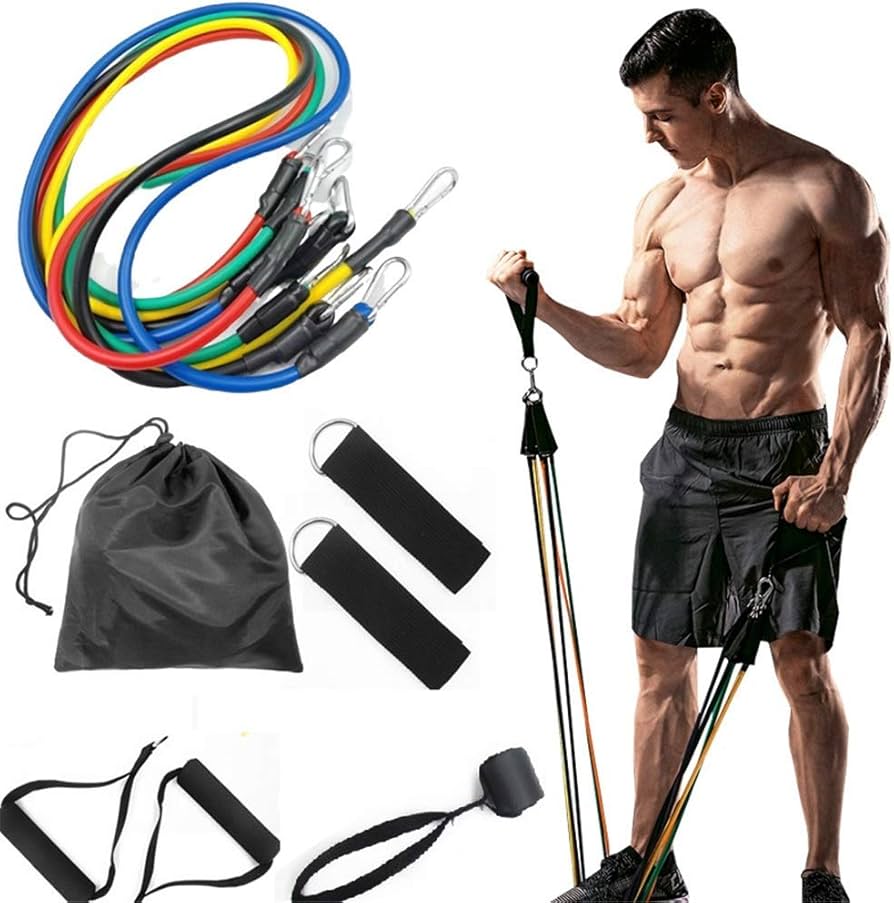
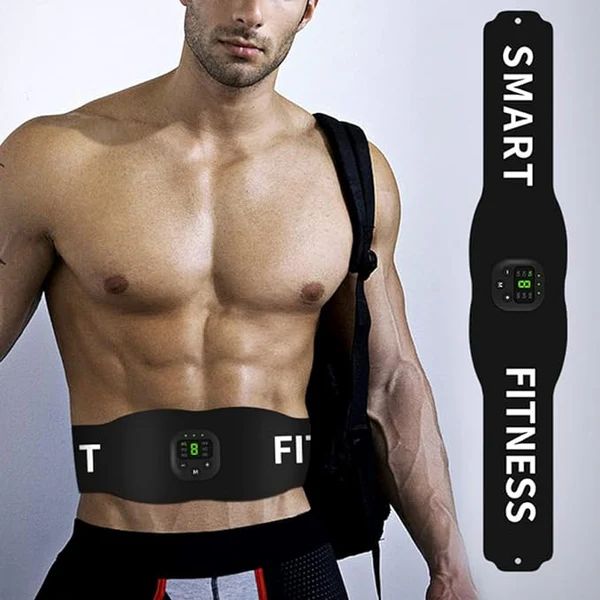
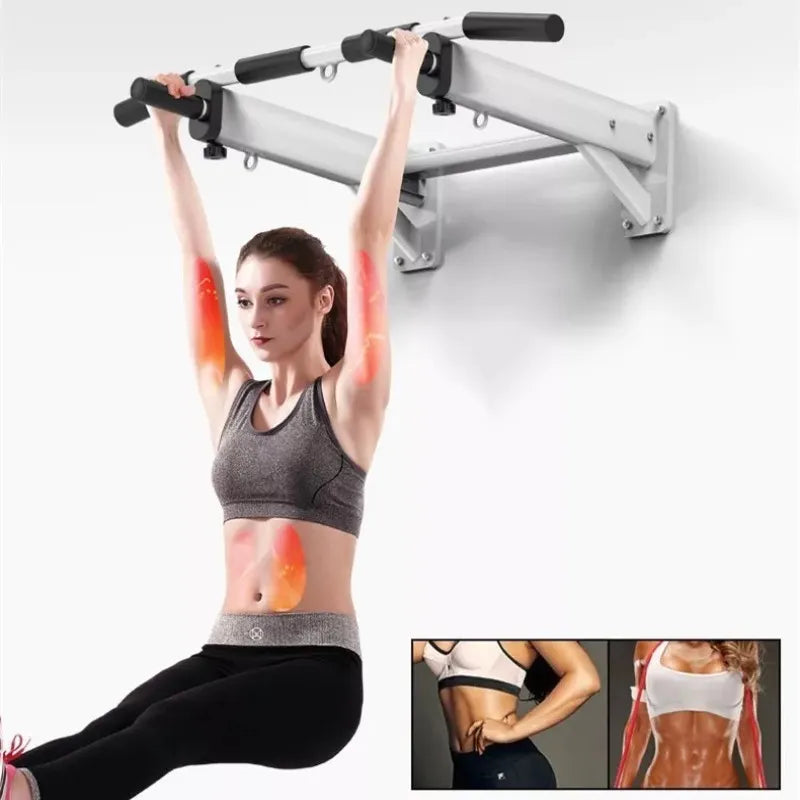
The exercise band set covers warm-ups and shoulder prehab, the fitness belt is a core accessory, and the pull up bar adds the pulling work that punching alone never gives you.
Frequently asked questions about the boxing reflex bag
Is a boxing reflex bag suitable for a complete beginner?
Yes, provided you set the height correctly and start slowly. Beginners should throw single jabs and let the ball settle between shots rather than chasing it. Speed builds naturally once the movement pattern is reliable, usually within a few weeks of short, regular sessions.
Do I need gloves for a boxing reflex bag?
Hand wraps plus light bag gloves are strongly recommended. The target is small and hard to hit cleanly at first, and mistimed contact on a bare knuckle or fingertip is the most common minor injury with this equipment.
How much space does a boxing reflex bag need?
Plan for the base diameter plus roughly one metre of clearance on each side, and check the ceiling height if you are tall. You should be able to circle the target and step back without hitting furniture.
Should I fill the base with water or sand?
Sand is denser and gives more stability for the same volume, so it is the better choice if the unit will stay in one place. Water is lighter to handle and far easier to drain, which suits anyone who needs to move or store the unit regularly.
Will a boxing reflex bag disturb the neighbours?
A boxing reflex bag is much quieter than a hanging heavy bag because there is no chain, no mounting bracket and no impact transmitted into a wall. Some low-frequency thud still travels through the floor, so a rubber mat is a sensible courtesy in an apartment.
How often should I use a boxing reflex bag?
Short and frequent beats long and occasional. Three to five sessions a week of ten to fifteen minutes is enough to see reaction time improve, and it keeps the wrists and shoulders from taking too much repetitive load in a single sitting.
A boxing reflex bag is a small purchase that changes how you train, as long as you match the height to the user, fill the base properly and treat accuracy as the goal. If that fits how you want to work out, the Boxing Reflex Speed Bag is worth a look, and you can browse the wider range in the Sports & Fitness section to build the rest of your home setup.




Add comment