A waist trainer belt is one of the most marketed items in the fitness accessory aisle, and one of the most misunderstood. It is a wide, adjustable band worn around the midsection during exercise, and what it genuinely does is quite different from what the category is often sold on.
This guide sets out plainly what a waist trainer belt does, what it does not do, how to size one, how to use it safely in a hot climate, and how it compares with a proper weightlifting belt. There is a checklist, six answered questions, and the WLD Store pick described exactly as the listing describes it, with the seller’s claims labelled as such.
What a waist trainer belt actually does
Three things are genuinely happening when you put one on, and none of them are mysterious.
The first is compression. A wide band firmly wrapped around the midsection holds the abdomen and lower back, and many people report that this feels supportive during movement. That feeling is real, and it is the main reason people keep wearing one.
The second is insulation. Neoprene and similar materials trap heat against the skin, so the area under a waist trainer belt gets warmer and you sweat more there. This is straightforward physics rather than metabolism, and the section below explains why the distinction matters.
The third is a postural cue. Because you can feel the band, you notice when you slump or arch. Some people find this helps them stay upright during a workout, in the same way a piece of tape across the back reminds you to sit straight.
Those three effects are what a waist trainer belt reliably provides. Everything beyond them belongs to marketing rather than to the product.
What a waist trainer belt does not do
This section is here because being clear about it is more useful than another list of benefits.
Sweating more in one area does not mean burning more fat in that area. Sweat is water, and the weight you lose as sweat comes straight back when you rehydrate, which you should. A lower reading on the scales after a hot session is fluid, not fat.
Targeted fat loss, sometimes called spot reduction, is not supported by evidence. The body does not draw fat preferentially from the area you happen to have wrapped, heated or exercised. Where fat is lost is largely down to genetics and overall energy balance.
Nor does a waist trainer belt permanently reshape the waist. Any narrowing you see immediately after taking one off is the temporary result of compression on soft tissue, and it resolves within a short time.
None of this makes the product useless. It makes it a support and comfort accessory rather than a weight-loss device, and buying one with the correct expectation is the difference between being satisfied and being disappointed.
What makes a good waist trainer belt
Once you are clear on what you are buying, the quality differences between one waist trainer belt and another are easy to assess.
Material and lining
Neoprene is the standard because it is flexible, durable and holds its shape. What varies is the lining. A brushed or towelling inner face is far more comfortable against bare skin and holds up better to repeated sweating than bare rubber.
Look for flat-locked or bound edges. Raw cut edges on a cheap waist trainer belt chafe at the ribs and hips within a couple of sessions, and that is the most common reason one gets abandoned.
Closure and adjustability
A wide hook-and-loop closure across most of the front gives the most adjustment range and the most even pressure. Narrow strips concentrate the pull in one line and peel open under load.
Some designs add a secondary tension strap over the main closure. This is genuinely useful, because it lets you set a comfortable base wrap and then fine-tune the tightness without unwrapping everything.
Height and coverage
Height determines what the belt actually supports. A narrow band sits at the natural waist and mostly provides a postural cue. A taller one covers more of the lower back and feels more supportive, but it can dig in when you bend forward.
Match the height to your torso. If you are short in the body, a very tall waist trainer belt will catch under your ribs on every rep, which is uncomfortable and distracting.
Stiffness and boning
Some belts include flexible plastic or steel stays running vertically. These stop the band rolling and folding over on itself, which is the single most annoying failure mode during exercise.
The trade-off is flexibility. More stays means less rolling and less freedom to bend. For general training, a couple of flexible stays at the back is a good compromise.
Breathability
In a Saudi summer this deserves real weight. Perforated panels or a mesh section make a meaningful difference to comfort, and a waist trainer belt with no ventilation at all becomes unpleasant quickly in a warm gym.
Sizing range
Check the stated measurement range rather than relying on small, medium and large labels, which vary wildly between manufacturers. Measure yourself first and match to numbers.
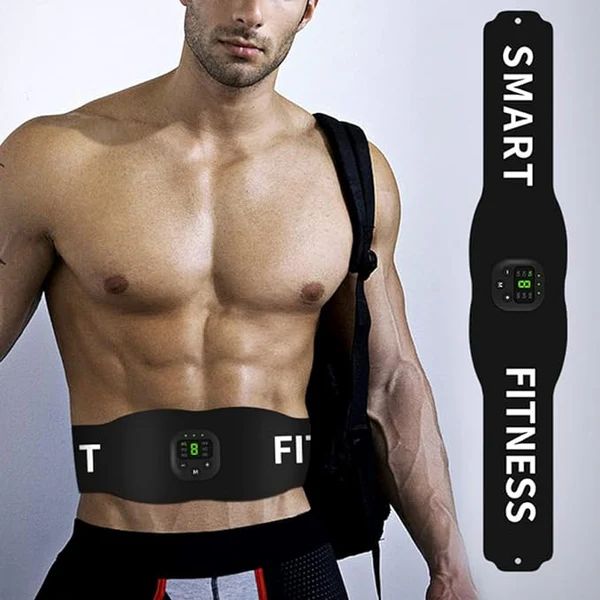
The WLD Store pick: Weight Loss Abdomen Fitness Belt
WLD Store lists this product as a fitness accessory for use during workouts. The points below are what the listing states, and where the listing makes a claim we have labelled it as the seller’s description rather than presenting it as established fact.
- Product: Weight Loss Abdomen Fitness Belt, described in the listing as a waist trainer
- Seller’s claim: the listing states it increases core temperature during workouts for enhanced calorie burning and sweat; see the section above on why sweat and fat loss are not the same thing
- Support: the listing describes firm abdominal support and lumbar stability while exercising
- Fit: described as adjustable and comfortable for a range of body sizes
- Category: Sports & Fitness
- Brand: WLD | SKU: WLD-KSA-0052-(KD-KD0175)
- Market: available across Saudi Arabia with secure checkout
The full description, all photographs, the stated size range and current availability are on the Weight Loss Abdomen Fitness Belt product page. Check the measurements listed there against your own before ordering.
Waist trainer belt sizing and fit
Fit is where most waist trainer belt complaints originate, and it is entirely avoidable with a tape measure.
Measure around your natural waist, the narrowest point, standing normally and breathing out gently. Do not pull the tape tight and do not hold your stomach in; you want the measurement you will actually be wearing the belt at.
Compare that number to the stated range for each size and, if you fall between two, consider what you want from it. The larger size gives more adjustment room as you use it; the smaller gives firmer compression from day one.
When you put a waist trainer belt on, it should feel firm and present, not restrictive. A useful test: if you cannot take a full, comfortable breath in, it is too tight, and tighter is not better in any respect.
Position it at the natural waist rather than on the hips. Too low and it rides up during movement; too high and it presses on the lower ribs. Expect to readjust once or twice in the first few minutes of a session.
Using a waist trainer belt safely in a hot climate
This matters more here than in most places, and it is worth taking seriously rather than treating as small print.
- Drink more, not less. Extra sweating means extra fluid loss. Replacing it is not optional, and deliberately dehydrating yourself to see a number on the scales is a genuinely bad idea.
- Do not wear one for outdoor training in peak heat. Adding insulation while exercising in high ambient temperature raises heat stress. Save it for air-conditioned sessions.
- Keep sessions to normal workout length. A waist trainer belt is worn for the duration of exercise, not all day.
- Loosen it if you feel light-headed. Dizziness, nausea or breathlessness are signals to stop and take it off, not to push through.
- Take it off between sets in a warm gym. Letting the skin cool and dry is more comfortable and reduces chafing.
- Check your skin afterwards. Persistent redness or irritation where the edges sit means the fit or the material is wrong for you.
If you are pregnant or recently postpartum, have a hernia, reflux, high blood pressure, or any abdominal or back condition, speak to a doctor before using abdominal compression of any kind. That is not a disclaimer for its own sake; compression around the midsection genuinely interacts with those conditions.
Where a waist trainer belt fits in a training plan
Used sensibly, this is an accessory that supports training rather than replacing any part of it.
The realistic role is comfort and a sense of support during moderate work: cardio sessions, circuit training, or general gym work where you want your midsection to feel held. Many people also like it for walking, particularly if they find their posture drifts.
What it should not do is take the place of building your own core strength. Relying on external support for every session means the muscles that would otherwise do that work get less stimulus, so use it as an occasional aid rather than a permanent fixture.
Progress in body composition comes from the boring, well-established combination of consistent training, adequate protein, an appropriate overall energy intake and sleep. A waist trainer belt sits alongside that; it does not substitute for any of it. If you want an overview of how the components of fitness fit together, the Wikipedia article on physical fitness is a reasonable neutral starting point.
What to expect in the first two weeks
Setting expectations properly is what separates a purchase you keep from one that goes in a drawer, so here is a realistic account of how the first fortnight usually goes.
The first session is normally the least comfortable. A new waist trainer belt is at its stiffest, you have not found your position yet, and you will probably adjust it several times. That is normal and not a sign of a bad fit.
By the third or fourth session the material has softened slightly and you will have settled on a height and tension that suits you. This is the point at which most people decide whether they like wearing one, so it is worth persisting that far before judging.
What you should not expect is any change in your measurements. Any narrowing visible immediately after removing it is compression of soft tissue and disappears within a short time. If a waist trainer belt is the only thing you have changed, nothing about your body composition will have changed either.
What you may reasonably notice is that your midsection feels supported during work, that you are more aware of your posture, and that you sweat more under the band. Those are the honest outcomes, and for plenty of people they are enough.
Waist trainer belt care and washing
Neoprene worn against sweaty skin needs a routine, or it develops a smell that no amount of spraying fixes.
- Rinse it after every session. Cool water, straight away. This single habit prevents most odour problems.
- Hand wash with mild soap weekly. Gentle agitation, then a thorough rinse to get all detergent out of the material.
- Never put it in a machine or a dryer. Heat and mechanical agitation delaminate neoprene and destroy hook-and-loop closures.
- Dry it flat, away from direct sun. Hanging a wet waist trainer belt over a rail stretches it out of shape at the fold.
- Close the hook-and-loop before washing. Left open, the hooks collect lint and lose grip, which is what usually kills the closure.
- Store it flat or loosely rolled. Folding it tightly into a gym bag creases the material permanently.
Common waist trainer belt problems and quick fixes
- It rolls or folds over during exercise. Usually too tall for your torso or lacking stays. Reposition it slightly lower, and look for a model with vertical supports next time.
- The closure will not hold. Lint in the hook side. Pick it out with a stiff brush or a comb; it restores far more grip than people expect.
- It chafes at the edges. Either the edges are unbound or you are wearing it directly against sweaty skin. A thin technical top worn underneath solves most cases immediately.
- It smells even after rinsing. Odour is in the lining. Soak in cool water with a little white vinegar for twenty minutes, rinse very thoroughly, and dry flat.
Waist trainer belt versus a weightlifting belt
These look superficially similar and do fundamentally different jobs, and confusing them is common.
A weightlifting belt is a stiff, narrow, buckled belt used on heavy compound lifts. You brace your abdomen against it to increase intra-abdominal pressure, which stabilises the spine under load. It is a tool for specific lifts, worn for a set and removed.
A waist trainer belt is soft, wide and elastic. You cannot brace against it in the same way, and it is not designed for maximal loads. It provides warmth, gentle compression and a postural cue across a whole session.
If your goal is supporting a heavy squat or deadlift, buy a lifting belt and learn to brace properly. If your goal is comfort and a supported feeling through general training, the softer band is the right one.
Owning both is perfectly reasonable, and they do not compete. They simply belong to different parts of a session.
Who a waist trainer belt is not for
It is not for anyone expecting it to reduce their waist measurement on its own. That expectation leads directly to disappointment, and it is the reason so many of these end up unused in a drawer.
It is not for heavy lifting, as above. Using a soft elastic band where a rigid lifting belt belongs gives a false sense of support.
It is also unsuitable for anyone who finds abdominal compression uncomfortable or who has a medical reason to avoid it. And it is a poor choice for outdoor training in Saudi summer conditions, where the extra insulation works against you.
Waist trainer belt buying checklist
- Have you measured your natural waist? Match that number to the stated range rather than trusting size labels.
- Is the closure wide and full-coverage? Narrow strips peel open under movement.
- Is the inner face lined? A brushed lining is far more comfortable than bare neoprene against skin.
- Does the height suit your torso? Too tall catches under the ribs when you bend.
- Are your expectations correct? Buy it for support and comfort during training; do not buy it as a weight-loss device.
Other Sports & Fitness picks at WLD Store
If you are building a home setup, these three sit in the same section and contribute more directly to actual training.
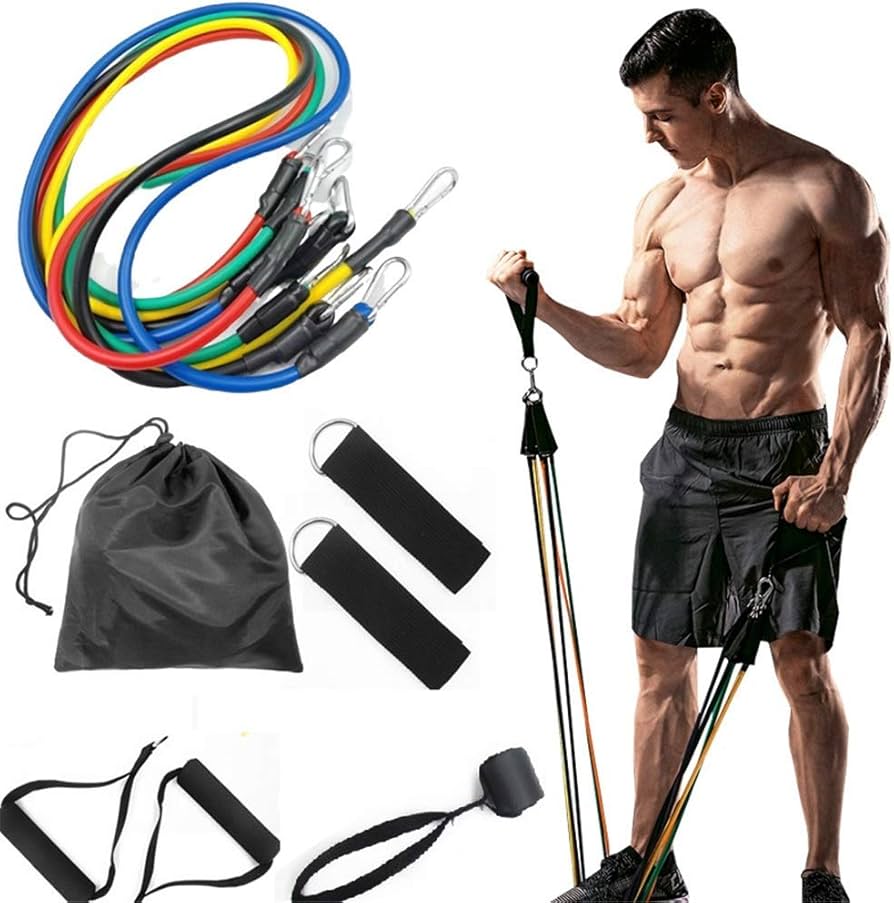
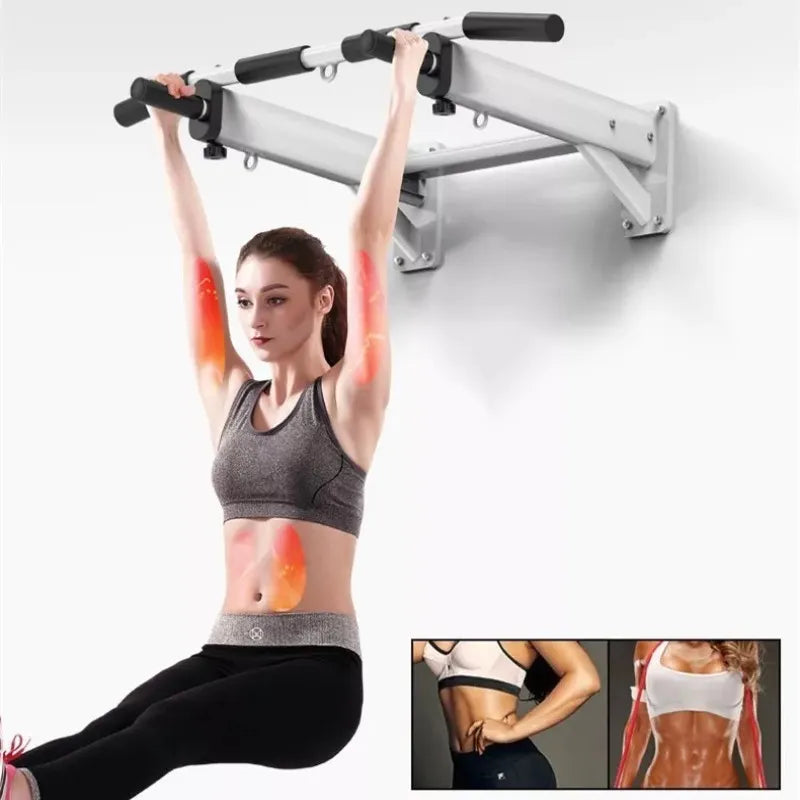
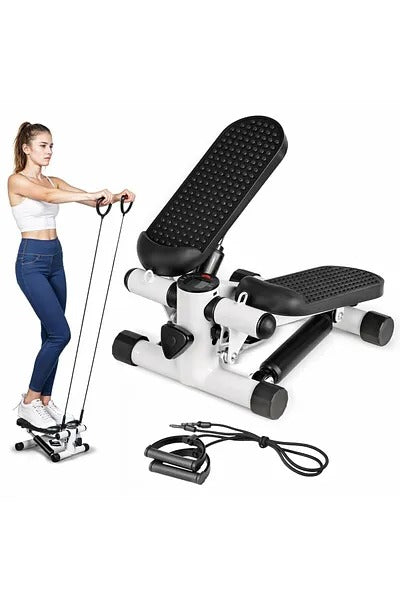
The band set is the most versatile of the three for strength work at home, the pull-up bar covers upper body pulling, and the stepper is the cardio option if space is tight.
Frequently asked questions about a waist trainer belt
Will a waist trainer belt help me lose belly fat?
Not on its own, and not from that specific area. Targeted fat loss is not supported by evidence, and the extra sweat is water rather than fat. Fat loss comes from overall energy balance, consistent training and sleep, whatever you wear while doing it.
How tight should it be?
Firm but never restrictive. If you cannot take a full, comfortable breath, it is too tight. Tighter offers no additional benefit and makes the belt less pleasant to wear, which usually means you stop using it.
How long can I wear one?
For the length of a workout. This is exercise equipment rather than a garment for all-day wear, and prolonged abdominal compression is uncomfortable and unnecessary. Take it off when the session finishes.
Can I wear it directly on skin?
You can, but a thin technical top underneath is more comfortable, reduces chafing at the edges and keeps the lining cleaner. It also makes the waist trainer belt easier to keep odour-free over time.
Is it the same as a weightlifting belt?
No. A lifting belt is stiff and narrow and is used to brace against on heavy lifts. A waist trainer belt is soft and wide, provides warmth and gentle compression, and is not designed for maximal loads.
Is it safe during pregnancy or after childbirth?
That is a question for your doctor or midwife rather than for a buying guide. Abdominal compression interacts with a number of conditions, so get individual advice before using one in either situation.
A waist trainer belt is a reasonable purchase if you want warmth, gentle compression and a supported feeling through a training session, and a poor one if you are expecting it to change your body composition. Measure before you order, wear it firmly rather than tightly, drink plenty of water, and rinse it after every use. See the full listing on the Weight Loss Abdomen Fitness Belt page, or compare it with other training gear in the Sports & Fitness section.


Add comment