A walking car toy occupies a useful middle ground in a toddler’s toy box: it moves on its own, so it holds attention, but it stays small enough to follow across a living room floor without anyone getting hurt.
This guide covers what these toys actually do for a young child, how to judge build quality and safety before buying, how to handle the noise and battery questions every parent eventually asks, and how to keep one working. There is an age-suitability section, a cleaning routine, a troubleshooting list, a buying checklist and six questions answered for families in Saudi Arabia.
Why a walking car toy holds attention
Toddlers are drawn to things that respond. A static toy car has to be pushed to do anything; the moment the child stops, the toy stops, and interest fades quickly at that age.
A walking car toy keeps moving after the child lets go. That small gap between the action and the result is exactly what a one to three year old finds fascinating, because it is the beginning of understanding cause and effect.
Lights and music add a second layer. Sound gives feedback that the button press worked, and a change in light gives a reason to keep watching even when the child is sitting still and tired.
The movement is also the point. A walking car toy travels a short distance and then waits, which invites a toddler to crawl or toddle after it. That is gentle, self-directed physical activity, and it happens without anybody organising it.
What this kind of toy actually teaches
It is easy to oversell developmental benefits, so it is worth being plain about which ones are real and modest.
The first is cause and effect. Press a button, something happens. Repeat, and the same thing happens again. Toddlers test this relentlessly, and a walking car toy gives them a reliable partner for the experiment.
The second is tracking and attention. Following a moving object with the eyes and then the whole body is a genuine skill at this age, and a toy that moves at walking pace is easier to track than one that shoots away.
The third is motivation to move. Crawling towards something is more appealing than crawling for its own sake. A walking car toy that stops a metre away is a small, achievable target.
What it does not do is teach language, numbers or reading, whatever a package might imply. Treat those claims with healthy scepticism and buy this category for movement and engagement instead. The broader history and role of play objects is summarised on the toy reference page.
What makes a good walking car toy
Four practical things separate a toy that lasts a year from one that goes quiet inside a fortnight.
Size and grip
It has to be big enough that small hands can grasp it without a thumb-and-finger pinch, and small enough that a toddler can pick it up and carry it. Something that needs two hands and a struggle stops being played with.
Look at the surfaces too. A walking car toy with a smooth, rounded body and no sharp seams is easier for a child to handle and far kinder when it is inevitably dropped on a foot.
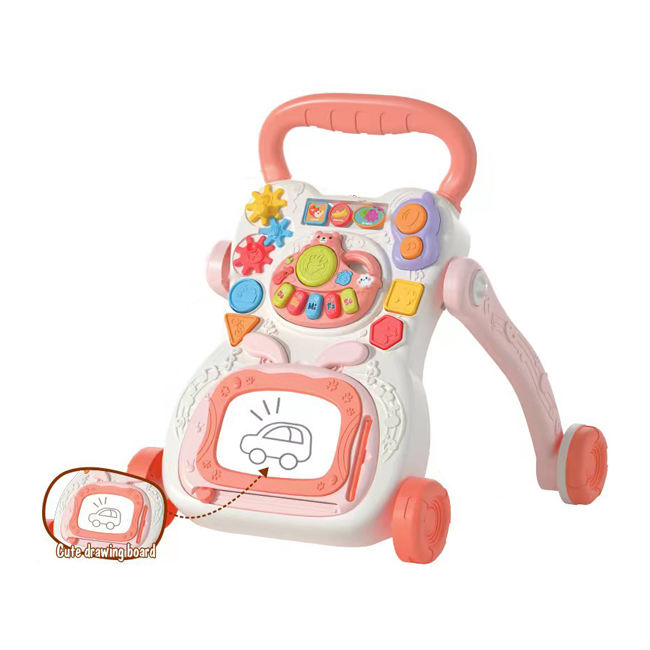
Volume that suits a home
Toy noise is designed to sell in a shop, not to live in a flat. A volume switch, or at least a moderate maximum, is the feature parents appreciate most after the first week.
If there is no switch, check whether the speaker opening can be partially covered without affecting the mechanism. Many families end up doing exactly that with a small piece of tape.
Material and finish
Toddler toys go in mouths. That is not a possibility, it is a certainty, so the plastic and the printing matter. Look for a smooth moulded finish rather than stickers, which peel off and become a hazard.
Battery access
The battery compartment should close with a screw, not a clip. A screwed cover is a standard safety expectation on any toy for a young child, and a walking car toy without one is worth passing over.
The WLD Store pick: Cartoon Multi-Function Walking Car Toy
WLD Store lists the Cartoon Multi-Function Walking Car Toy in its Baby & Kids and Toys range. Here is what the listing states:
- Product: Cartoon Multi-Function Walking Car Toy
- Brand: WLD
- Category: Baby & Kids — Toys
- Functions: the listing describes a toy that walks, dances, plays music and lights up
- Construction: described as durable BPA-free construction intended for young children
- Controls: described as easy-press buttons with bright colours
- Availability: available across Saudi Arabia with secure checkout
- SKU: WLD-KSA-0069-(KD-KD0196)
Current images and availability are on the Cartoon Multi-Function Walking Car Toy product page.
Which age is this really for
Manufacturers print an age range, and it is a guide rather than a rule. What matters more is where a particular child is developmentally.
Below roughly nine months, a walking car toy is mostly something to watch. It still has value at that stage, because tracking a moving light is engaging, but the child will not operate it.
Between about one and two years is the sweet spot. The child can press buttons deliberately, chase the toy, pick it up and start it again — the whole loop works without adult help.
From roughly three years, interest usually shifts. Children at that age want toys they can direct rather than toys that direct themselves, and a walking car toy tends to become a background object rather than a favourite.
Safety checks worth making at home
Do these once when the toy arrives and then occasionally afterwards. They take a couple of minutes.
- Check the battery cover. It should need a screwdriver. If a screw is missing or loose, tighten it before the toy is handed over.
- Pull gently on wheels and small parts. Anything that comes away easily is a choking risk and the toy should go back rather than into the toy box.
- Run a finger over every seam. Moulding flash can be sharp. A quick check finds it before a child does.
- Listen at the child’s distance. Hold the walking car toy where the child will hold it, not at arm’s length, and judge the volume from there.
- Check the printing. Any sticker that has begun to lift should be removed entirely rather than pressed back down.
The first play session
How a toy is introduced changes how much it gets used. A walking car toy dropped into a busy floor of other toys often gets ignored.
Clear a small space first. Sit down at the child’s level, switch the toy on and let it walk towards them rather than away. Movement coming towards a toddler is inviting; movement going away can be startling.
Then show the button once, slowly, and let the child copy. Resist the urge to demonstrate every function. One function understood is worth four that were shown too fast.
Expect the first session to be short. Five minutes of real interest from a toddler is a success, and interest usually grows over the following days as the toy becomes familiar.
Noise, batteries and household peace
Two practical realities decide whether a walking car toy stays in the living room or migrates to a cupboard.
The first is volume. If there is a switch, use the lower setting from day one — children do not miss what they never had. If there is no switch, a small piece of tape over part of the speaker grille softens the sound without silencing it.
The second is battery life. Toys that walk and light up consume batteries quickly, and a walking car toy that has slowed down is usually a battery problem rather than a fault.
Rechargeable cells are worth considering for any toy used daily. Keep a charged set aside, and always replace all the cells at once rather than mixing a fresh one with tired ones.
When the toy is going to be stored for weeks, take the batteries out. Cells left in an unused toy are the single most common cause of a corroded compartment and a toy that never works again.
Cleaning and care
Toddler toys need cleaning more often than adults expect, and a walking car toy has a motor inside, so the method matters.
Never submerge it and never hold it under a tap. Water reaching the motor or the battery contacts ends the toy immediately.
Wipe the body with a cloth dampened with warm water and a little mild soap, then go over it again with a cloth dampened with plain water. Dry it properly before the toy is used again.
Clear hair and carpet fibres from around the wheels regularly. Fibre wound around an axle is the most common reason a walking car toy starts to limp or veer to one side.
Store it somewhere out of direct sun. Sustained heat makes plastic brittle and fades bright colours, and in this climate a windowsill is not a good home for any toy.
Common problems and quick fixes
- It moves slowly or stalls. Almost always weak batteries. Replace the whole set before assuming a fault.
- It walks in a curve. Usually hair or thread wrapped around one wheel. Turn it over and clear the axle with tweezers.
- Sound but no movement. Batteries with enough power for the speaker but not the motor, or the toy is on a deep-pile rug. Test it on a hard floor first.
- Buttons stop responding. Sticky residue under the button is common with toddlers. Wipe around the edge with a barely damp cloth and let it dry fully.
Walking toy, push-along or ride-on
These three categories look similar in a listing and suit quite different stages, so it helps to know where each fits.
A push-along toy needs the child to supply all the movement. It is excellent for a child already walking confidently and useless for one who is not.
A ride-on takes floor space, needs supervision and suits an older toddler with reasonable balance. It is the biggest commitment of the three.
A walking car toy sits between them. It supplies its own movement, needs no balance from the child and takes almost no storage space, which is why it often works earliest of the three.
Who should skip it
Families in small flats with light sleepers may find any musical toy difficult, and one that also moves is harder to put down mid-song. A quiet toy is a kinder choice in that situation.
Homes with thick carpet throughout are another poor fit. Walking mechanisms need a reasonably firm surface, and a walking car toy that cannot move on the only floor available will disappoint.
If the child is well past three and prefers construction or pretend play, this category has probably been outgrown. Money goes further on a toy they direct themselves.
Toy rotation: making it last longer
Most toddler toys lose their appeal not because they are bad, but because they are always there. A toy that sits in the same basket every day becomes furniture.
Rotation fixes this cheaply. Keep roughly half the toys in a cupboard and swap the sets every week or two. Something that was ignored on Monday is often greeted like a new arrival a fortnight later.
A walking car toy responds particularly well to this, because its appeal is the surprise of self-directed movement. That surprise wears off with constant exposure and comes straight back after a break.
It also helps to keep the floor reasonably clear when the toy is out. A moving toy needs a run of open space, and a crowded rug turns every journey into a two-second stop.
Taking it out of the house
Portability is one of the quiet advantages of this category. It is small, it needs no assembly and it does not require a flat playmat, so it travels easily to a relative’s home or a hotel room.
Switch it off properly before it goes into a bag rather than relying on it stopping by itself. A toy that walks and sings inside a suitcase arrives with flat batteries.
Outdoors is a different question. Sand, grit and dust get into a wheel mechanism quickly, and a walking car toy is really designed for indoor floors. A shaded tiled terrace is fine; a garden or a beach is not.
In a car, keep it in a bag rather than loose on a seat. Toys left on a parcel shelf in summer heat can warp, and bright plastic fades noticeably after a few weeks in direct sun.
Buying one as a gift
This category makes a straightforward gift because it needs no prior knowledge of what the child already owns. There is no set to complete and no compatibility to check.
Two courtesies are worth extending to the parents. Mention whether it has a volume control, because that is the first thing they will look for, and include a set of the right batteries so the toy can be used on the day it is opened.
If the child is very close to three, consider whether something more open-ended would last longer. A walking car toy has a real but limited window, and a gift is best aimed at the middle of it.
Buying checklist
- Is the battery cover screwed shut? A clip-only cover is not appropriate for a toddler toy.
- Can the child lift it comfortably? A toy that has to be dragged loses its appeal fast.
- Is the volume manageable in your home? Check for a switch before buying, not after.
- Is the decoration moulded rather than stickers? Stickers peel and become a hazard.
- Will it work on your floors? Hard floors and low-pile rugs suit a walking car toy; deep carpet does not.
Other kids and toy picks at WLD Store
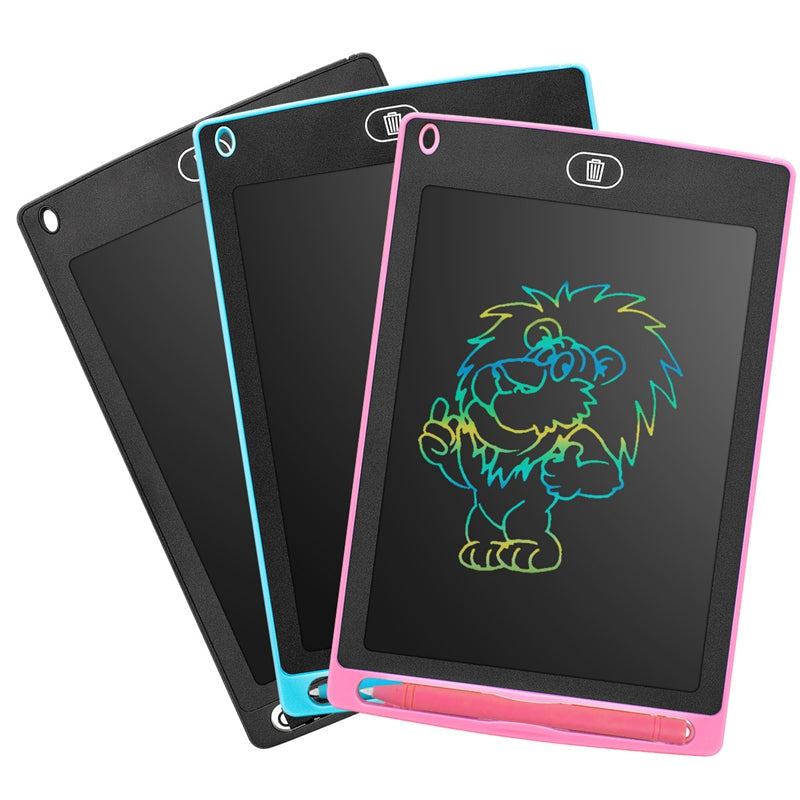
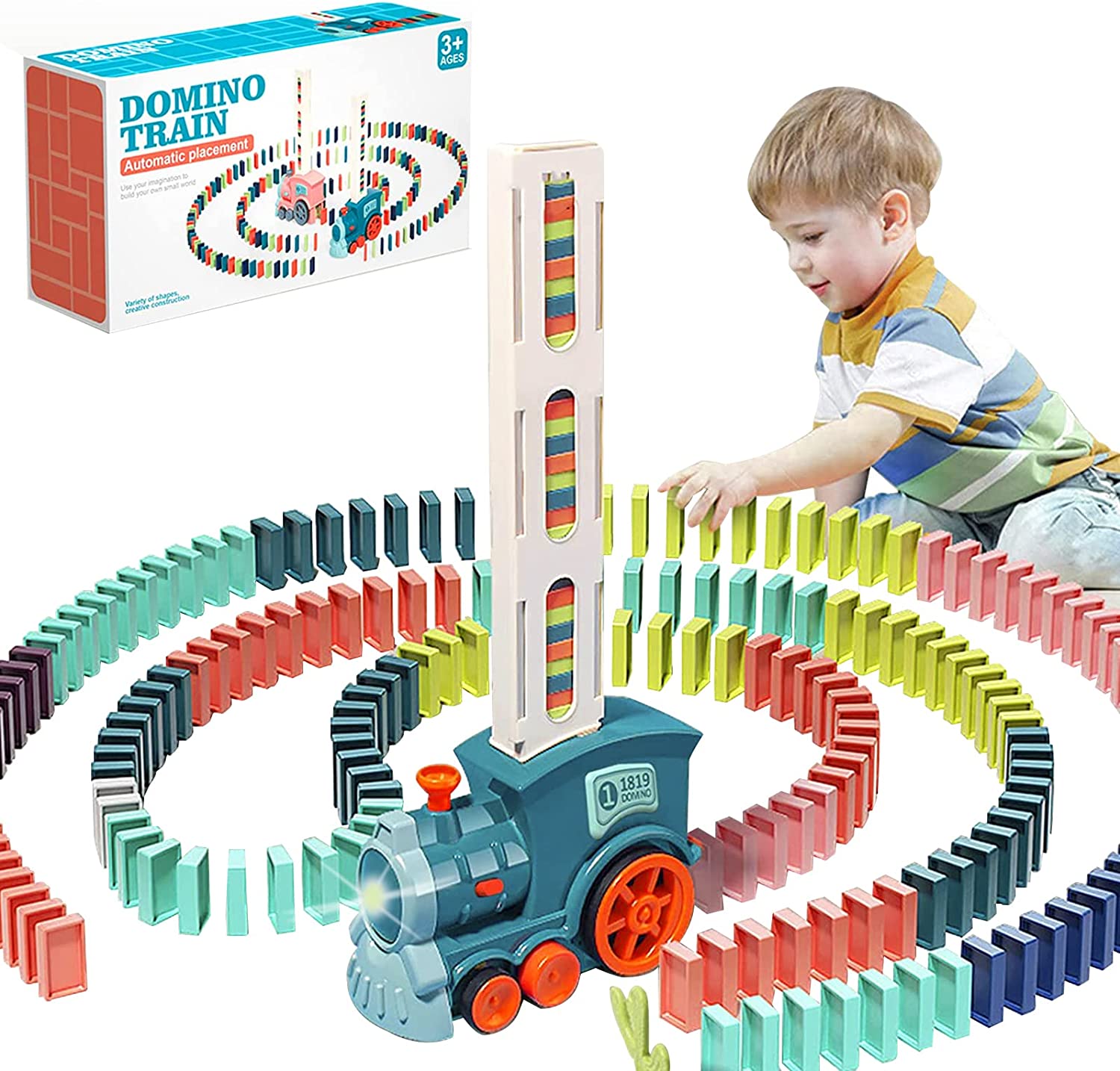
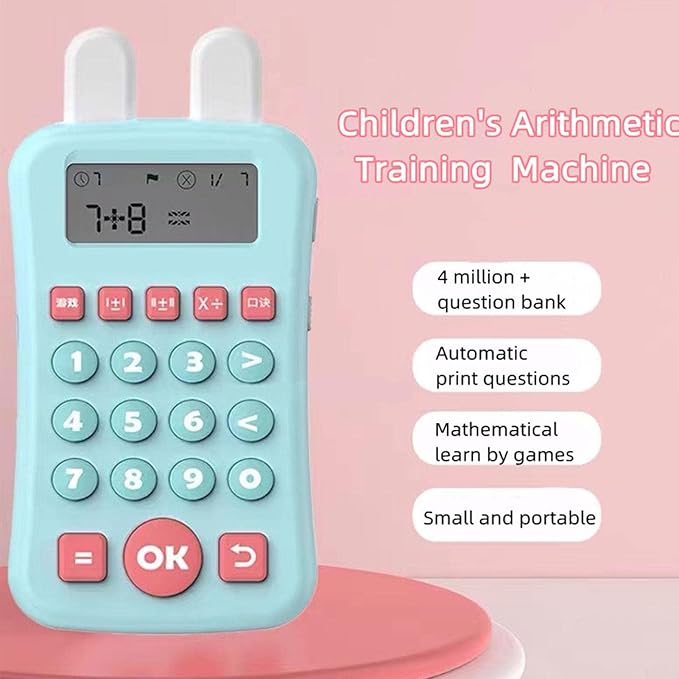
These related listings sit nearby in the Baby & Kids and Toys range.
Frequently asked questions about a walking car toy
What age is a walking car toy best for?
Roughly one to three years is where it works hardest. Younger babies enjoy watching it but cannot operate it, and children past three usually prefer toys they control themselves.
Are these toys safe for a child who mouths everything?
Provided the battery cover is screwed shut, no small parts pull free and the decoration is moulded rather than applied as stickers, a walking car toy is a normal toddler toy. Check those three things before handing it over.
Can the sound be turned down?
Some models have a volume switch and some do not, so check the listing. Where there is no switch, partially covering the speaker opening with a small piece of tape reduces the volume without damaging anything.
Why does it stop working on the rug?
Walking mechanisms need traction and a firm surface. Deep-pile carpet absorbs the motion, so a walking car toy that struggles on a rug will usually run perfectly on a tiled or wooden floor.
How long do the batteries last?
That depends entirely on how much the toy is used and whether the lights and music run constantly. Daily play drains cells quickly, which is why a rechargeable set is worth having for any toy in regular rotation.
Can it be washed?
Not immersed, no. Wipe the body with a barely damp cloth and mild soap, wipe again with plain water and dry it fully. Water inside a walking car toy reaches the motor and the battery contacts, and that damage is permanent.
Chosen with a little care, a walking car toy earns its place by getting a toddler moving and giving them something that reliably answers back. You can see the current listing on the Cartoon Multi-Function Walking Car Toy page or browse more children’s items in the Toys section, with secure checkout and availability across Saudi Arabia.



Add comment