An action sports camera exists to go where a phone should not: underwater, strapped to a helmet, clipped to a handlebar, or buried in sand at the edge of a beach. This guide covers what actually matters when choosing one, how to mount it so the footage is watchable, and the maintenance habits that keep a camera working after its first serious outing.
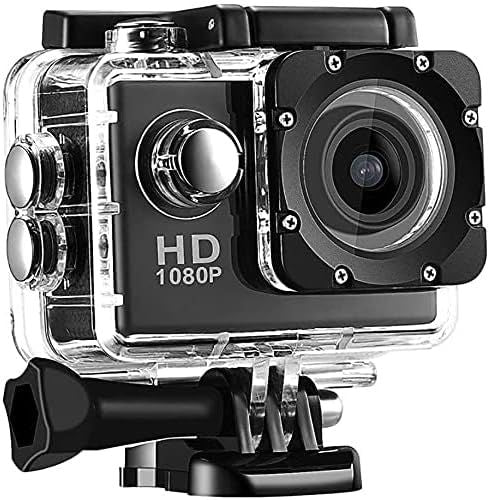
You will find practical detail on wide-angle framing, stabilisation, waterproof housings, battery behaviour in heat, and the mistakes that ruin otherwise good clips. The Waterproof 1080P Action Sports Camera listed at WLD Store for shoppers in Saudi Arabia runs through the guide as a worked example, described only from what the listing states.
Why an action sports camera beats a phone outdoors
Modern phones take excellent video, so the obvious question is why anyone needs a second camera. The answer is not image quality but risk and mounting. Holding an expensive phone over the side of a boat, or gripping it while cycling, is a decision most people only make once. An action sports camera is built to be put in exactly those positions.
Size and shape do a lot of the work. A small rectangular body attaches to a helmet, a chest harness or a pole without becoming unbalanced, whereas a phone is the wrong shape for almost every mount and heavy enough to wobble on the ones that exist. Framing follows from this: cameras designed for movement are built around a wide field of view, so the subject stays in shot when the mount shifts.
Then there is water. A phone in a pouch is awkward to operate and hard to aim, while a camera designed for underwater use has physical buttons and a housing intended for the job. If snorkelling, pool sessions or wet weather feature in your plans at all, that difference is the whole argument for an action sports camera.
Finally, there is the freedom to stop worrying. Footage from an action sports camera is usually better than phone footage of the same moment, not because the sensor is superior, but because you are willing to put the camera somewhere interesting and leave it running. The best angle is the one you would never risk a phone on.
What makes a good action sports camera
Specifications on this type of camera are easy to list and hard to interpret. Four qualities determine whether an action sports camera is enjoyable to use: the field of view, how it handles shake, how it copes with water and dust, and how it mounts to things.
Wide-angle framing and field of view
The wide-angle lens on an action camera is what makes helmet and chest footage usable. A narrow lens turns every small head movement into a lurch across the frame, while a wide one keeps the horizon and the subject in shot throughout. The trade-off is perspective: wide lenses push distant things further away and curve straight lines near the edges, so an action sports camera flatters close-up action and understates scenery.
Stabilisation and why shake matters
Anti-shake stabilisation, listed as a feature of this model, is the difference between footage you rewatch and footage you delete. Movement in a mounted camera is constant and high-frequency, which is unpleasant to watch for more than a few seconds. Stabilisation smooths that motion out. It cannot rescue a badly mounted camera, though, so treat it as a refinement of good technique rather than a substitute for it.
Waterproofing and housings
Underwater capability comes either from a sealed body or from a separate clear housing, and the practical difference is significant. A housing protects against knocks and sand as well as water, but adds bulk and muffles audio noticeably. Whichever design your action sports camera uses, the seal is the part that needs attention: a single grain of sand on a gasket is enough to let water past.
Mounting options
Multiple mounting options are listed for this camera, and that flexibility is what turns one camera into several different perspectives. Helmet, chest, handlebar, pole and suction mounts each produce a distinct look. Before buying accessories, work out which two or three angles you will genuinely use, because most people buy a large mounting kit and use one bracket repeatedly.
The WLD Store pick: Waterproof 1080P Action Sports Camera
Here is exactly what the WLD Store listing states about this action sports camera for shoppers in Saudi Arabia, with nothing added beyond it.
- Category: Cameras & Drones, also listed under Electronics
- Brand: WLD
- Video: full HD 1080P
- Water capability: waterproof and underwater-ready
- Lens: wide-angle
- Stabilisation: anti-shake
- Mounting: multiple mounting options
- Size: compact enough to fit in a bag
- Intended activities: extreme sports, hiking, diving and travel
- Market: available across Saudi Arabia
- SKU: WLD-KSA-0076-(KD-KD0112)
Photographs, included accessories and current availability for this action sports camera are on the Waterproof 1080P Action Sports Camera product page, where orders go through secure checkout.
Where to mount an action sports camera
Mount position changes the character of a clip more than any setting in the menu. These are the positions worth learning, and what each one is good and bad at.
Helmet mount. Puts the viewer behind your eyes and follows wherever you look, which is ideal for cycling and climbing. The downside is that every head turn moves the whole frame, so deliberate, slow head movement produces far better footage than natural glancing around.
Chest harness. Lower and steadier than a helmet, and it includes your hands in the shot, which makes it excellent for anything involving handlebars, paddles or tools. It looks less dramatic than a helmet angle but is far more watchable over long clips.
Handlebar or pole. Fixes the camera to the machine rather than the person, giving a stable, external view. This is the mount that shows speed most convincingly, since a fixed foreground gives the eye something to measure movement against.
Handheld or floating grip. In water, a floating handle is the accessory that saves cameras. A dropped action sports camera on a boat deck is recoverable, and one dropped over the side without a float is not. Bright-coloured grips are easier to spot in murky water.
Getting footage worth keeping
Technique matters more than specification on this kind of camera. A handful of habits separate clips people actually watch from folders nobody opens.
- Move slowly and deliberately. Wide lenses exaggerate motion. Panning at half the speed that feels natural gives a result that looks normal on screen.
- Get close to the subject. A wide-angle action sports camera pushes everything away, so what feels uncomfortably close in person usually looks correct in the footage.
- Shoot short takes. Ten focused clips beat one continuous recording, and short files are far easier to review, edit and store.
- Keep the sun behind you where possible. Small sensors struggle with strong backlight, and a shot into the sun loses detail that no editing recovers.
- Check the lens before every session. A fingerprint or a water droplet on the front element softens everything, and it is invisible on a small screen.
- Record a few seconds of lead-in. Starting the camera slightly before the action gives you something to cut from.
Audio is the part most people forget. Housings muffle sound heavily and wind noise dominates outdoors, so plan on adding music or narration afterwards rather than relying on what an action sports camera captures at speed.
Water, sand and heat
The three environments these cameras are bought for are also the three that damage them. Each has a specific routine that prevents most problems.
Water. Before every session, check the seal for hair, sand and grit, and close the housing firmly. Afterwards, rinse the closed camera in fresh water before opening it, because salt left to dry on a gasket is what ruins seals over time. Never open a wet camera with wet hands.
Sand. Sand is more destructive than water because it works into hinges, buttons and threads. Keep an action sports camera in a bag rather than a pocket at the beach, and brush the housing dry before opening it rather than blowing on it.
Heat. Small cameras generate heat while recording and lose it slowly, and a hot climate compounds this. Recording long clips in direct sun is what causes a camera to slow down or stop, so shade it between takes and avoid leaving it on a dashboard.
Batteries. Heat and cold both shorten runtime, and a small battery has little margin. Carrying a spare, keeping batteries out of direct sun, and turning the camera off between takes has more effect on a day of shooting than any setting available in the menu.
Care and maintenance
An action sports camera lives a harder life than most electronics, so a short routine after each outing pays for itself many times over.
- Rinse after salt water, every time. Submerge the closed camera in fresh water for a few minutes, then dry it before opening.
- Dry the seal and inspect it. Run a fingertip around the gasket to feel for grit. Replace a gasket that looks flattened or cracked rather than hoping.
- Clean the lens with a microfibre cloth only. Paper towel scratches coatings, and scratches on a wide lens show up across the whole frame.
- Store it with the housing unlatched. Leaving a seal compressed for months deforms it. Store the camera dry, unlatched and out of the sun.
- Offload footage promptly. Memory cards fail, and a card left full is a card at risk. Copy files off, then format the card in the camera rather than on a computer.
Keep spare gaskets and a spare memory card in the case. Both are inexpensive and both are the sort of thing that ends a shooting day when they are missing, which is a poor return on an otherwise capable action sports camera.
Common problems and quick fixes
Four issues explain most of the frustration people report with this kind of camera, and each has a straightforward cause.
- Footage is blurry or soft. Almost always a smeared lens or a droplet on the housing rather than a focus fault. Wipe the front element and re-check before blaming the camera.
- Water got inside. The seal was contaminated or the housing was not fully latched. Dry everything, inspect the gasket carefully, and test the empty housing in a sink before trusting it again.
- Recording stops on its own. Usually heat or a full or slow memory card. Let the camera cool, use a card rated for video, and shoot shorter takes.
- Battery dies far too quickly. Heat and continuous recording are the usual culprits. Turn the camera off between takes rather than leaving it idle, and keep spares out of the sun.
How it compares with using your phone
The honest comparison is not about which produces a better image in perfect conditions, because a modern phone often will. It is about which one you are willing to use in the conditions that produce interesting footage.
A phone wins on convenience, editing and sharing. It is already in your pocket, the screen is large, and the footage is on the device you will post from. For casual travel video shot from a safe position, a phone is the sensible tool and a second camera is an unnecessary purchase.
An action sports camera wins whenever the camera has to be attached to something, submerged, or exposed to a real chance of damage. It also wins on framing for close, fast action, because the wide lens keeps the subject in frame when the mount moves unpredictably.
Many people end up carrying both, which is a reasonable outcome rather than a failure to decide. Use the phone for the scenery and the people, and let the action sports camera take the risks and the mounts.
Who this camera is not for
It is a poor choice for portraits, low-light scenes and anything where you want a natural perspective. Wide lenses distort faces at close range and small sensors struggle once the light drops, so an action sports camera is the wrong tool for indoor events and evening video.
It is also not a replacement for a proper camera if image quality is your main concern. Full HD is entirely sufficient for social video and family clips, but if you plan to crop heavily, project footage on a large screen, or produce professional work, that is a different category of equipment.
Finally, it suits people who will actually mount it. Bought with good intentions and then used handheld, an action sports camera offers little that a phone does not already do, and the specialised design goes to waste.
Buying checklist
Five questions to answer before ordering an action sports camera for any activity.
- What will you mount it on? Confirm the bracket for your helmet, bike or board exists before ordering the camera.
- Will it go underwater, and how deep? Snorkelling and diving are very different demands on a housing.
- How long do you need to record? Battery life sets the real limit on a shooting day, so plan spares accordingly.
- Do you have a suitable memory card? Video needs a card rated for sustained write speed, not just capacity.
- Is full HD enough for your use? For social clips it usually is; for heavy cropping or large-screen work it may not be.
Other picks at WLD Store
These three products sit elsewhere in the WLD Store catalogue and cover very different household jobs.
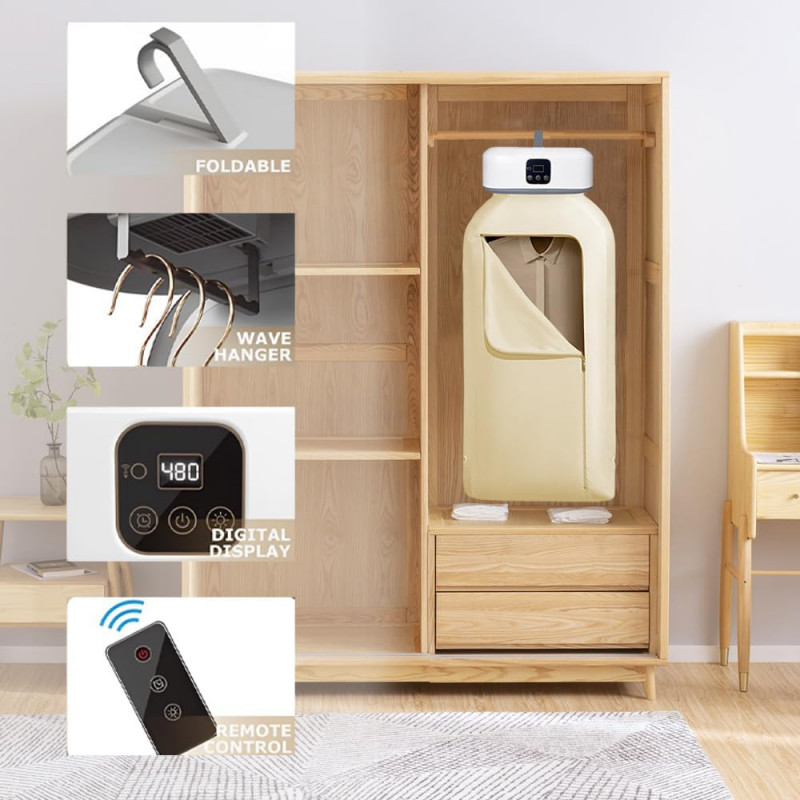

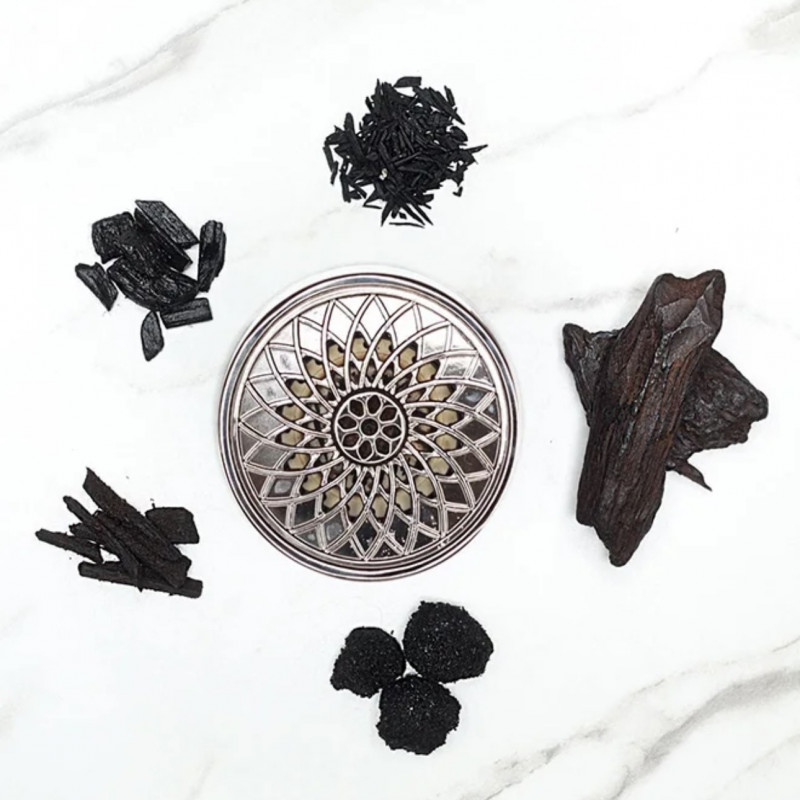
The Foldable Electric Clothes Dryer helps with laundry in humid weather, the Smart Blender 15-Speed covers kitchen prep, and the Smart Electric Bakhoor Burner handles home fragrance. Each has its own listing with full details.
Frequently asked questions about an action sports camera
How deep can it go underwater?
Depth capability depends on the housing supplied with a given model, so check the product page rather than assuming. As a general rule, cameras of this type are aimed at surface and shallow water use such as snorkelling and pool sessions. Treat any depth figure as a limit, not a target.
Is 1080P still good enough?
For social video, family clips and anything watched on a phone, full HD is entirely adequate and produces much smaller files than higher resolutions. It becomes limiting only if you crop heavily in editing or display footage on a large screen, where extra resolution gives you room to work.
Does anti-shake replace a gimbal?
Electronic stabilisation smooths high-frequency vibration well and slow drifting movement less well. It makes mounted footage far more watchable but does not produce the gliding look of a mechanical gimbal. Good mounting and slow, deliberate movement still contribute more than any stabilisation setting.
What memory card should I use with an action sports camera?
Use a card rated for sustained video writing rather than the cheapest card of the right capacity. Slow cards are a common cause of recordings stopping unexpectedly. Format the card in the camera before first use, and reformat it after each offload rather than deleting files individually.
Can I leave it recording all day?
Continuous recording drains the battery quickly and builds heat, which is the combination that causes a camera to shut down mid-session. Shooting short, purposeful takes is better for the hardware, produces footage that is far easier to edit, and makes a single battery last considerably longer.
Do I need to rinse it after every swim?
After salt water, yes, without exception. Salt crystallises as it dries and that is what degrades gaskets and seizes buttons. After a chlorinated pool a rinse is also worthwhile. After fresh water, drying the seal carefully before opening the housing is usually sufficient.
Used with sensible mounting and a short post-session routine, an action sports camera captures the moments a phone never gets near. Rinse the seals, shoot short takes, get closer than feels natural, and carry a spare battery. The full listing is on the Waterproof 1080P Action Sports Camera page, and the wider range is in the Cameras & Drones section.






Add comment