A teddy bear plush toy is one of the few gifts that survives a childhood, and an oversized one turns a bedroom corner into something a child actually wants to sit in. This guide covers how to choose a teddy bear plush toy that lasts: what to look for in the seams and stitching, how to judge size against the room and the age of the child, which safety points genuinely matter, and how to wash a large plush without ruining it. There is also a gifting section, storage advice, a troubleshooting list, a buying checklist and six frequently asked questions, followed by the giant huggable pick stocked at WLD Store.
Why a teddy bear plush toy still matters
Soft toys have been part of childhood since the first commercial teddy bear appeared at the start of the twentieth century, and the reason they persist is not nostalgia. For a young child, a familiar soft toy is a portable piece of home, which is why the same bear ends up at the dentist, on the first day of school and in a hospital bag.
Psychologists describe these as comfort objects, and the value comes from consistency rather than from any feature of the toy. That has a practical implication for buyers: the bear a child bonds with is usually the one that is always available, so durability and washability matter far more than novelty. A teddy bear plush toy that has to be kept on a high shelf because it cannot be cleaned is not doing its job.
A large bear does something slightly different. Because it is the size of the child or bigger, it becomes furniture as much as toy: a backrest for reading, a landing pad, a photo prop that parents genuinely do keep pictures of for decades. That is why giant plush turns up so often as a birthday, new baby or anniversary gift.
There is also the plain fact that a teddy bear plush toy makes an easy gift for people who are difficult to buy for. It carries no assumptions about taste, size or hobbies, and the reaction when something enormous and soft comes out of the wrapping is reliably worth watching.
Choosing the right size
Size is the decision people get wrong most often, usually by buying larger than the room can take.
Small bears that fit in one hand travel well, go in a bag and get taken everywhere. They are the ones most likely to become a genuine comfort object, and also the ones most likely to be lost, which is why many parents buy two of the same.
Medium bears around the size of a cushion are the everyday compromise: big enough to hug properly, small enough to wash in a domestic machine, and easy to put away.
Giant bears are a different proposition. They are wonderful to receive, but they need a permanent home. Before ordering one, decide precisely where it will live, because it will not fit in a toy box and it will not fit in most washing machines either. Measure the corner you intend to use, and think about whether a bear that size blocks a radiator, a door or a walkway.
A useful rule for a child’s bedroom is that a teddy bear plush toy should not take up space the child needs to play in. In a teenager’s room or a nursery corner, a giant bear is charming; in a small shared bedroom, a medium one gets hugged far more often.
What makes a good teddy bear plush toy
Plush toys are easy to make badly and the differences do not always show in photographs. These five points are what separate a bear that lasts a decade from one that sheds fluff in a fortnight.
Seams and stitching
Seams are where a plush toy fails first, and they take the most strain on a large bear that gets dragged by one arm. Look at the listing photographs for even, close stitching, and pay attention to the joints where limbs meet the body. Once a seam opens on a stuffed toy, filling escapes quickly and the shape never fully recovers.
Fabric and how it handles washing
The outer fabric determines how the bear feels and how it ages. Short, dense pile stays looking tidy and is easier to clean; long shaggy pile feels luxurious but mats and traps dust. Whatever the fabric, the real question is whether the colour holds and the pile recovers after a wash, because any teddy bear plush toy in regular use will be washed repeatedly.
The filling and how it holds shape
Filling decides whether the bear stays huggable or turns into a lumpy sack. Evenly distributed fibre fill should spring back when squeezed and should not shift permanently to the bottom of a limb. On a giant bear this matters more, because there is simply more filling to migrate.
Eyes, noses and attached features
For young children, embroidered features are far safer than any part that is glued or attached with a stem, since a detached plastic eye is a choking hazard. For older children and adults the choice is aesthetic rather than critical, but embroidered features also survive washing better.
Labels and what they tell you
Care labels are worth reading before you buy, not after the first spill. They tell you whether a teddy bear plush toy is machine washable, whether it can be tumble dried, and what age it is intended for. A toy with no label at all gives you nothing to work with when something goes wrong.
The WLD Store pick: Giant Soft Teddy Bear Plush Toy
These are the details WLD Store lists, with nothing added:
- Product: Giant Soft Teddy Bear Plush Toy
- Brand: WLD
- Categories: Baby & Kids, Toys
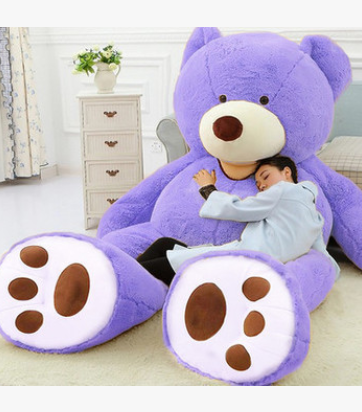
- What it is: a huge, huggable plush teddy, the sort of gift that gets all the smiles
- Availability: available across the USA through secure checkout
- SKU: WLD-US-0014-(CJ-CJWJWJMR00412)
The point of this one is scale. A giant teddy bear plush toy is bought for the moment it is opened and then kept for years as a reading chair, a bedroom fixture and a photo backdrop. Photographs, size options and current availability are on the Giant Soft Teddy Bear Plush Toy product page, which is where to check the details before ordering.
Giving one as a gift
A large plush is an unusually easy gift to get right, provided you think about two things: where it will live, and who has to carry it home.
- Check the recipient has space. A giant bear in a small flat is a burden dressed as a present. If in doubt, choose a medium size.
- Consider the age. For under-threes, prioritise embroidered features and a washable label over sheer size.
- Think about the handover. Large plush is bulky rather than heavy, so a party is easier than a restaurant, and a home delivery is easier than either.
- Wrap it simply. A fabric bag or a large ribbon works better than paper, which tears on the way to the door.
- Keep the care label attached so the recipient knows how to wash it later.
For a new baby, remember that a teddy bear plush toy is a gift for the room rather than the crib. It looks wonderful in the nursery corner and belongs there rather than in the sleeping space, for reasons the safety section below explains.
Safety by age
Soft toys are gentle by nature, but the guidance genuinely differs by age and it is worth stating plainly.
Under twelve months. Safe sleep guidance is that a baby’s crib should contain a firm mattress and a fitted sheet, and nothing soft: no pillows, no bumpers and no plush toys. A teddy bear plush toy belongs on a shelf or in the corner of the nursery, not in the sleeping space, however lovely it looks in photographs.
One to three years. Choking hazards are the main concern. Choose embroidered eyes and noses over attached plastic parts, check for ribbons or tags that could wrap around a neck, and inspect seams regularly, since a small opening lets a toddler pull out filling.
Three years and up. Most restrictions relax, and this is when a large bear comes into its own. The remaining considerations are practical: make sure a giant plush cannot fall from a height onto a small child, and keep it clear of heaters and open flames.
Whatever the age, check the manufacturer’s stated age guidance on the label and follow it rather than judging by appearance. Age markings on toys exist for reasons that are not always visible from the outside.
How to clean a teddy bear plush toy
Plush attracts dust, and a bear that gets hugged will eventually meet food, mud or worse. The method depends on size more than anything else.
- Read the label first. If it says surface clean only, believe it. Machine washing a toy that was not designed for it can felt the pile permanently.
- Spot-clean small marks. Mild detergent on a damp cloth, dabbed rather than rubbed, then a clean damp cloth to lift the residue. This handles most day-to-day accidents.
- Machine wash medium toys in a pillowcase on a cool, gentle cycle. The pillowcase protects the seams and stops loose fibres clogging the machine.
- Hand wash a giant teddy bear plush toy in the bath. Cool water, a small amount of mild detergent, squeeze rather than wring, then rinse until the water runs clear.
- Never wring a large plush. Twisting is what tears internal seams. Press the water out against the side of the bath instead.
- Dry it flat and slowly. Air drying takes a day or more for a big bear. Turn it periodically so the filling dries evenly and never dries in a compressed shape.
Avoid tumble dryers unless the label specifically allows one, and avoid direct heat entirely. Heat shrinks synthetic pile, and a shrunken outer fabric over unchanged filling is what makes a washed teddy bear plush toy come out looking hard and lumpy.
Between washes, a weekly going-over with a lint roller or the upholstery attachment of a vacuum on low suction removes most surface dust, which is the part that matters for anyone in the house with allergies.
Storage and keeping it fresh
Large plush is bulky, and how it is stored between uses affects how it looks in a year.
- Store it sitting upright, not squashed under other things. Prolonged compression flattens pile and the marks can be permanent.
- Keep it out of direct sunlight. Sun fades dyed fabric quickly, and one faded side is very obvious on a large bear.
- Air it every few weeks. An hour somewhere with moving air keeps a teddy bear plush toy smelling clean without any washing at all.
- Do not seal a damp toy in plastic. Vacuum bags are useful for long-term storage, but only once the plush is completely dry.
- Freshen the pile by hand. Brushing gently with a soft brush lifts matted fibres and makes an older bear look considerably better.
Common problems and quick fixes
- A seam has opened. Push the filling back inside and close it with a ladder stitch from the outside using strong thread. Do it immediately, because an open seam grows fast in a toy that gets carried.
- The bear has gone lumpy after washing. The filling has shifted. Work it back into shape with your hands while the plush is still slightly damp, then let it finish drying in the correct shape.
- The pile is matted and flat. Brush gently with a soft-bristled brush in the direction of the pile. A matted teddy bear plush toy can usually be rescued without any washing.
- It smells musty. Almost always stored damp or in a sealed box. Air it thoroughly, and if the smell persists, wash it and dry it completely before storing again.
Buying checklist
- Where exactly will it live? Measure the corner before ordering anything described as giant.
- Are the features embroidered? Essential for under-threes, useful for everyone else.
- Can I wash it at home? A teddy bear plush toy that cannot be cleaned will end up on a shelf rather than in a child’s arms.
- How is the stitching at the limb joints? Those seams take the most strain, so look at them in the listing photographs.
- Is the size right for the age? Giant is a wonderful gift for an older child and a nursery ornament for a baby.
Other Baby & Kids picks at WLD Store
Worth a look alongside a teddy bear plush toy if you are shopping for a birthday or a playroom:
Repairing and refreshing an older bear
A well-loved bear rarely fails all at once. It goes thin at the elbows, loses shape in one leg and opens a seam under an arm, and each of those is fixable at home with very little skill.
Seams. Keep strong thread in a colour close to the fabric and close small openings as soon as they appear. A ladder stitch worked from the outside is nearly invisible and holds well, and it takes ten minutes.
Lost shape. If one limb has gone soft, the filling has migrated rather than disappeared. Open a small seam, redistribute the fill by hand, add a little polyester toy filling if needed and close it again. This single repair brings most tired bears back to life.
Flattened pile. Brush along the grain with a soft brush, then let the plush rest. A teddy bear plush toy that looks worn is often just compressed, and brushing restores far more than people expect.
Grubby patches that will not shift. Try a longer soak in cool water with mild detergent before reaching for anything stronger. Stain removers can bleach dyed plush unevenly, which is worse than the original mark.
It is worth doing these repairs promptly rather than waiting. A teddy bear plush toy that is patched early stays in daily use, while one left with an open seam usually ends up in a cupboard, and that is how a bear a child genuinely loves quietly disappears.
Frequently asked questions about a teddy bear plush toy
What age is a giant teddy bear plush toy suitable for?
Follow the age guidance printed on the product label. As a general rule, large plush suits children of three and over, who can move around it safely and will actually use it as a seat or a cushion. For younger children, a smaller bear with embroidered features is the more practical choice.
Can I put a large plush in the washing machine?
Only if the label allows it and the toy physically fits with room to tumble. A drum packed tight does not clean anything and strains both the machine and the seams. For a genuinely giant bear, hand washing in a bath is the realistic option.
How do I get rid of dust without washing?
Vacuum the surface on low suction with an upholstery attachment, or run a lint roller over the pile. Both remove surface dust in minutes, which is usually all a teddy bear plush toy needs between proper washes.
Is a big bear safe in a child’s bedroom?
Yes, with two sensible precautions: keep it on the floor rather than balanced on a high shelf where it could fall, and keep it away from heaters, plug sockets and cords. Beyond that, a large plush in a bedroom is about as low-risk as furniture gets.
How long should one last?
With reasonable care, many years. The failure points are seams and matted pile rather than the filling, so prompt stitching of small openings and occasional brushing extend the life of a teddy bear plush toy far more than careful handling does.
Is it a good gift for an adult?
Frequently, yes. Giant plush is a popular gift for anniversaries, graduations and long-distance relationships precisely because it is impractical in the best way. Just check the recipient has somewhere to put it before committing to the largest size available.
The short answer
Choose the size for the room rather than the photograph, check the seams and features before buying, and confirm you can actually wash it. Get those three right and a teddy bear plush toy stops being a novelty purchase and becomes something a family still has years later.
Photographs, options and current availability are on the Giant Soft Teddy Bear Plush Toy page, and the rest of the range is in the Toys section. Available across the USA through secure checkout.


Add comment