A cat playhouse is not furniture you buy for the cat so much as territory you hand over. Cats organise a home by height, sightlines and boltholes, and a house that provides none of those gets a cat that treats your bookshelf and your sofa arm as the alternatives. This guide explains why a raised, enclosed structure works so well, what to look for when comparing one cat playhouse against another, where in the room to put it, and how to get a suspicious cat to move in. The two-story eco pet bungalow stocked at WLD Store is the worked example.
Why height is the thing your cat is actually asking for
Watch a cat in an unfamiliar room and it will head upward within a minute. Height is where a cat can see approaches, keep clear of foot traffic, and rest without needing to stay fully alert. A floor-level bed offers none of that, which is why so many expensive cat beds sit unused while the cat sleeps on top of the wardrobe.
A two-story structure gives both of the things cats balance constantly: a lookout and a hiding place. The upper level satisfies the surveying instinct, and the enclosed lower level satisfies the denning one. A cat playhouse that offers both means the cat does not have to choose between feeling safe and being able to see, which is the compromise most single-level beds force.
In a household with more than one cat, vertical space is worth even more. Cats resolve a great deal of social tension by occupying different heights rather than fighting over one, and adding levels effectively adds floor area without using any. Two cats and one good spot is a recipe for friction; two cats and several spots at different heights usually is not.
There is a household benefit as well. A cat with a legitimate, appealing place to climb, scratch and hide is a cat with less reason to redirect those behaviours onto your furniture. You are not stopping the behaviour, because you cannot; you are giving it somewhere acceptable to happen. The general background on domestic cats is a useful reminder of how much of this is hardwired rather than learned.
What makes a good cat playhouse
Most designs look appealing to humans. The features that matter are the ones a cat notices.
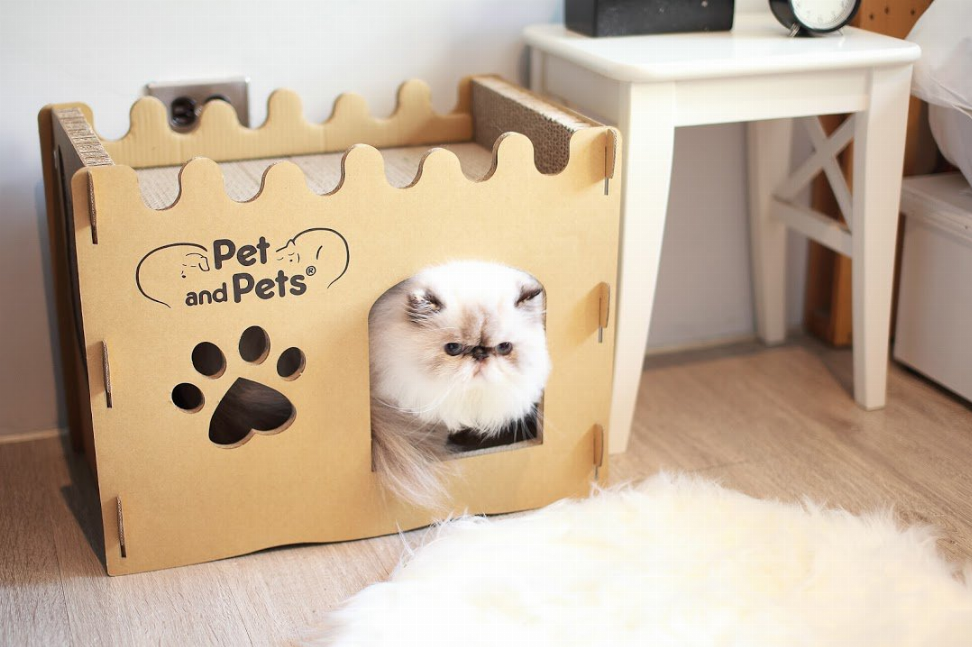
Levels and how the cat moves between them
Two levels is the sweet spot for most rooms: enough to give a genuine lookout without turning into a tower that dominates the space. What matters is the route between them. Cats prefer a step they can take confidently, and an awkward or wobbly transition is a common reason a cat playhouse gets used only at ground level.
Material
Recyclable board is a better material for this job than it sounds. It is light enough to move around the room, rigid enough to hold a cat’s weight when it is properly constructed, warm to lie against, and satisfying to scratch. It is also replaceable without guilt, which matters because any cat playhouse is a consumable on a long enough timescale. Plush-covered towers look luxurious and are far harder to keep clean.
Entrances, exits and sightlines
A cat wants to see out and, ideally, to have more than one way out. An enclosure with a single small opening and no view can feel like a trap rather than a den, particularly to a nervous cat or in a multi-pet home. Openings that let light in and let the cat watch the room are used far more than sealed boxes.
Scratch-friendly surfaces
Scratching is not damage, it is maintenance: cats condition their claws and mark territory by doing it. A cat playhouse with surfaces the cat is allowed to scratch converts a destructive habit into a contained one. Board takes claws well and gives the resistance cats look for.
Stability and assembly
A structure that shifts when a cat lands on it will be abandoned quickly, because cats do not persist with things that move unexpectedly underfoot. Check how the panels lock together, and whether the design can be flat-packed and reassembled if you move it. Easy assembly matters to you; a solid landing matters to the cat.
The WLD Store pick: Bungalow Eco Pet House
Here is the cat playhouse we stock, described using only what the listing states:
- Product: Bungalow Eco Pet House, a two-story cat playhouse
- Brand: WLD
- Category: Home and Kitchen, pet
- Structure: two stories
- Material: recyclable
- Assembly: described as easy to assemble
- Surfaces: scratch-friendly
- SKU: WLD-US-0025-(IS-TDNS000649B001467P000030V001)
- Availability: available across the USA through WLD Store with secure checkout
The listing’s claim that a cat will claim it on day one is the usual pattern with this kind of structure, for the simple reason that a new enclosed object in a familiar room is irresistible to most cats. Full details and current availability are on the Bungalow Eco Pet House product page.
Where to put a cat playhouse
Placement decides whether it becomes a favourite spot or an ignored object, and it is the part people get wrong most often.
- Put it in a room the family actually uses. Cats want to be near their people, not exiled to a spare room. A cat playhouse in the corner of the living room outperforms one in an empty bedroom every time.
- Choose a corner or a wall, not the middle of the floor. A structure with its back protected feels far more secure than one exposed on all sides.
- Give it a view. Near a window is ideal. Watching the street or the garden is most cats’ preferred entertainment.
- Keep it out of the traffic lane. Doorways and hallways are the worst spots, because a resting cat gets startled repeatedly.
- Away from the food and the litter tray. Cats separate these zones deliberately, and a resting place next to either will be rejected.
- Somewhere warm but not hot. Near a radiator is popular; in direct summer sun through glass is not.
- Not directly beside a noisy appliance. Washing machines and printers undo the sense of safety you are trying to build.
If the room allows, try a spot for a week before treating it as permanent. Cats vote with their feet, and moving a cat playhouse three feet to the left has rescued more of them than any amount of extra bedding.
How to get a cat to actually use a cat playhouse
Cats decide about new objects on their own schedule, and pushing produces the opposite result. The approach that works is patience plus a few nudges.
- Assemble it and then ignore it. Let the cat investigate without being watched. Attention at the wrong moment makes a suspicious cat more suspicious.
- Transfer familiar scent. Put a blanket, a worn t-shirt or the old bed inside so it smells like home rather than like a shop.
- Feed treats near it, then in it. Build the association gradually rather than placing the cat inside, which almost always backfires.
- Play into it. A wand toy drawn through an opening turns the cat playhouse into part of a hunt, which is the fastest route to acceptance.
- Give it time. Some cats claim it in ten minutes, others take a fortnight. Both are normal.
Bringing one into a home with a nervous cat
A newly adopted cat, or one that vanishes whenever the doorbell goes, gets more out of an enclosed structure than a confident cat does. It just needs introducing differently. Put it in place while the room is quiet, then leave it completely alone for a day so the arrival stops being an event.
Position it where the cat already chooses to hide rather than where you would like the cat to be. If the current bolthole is behind the sofa, a cat playhouse a foot from that spot is far more likely to be adopted than a better one across the room. Once it is genuinely being used, you can shift it a few feet at a time toward where you would rather it lived.
Resist the urge to look inside. A cat watched while investigating a new hiding place tends to decide the place is compromised. Check whether the bedding has been flattened instead of lifting a flap to see who is home.
Cat playhouse care and upkeep
- Vacuum it regularly. Hair and dander collect in corners; a brush attachment on low suction is enough.
- Spot clean rather than soak. Board does not enjoy water. A barely damp cloth on a mark, then dry it thoroughly.
- Rotate the bedding inside. Wash the blanket, not the house, and keep two so one is always available.
- Check the joints every few months. A cat playhouse that has been jumped on for a year may need panels reseating.
- Expect scratch surfaces to wear. That is the surface doing its job. Turn or reposition panels where the design allows.
- Recycle it when it is finished. A recyclable structure can go into the paper stream at the end of its life rather than to landfill.
Common cat playhouse problems and quick fixes
- The cat sleeps on it, not in it. This is not a failure, it is a preference for the lookout over the den. Add a soft layer on top and let the cat use it as it wishes.
- It is being ignored completely. Nine times out of ten it is placement. Move it nearer where the family sits, or nearer a window, before concluding the cat dislikes it.
- Two cats are competing for it. One structure cannot resolve a territorial argument. Add a second raised spot elsewhere in the room so both have an option.
- The furniture is still being scratched. Move the cat playhouse next to the piece being scratched. Cats scratch on the way through a route, so the alternative has to be on that route.
Cat playhouse buying checklist
- Does it offer both a lookout and an enclosed space? One without the other only satisfies half of what a cat wants.
- Is it stable when a cat lands on the top level? Movement underfoot is the fastest way to lose a cat’s interest.
- Can you clean it easily? Anything you dread cleaning will end up unclean.
- Will it fit the spot you have in mind? Measure the corner before ordering, including height under a shelf or windowsill.
- Is the material something you are happy to replace? Any cat playhouse is a wearing item, and recyclable board is easy to part with.
More home and pet picks at WLD Store
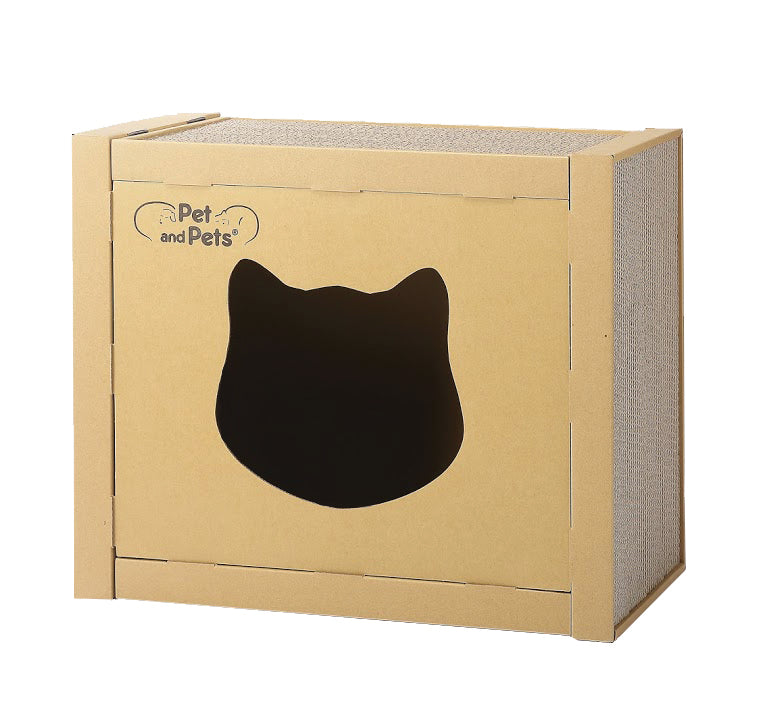
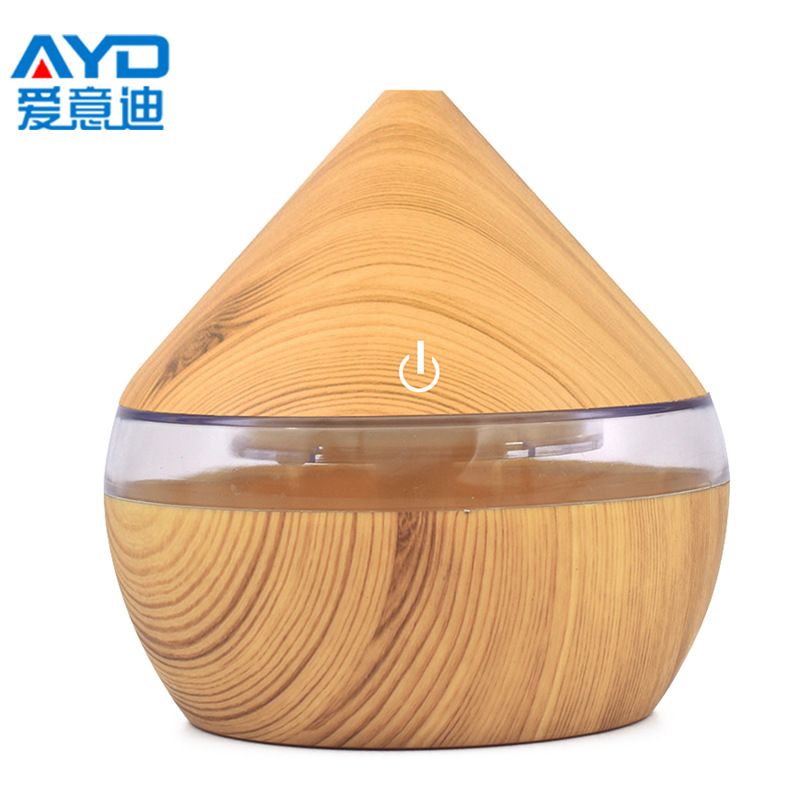
These three often go into the same order as a cat playhouse:

Sizing a cat playhouse for kittens, seniors and large breeds
Cats are not one size, and a cat playhouse that suits a healthy two-year-old can be wrong at both ends of the age range.
Kittens climb long before they can judge a landing. Under about four months they will go up anything and then sit at the top complaining about it. Keep the entry level low while they learn, put something soft under the highest point, and do not be surprised if they ignore the upper floor for several weeks.
Older cats have the opposite problem. Stiff hips and arthritis turn a jump that used to be nothing into something a cat will quietly stop attempting. If a senior has abandoned a cat playhouse it used to love, the house is rarely the real issue. Add a step: a sturdy box, a footstool or a low stack of books beside the entrance turns one big jump into two small ones.
Size the opening to the widest part of the cat, which is the ribcage and hips rather than the head. A cat should be able to turn around inside without shuffling out backwards. Larger breeds and simply large housecats need floor area more than they need height, and a cat playhouse that is tall but narrow will sit unused by a big cat.
- Kitten: low entry, a soft landing underneath, and supervision for the first week.
- Healthy adult: height, and a clear view across the room.
- Senior or arthritic: a step up, plus a ground-floor option nearby.
- Large or long-bodied cat: floor area first, height second.
Using a cat playhouse through moving, visitors and fireworks
The times a cat most needs a den are the times a household is least able to think about it. Planning one small thing in advance saves a great deal of hiding under beds.
When you move, the den should be among the first things unpacked rather than the last. Put it in the room the cat will be confined to for the first few days, and do not wash it first, so it still smells of the old home. Familiar smell in an unfamiliar room settles a cat faster than any amount of reassurance.
For visitors, place the cat playhouse where the cat can watch the room without being in it, and tell people to leave it alone. A den only works if the cat is certain nobody will reach inside. One guest pulling a cat out of its house can undo months of quiet trust.
Fireworks and thunder call for the opposite placement. Move the house to the quietest interior room, away from windows, and drape a blanket over the top to muffle sound and block flashes. Close the curtains, leave a radio or television on at normal volume, and let the cat choose when to come out.
A new baby, building work, a new pet: the pattern repeats. Set the cat playhouse up before the disruption arrives, in a spot the cat already likes, and make it genuinely off limits to everyone else in the house.
Frequently asked questions about a cat playhouse
Will my cat use it, or is this money wasted?
Most cats investigate a new enclosed structure almost immediately, because novelty plus shelter is a strong combination. Acceptance as a regular sleeping spot depends far more on placement and scent than on the product. Put it where the family is, add something that smells of home, and give it a couple of weeks.
Is cardboard-style board strong enough?
Properly constructed board is considerably stronger than a single sheet suggests, because the structure carries the load rather than the surface. It is also warm, light and pleasant to scratch. Treat it as a durable but replaceable item rather than a lifetime purchase.
Is a two-story design better than a single level?
For most cats, yes, because it satisfies the urge to survey and the urge to hide in one object. A single-level house suits cats that mainly want a den, and small dogs, which is a different product for a different animal.
How do I stop it smelling?
Keep washable bedding inside and wash that regularly rather than trying to clean the structure itself. Vacuum the corners, spot clean marks with a barely damp cloth, and let it dry fully. A cat playhouse kept away from the litter tray stays fresh far longer.
Can two cats share one?
Sometimes, if they are already comfortable sharing space. Often they will time-share it instead, one using it while the other has a different spot. If there is tension, adding a second elevated place elsewhere in the room works better than expecting them to negotiate.
Will it stop my cat scratching the sofa?
It gives the behaviour somewhere better to go, which is the only realistic goal. Position matters enormously: place the scratch-friendly structure right beside whatever is currently being scratched, because cats scratch at particular points on their route rather than wherever is most convenient for you.
A cat playhouse works when it gives a cat height, cover and something legitimate to scratch, and when it sits where the household actually lives. If the two-story eco bungalow suits your room, the full listing is on the product page, and you can see the rest of the range in the Home & Kitchen section.







Add comment